


Картина відповідає вашим виборам: , .
Опис експоната
Explore Agnolo Bronzino’s ‘Altarpiece,’ a haunting Mannerist fresco of Christ’s Lamentation. Witness dramatic figures, rich detail & profound emotion in this 1540 Florentine masterpiece.
 Розгорнути текст
Біографія митця
Аґноло Бронзіно – витончений флорентійський майстер епохи маньєризму, відомий своїми холодними, але вражаючими портретами та символічними творами для династії Медічі. Його стиль – це ідеальна гармонія елегантності та влади.
Олійная репродукція ручної роботи
Написана вручну олією на полотні у вашому розмірі та рамі, виготовлена на замовлення нашими художниками. ( Перейти до друку Перейти до цифрових зображень)
Більше про цю картину
 Переглянути в інтер'єрі
 Надіслати як листівку
 Поділитися
 Деталі витвору
 Посібник

 Завантажити
 Схожі екземпляри
 Рентгенівське дослідження
 Слайд-шоу
 Питання та відповіді
 Статистика
Замовте свою картину у чотири прості кроки
Не поспішайте. Ви можете змінити будь-яку відповідь; ціна у вашій кошику буде оновлюватися відповідно до кожного вибору.
1 Перший крок із чотирьох
Який розмір ви бажаєте обрати?
Ці розміри зберігають пропорції оригінальної картини. На малюнку показано ваш вибір на стіні над двометровим диваном.
Або вкажіть власні розміри
Обирайте з наших стандартних розмірів, що відповідають оригінальним пропорціям твору мистецтва.

Введіть необхідну ширину та висоту, щоб картина підійшла до вашої рами або стіни. Оскільки це ручний розпис, для зміни пропорцій художник може дописати трохи більше по краях або дещо обрізати композицію — вибір за вами. Перед початком роботи ми надішлемо вам цифровий макет для затвердження. Зображення, показане на цій сторінці, не є реальним результатом — лише макет відображає майбутній вигляд.
2 Другий крок із чотирьох
Як його підготувати: у рулоні, на підрамнику чи в рамі?
Наведені нижче ціни вказані для розміру, обраного вами на першому кроці.
Оберіть тип країв натяжного полотна
Оберіть свою раму

Білий край ₴1

Розмитий край ₴1

З розширенням ₴1

P118B ₴10

P118H ₴10

P118W ₴10

P438Z ₴10

P508JH ₴12

P508YH ₴12

P805H ₴10

P805Z ₴10

P919BZ ₴10

P919G ₴10

P919XJ ₴10

P959ZH ₴10

P968JZ ₴12

W106C ₴8

W218G ₴10

W218JH ₴8

W218Y ₴10

W307PJ ₴10

W316G ₴10

W316PJ ₴8

W316Y ₴10

W398PJ ₴8

W4111J ₴10

W500HY ₴15

W500JH ₴15

W692G ₴12

W849H ₴8

W940BG ₴15

W953PJ ₴8

H24-GOLD ₴30

H24-SILVER ₴30

H36-GOLD ₴45

H36-SILVER ₴45
У рамі
Багет: . Загальний розмір із рамою: .
3 Третій крок із чотирьох
Бажаєте внести якісь зміни в картину?
Більшість людей відповідають «ні». Оскільки кожна картина створена вручну, наш художник також може адаптувати її для вас.
Після оформлення замовлення команда ArtsDot.com надішле клієнту електронний лист із запитом інструкцій та надасть попередній макет для перегляду
4 Четвертий крок із чотирьох
Кілька варіантів фінішного покриття
Усі вони є необов'язковими. Вибір уже вибраних варіантів не потребує додаткової оплати.
Хто автор?
Доставка по всьому світу () за 3–4 тижні замість стандартних 5 тижнів. (6 Листопад). Без жодних компромісів у якості.
Табличка, як у музеї?
Деталі гравірування на бронзовій табличці
This elegant plaque features the artist's name and the title of the artwork, finely engraved for a timeless presentation.
It is made from bronze with a refined, elegant finish. The text is precisely laser-engraved for a sharp and permanent result. Measuring 9x2 cm, the plaque is compact yet easy to read. It's built to be durable and scratch-resistant, offering a professional, museum-quality look. Mounting is simple thanks to the included adhesive backing.
Деталі прозорої акрилової таблички
The plaque includes essential engraved details such as the artist's name, the title of the artwork, the date it was created, the type of media used-like oil on canvas or watercolor-a brief description of the piece, and a QR code that links to the complete artwork information.
It is crafted from clear acrylic, offering a sleek, modern appearance. The text is UV-engraved in black to ensure strong visual contrast. With a size of 10x15 cm, it ensures optimal readability. It comes equipped with two metal hooks for secure wall mounting. The plaque is designed to be weather-resistant, making it suitable for various environments, and it includes interactive features that work seamlessly with smartphone scanning.
Деталі чорної акрилової таблички
This elegant plaque includes engraved information such as the artist's name, the title of the artwork, the date it was created, the type of media used (like oil on canvas or watercolor), a short description of the artwork, and a QR code for quick access to more information.
The plaque itself is made from refined black acrylic with a premium finish. The text is laser-engraved in white for high contrast and readability. Its size is 10x15 cm, designed to be easy to read. It comes with two metal hooks for professional mounting. The design is sleek and fits any interior style. It is also weather-resistant and durable, with built-in digital integration for mobile compatibility.
Захисний лак?
Коли вам це потрібно?
✓ Перевірити та замовити
Ваша картина, згідно із вашим замовленням

Altarpiece
Матеріал репродукції
Розмір репродукції
-

Видатний майстер-художник
Більше деталізації, витонченості та додаткового часу на створення твору
-

Рама для репродукції
-
-
Для творів мистецтва або репродукцій, розмір яких перевищує 105 см (приблизно 41 дюйм) з будь-якого боку, рама доставляється у вигляді розібраного комплекту. Такий метод гарантує безпечну доставку та запобігає пошкодженням під час транспортування.
Потребує професійного збирання — це не продукт для самостійного виготовлення (DIY).
Комплект має бути зібраний, а полотно натягнуте досвідченим майстром багетних робіт із використанням клейового дерева (не входить у комплект), щипців для натягування полотна та затискачів, щоб підрамник залишався рівним під час висихання клею. Неправильне збирання або нерівномірне натягування полотна може призвести до незворотного пошкодження твору мистецтва, що не підпадає під дію нашої гарантії.
 Для творів мистецтва або репродукцій, розмір яких перевищує 105 см (приблизно 41 дюйм) з будь-якого боку, рама доставляється у вигляді розібраного комплекту. Такий метод гарантує безпечну доставку та запобігає пошкодженням під час транспортування.
У комплект входять усі бруски з цільного дерева, точно вирізані за розміром.
Збирається за допомогою гвинтів, що входять до комплекту, а також клейового розчину для кутових з'єднань, який не входить до комплекту і має бути підготовлений вашим майстром.
Потрібні професійні інструменти, які не входять до комплекту: щипці для натягування полотна (натягувач) та затискачі, щоб утримувати рейки рівно під час висихання клею.
Важливо:
Для з'єднання кутів потрібен клей для дерева, перекладини необхідно затиснути струбцинами до повного висихання клею, а для натягування полотна на зібрану раму знадобляться щипці для натягування полотна. Жоден із цих інструментів не входить до комплекту. Будь ласка, проконсультуйтеся з досвідченим майстром багетного оформлення перед замовленням рами такого розміру.

Етикетка експоната
-
-

Захисний лак
Глянцевий лак (підсилює яскравість кольорів, захищає від світла та вологи)
-

Персоналізувати мій витвір
Приклади можливих змін: заміна обличчя на фото клієнта; додавання домашньої тварини (наприклад, заміна кота на собаку); додавання прихованого повідомлення на фоні; зміна пейзажу або елементів фону.
-

Прискорено
Доставка по всьому світу () за 3–4 тижні замість стандартних 5 тижнів. (6 Листопад). Без компромісів у якості.
-
Експрес-доставка
Доставка по всьому світу () протягом 5 тижнів. (13 Листопад).
Включено в ціну
Підсумкова вартість
₴ 21920
Скляний варіант доступний лише для розмірів до 110 см
До кожного замовлення додається
- Безкоштовна експрес-доставка по всьому світу
- Високоякісне лляне полотно
- Повне страхове покриття доставки
- Гарантія повернення митних зборів
- Гарантія точного відтворення кольорів
- Політика повернення протягом 100 днів (лише у разі виявлення дефектів)
- Гарантія повернення 100% коштів
- Пропозиція на оптові замовлення


A Glimpse into Grief: Agnolo Bronzino’s ‘Altarpiece’
The year is 1540, and Florence pulses with the ambition of the Medici court. Within the private chapel of Eleonora di Toledo, Duchess of Florence, a masterpiece emerges – Agnolo Bronzino's “Altarpiece,” a profoundly moving depiction of the Lamentation of Christ. More than just a religious scene, it’s a carefully constructed meditation on sorrow, loss, and the divine, rendered with the artist’s signature cool elegance and masterful control. The fresco, measuring an unknown scale but radiating an immense presence, immediately draws the viewer into a chaotic yet controlled vortex of grief – a testament to Bronzino's ability to distill intense emotion into meticulously observed form.
The composition is densely populated, a deliberate orchestration of figures arranged within an arched architectural framework. This isn’t a scene of raw, uncontrolled weeping; instead, Bronzino employs a Mannerist sensibility – elongated forms, dramatic poses, and heightened expressions – to convey the weight of sorrow with remarkable restraint. Perspective is subtly flattened, prioritizing emotional impact over strict realism, creating a sense of immediacy that pulls us directly into the heart of the mourning. The lighting, theatrical in its contrasts between light and shadow, emphasizes key figures—Christ’s anguished face, Mary's profound grief, and the outstretched hands of those gathered to lament – each gesture imbued with palpable sorrow.
The Master of Reserved Elegance: Bronzino and the Mannerist Style
Agnolo Bronzino stands as a pivotal figure in the transition from Renaissance High Art to the cooler, more stylized world of Mannerism. Born in Florence in 1503, he initially trained under Pontormo, absorbing his teacher’s innovative spirit but ultimately forging his own distinct voice. Unlike Pontormo's often emotionally charged works, Bronzino cultivated a style characterized by composure, refined detail, and an almost unnerving stillness. This is evident in “Altarpiece,” where figures are rendered with exquisite precision – the velvet of Mary’s robes, the folds of Christ’s linen shroud, the delicate texture of skin—yet retain a sense of detachment, as if observing grief from a carefully considered distance.
Bronzino's training also included studies under Andrea del Sarto, exposing him to the legacies of Michelangelo and Leonardo da Vinci. These influences subtly permeate his work, contributing to its technical mastery and sophisticated understanding of anatomy and composition. However, Bronzino’s approach is markedly different; he eschews the dynamism and expressive fervor of these predecessors in favor of a more controlled, almost sculpted quality. His portraits, particularly those commissioned by the Medici family, exemplify this reserved elegance – figures presented with an air of dignified composure that has captivated viewers for centuries.
Symbolism Woven into Sorrow
Beyond its emotional power, “Altarpiece” is rich in symbolic detail. The central figure of Christ, depicted in death’s embrace, immediately evokes the core themes of sacrifice and redemption. Mary, his mother, embodies profound grief – her posture conveys a heartbreaking blend of sorrow and acceptance. The angels surrounding them represent divine mourning, offering solace to the earthly realm. Crucially, the presence of the cross—a potent symbol of Christ's suffering and resurrection—underscores the scene’s theological significance. The rich fabrics adorning the figures—velvet, silk, and linen—add a layer of opulence and drama, highlighting the sacredness of the event while simultaneously emphasizing the profound loss.
A Fresco for Eternity: Technique and Materials
“Altarpiece” is executed in the traditional technique of fresco painting – pigments mixed with water and applied directly to wet plaster. This method demands meticulous planning and execution, as any errors are permanently ingrained into the artwork. The materials used were primarily natural pigments derived from minerals and plants, combined with lime plaster, creating a smooth, durable surface that has endured for centuries. The artist’s mastery of color is particularly evident in the deep blues, reds, and browns that dominate the palette, contributing to the scene's somber and melancholic atmosphere. The fresco technique itself lends a timeless quality to the work, ensuring its longevity and allowing it to resonate with viewers across generations.
Питання та відповіді
Чи можу я переглянути «Altarpiece» роботи Агноло Бронзино перед замовленням?
Щоб переглянути репродукцію «Altarpiece» роботи Агноло Бронзино, відкрийте сторінку попереднього перегляду Перегляд у інтер'єрі цього твору.
Хто є автором "Altarpiece" і до якого художнього напряму він належить?
«Altarpiece» була створена Агноло Бронзино у стилі Mannerism. Автор та художній напрям визначають традицію цього твору.
Чи можу я побачити «Altarpiece» роботи Агноло Бронзино на власній стіні перед покупкою?
Сторінка Перегляд в AR для твору «Altarpiece» роботи Агноло Бронзино використовує технологію доповненої реальності, щоб показати витвір у вашому власному просторі за допомогою сумісного пристрою.
Схожі твори мистецтва


Агноло Бронзино
1503 - 1572, Італія
Біографія митця
Agnolo Bronzino: Florentine Master of Reserved Elegance
Agnolo di Cosimo, known to history as Bronzino, emerged from the vibrant artistic landscape of Renaissance Florence in 1503, a period already brimming with genius. Born the son of a butcher—a humble origin for an artist destined to become one of the most celebrated portraitists of his era and a defining figure of Mannerism—his path diverged sharply from familial trade, guided instead by an innate talent that would see him achieve unparalleled renown. His early artistic training commenced with Raffaellino del Garbo, but it was under the tutelage of Jacopo da Pontormo that Bronzino’s artistic sensibilities truly blossomed. Recognizing Pontormo's groundbreaking experimentation with perspective and color—a bold departure from prevailing stylistic conventions—Bronzino absorbed these innovations while simultaneously forging his own distinctive voice—one characterized by a profound stillness, meticulous detail, and an understated elegance markedly different from Pontormo’s often emotionally turbulent compositions. This formative period was further enriched by studies conducted alongside Andrea del Sarto, exposing him to the legacies of Michelangelo and Leonardo da Vinci—giants whose artistic vision profoundly shaped Bronzino's understanding of art history and technique. The young Bronzino swiftly demonstrated an exceptional aptitude for capturing not merely physical likeness but a subtle psychological depth—a feat rarely accomplished by his contemporaries—even in his earliest commissions.Early Influences and Artistic Development
The influence of Michelangelo’s monumental sculptures and Leonardo da Vinci's scientific observation profoundly impacted Bronzino’s artistic sensibilities. Like Michelangelo, he embraced anatomical precision and sculptural form, striving to convey a sense of grandeur and permanence within his portraits. Similarly, Da Vinci’s meticulous attention to detail—particularly in his sfumato technique—inspired Bronzino to achieve an unparalleled level of surface refinement. These foundational influences instilled in him a conviction that art should transcend mere representation; it must embody intellectual contemplation and elevate the viewer's perception of beauty. His initial artistic explorations focused on mastering traditional techniques—drawing, etching, and fresco painting—before gravitating towards portraiture as his primary medium. This dedication to craft—combined with an innate understanding of human psychology—established him as a uniquely gifted artist capable of capturing not just outward appearance but inner character.The Medici Patronage and Florentine Court Style
Bronzino’s artistic career ascended dramatically with the patronage of Cosimo I de’ Medici, Duke of Tuscany—a relationship that solidified his position as the official court painter for much of his life. Recognizing Cosimo's astute political acumen and unwavering commitment to cultural advancement, Bronzino embraced this opportunity to hone his skills and establish himself as Florence’s foremost artistic voice. The commissions emanating from the Medici Court demanded an uncompromising adherence to stylistic conventions—a preference for cool composure, idealized beauty, and subtle psychological nuance. Cosimo I and Eleonora di Toledo became frequent subjects of Bronzino's portraits—images that convey an aura of aristocratic detachment and refined dignity. These works weren’t merely about replicating physical resemblance; they were carefully constructed statements of power, status, and dynastic ambition—a testament to Bronzino’s ability to transform visual art into a tool for shaping public perception. His meticulous attention to detail—the textures of fabrics, the gleam of jewels, the subtle expressions conveyed by his subjects—exemplified Florentine court style at its zenith.The Art of Mannerism: Stylized Elegance and Intellectual Depth
Bronzino’s artistic style is undeniably Mannerist—a movement that emerged in Italy during the mid-16th century as a deliberate reaction against the harmonious idealism of the High Renaissance. Rejecting the prevailing emphasis on naturalistic representation, Mannerists sought to explore psychological complexity and stylistic innovation—often prioritizing formal elegance over emotional immediacy. Bronzino embraced elongated figures, stylized poses, and an understated emotionality—techniques that distinguished him from his contemporaries and cemented his reputation as a pioneer of artistic experimentation. His approach mirrored Michelangelo’s sculptural ambition—a desire to convey grandeur and permanence through meticulously crafted forms—while simultaneously incorporating Leonardo da Vinci's sfumato technique—creating subtle gradations of light and shadow to heighten visual impact. Venus, Cupid, Folly and Time (c. 1544-45)—perhaps his most iconic masterpiece—perfectly encapsulates this Mannerist aesthetic. The painting’s intricate composition—characterized by asymmetrical balance and subtly distorted perspective—challenges conventional notions of beauty while simultaneously conveying a profound meditation on human experience. Bronzino's mastery extended beyond mere technical proficiency; he possessed an intellectual curiosity that fueled his artistic endeavors—a conviction that art should engage the mind as well as the senses.Legacy and Enduring Influence
Bronzino’s contribution to Florentine art history transcends his prolific output as a painter. He was a founding member of the Accademia delle Arti del Disegno in 1563—an institution dedicated to fostering artistic excellence and promoting scholarly inquiry—solidifying his role as a champion of humanist ideals and artistic innovation. His influence reverberated throughout Europe, shaping court portraiture for generations to come—establishing Florentine Mannerist style as a benchmark of aristocratic representation. Though subsequent artistic movements favored more emotive or naturalistic approaches, Bronzino’s unwavering commitment to stylistic control and intellectual depth ensured his enduring place in art history—a testament to the transformative power of artistic vision. His legacy continues to inspire artists today who strive for elegance, precision, and psychological insight—demonstrating that true artistry lies not merely in replicating reality but elevating it through deliberate stylistic choices.- Born: Florence, Italy, 1503
- Died: Florence, Italy, 1572
- Key Movement: Mannerism
- Notable Works: *Venus, Cupid, Folly and Time*, Portraits of Cosimo I de’ Medici and Eleonora di Toledo
- Institution: Accademia delle Arti del Disegno


Пов'язані статті
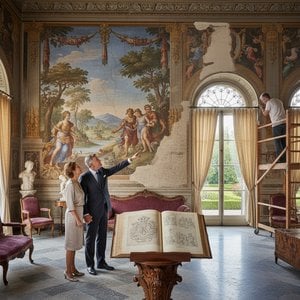
Фреска як сімейна спадщина: Збереження родинної історії через настінне мистецтво
Дізнайтеся все про фрески: історію, техніки, замовлення та догляд. Створіть унікальну сімейну спадщину з нашими професійними художниками! Якість гарантовано.

The Enduring Legacy of Fresco: Technique, History & Artistic Expression Across Cultures
Explore the rich history & enduring legacy of fresco painting! Discover ancient techniques, Giotto's masterpieces, and modern applications. Expert insights for art lovers & professionals.

Мистецтво, що живе з вами: Емоційна сила індивідуального інтер'єрного фреску
Відкрийте для себе світ вишуканих фресок на замовлення! Індивідуальний дизайн, професійне виконання та емоційний вплив у вашому інтер'єрі. Дізнайтесь більше!