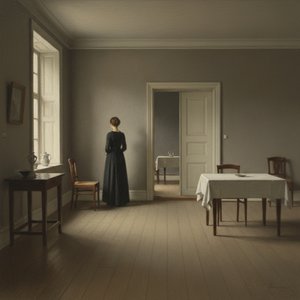
The Quiet Observer of Dutch Interiors
In the quiet corners of the nineteenth century, a Dutch painter named Auguste Wynantz sought to capture the stillness of grand spaces and the subtle play of light within them. Born in 1795, he moved through a world that was rapidly changing, yet his brush remained fixed on the enduring dignity of architecture and the silent presence of objects. His life, which reached its end in The Hague in 1848, was spent observing the way light settles upon marble and how shadows stretch across a hall. He did not seek the chaotic energy of the streets, but rather the composed elegance of the interior.
His hand was particularly adept at translating the weight of stone and the texture of wood into visual form. He possessed a keen eye for the way a room holds its breath when no one is present. This focus on the structural and the domestic allowed him to document the very fabric of his surroundings, turning a simple hallway or a grand hall into a study of light and geometry.
A Record of Grandeur and Detail
The works left behind by Wynantz offer a window into the architectural splendor of his era. He moved between the depiction of vast, public halls and the more intimate, though no less detailed, settings of private collections. His compositions often centered on the following themes:
- The architectural majesty of the Mauritshuis.
- The intricate details of the Gothic Hall within the Kneuterdijk Palace in Den Haag.
- The interplay of light in marble foyers and grand staircases.
- The quiet presence of figures within a landscape or an interior setting.
In his depiction of the Mauritshuis around 1830, one senses his fascination with how a building commands its environment. He approached his subjects with a steady hand, ensuring that the perspective remained true to the eye. Whether he was painting a landscape or a still life, his intent remained the same: to record the physical reality of the world with precision and grace.
The Legacy of the Silent Room
As the decades passed, Wynantz’s work became a way of preserving the atmosphere of a specific time and place. His paintings of the Kneuterdijk Palace, created in the mid-1840s, provide a visual history of spaces that defined the Dutch social landscape. He captured the marble and the wood not merely as materials, but as the very bones of a culture. His ability to render the stillness of a room ensures that his vision remains intact, offering a glimpse into a world of quietude and structured beauty.
Soru ve Cevaplar
Auguste Wynantz tarafından üretilen tüm eserleri belirli bir teknik/materyal türünde nasıl bulabilirim?
Auguste Wynantz tarafından belirli bir teknikte üretilmiş tüm eserleri bulmak için sanatçının Tüm Teknikler sayfasını kullanabilirsiniz.
Auguste Wynantz adlı sanatçının eserlerini renklere göre sıralayabilir miyim?
Renk Spektrumu sayfası, Auguste Wynantz adlı sanatçının eserlerini renklere göre düzenler.
Auguste Wynantz hangi dönem sanatçısıdır?
Auguste Wynantz, 19th Century döneminde eserlerini vermiştir. Bu dönem, sanatçının çalışmalarını tarihsel bir bağlama oturtur.
Auguste Wynantz eserlerine sanat akımlarına göre göz atabilir miyim?
Auguste Wynantz tarafından çalışılan akımlar, eserleri akımlara göre gruplandıran sanatçının Tüm Sanat Akımları sayfasında görülebilir.