
 Gerçek Boyutta Önizle
 Paylaş
 Paylaş
 Detayları Gör
 Rehber

 İndir
İndir
 Benzer ürünler
 X-Işını
 Slayt Gösterisi
 Soru & Cevap
 İstatistikler
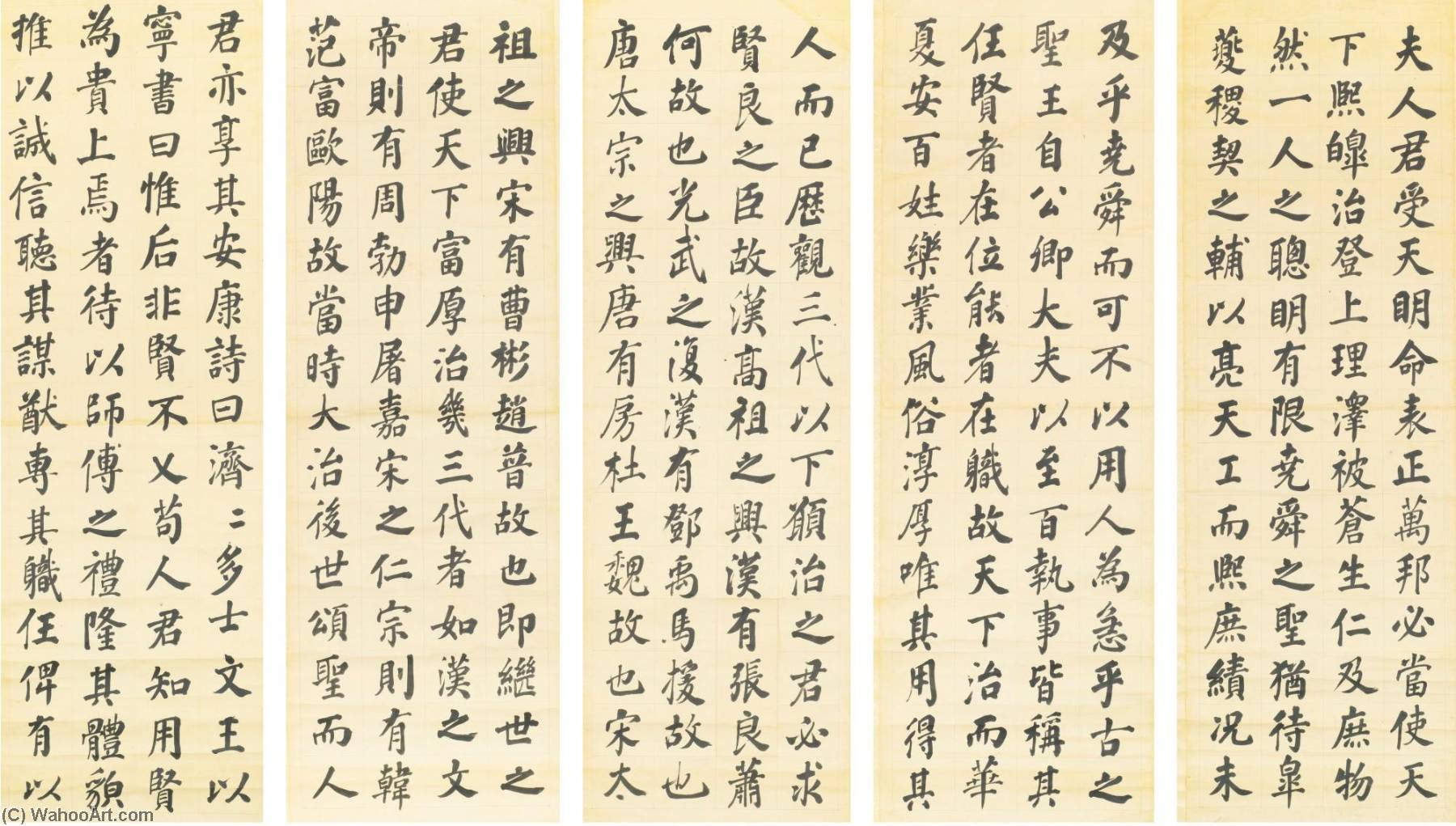
CALLIGRAPHY IN REGULAR SCRIPT

- 137.0 x 45.0 cm
 Tümünü Gör
Web önizlemesinin çok ötesinde, baskıya hazır bir dosya edinin. Sattığımız her dijital görüntü, stok veri tabanımızdaki yüksek çözünürlüklü bir ana dosyadan —genellikle 5.000 ila 15.000 piksel genişliğinde— gelir; böylece büyük boyutlarda baskı alabilir, dar kırpmalar yapabilir veya ince detayları güvenle yeniden üretebilirsiniz.
Stüdyomuzdan çıkan hiçbir dosya işlenmeden çıkmaz. Bir dijital uzman, renkleri orijinal tabloyla karşılaştırarak kontrol eder ve gerekirse düzeltir; ardından profesyonel rötuş araçlarıyla netliği ve detayları artırır — bunu yaparken her zaman sanatçının fırça darbelerine ve üslubuna sadık kalır. Sonuç, filtrelenmiş bir tarama gibi değil, bizzat tablonun kendisi gibi görünen bir görüntüdür.
İşlem tamamlanmadan önce onayınız alınır: Uzmanımız, incelemeniz için görseli 72 saat içinde e-posta ile gönderir. Memnun kalmadınız mı? İyileştirme veya düzeltme talep edebilir ya da kalite beklentinizin altında kalırsa iade isteyebilirsiniz.
Yayıncıların, tasarım stüdyolarının, galerilerin ve matbaaların güvendiği kalite budur.
Dijital Görsel Sanatlar
Kişisel kullanım, baskı ve yaratıcı projeleriniz için yüksek çözünürlüklü bir dosya indirin. ( Baskı Satışına Geç El Yapımı Tablo Satın Al)
Her Dijital Görüntü Siparişine Dahil Olanlar
Uzman Dijital Teslimat Garantisi
ArtsDot.com seçtiğinizde, sadece bir görsel edinmekle kalmaz; titizlikle hazırlanmış, profesyonelce iyileştirilmiş dijital bir sanat eserine sahip olur ve memnuniyet garantisiyle güvence altına alınırsınız. Siparişinizle birlikte otomatik olarak sunulan her şey şunlardır:

Hızlı E-posta ile Teslimat
Yüksek çözünürlüklü dijital görüntü dosyanız, siparişinizin ardından en geç 72 saat içinde e-posta ile size gönderilecek ve hemen kullanıma hazır olacaktır.

Yapay Zeka Destekli Dijital Görüntü İşleme
Sanat eseriniz; maksimum detay, netlik ve renk doğruluğu sağlamak amacıyla gelişmiş yapay zeka araçları ve manuel düzenleme kullanılarak profesyonelce optimize edilmektedir.

Ömür Boyu Ücretsiz Yeniden Gönderim
Dosyanızı yanlışlıkla mı sildiniz yoksa kayıp mı oldu? Endişelenmeyin; dosyanızı dilediğiniz zaman size ücretsiz olarak tekrar göndereceğiz.

Hiçbir Zaman İthalat Ücreti Ödemeyin
Sanat eserinizin tadını gümrük vergisi, harç veya teslimat ücreti ödemeden anında çıkarın; dijital indirmeler her zaman vergiden muaftır.

Renk Doğruluğu Garantisi
Profesyonel araçlar ve renk yönetimi kullanarak dijital görselinizin orijinal renklere mümkün olduğunca yakın yansıtılmasını sağlıyoruz.

100 Günlük Memnuniyet Garantisi
If you're not satisfied with your digital image, we'll revise it or refund 100% within 100 days - no questions asked.

100% Para İadesi Garantisi
Memnun kalmadınız mı? Dijital dosyanızı teslim aldıktan sonraki 100 gün içinde, hiçbir soru sorulmaksızın tam para iadesi alabilirsiniz.

Toplu Sipariş İndirimleri
Buy 3 images, save 10% - Buy 5, save 15% - Buy 10+, save 20%. Great for creative projects, galleries, and agencies.
Benzer Eserler


Sanatçı Özgeçmişi
Zhang Zhao: A Master of Running Script in the Qing Dynasty
The world of 17th-century Chinese art is rich with figures who shaped its trajectory, and among them stands Zhang Zhao (1691–1745), a calligrapher whose elegant running script – known as *jiejing* – continues to captivate viewers today. More than just a skilled practitioner of brush and ink, Zhang Zhao was a product of his time, deeply influenced by the philosophical currents of the Qing Dynasty and the artistic legacy of Dong Qichang, a pivotal figure in establishing aesthetic standards for Chinese art.
Born in Xu Province during a period of immense political upheaval, Zhang Zhao’s early life instilled within him a profound sense of discipline and an appreciation for scholarship. He initially pursued a career as a civil servant but quickly gravitated towards the refined world of calligraphy, recognizing its power to convey both intellectual depth and aesthetic beauty. His training likely involved studying the works of earlier masters, absorbing their techniques and developing his own distinctive style – one characterized by fluidity, balance, and an almost meditative quality.
The Influence of Dong Qichang
Zhang Zhao’s artistic development was inextricably linked to that of Dong Qichang (1579–1645), a renowned scholar-official and art critic who profoundly shaped the aesthetic landscape of the Qing Dynasty. Dong Qichang championed the concept of *wuhu*, or “five aesthetics”—poetry, music, painting, calligraphy, and ritual—as essential components of a cultivated individual’s life. He advocated for a return to classical forms and values, emphasizing simplicity, sincerity, and a deep connection with nature.
Zhang Zhao was deeply influenced by Dong Qichang's ideas, particularly his emphasis on *jiejing* as a form of refined expression. Dong Qichang’s writings on calligraphy stressed the importance of achieving a state of “naturalness” – a sense of effortless grace and spontaneity – in one’s brushwork. Zhang Zhao embraced this philosophy, striving to capture the essence of his subjects through subtle variations in line weight, pressure, and speed.
A Career in Service and Artistic Recognition
Zhang Zhao's career unfolded within the complex political landscape of the Qing Dynasty. He secured a *jinshi* (successful candidate) position in 1709, demonstrating his intellectual prowess and earning him a place within the imperial bureaucracy. He rose through the ranks, eventually becoming Secretary of the Ministry of Justice in 1733. However, his career was not without its challenges; he narrowly avoided execution after failing to manage aboriginal territories in Guizhou, highlighting the precariousness of life for officials during this turbulent period.
Despite these setbacks, Zhang Zhao continued to produce significant works of calligraphy and poetry. He collaborated with other prominent scholars on important literary projects, including the *Lülü Zhengyi* and its sequel, *Houbian*, which served as standard treatises on music theory. Notably, he was also recognized by the Yongzheng Emperor for his exceptional skill, receiving a commendation for a poem written with his left hand after an accident had impaired his right arm – a testament to his resilience and artistic dedication.
Style and Legacy
Zhang Zhao’s *jiejing* is characterized by its elegant fluidity and subtle variations in line weight. His works often exhibit a sense of quiet contemplation, reflecting the philosophical ideals championed by Dong Qichang. He skillfully employed techniques such as *shougong* (a technique for creating a sense of depth through varying line thickness) and *yanzhuan* (a technique for creating a sense of movement through variations in brush pressure), adding layers of complexity and nuance to his compositions.
While Zhang Zhao’s name may not be as widely recognized as some of his contemporaries, his contributions to the development of running script are undeniable. His works represent a significant example of Qing Dynasty calligraphy, embodying both technical mastery and philosophical depth. Today, his paintings and scrolls continue to be admired for their beauty, elegance, and enduring legacy – a testament to the skill and vision of this remarkable artist.

Zhang Zhao
1691 - 1745
Kısa Bilgiler
- Artistic Movement Or Style: Running script calligraphy
- Artists Or Movements Influenced By This Artist: ['Traditional Chinese art']
- Artists Who Influenced This Artist: ['Dong Qichang']
- Date Of Birth: 1691
- Date Of Death: 1745
- Full Name: Zhang Zhao
- Nationality: Chinese
- Notable Artworks:
- Hanging Scrolls
- Album Leaves
- Place Of Birth: Jiangsu Province, China