

 Gerçek Boyutta Önizle
 Paylaş
 Paylaş
 Detayları Gör
 Rehber

 İndir
İndir
 Benzer ürünler
 X-Işını
 Slayt Gösterisi
 Soru & Cevap
 İstatistikler
Mary Edwards

 Tümünü Gör
Giclée / Sanat Baskısı
Hızlı üretim ve esnek bitiş seçenekleriyle müze kalitesinde giclée veya kanvas baskı. ( El Yapımı Tablo Satın Al Dijital Görsele Geç)




P118B ₺10

P118H ₺10

P118W ₺10

P438Z ₺10

P508JH ₺12

P508YH ₺12

P805H ₺10

P805Z ₺10

P919BZ ₺10

P919G ₺10

P919XJ ₺10

P959ZH ₺10

P968JZ ₺12

W106C ₺8

W218G ₺10

W218JH ₺8

W218Y ₺10

W307PJ ₺10

W316G ₺10

W316PJ ₺8

W316Y ₺10

W398PJ ₺8

W4111J ₺10

W500HY ₺15

W500JH ₺15

W692G ₺12

W849H ₺8

W940BG ₺15

W953PJ ₺8




Eserin orijinal oranlarıyla uyumlu, önceden belirlenmiş boyutlarımız arasından seçim yapın.

Çerçevenize veya duvarınıza uygun olması için ihtiyacınız olan genişlik ve yüksekliği yazın. Bir baskı yalnızca kesilebilir, görselden daha büyük hale getirilemez; bu nedenle farklı bir formdaki boyut seçimi, görselin bir kısmının kaybına neden olur. Herhangi bir baskı yapmadan önce onaylamanız için size bir dijital taslak gönderiyoruz. Bu sayfada gösterilen resim gerçek kesimi göstermez — bunu yalnızca taslak gösterir.
Dünya Çapında Teslimat (); standart 4/5 hafta yerine 2 haftada. (8 Kasım)

Dünya Çapında Ücretsiz Ekspres Kargo

Yüksek Kaliteli Keten Kanvas

Tam Nakliye Sigortası

Gümrük Vergisi İadesi Garantisi

Gerçek Renk Uyumu Garantisi

100 Günlük İade Politikası (Sadece Kusurlu Ürünler İçin)

%100 Para İade Garantisi

Toplu Alım İndirimi
 Cam seçeneği yalnızca 110 cm altındaki boyutlar için mevcuttur.

Mary Edwards
Giclée / Sanat Baskısı
Reproduksiyon Boyutu
-


Toplam Tutar
₺ 3107
A Moment of Quiet Contemplation: William Hogarth’s “Mary Edwards”
William Hogarth's "Mary Edwards," a captivating portrait rendered with his signature meticulous detail and sharp social observation, offers more than just a likeness; it presents a carefully constructed tableau of domesticity and quiet introspection. Painted around the mid-18th century, this work exemplifies Hogarth’s unique approach to genre painting – moving beyond mere representation to deliver a subtle commentary on the roles and expectations placed upon women within the burgeoning urban landscape of London. The scene unfolds within a modestly furnished interior, likely a parlor or study, bathed in soft light that suggests an afternoon repose. At the heart of the composition sits Mary Edwards, a woman of evident grace and intelligence, absorbed in a book. Her posture is relaxed yet dignified, her gaze directed inward, hinting at a world of thought and imagination contained within those pages.
Beside her rests her loyal dog, a creature of gentle demeanor that mirrors the serenity of the scene. The inclusion of the animal isn’t merely decorative; it speaks to the close bonds between humans and animals in 18th-century life – a shared space of companionship and mutual affection. The dining table behind them, adorned with simple tableware and a clock, anchors the composition within the realities of daily existence. The clock, a recurring motif in Hogarth’s work, serves as a subtle reminder of time's relentless passage, adding a layer of temporal awareness to the scene.
Hogarth’s Technique: A Masterclass in Detail and Observation
Hogarth was renowned for his painstaking technique, honed during his early apprenticeship as an engraver. This training instilled within him an unparalleled ability to render texture, light, and shadow with astonishing accuracy. In “Mary Edwards,” this skill is immediately apparent. Notice the subtle variations in the fabric of Mary’s dress – the delicate folds, the sheen of the material, all meticulously captured. The dog's fur is rendered with a remarkable level of detail, conveying its softness and warmth. Hogarth’s use of chiaroscuro—the dramatic contrast between light and dark—further enhances the sense of depth and realism within the painting. He masterfully employs this technique to draw the viewer’s eye towards Mary’s face, emphasizing her expression of quiet contemplation.
Furthermore, Hogarth's approach extended beyond mere technical proficiency; he was a keen observer of human behavior. He didn’t simply paint what he saw but sought to capture the essence of his subjects – their personalities, their social standing, and their place within the broader context of society. This is particularly evident in Mary Edwards’ posture and expression, which suggest a woman of independent thought and quiet dignity.
Symbolism and Social Commentary
While seemingly a simple portrait, “Mary Edwards” carries subtle layers of symbolic meaning. The book she reads likely represents her intellectual pursuits – a rare privilege for women of the era. It speaks to a desire for knowledge and self-improvement, hinting at a woman who transcends the traditional roles assigned to her by society. The dog, as mentioned earlier, symbolizes companionship and loyalty, but also perhaps a connection to the natural world—a grounding force amidst the complexities of urban life.
Considering this painting within the context of Hogarth’s broader oeuvre reveals a consistent thread of social commentary. He frequently used his art to critique the moral failings and societal injustices of his time. While “Mary Edwards” lacks the overt satire of works like *A Rake's Progress*, it subtly challenges conventional notions of female roles, suggesting that women possessed intellectual capabilities beyond mere domesticity. It’s a quiet assertion of agency within a restrictive social framework.
A Legacy of Insight: Mary Stella Edwards and Beyond
Interestingly, the subject of this painting bears a striking resemblance to Mary Stella Edwards (1893-1989), an English painter herself. While separated by over two centuries, both women shared a passion for art and a desire to capture moments of quiet beauty. Edwards’ own work often featured domestic scenes and portraits, reflecting a similar interest in the lives of ordinary people. The connection between Hogarth's "Mary Edwards" and Edwards highlights the enduring appeal of portraying intimate human experiences.
Today, ArtsDot offers meticulously crafted hand-painted reproductions of “Mary Edwards,” allowing you to bring this remarkable work into your home or office. Each reproduction is created by skilled artisans who replicate Hogarth’s technique with exceptional precision, ensuring that the painting's beauty and detail are faithfully preserved. Whether you are an art enthusiast, a collector, or simply seeking a piece of timeless elegance, a ArtsDot reproduction of “Mary Edwards” offers a unique opportunity to connect with one of Britain’s most influential artists.
Soru ve Cevaplar
William Hogarth imzalı "Mary Edwards" eserinin kompozisyonunda baskın olan renk hangisidir?
"Mary Edwards" adlı eserde en çok öne çıkan renk Phthalo Green (#30211d)'dır. Baskın rengi bilmek, bir sanat eserini iç mekânla eşleştirirken size yardımcı olur.
"Mary Edwards" eserinde güçlü ışık-gölge kontrastları görülüyor mu?
William Hogarth imzalı "Mary Edwards", açık ve koyu alanlar arasında Bold bir kontrast sergiliyor.
"Mary Edwards", William Hogarth eserlerinin en popülerlerinden biri mi?
William Hogarth imzalı "Mary Edwards", Iconic düzeyinde bir popülerliğe sahiptir. Bu sınıflandırma, eserin ne kadar geniş kitlelerce tanındığını yansıtmaktadır.
Benzer Eserler


Sanatçı Özgeçmişi
William Hogarth (1697 – 1764): A London Life in Ink and Paint
William Hogarth, born into the bustling heart of 18th-century London in 1697, was more than just an artist; he was a visual historian, a keen observer of human nature, and a satirical commentator on the societal currents of his age. His life story is inextricably linked to the very fabric of England during a period of significant transformation – its burgeoning ambitions, underlying anxieties, and pervasive hypocrisies all finding potent expression in his remarkably detailed and often biting works. The son of a struggling Latin schoolmaster, Hogarth’s early experiences instilled within him both a love for learning and a sharp awareness of social inequalities, a foundation that would prove crucial to shaping his artistic vision. Initially apprenticed to an engraver, he quickly demonstrated a talent extending beyond mere technical skill; he possessed an innate ability to observe the nuances of human behavior and translate them into compelling visual narratives. However, he chafed against the constraints of traditional engraving, seeking a more expressive outlet for his burgeoning creativity. This led him to studies at both St Martin’s Lane Academy and under Sir James Thornhill, where he honed his skills in painting and composition, absorbing influences that would later inform his unique style.- Early Life and Influences: Hogarth's father, a teacher, faced considerable hardship during his childhood, including imprisonment for debt – an experience that profoundly shaped his worldview and fueled his fascination with the darker side of human existence. He developed a passion for sketching people he encountered on the streets, drawing inspiration from classic painters such as Albrecht Dürer, Pieter Bruegel the Elder, Leonardo Da Vinci, Raphael, Michelangelo, Nicolas Poussin, Jacques Callot, Peter Paul Rubens and his idol, James Thornhill.
- The Engraving Trade: Hogarth began his artistic career as an engraver’s apprentice, mastering the craft of producing prints from drawings with meticulous precision. His early engravings showcased a remarkable talent for capturing detail and conveying emotion, establishing him as a skilled craftsman and demonstrating his versatility beyond purely decorative pursuits.
- Painting and Composition: Hogarth's artistic vision extended far beyond engraving; he excelled in painting, developing a distinctive style characterized by realism and narrative complexity. He studied under Sir James Thornhill at St Martin’s Lane Academy, absorbing influences that would contribute to his groundbreaking approach to visual storytelling.
- “Modern Moral Subjects”: Hogarth revolutionized artistic practice by pioneering what he termed “modern moral subjects”—series of paintings designed to tell a story and deliver a pointed critique of contemporary society. These weren't isolated portraits or landscapes; they were visual novels unfolding before the viewer’s eyes, offering unflinching commentary on social issues and challenging conventional notions of beauty and virtue.
A Harlot’s Progress: A Pioneering Narrative Sequence
Perhaps Hogarth's most celebrated achievement was *A Harlot’s Progress*, a six-part series of paintings that meticulously chronicles the tragic downfall of Mary, a young woman arriving in London full of hope but swiftly succumbing to the temptations and dangers of city life. Each scene is rendered with painstaking detail, filled with symbolic elements that reveal the moral decay surrounding her. The series exemplifies Hogarth’s innovative technique—combining realistic depiction with narrative storytelling—marking him as a forerunner of comic strip-like visual narratives. He skillfully employed cross-hatching to create depth and texture, bringing his scenes to life with remarkable clarity and capturing the psychological complexities of his subjects.Technique and Style: Mastering Line and Shade
Hogarth’s artistic style was distinguished by a masterful command of line and shade—a hallmark of his engravings and paintings alike. He achieved unparalleled realism through meticulous observation and skillful rendering, capturing the subtleties of human expression with remarkable accuracy. His distinctive cross-hatching technique created depth and texture, transforming flat surfaces into immersive visual experiences. Furthermore, Hogarth’s compositional choices were equally innovative, arranging figures and objects within the frame to generate dynamic narratives that engaged viewers emotionally and intellectually.Legacy and Influence: Shaping British Art History
William Hogarth's influence on British art history is undeniable. He established a distinctly British artistic identity, rejecting continental Mannerism in favor of realism and moral seriousness. His work profoundly impacted subsequent generations of artists—including James Gillray and George Cruikshank—who embraced his satirical tradition and continued to explore social issues with unflinching honesty. Moreover, Hogarth’s pioneering approach to visual storytelling paved the way for the development of political cartoons and comic strips, securing his place as a pivotal figure in popular culture. He remains revered as one of the “Big Three” of 18th-century cartooning, recognized for his originality, his social critique, and his enduring ability to capture the complexities of human life—a legacy that continues to inspire artists and scholars today.Concluding Remarks
Ultimately, William Hogarth stands as a testament to the transformative power of observation and artistic innovation. He demonstrated that art could be both entertaining and enlightening, challenging viewers to confront uncomfortable truths about themselves and their society—a conviction that underpinned his entire creative endeavor. His paintings and engravings endure not merely as historical artifacts but as vibrant windows into a bygone era, offering timeless insights into the follies and foibles of humanity.
William Hogarth
1697 - 1764 , Birleşik Krallık
Kısa Bilgiler
- Artistic Movement Or Style: Satirizm ve gerçekçilik
- Artists Who Influenced This Artist:
- Pieter de Hooch
- Jonathan Swift
- Date Of Birth: 1697
- Full Name: William Hogarth
- Nationality: İngiliz
- Notable Artworks:
- A Harlot's Progress
- A Rake's Progress
- Marriage A-la-Mode
- Place Of Birth: Londra
Benzer Yazılar

Jacob Henricus Maris: A Master of Dutch Atmospheric Realism & the Intimate Landscape
Explore the captivating world of Jacob Henricus Maris, a leading figure of the Dutch Hague School. Discover his atmospheric landscapes, signature brushstrokes & lasting influence on 19th-century art. Learn more at ArtsDot.

Mark Rothko'nun En İyi 25 Eseri: Soyut Ekspresyonizmin Derinliği ve Ev Dekorasyonunda Sanat
Mark Rothko'nun en iyi 25 eserini keşfedin! Soyut ekspresyonizmin duygusal derinliğine yolculuk edin, renklerin anlamını ve sanatın gücünü anlayın. Ev dekorasyonunuz için ilham alın ve ArtsDot.com'da benzersiz tabloları bulun.

Edward Hopper'ın En İyi 25 Eseri: Amerikan Rüyasının Derinliklerinde Sanat ve Yalnızlık
Edward Hopper'ın en ikonik 25 eserini keşfedin! Amerikan gerçekçiliğinin ustasının yalnızlık, ışık ve gölge oyunlarıyla dolu dünyasına yolculuk edin. Ev dekorasyonunuz için ilham alın veya yüksek kaliteli sanat baskılarıyla koleksiyonunuzu zenginleştirin. ArtsDot.com'da tüm şaheserleri keşfedin.
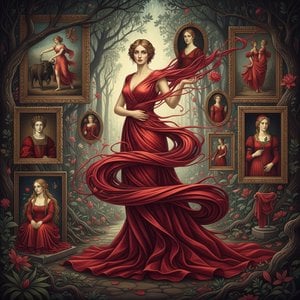
Crimson Threads of Narrative: Exploring Symbolism & Representation in Artworks Featuring the Red Dress
Explore the rich symbolism of the red dress in art history! From ancient power displays to iconic portraits like Cézanne’s 'Madame Cezanne', discover the cultural and artistic significance behind this captivating color. Expert analysis & insights.

William Hogarth: Satire, Social Commentary & the Birth of Modern British Art
Explore the satirical world of William Hogarth, pioneering British painter & engraver. Discover his iconic works like *A Rake's Progress* and insightful social commentary on 18th-century London life.


