


 Önizleme yap
 Paylaş
 Paylaş
 Detayları Gör

 İndir
İndir
 Benzerlerini gör
 X-Işını
 Slayt Gösterisi
Pigs at a Trough


 Tümünü Gör
El Yapımı Yağlı Boya Reproduksiyon
Sanatçılarımız tarafından sipariş üzerine hazırlanan; istediğiniz boyut ve çerçevede, tuval üzerine el boyaması yağlı boya. ( Baskı satın al Görsel satın al)




P118B $10

P118H $10

P118W $10

P438Z $10

P508JH $12

P508YH $12

P805H $10

P805Z $10

P919BZ $10

P919G $10

P919XJ $10

P959ZH $10

P968JZ $12

W106C $8

W218G $10

W218JH $8

W218Y $10

W307PJ $10

W316G $10

W316PJ $8

W316Y $10

W398PJ $8

W4111J $10

W500HY $15

W500JH $15

W692G $12

W849H $8

W940BG $15

W953PJ $8




Eserin orijinal oranlarıyla uyumlu, önceden belirlenmiş boyutlarımız arasından seçim yapın.

Belirli bir çerçeveye veya alana uyması için kendi boyutlarınızı girebilirsiniz. Seçtiğiniz boyut orijinal görüntünün oranlarıyla eşleşmiyorsa, sanat eserini kırparak veya ek el boyaması öğelerle resmi uzatarak ayarlayacağız. Üretim başlamadan önce onayınız için dijital bir taslak gönderilecektir.
Lütfen ekrandaki önizlemenin gerçek kırpmayı veya uzatmayı yansıtmadığını unutmayın. Nihai kompozisyonu yalnızca hazırlanan taslak doğru şekilde gösterecektir.
Özel boyutlar mevcut olsa da, orijinal oranları korumak adına önceden tanımlanmış listeden bir boyut seçmenizi öneririz.
Siparişten sonra, ArtsDot.com ekibi talimatlar için müşteriye e-posta gönderecek ve bir taslak önizleme sunacaktır
Dünya Çapında Teslimat (); standart 5 hafta yerine 3/4 haftada. (3 Eylül). Kaliteden ödün verilmez.

Dünya Çapında Ücretsiz Ekspres Kargo

Yüksek Kaliteli Keten Tuval

Tam Kapsamlı Nakliye Sigortası

Gümrük Vergisi İade Garantisi

Gerçek Renk Uyumu Garantisi

60 Günlük İade Politikası (Sadece Kusurlu Ürünler İçin)

%100 Para İade Garantisi

Toplu Alım İndirimi
 Cam seçeneği yalnızca 110 cm altındaki boyutlar için mevcuttur.

Pigs at a Trough
Reproduksiyon Tekniği
Reproduksiyon Boyutu
-


Toplam Tutar
$ 263
A Rustic Revelry: Thomas Rowlandson’s “Pigs at a Trough”
Thomas Rowlandson's "Pigs at a Trough," painted circa 1790, isn’t merely a depiction of farmyard animals; it’s a vibrant snapshot of Georgian England brimming with social commentary and delightfully mischievous humor. This small yet powerfully evocative work, now housed within the Yale Center for British Art, offers a glimpse into a world where satire and observation intertwined seamlessly, revealing both the pleasures and absurdities of everyday life.
Rowlandson, a master caricaturist renowned for his biting political illustrations and intimate portrayals of human folly, employed a remarkably direct technique here. The scene unfolds with an almost palpable immediacy – we’re not observing from a distance but rather immersed within the muddy chaos of the trough. His pen and ink lines are bold and confident, capturing the physicality of the pigs with remarkable accuracy; their plump bodies, bristly coats, and greedy postures practically leap off the cream-laid paper. The brown wash adds depth and texture, emphasizing the damp earth and the glistening sheen of the water. Notice how Rowlandson skillfully uses light and shadow to define each animal, creating a sense of three-dimensionality that belies the painting’s diminutive size.
A Scene Steeped in Social Observation
“Pigs at a Trough” is more than just a charming pastoral scene; it's a subtle critique of societal values. Rowlandson was known for his sharp wit and willingness to expose hypocrisy, and this painting is no exception. The image subtly alludes to the extravagance and excess prevalent in Georgian society – a stark contrast to the simple, almost primal act of foraging for food. The abundance of pigs suggests a commentary on resourcefulness and perhaps even a gentle mockery of those who indulged in unnecessary displays of wealth. It’s a reminder that beneath the veneer of refinement, there often lay a deeper current of practicality and, occasionally, a touch of desperation.
Echoes of Folklore and Myth
The image resonates with elements of folklore and myth, particularly the enduring legend of “pig-faced women.” While not explicitly depicted here, the scene evokes the story of a noblewoman cursed to appear as a pig after rejecting a beggar. This tale, popular in England and Ireland during the 18th century, speaks to anxieties about social status, beauty standards, and the consequences of arrogance. Rowlandson’s painting subtly taps into this cultural memory, suggesting a connection between earthly abundance and potential misfortune – a reminder that even the most seemingly prosperous life can be fraught with unexpected challenges.
A Timeless Appeal
“Pigs at a Trough” endures as a testament to Rowlandson’s artistic genius and his keen understanding of human nature. Its playful composition, vibrant colors, and subtle social commentary combine to create an image that is both entertaining and thought-provoking. It's a painting that invites us to pause, observe, and perhaps even question the values we hold dear. Reproductions of this delightful work continue to captivate audiences today, offering a window into a bygone era and reminding us of the enduring power of humor and satire.
Benzer Eserler


Sanatçı Özgeçmişi
A Life Etched in Satire: The World of Thomas Rowlandson
Born amidst the bustling streets of Old Jewry, London, on July 13th, 1756 (baptized July 23rd, 1757), Thomas Rowlandson emerged as a defining voice – and pen – of Georgian England. His life, initially shadowed by his father’s financial struggles that necessitated a move to Richmond, North Yorkshire in 1759, would ultimately blossom into an artistic career marked by unparalleled wit and incisive social commentary. Rowlandson wasn't merely documenting his era; he was holding a mirror to its follies, exaggerating its vanities, and immortalizing its characters with a uniquely satirical eye. From humble beginnings, nurtured by an uncle’s support that allowed him access to education at Dr. Barwis’ school in Soho Square, Rowlandson embarked on a path that would see him become one of the most celebrated – and controversial – caricaturists of his time. Even as a schoolboy, his innate talent manifested itself in playful sketches adorning the margins of his books, foreshadowing a career dedicated to visual storytelling with a mischievous edge.
Early Influences and Artistic Training
Rowlandson’s artistic sensibilities were undoubtedly shaped by the art of his predecessors. He admired the grandeur and dynamism of Rubens’ monumental canvases, recognizing in them a masterful command of composition and color—qualities he would strive to emulate throughout his career. Furthermore, the influence of Gainsborough can be discerned in Rowlandson's meticulous attention to detail and his ability to convey psychological nuance through portraiture. These formative connections instilled within him a deep appreciation for artistic tradition while simultaneously fostering an ambition to forge his own distinctive style.
The Royal Academy Years and Parisian Exploration
Rowlandson’s formal artistic training commenced at the Royal Academy in 1772, where he diligently honed his draughtsmanship skills under the tutelage of esteemed instructors. This period proved crucial for establishing a foundation in classical technique—a cornerstone of his subsequent oeuvre. Recognizing the importance of broadening his horizons beyond England's borders, Rowlandson undertook a transformative journey to Paris in 1773, immersing himself in the vibrant artistic milieu of the Enlightenment. He studied under Jean-Baptiste Pigalle, absorbing innovative approaches to painting and sculpture that would enrich his stylistic repertoire.
The Rise of Caricature: Collaboration and Recognition
Rowlandson swiftly transitioned from portraiture to caricature—a decision driven not merely by economic necessity but by a profound conviction in the power of satire as a vehicle for social critique. His partnership with Rudolph Ackermann proved pivotal, yielding iconic works such as *The Schoolmaster’s Tour* (1809), a series of plates accompanied by verses from Dr. William Combe—a collaborative effort that cemented Rowlandson's reputation as one of the era’s foremost illustrators. The *Dr. Syntax* series – comprising *Dr. Syntax in Search of Consolation*, *Dr. Syntax in Search of Consolation*, and *The Third Tour of Dr. Syntax in Search of a Wife*—captivated audiences with its whimsical narrative and Rowlandson’s masterful depictions of landscapes and human characters.
A Legacy of Wit and Social Commentary
Thomas Rowlandson's enduring legacy resides not only in his artistic achievements but also in the profound impact he exerted on the cultural landscape of Georgian England. His caricatures—characterized by audacious exaggeration and astute observation—challenged prevailing social norms and exposed hypocrisy within aristocratic circles. He fearlessly scrutinized political figures like William Pitt the Younger and Napoleon Bonaparte, wielding satire as a weapon against entrenched power structures. Rowlandson’s work continues to resonate with contemporary audiences, reminding us that humor can serve as a catalyst for critical reflection and fostering an appreciation for artistic innovation—a testament to his enduring influence on subsequent generations of artists.

Thomas Rowlandson
1756 - 1827 , İngiltere
Kısa Bilgiler
- Artistic Movement Or Style: Karikatür, Satir
- Artists Who Influenced This Artist:
- Peter Paul Rubens
- Thomas Gainsborough
- Date Of Birth: July 13, 1756
- Date Of Death: April 21, 1827
- Full Name: Thomas Rowlandson
- Nationality: İngiliz
- Notable Artworks:
- Okul Müdürünün Turu
- *Dr. Syntax Serisi*
- Çaresizlik Turu
- *Hollandalıların Zaferi*
- *Akşam Yemeği*
- *Glorious Defeat*
- Place Of Birth: London, UK
İlgili Makaleler

Giclée Prints: Archival Quality & Aesthetic Nuances for the Discerning Collector
Explore the world of giclée prints with ArtsDot. Learn about archival quality, aesthetic nuances & investment potential. Expert guidance for discerning art collectors seeking museum-quality reproductions and lasting value.

Thomas Rowlandson: Satire, Society & the Art of Caricature in Georgian England
Explore the witty world of Thomas Rowlandson, master Georgian caricaturist! Discover his satirical prints & insightful social commentary on 18th-century England. Learn about his life, techniques, and enduring influence.

The Enduring Legacy of Fine Art Prints: Technique, History & Aesthetic Impact
Explore the rich history & techniques of fine art prints. Discover investment potential, assess authenticity, and learn how to preserve your collection with expert guidance. Trusted insights for discerning collectors.

Echoes of Time: Exploring the Enduring Appeal & Historical Context of Vintage Art Prints
Explore the captivating world of vintage art prints! Discover their history, collecting tips & enduring appeal. Expert insights on chromolithography and building a legacy collection with ArtsDot.
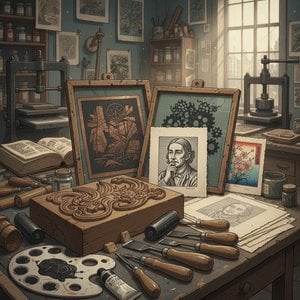
The Enduring Legacy of Printmaking: Techniques, Themes & Artistic Innovation Across Centuries
Explore the rich history of printmaking with ArtsDot. Discover techniques from intaglio to lithography, learn about collecting valuable prints & find museum-quality reproductions. Expert insights for art enthusiasts and collectors.

