


 Önizleme yap
 Paylaş
 Paylaş
 Detayları Gör

 İndir
İndir
 Benzerlerini gör
 X-Işını
 Slayt Gösterisi
Brushstroke with Still Life


 Tümünü Gör
El Yapımı Yağlı Boya Reproduksiyon
Sanatçılarımız tarafından sipariş üzerine hazırlanan; istediğiniz boyut ve çerçevede, tuval üzerine el boyaması yağlı boya. ( Baskı satın al Görsel satın al)




P118B $10

P118H $10

P118W $10

P438Z $10

P508JH $12

P508YH $12

P805H $10

P805Z $10

P919BZ $10

P919G $10

P919XJ $10

P959ZH $10

P968JZ $12

W106C $8

W218G $10

W218JH $8

W218Y $10

W307PJ $10

W316G $10

W316PJ $8

W316Y $10

W398PJ $8

W4111J $10

W500HY $15

W500JH $15

W692G $12

W849H $8

W940BG $15

W953PJ $8




Eserin orijinal oranlarıyla uyumlu, önceden belirlenmiş boyutlarımız arasından seçim yapın.

Belirli bir çerçeveye veya alana uyması için kendi boyutlarınızı girebilirsiniz. Seçtiğiniz boyut orijinal görüntünün oranlarıyla eşleşmiyorsa, sanat eserini kırparak veya ek el boyaması öğelerle resmi uzatarak ayarlayacağız. Üretim başlamadan önce onayınız için dijital bir taslak gönderilecektir.
Lütfen ekrandaki önizlemenin gerçek kırpmayı veya uzatmayı yansıtmadığını unutmayın. Nihai kompozisyonu yalnızca hazırlanan taslak doğru şekilde gösterecektir.
Özel boyutlar mevcut olsa da, orijinal oranları korumak adına önceden tanımlanmış listeden bir boyut seçmenizi öneririz.
Siparişten sonra, ArtsDot.com ekibi talimatlar için müşteriye e-posta gönderecek ve bir taslak önizleme sunacaktır
Dünya Çapında Teslimat (); standart 5 hafta yerine 3/4 haftada. (5 Eylül). Kaliteden ödün verilmez.

Dünya Çapında Ücretsiz Ekspres Kargo

Yüksek Kaliteli Keten Tuval

Tam Kapsamlı Nakliye Sigortası

Gümrük Vergisi İade Garantisi

Gerçek Renk Uyumu Garantisi

60 Günlük İade Politikası (Sadece Kusurlu Ürünler İçin)

%100 Para İade Garantisi

Toplu Alım İndirimi
 Cam seçeneği yalnızca 110 cm altındaki boyutlar için mevcuttur.

Brushstroke with Still Life
Reproduksiyon Tekniği
Reproduksiyon Boyutu
-


Toplam Tutar
$ 263
The Genesis of a Pop Visionary: Introducing “Brushstroke with Still Life”
Roy Lichtenstein’s “Brushstroke with Still Life,” created in 1996, isn't merely a painting; it’s a distilled essence of the artist’s unique approach to visual language. This deceptively simple work—a stark white canvas punctuated by vibrant yellow and blue brushstrokes against a scattering of black dots – encapsulates Lichtenstein’s masterful manipulation of Pop Art conventions while hinting at deeper, more contemplative themes. The piece immediately draws the eye, inviting close inspection and revealing layers of intentionality within its apparent minimalism. It's a testament to his ability to elevate the commonplace into something profoundly engaging.
Born in Manhattan in 1923, Roy Lichtenstein’s artistic journey was anything but conventional. Initially trained in realistic drawing and painting, he quickly recognized the limitations of traditional representation and sought a new vocabulary for expressing the anxieties and fascinations of his era. His exposure to jazz music, museums, and the burgeoning world of advertising profoundly shaped his aesthetic sensibilities. He deliberately rejected academic training, choosing instead to absorb influences from comic books, commercial art, and the bold experimentation of European modernists like Matisse and Picasso. “Brushstroke with Still Life” exemplifies this deliberate rejection – a playful subversion of established artistic norms.
Decoding the Visual Language: Color, Dotting, and Composition
The painting’s power lies in its carefully orchestrated simplicity. The dominant yellow brushstroke, positioned towards the upper left corner, acts as a focal point, immediately commanding attention. Its energetic, almost frantic application contrasts sharply with the cool blues scattered across the right side of the canvas. This dynamic interplay creates visual tension and movement, mirroring the energy of Lichtenstein’s artistic process itself. The black dots, meticulously applied throughout the composition, aren't merely decorative; they function as a textural element, adding depth and complexity to the surface while simultaneously referencing the Ben-Day printing technique prevalent in comic books – a key influence on Lichtenstein’s style.
The deliberate use of raw canvas reveals the physicality of the painting process. It's a direct engagement with the materials, a rejection of illusionistic depth and a celebration of surface. This honesty is characteristic of Lichtenstein’s approach, moving away from the polished perfection often associated with traditional fine art. The composition itself feels deliberately unbalanced, creating an unsettling yet captivating visual experience.
Contextualizing the Work: Pop Art and Beyond
“Brushstroke with Still Life” was created during a period of intense artistic experimentation and social upheaval. The late 1960s and early 1970s saw the rise of Pop Art, challenging the established hierarchy between “high” art and “low” culture. Lichtenstein’s work directly engaged with this movement, appropriating imagery from advertising, comic books, and everyday objects to create works that were both critical and celebratory. The painting can be seen as a meditation on the nature of representation itself – questioning what constitutes ‘art’ and how it reflects our relationship to mass media.
Furthermore, the work speaks to Lichtenstein's ongoing exploration of abstraction. While rooted in Pop Art’s engagement with recognizable imagery, “Brushstroke” transcends simple imitation, becoming a purely visual statement about color, form, and texture. It’s a testament to his ability to distill complex ideas into their most essential elements. The piece resonates with the broader themes of process and materiality that would continue to define his career.
Bringing “Brushstroke with Still Life” Home: Reproduction Options
ArtsDot offers meticulously crafted, hand-painted reproductions of Roy Lichtenstein’s “Brushstroke with Still Life,” allowing you to experience the artwork's vibrant energy and intricate details in your own space. Our skilled artists faithfully recreate Lichtenstein’s unique style, capturing the essence of his bold brushstrokes and iconic dot patterns. Choose from a range of canvas sizes and framing options to perfectly complement your décor. A ArtsDot reproduction is more than just an image; it's a tangible connection to one of the 20th century’s most influential artists – a vibrant addition to any art collection or interior design scheme.
Benzer Eserler


Sanatçı Özgeçmişi
The Genesis of a Pop Visionary
Roy Fox Lichtenstein, born in the vibrant metropolis of New York City on October 27, 1923, indelibly altered the landscape of twentieth-century art. Emerging as a pivotal figure within the Pop Art movement, Lichtenstein didn’t simply reflect his era; he actively interrogated it, transforming commonplace imagery into compelling artistic statements. His upbringing in an upper-middle-class Jewish family fostered both a cultural awareness and an early artistic inclination. Childhood exposure to museums and concerts, coupled with a deep appreciation for jazz music, laid the groundwork for a creative spirit that would challenge conventional notions of fine art. Though initially drawn to realistic drawing and painting during his formative years, Lichtenstein’s formal training commenced at the Art Students League in 1939 under Reginald Marsh, followed by studies at Ohio State University – interrupted briefly by wartime service in the Army. These experiences provided a robust technical foundation that would later be brilliantly re-contextualized through the lens of mass culture and commercial aesthetics. The seeds of his signature style weren’t sown within the hallowed halls of artistic tradition but rather in the often-overlooked world of everyday imagery, particularly comic books and advertising.Early Influences and Artistic Exploration
Lichtenstein's formative years were marked by a fascination with European Surrealism, mirroring the stylistic trends prevalent at the time. Artists like René Magritte and Salvador Dalí captivated him with their dreamlike landscapes and paradoxical juxtapositions—influences that subtly shaped his early artistic explorations. However, Lichtenstein swiftly moved beyond Surrealist conventions, recognizing the potential of abstraction as a vehicle for conveying emotion and exploring formal experimentation. His initial drawings showcased meticulous attention to detail and tonal subtlety, demonstrating a mastery of traditional drawing techniques honed during his studies at Ohio State University. Yet, it was Reginald Marsh’s encouragement—particularly regarding capturing the essence of nature—that propelled him toward bolder stylistic choices. This pivotal encounter instilled in Lichtenstein a belief that art could transcend mere representation, striving instead for an expressive distillation of experience. He diligently practiced drawing from life and studying anatomical sketches, cultivating a foundational understanding of artistic principles that would prove invaluable to his subsequent stylistic innovations.The Birth of Pop Art: Comic Books as Inspiration
A transformative moment arrived in 1961 with Lichtenstein’s groundbreaking artwork *Look Mickey*, a bold appropriation of Disney comics imagery. This wasn't merely copying comic strips; it was an act of artistic re-evaluation—a deliberate questioning of established aesthetic hierarchies and a rejection of the subjective expression championed by Abstract Expressionism. Recognizing the pervasive influence of mass media on American society, Lichtenstein embraced the visual language of advertising and comic books as sources of inspiration. He meticulously recreated comic book scenes using techniques mimicking commercial printing processes—a conscious blurring of boundaries between original artwork and mass production. This appropriation wasn’t about celebrating consumerism uncritically but rather examining its impact on cultural identity and challenging traditional artistic conventions. The resulting paintings featured vibrant colors, thick black outlines, and most notably, Ben-Day dots—a technique borrowed directly from comic book printing—representing the very process of reproduction itself.Technique and Conceptual Framework: Mastering Mass Production
Lichtenstein’s artistic vocabulary is instantly recognizable: bold, primary colors, thick black outlines, and crucially, Ben-Day dots—a technique meticulously replicated to mimic commercial printing processes. These dots weren't merely decorative; they were integral to his conceptual framework—a deliberate assertion of objectivity and a rejection of painterly gesture. He painstakingly enlarged details from comic strips to monumental scale, forcing viewers to confront the aesthetic qualities of an art form typically dismissed as trivial. Works like *Whaam!*, *Drowning Girl*, and *Oh, Jeff…I Love You, Too…But…* became iconic representations of Pop Art—capturing anxieties and desires within a rapidly changing consumer culture. These weren’t simply depictions of comic book scenes; they were commentaries on themes of war, romance, and societal expectations—filtered through the visual language of mass media. He aimed to strip away any pretense of artistic subjectivity, presenting his work as objective reflections of American society—a mirror held up to its own manufactured reality. The deliberate flatness and lack of painterly texture further emphasized this detachment—mimicking the impersonal nature of commercial printing.Legacy and Influence: Shaping Contemporary Art
Roy Lichtenstein’s influence extends far beyond the realm of painting, profoundly impacting graphic design, illustration, and visual art across various disciplines. His innovative use of commercial techniques and appropriation paved the way for new generations of artists exploring themes of consumerism, media saturation, and cultural identity—challenging traditional notions of artistic authorship and originality. He championed a radical rethinking of what constitutes “art”—rejecting elitist standards and embracing the accessibility of popular culture as legitimate sources of aesthetic inspiration. His enduring legacy resides in his unwavering conviction that art could engage with social issues—provoking critical dialogue about societal values and confronting uncomfortable truths. Artists like Andy Warhol, Jeff Koons, and Damien Hirst acknowledge Lichtenstein’s pioneering role in redefining artistic boundaries and establishing Pop Art as a dominant stylistic trend.- Notable Achievements: Established Pop Art style; achieved international recognition with groundbreaking exhibitions.
- Major Works: *Whaam!*, *Drowning Girl*, *Oh, Jeff…I Love You, Too…But…*, *Masterpiece*.
- Teaching Career: Influenced aspiring artists at SUNY Oswego and Rutgers University.

Roy Fox Lichtenstein
1923 - 1997 , Amerika Birleşik Devletleri
Kısa Bilgiler
- Artistic Movement Or Style: Pop Art
- Artists Who Influenced This Artist:
- Reginald Marsh
- Allan Kaprow
- Date Of Birth: 27 Ekim 1923
- Date Of Death: 29 Eylül 1997
- Full Name: Roy Fox Lichtenstein
- Nationality: Amerikalı
- Notable Artworks:
- Whaam!
- Drowning Girl
- Oh, Jeff…I Love You, Too…But…
- Place Of Birth: New York Şehri, ABD
İlgili Makaleler

Roy Lichtenstein'ın En İyi 25 Eseri: Pop Art İkonlarının Büyülü Dünyası | ArtsDot
Roy Lichtenstein'ın en ikonik 25 eserini keşfedin! Pop art'ın büyülü dünyasına dalın, benzersiz ben-dot tekniğini ve renkli kompozisyonları inceleyin. Ev dekorasyonunuz için yüksek çözünürlüklü sanat baskıları ArtsDot'ta. Koleksiyonu şimdi keşfedin!

Slate Blue Masterpieces: 10 Iconic Paintings & Timeless Home Decor Ideas
Immerse yourself in the captivating world of slate blue! Explore 10 iconic paintings by Monet, Van Gogh & Renoir. Discover their stories, techniques & find museum-quality art reproductions for your home at .

Pop Art'ın Zirveleri: Evinizi Sanatla Yeniden Tanımlayan 10 Eser
Pop Art'ın en etkileyici 10 başyapıtını keşfedin! Andy Warhol, Roy Lichtenstein ve daha fazlasıyla sanat tarihine yön veren eserleri inceleyin. Evinizi renkli ve modern sanatla yeniden tanımlayın. ArtsDot.com’da tüm ustaları keşfedin!
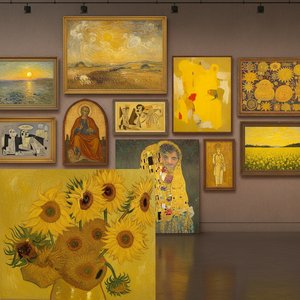
Golden Hues: 10 Masterpieces Dominated by Chrome Yellow | ArtsDot
Immerse yourself in golden light! Explore 10 famous paintings dominated by 'Chrome Yellow', from Van Gogh’s Sunflowers to Monet's Haystacks. Discover the stories behind these iconic Impressionist & Post-Impressionist masterpieces and find museum-quality art reproductions at ArtsDot.com.

The Psychology of the Palette: Decoding Roy Lichtenstein’s Bold Color Theory
Explore the vibrant psychology behind Roy Lichtenstein’s color theory. Discover how Ben-Day dots and primary colors revolutionized Pop Art, transforming mass media into timeless masterpieces for modern collectors and interior design enthusiasts.



