


 Önizleme yap
 Paylaş
 Paylaş
 Detayları Gör

 İndir
İndir
 Benzerlerini gör
 X-Işını
 Slayt Gösterisi
The blank page


 Tümünü Gör
El Yapımı Yağlı Boya Reproduksiyon
Sanatçılarımız tarafından sipariş üzerine hazırlanan; istediğiniz boyut ve çerçevede, tuval üzerine el boyaması yağlı boya. ( Baskı satın al Görsel satın al)




P118B $10

P118H $10

P118W $10

P438Z $10

P508JH $12

P508YH $12

P805H $10

P805Z $10

P919BZ $10

P919G $10

P919XJ $10

P959ZH $10

P968JZ $12

W106C $8

W218G $10

W218JH $8

W218Y $10

W307PJ $10

W316G $10

W316PJ $8

W316Y $10

W398PJ $8

W4111J $10

W500HY $15

W500JH $15

W692G $12

W849H $8

W940BG $15

W953PJ $8




Eserin orijinal oranlarıyla uyumlu, önceden belirlenmiş boyutlarımız arasından seçim yapın.

Belirli bir çerçeveye veya alana uyması için kendi boyutlarınızı girebilirsiniz. Seçtiğiniz boyut orijinal görüntünün oranlarıyla eşleşmiyorsa, sanat eserini kırparak veya ek el boyaması öğelerle resmi uzatarak ayarlayacağız. Üretim başlamadan önce onayınız için dijital bir taslak gönderilecektir.
Lütfen ekrandaki önizlemenin gerçek kırpmayı veya uzatmayı yansıtmadığını unutmayın. Nihai kompozisyonu yalnızca hazırlanan taslak doğru şekilde gösterecektir.
Özel boyutlar mevcut olsa da, orijinal oranları korumak adına önceden tanımlanmış listeden bir boyut seçmenizi öneririz.
Siparişten sonra, ArtsDot.com ekibi talimatlar için müşteriye e-posta gönderecek ve bir taslak önizleme sunacaktır
Dünya Çapında Teslimat (); standart 5 hafta yerine 3/4 haftada. (28 Ağustos). Kaliteden ödün verilmez.

Dünya Çapında Ücretsiz Ekspres Kargo

Yüksek Kaliteli Keten Tuval

Tam Kapsamlı Nakliye Sigortası

Gümrük Vergisi İade Garantisi

Gerçek Renk Uyumu Garantisi

60 Günlük İade Politikası (Sadece Kusurlu Ürünler İçin)

%100 Para İade Garantisi

Toplu Alım İndirimi
 Cam seçeneği yalnızca 110 cm altındaki boyutlar için mevcuttur.

The blank page
Reproduksiyon Tekniği
Reproduksiyon Boyutu
-


Toplam Tutar
$ 263
A Silent Echo: René Magritte’s “The Blank Page”
René Magritte's "The Blank Page," painted in 1967, isn’t merely an image of emptiness; it’s a profound meditation on perception, representation, and the very nature of art itself. This deceptively simple composition—a full moon bathed in ethereal light, encircled by a scattering of leaves – immediately draws us into a realm where reality seems to subtly shift and dissolve. It's a quintessential example of Magritte’s signature surrealist style, a deliberate disruption of expectations that invites the viewer to actively participate in the creation of meaning.
The painting’s genesis lies, perhaps surprisingly, in a deeply personal experience for Magritte. The tragic loss of his mother at a young age, and the haunting image of her body recovered from the River Sambre – her dress concealing her face – became a recurring motif throughout his oeuvre. In “The Blank Page,” this memory isn’t explicitly depicted, but it resonates powerfully through the painting's overall atmosphere of melancholy and veiled mystery. The moon, often associated with dreams and the subconscious, acts as a conduit to these hidden emotions, while the leaves, symbols of nature and transience, suggest a fleeting connection between the tangible world and the realm of memory.
The Language of Surrealism: Technique and Composition
Magritte’s masterful technique is crucial to understanding the painting's impact. Executed in oil on canvas, the work possesses a remarkable depth and texture achieved through meticulous layering and blending. He employs a muted palette—primarily blues, grays, and whites—to create an atmosphere of quiet contemplation. The moon isn’t rendered with photographic realism; instead, it’s painted with a soft, almost luminous quality, suggesting its presence as more than just a physical object. The leaves are not sharply defined but rather appear to float within the composition, contributing to the dreamlike quality and blurring the boundaries between foreground and background.
Noticeably, Magritte avoids any overt narrative or symbolic representation beyond these core elements. This deliberate ambiguity is characteristic of his approach – he sought to challenge viewers’ assumptions about how art should function, prompting them to question what they were seeing and, ultimately, what they believed. The composition itself—the circular arrangement of the moon and leaves—creates a sense of contained space, almost like a miniature universe suspended in time.
A Dialogue with Art History: Influences and Legacy
"The Blank Page" is firmly rooted within the broader context of 20th-century art. Magritte’s work was profoundly influenced by movements such as Cubism and Futurism, particularly their exploration of fragmented forms and multiple perspectives. However, he transcended these influences, forging a uniquely personal style that prioritized psychological impact over strict adherence to any single movement. The painting's quiet contemplation echoes the introspective nature of later Surrealist artists like Salvador Dalí, yet Magritte’s approach is more restrained and subtly unsettling.
Today, “The Blank Page” resides within the Berardo Collection Museum in Lisbon, a testament to its enduring significance. It represents not just a single artwork but a pivotal moment in the evolution of surrealism – a reminder that art can be both profoundly evocative and deliberately resistant to easy interpretation. It’s a piece that continues to spark conversation and invite viewers to confront their own perceptions of reality.
Bringing “The Blank Page” Home: Reproductions for the Discerning Collector
ArtsDot offers meticulously crafted, hand-painted oil painting reproductions of René Magritte's "The Blank Page," allowing art lovers worldwide to experience the power and beauty of this iconic work. These reproductions are created by skilled artisans who painstakingly replicate Magritte’s technique and color palette, ensuring that every detail is faithfully reproduced.
- Authentic Materials: We use only archival-quality oil paints on canvas to guarantee the longevity and vibrancy of the reproduction.
- Handcrafted Detail: Each reproduction is meticulously hand-painted by experienced artists, capturing the nuances of Magritte’s style.
- Museum-Quality Finish: The finished reproductions are treated with a protective varnish to preserve their beauty for generations to come.
Whether you're an art enthusiast, a collector seeking to expand your collection, or simply someone looking for a captivating piece of art to enhance your interior space, a ArtsDot reproduction of “The Blank Page” offers a unique opportunity to own a tangible connection to one of the 20th century’s most influential artists. Explore our selection and bring this silent echo into your world.
Benzer Eserler


Sanatçı Özgeçmişi
Early Life and the Seeds of Surrealism
René Magritte, born René François Ghislain Magritte on November 21, 1898, in Lessines, Belgium, emerged into a world that would profoundly shape his enigmatic artistic vision. His early years were marked by an unsettling event – the suicide of his mother when he was just thirteen. The image of her body being recovered from the River Sambre, with her dress obscuring her face, became a haunting motif that would subtly permeate his later work, manifesting in veiled figures and a persistent exploration of hidden realities. This early trauma instilled within him a fascination with mystery, loss, and the unsettling power of what remains unseen. While details of his childhood remain somewhat elusive, it’s clear this formative experience laid the groundwork for his lifelong questioning of perception and representation. He began drawing lessons at age ten, revealing an innate inclination towards visual expression, but initially explored Impressionism before embarking on a path that would lead him to become one of the most significant figures in Surrealist art.
Artistic Development and Influences
Magritte’s artistic journey was not immediate or straightforward. He studied at the Académie Royale des Beaux-Arts in Brussels, yet found its traditional methods stifling. His early work experimented with Futurism and Cubism, absorbing elements of these avant-garde movements but ultimately rejecting their purely formal concerns. It wasn't until encountering Giorgio de Chirico’s painting *The Song of Love* in 1922 that Magritte discovered a resonance that would irrevocably alter his artistic course. De Chirico’s dreamlike landscapes and unsettling juxtapositions unlocked within Magritte a new way of seeing – a world where the familiar could be rendered strange, and the ordinary imbued with profound mystery. This encounter sparked his commitment to Surrealism, though he often maintained a unique distance from its more overtly psychological or automatic approaches. He preferred a meticulous, almost clinical precision in his painting, using realistic techniques to depict illogical scenarios.
The Heart of Surrealism: Challenging Reality
By 1926, Magritte had fully embraced the tenets of Surrealism, producing *Le Jockey Perdu (The Lost Jockey)*, widely considered his first truly surrealist work. However, his brand of Surrealism was distinct. He wasn’t interested in exploring the subconscious through free association or dream imagery in the manner of some of his contemporaries. Instead, Magritte sought to challenge viewers' perceptions of reality by presenting ordinary objects in unexpected contexts, forcing them to question their assumptions about the world around them. Iconic works like *The Treachery of Images (This is not a pipe)* (1929) brilliantly deconstructs the relationship between image and object, reminding us that a representation is never the thing itself. *Les Amants (The Lovers)* (1927-1928), with its shrouded figures, echoes the trauma of his mother’s death while simultaneously exploring themes of concealment and intimacy. *Time Transfixed* (1938) presents a locomotive bursting through a brick wall, disrupting our sense of space and time. And *The Human Condition* (1933), a canvas within a canvas, blurs the boundaries between representation and reality, prompting us to consider how we perceive and interpret the world.
Later Life, Recognition, and Enduring Legacy
Despite initial struggles for recognition, Magritte’s work gradually gained prominence, particularly in the United States with exhibitions in 1936 and later retrospective shows at the Museum of Modern Art (1965) and the Metropolitan Museum of Art (1992). He continued to refine his signature style, exploring themes of repetition, illusion, and the power of language in paintings that are both intellectually stimulating and visually arresting. Magritte died on August 15, 1967, leaving behind a body of work that continues to captivate and challenge audiences worldwide. His influence extends far beyond the realm of painting, impacting pop art, minimalist art, conceptual art, and even advertising and film. Today, his paintings are held in major museum collections around the globe, including the Musées royaux des beaux-arts de Belgique in Brussels, which houses the Magritte Museum – dedicated entirely to his work and boasting the world’s largest collection of his creations.
- Museum Collections: Musées royaux des beaux-arts de Belgique, Brussels; Magritte Museum.
Magritte's enduring legacy lies in his ability to make us see the familiar anew, to question our assumptions about reality, and to appreciate the power of art to provoke thought and inspire wonder. He wasn’t simply painting images; he was crafting visual paradoxes that continue to resonate with viewers decades after their creation, solidifying his position as a true master of Surrealism and a pivotal figure in 20th-century art.

René Magritte
1898 - 1967 , Belçika
Kısa Bilgiler
- Artistic Movement Or Style: Gerçeküstücülük
- Artists Who Influenced This Artist: ['Giorgio de Chirico']
- Date Of Birth: Kasım 21, 1898
- Date Of Death: Ağustos 15, 1967
- Full Name: René François Ghislain Magritte
- Nationality: Belçikalı
- Notable Artworks:
- Les Amants
- Treachery of Images
- Time Transfixed
- Place Of Birth: Lessines, Belçika
İlgili Makaleler
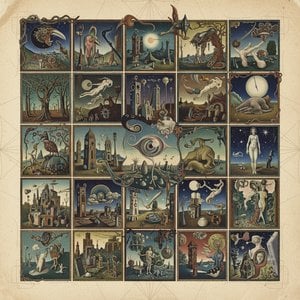
Max Ernst'in En İyi 25 Eseri: Sürrealizmin Derinliklerinde Sanat ve Dekor Rehberi
Max Ernst'in en iyi 25 eserini keşfedin! Sürrealizmin büyülü dünyasına dalın, resimlerin ardındaki hikayeleri öğrenin ve evinizi modern sanatla zenginleştirin. Yüksek kaliteli tablolar ArtsDot.com’da.

Sürrealizmin İzinde: Sanat Tarihini Derinden Etkileyen 10 Başyapıt
Sürrealizmin büyüleyici dünyasına yolculuk! Dali, Magritte ve daha fazlasıyla sanat tarihini şekillendiren 10 başyapıtı keşfedin. Evinizi benzersiz eserlerle dekore edin. ArtsDot.com'da tüm koleksiyonu inceleyin!
Çağdaş Galeri Uygulamalarında İnce Sanat Reproduksiyonlarının Stratejik Rolü: Sadece Taklit Ötesi, Prestij ve Mirasın Yeniden İnşası
Çağdaş galeri uygulamalarında ince sanat reproduksiyonlarının stratejik rolünü keşfedin. Prestijli koleksiyonlar, miras inşası ve yatırım fırsatları için uzman tavsiyeleri ArtsDot'ta!

Beyond Imitation: The Cultural Resonance of Fine Art Reproduction & Discerning Collectors
Explore the cultural significance of fine art reproduction & its appeal to discerning collectors. Discover how reproductions enhance aesthetics, build collections, and signal status. Expert insights & museum-quality artistry.

Salvador Dalí'nin En İyi 25 Eseri: Rüyaların ve Sanatın İkonik Dünyası
Salvador Dalí'nin en iyi 25 eserini keşfedin! Sürrealizmin büyülü dünyasına dalın, rüya gibi tablolarının ardındaki hikayeleri öğrenin. Ev dekorasyonunuz için lüks sanat baskıları ArtsDot.com'da sizi bekliyor. Koleksiyonu şimdi keşfedin!



