
- Ana Sayfa

- Yağlı Boya Reprodüksiyonlar
- Pieter De Hooch
- A Mother Delousing her Child
 Baskıyı satın al Görseli Satın Al
 Paylaş
 Paylaş
 Details
 Favorilere ekle

 İndir
İndir
 Benzerlerini gör
 X-Ray
X-Ray
 Slayt Gösterisi
A Mother Delousing her Child
 Acrylic On Canvas
- WallArt
 1660
1660- Early Modern
 61.0 x 52.0 cm
 Rijksmuseum
El Yapımı Yağlı Boya Reproduksiyon
Sanatçılarımız tarafından sipariş üzerine hazırlanan; istediğiniz boyut ve çerçevede, tuval üzerine el boyaması yağlı boya.




P118B $10

P118H $10

P118W $10

P438Z $10

P508JH $12

P508YH $12

P805H $10

P805Z $10

P919BZ $10

P919G $10

P919XJ $10

P959ZH $10

P968JZ $12

W106C $8

W218G $10

W218JH $8

W218Y $10

W307PJ $10

W316G $10

W316PJ $8

W316Y $10

W398PJ $8

W4111J $10

W500HY $15

W500JH $15

W692G $12

W849H $8

W940BG $15

W953PJ $8




 Detaylı bilgi için tıklayın
Eserin orijinal oranlarıyla uyumlu, önceden belirlenmiş boyutlarımız arasından seçim yapın.

Belirli bir çerçeveye veya alana uyması için kendi boyutlarınızı girebilirsiniz. Seçtiğiniz boyut orijinal görüntünün oranlarıyla eşleşmiyorsa, sanat eserini kırparak veya ek el boyaması öğelerle resmi uzatarak ayarlayacağız. Üretim başlamadan önce onayınız için dijital bir taslak gönderilecektir.
Lütfen ekrandaki önizlemenin gerçek kırpmayı veya uzatmayı yansıtmadığını unutmayın. Nihai kompozisyonu yalnızca hazırlanan taslak doğru şekilde gösterecektir.
Özel boyutlar mevcut olsa da, orijinal oranları korumak adına önceden tanımlanmış listeden bir boyut seçmenizi öneririz.
Siparişten sonra, ArtsDot.com ekibi talimatlar için müşteriye e-posta gönderecek ve bir taslak önizleme sunacaktır
Dünya Çapında Teslimat (); standart 5 hafta yerine 3/4 haftada. (1 Temmuz). Kaliteden ödün verilmez.

Dünya Çapında Ücretsiz Ekspres Kargo

Yüksek Kaliteli Keten Tuval

Tam Kapsamlı Nakliye Sigortası

Gümrük Vergisi İade Garantisi

Gerçek Renk Uyumu Garantisi

60 Günlük İade Politikası (Sadece Kusurlu Ürünler İçin)

%100 Para İade Garantisi

Toplu Alım İndirimi
 Cam seçeneği yalnızca 110 cm altındaki boyutlar için mevcuttur.

A Mother Delousing her Child
Reproduksiyon Tekniği
Reproduksiyon Boyutu
-


Toplam Tutar
-
Eser Açıklaması
A Moment of Domesticity: Pieter de Hooch’s “A Mother Delousing Her Child”
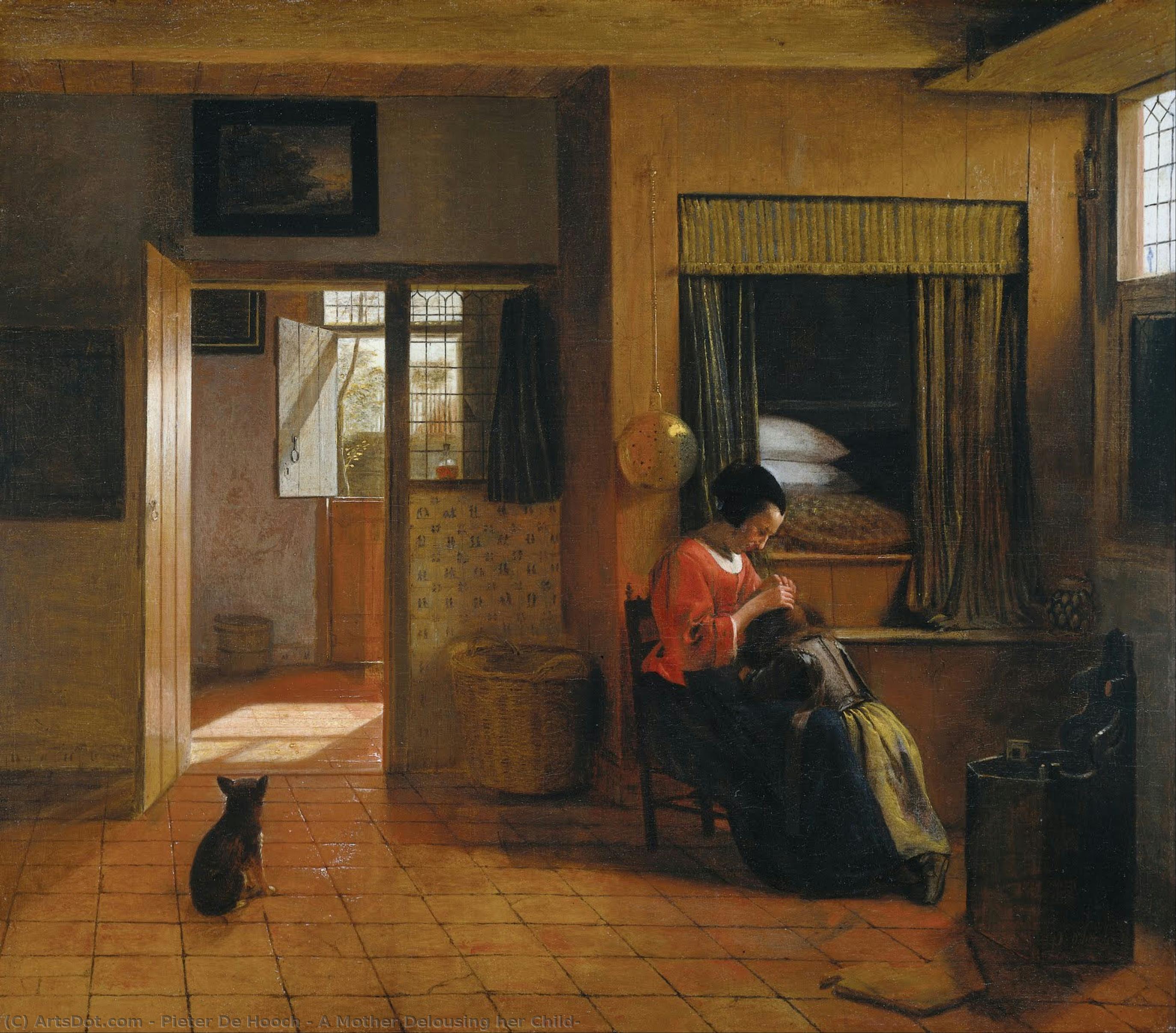
Pieter de Hooch's "A Mother Delousing Her Child," painted circa 1660, is more than just a depiction of a mundane household task; it’s a poignant window into the burgeoning middle-class life of 17th-century Holland. This intimate scene, now housed within the Rijksmuseum in Amsterdam, captures a fleeting moment of vulnerability and care amidst the bustling world of the Dutch Golden Age. The painting, measuring just 61 x 52 cm, belies its small scale with an astonishingly detailed portrayal of everyday life – a testament to de Hooch’s mastery of light, shadow, and the subtle nuances of human emotion. It's a work that speaks volumes about family, hygiene, and the quiet dignity of domesticity.The Scene Unfolds: Composition and Setting
The composition is remarkably restrained, drawing the viewer’s eye immediately to the central figures – a mother diligently examining her child’s head for lice. The setting is a modestly furnished interior, likely a bedroom or sitting room, rendered with meticulous attention to detail. Delft blue tiles adorn the floor, hinting at the wealth and status of the household, while a simple bed stands in the background, partially obscured by a curtain. A dining table holds a bowl, suggesting a recent meal, and a ‘kakstoel’ – a small potty chair – adds an element of realism to the scene, grounding it firmly within the realities of daily life. The inclusion of a cat, calmly observing from beneath the woman's feet, introduces a touch of domestic tranquility and perhaps even a subtle commentary on observation and vigilance. The doorway glimpsed in the background offers a tantalizing suggestion of another room, expanding the spatial awareness of the scene without disrupting its intimate focus.Technique and Style: De Hooch’s Signature Approach
De Hooch was a master of *doorway paintings*, a technique he perfected during his time in Haarlem under Nicolaes Berchem. This style is characterized by an ambiguous space, often featuring a partially visible doorway or window that invites the viewer to imagine what lies beyond. In “A Mother Delousing Her Child,” this technique serves not only as a compositional device but also as a metaphor for the hidden complexities of domestic life. De Hooch’s brushwork is remarkably delicate and precise, creating an illusion of depth through subtle variations in light and shadow. He employed a muted palette – predominantly browns, creams, and blues – to evoke a sense of quietness and understated elegance. The lighting, diffused and naturalistic, further enhances the painting's realism, casting soft shadows that accentuate the figures’ forms and textures. Notably, de Hooch was known for his ability to capture the fleeting expressions on his subjects’ faces, imbuing each scene with a sense of lived experience.Symbolism and Context: A Reflection of Dutch Society
The act of delousing itself carries significant symbolic weight within the context of 17th-century Holland. Lice were a persistent and widespread problem, particularly in densely populated urban areas, and meticulous hygiene was considered essential for maintaining health and social standing. The mother’s focused attention on her child underscores the importance placed on family care and the responsibility of parents to protect their offspring. Furthermore, the scene reflects the growing emphasis on domesticity within the emerging middle class – a shift away from the more overtly public life of merchants and artisans towards a greater focus on home and family. The painting’s realism—the inclusion of everyday objects like the ‘kakstoel’—demonstrates de Hooch's commitment to portraying the lives of ordinary people, capturing a slice of Dutch society that was increasingly valued for its quiet dignity and understated beauty.Emotional Resonance: A Quiet Moment of Connection
Despite its seemingly simple subject matter, “A Mother Delousing Her Child” possesses a remarkable emotional resonance. The mother’s expression is one of focused determination mingled with tenderness, conveying both the burden of responsibility and the deep affection she feels for her child. The scene evokes a sense of intimacy and vulnerability, reminding us of the fundamental human need for connection and care. It's a painting that invites contemplation on themes of family, health, and the quiet moments of everyday life—moments often overlooked but profoundly meaningful. ArtsDot’s hand-painted reproductions offer an unparalleled opportunity to experience the beauty and subtlety of this iconic work by Pieter de Hooch, bringing its timeless charm into your home or studio.Benzer Eserler


Sanatçı Özgeçmişi
erken hayatı ve eğitimi
Pieter de Hooch, Hollanda Altın Çağı'nın en seçkin figürlerinden biri olarak 20 Aralık 1629 tarihinde Rotterdam, Hollanda'da dünyaya geldi. Bir duvar ustası olan Hendrick Hendricksz de Hooch ile bir ebe olan Annetge Pieters'in beş çocuğundan ilkiydi. Gençlik yıllarına dair çok fazla bilgi bulunmasa da, sanatçının Rotterdam, Delft ve Amsterdam şehirlerinde çalışmalar yürüttüğüne inanılmaktadır. De Hooch'un sanatsal eğitimi, Haarlem'de manzara ressamı Nicolaes Berchem'in yanında ve Jacob Ochtervelt ile birlikte gerçekleşti. Bu dönem, onun açık bir kapı eşiğiyle süzülen o huzurlu ev sahnelerini resmetmedeki gelecekteki başarısının temellerini attı.sanatsal üslup ve temalar
De Hooch'un eserleri; detaylara olan titizliği, natüralizmi ve ışığı kullanma becerisiyle karakterize edilir. Resimleri sıklıkla yükselen orta sınıfın değerlerini ve özlemlerini yansıtarak gündelik yaşamı konu alır. Bu üslubun en çarpıcı örneklerinden biri olan "Delft'te bir evin avlusu" (1658), sanatçının günlük hayatın sıradan detaylarını yakalama yeteneğini gözler önüne serer. De Hooch'un çalışmaları Emanuel de Witte ile benzer temalar ve kompozisyonlar paylaşsa da, insanlara ve onların arasındaki ilişkilere odaklanması onu diğerlerinden ayırır. Bu durum, ev sahnelerine olan ilgisini kanıtlayan "emziren kadın" (1658) ve "kucağında bebek olan kadın" (1658) adlı eserlerinde açıkça görülmektedir.unutulmaz eserler ve miras
De Hooch'un en önemli yapıtları arasında şunlar yer almaktadır:- "neşeli içici" (yaklaşık 1650)
- "güneşli bir odada kağıt oynayanlar" (1658)
- "bir çocuk için ekmek ve tereyağı hazırlayan kadın" (1661)
müzeler ve koleksiyonlar
De Hooch'un eserlerine, Belçika'nın Anvers kentinde bulunan ve 15. yüzyıldan 20. yüzyıla kadar uzanan geniş bir Avrupa sanatı koleksiyonuna ev sahipliği yapan Koninklijk Museum voor Schone Kunsten dahil olmak üzere çeşitli müzelerde rastlamak mümkündür.
Pieter De Hooch
1629 - 1694 , Hollanda
Kısa Bilgiler
- Artistic Movement Or Style: Delft Okulu, Hollanda Altın Çağı
- Artists Or Movements Influenced By This Artist: ['Jan Vermeer']
- Artists Who Influenced This Artist: ['Nicolaes Berchem']
- Date Of Birth: 20 Aralık 1629
- Full Name: Pieter Hendricksz de Hooch
- Nationality: Hollandalı
- Notable Artworks:
- Boş Kadeh
- Mektup Okuyan Kadın
- Güneşli bir odada kağıt oynayanlar
- Ekmek ve tereyağı hazırlayan bir kadın
- Place Of Birth: Rotterdam, Hollanda
İlgili Makaleler

Hollanda Altın Çağı'nın 10 Eseri: Sanat ve Ev Dekorasyonunda Usta Dokunuşlar
Hollanda Altın Çağı'nın en büyüleyici 10 eseriyle sanat tarihine yolculuk! Rembrandt, Vermeer ve daha fazlasının ustalıklarını keşfedin. Evinizi sanatla taçlandırın. ArtsDot.com’da tüm başyapıtları inceleyin.


Golden Age Reflections: Dutch Baroque Painting & Cultural Innovation
Explore the Dutch Golden Age of painting! Discover key artists like Vermeer & ter Borch, their innovative techniques, and the rich cultural context behind these Baroque masterpieces. Learn about collecting & appreciating this iconic art period.
Illuminating Realism: Exploring the Dutch Golden Age of Painting (1600-1700)
Explore the Dutch Golden Age of painting (1600-1700) with ArtsDot. Discover Rembrandt, Vermeer & other masters. Learn about techniques, history & find museum-quality reproductions.

Willem van de Velde the Elder: Master of Maritime Painting & Chronicler of the Dutch Golden Age
Discover the captivating maritime paintings of Willem van de Velde the Elder, a master chronicler of the Dutch Golden Age. Explore his unparalleled realism and lasting influence on naval art history.

Jan Jansz Wijnants: A Study in Dutch Golden Age Still Life & Floral Transience
Explore the captivating world of Jan Wijnants and Dutch Golden Age still life painting. Discover symbolism, masterful techniques & lasting influence on floral art history. Learn more!


