


 Önizle
 Gönder
 Paylaş
 Detaylar
 Rehber

 Dosyayı İndir
 Benzerleri
 X-Işını
 Slayt Gösterisi
 İstatistikler
Lute Player
 Oil On Canvas
- WallArt
- Baroque Tenebrism
 105.0 x 77.0 cm
 Hermitage Müzesi
 Devamını Oku
El Yapımı Yağlı Boya Reproduksiyon
Sanatçılarımız tarafından sipariş üzerine hazırlanan; istediğiniz boyut ve çerçevede, tuval üzerine el boyaması yağlı boya. ( Baskı Satışına Geç Dijital Görsel Satışına Geç)




P118B ₺10

P118H ₺10

P118W ₺10

P438Z ₺10

P508JH ₺12

P508YH ₺12

P805H ₺10

P805Z ₺10

P919BZ ₺10

P919G ₺10

P919XJ ₺10

P959ZH ₺10

P968JZ ₺12

W106C ₺8

W218G ₺10

W218JH ₺8

W218Y ₺10

W307PJ ₺10

W316G ₺10

W316PJ ₺8

W316Y ₺10

W398PJ ₺8

W4111J ₺10

W500HY ₺15

W500JH ₺15

W692G ₺12

W849H ₺8

W940BG ₺15

W953PJ ₺8




Eserin orijinal oranlarıyla uyumlu, önceden belirlenmiş boyutlarımız arasından seçim yapın.

Çerçevenize veya duvarınıza uygun olması için ihtiyacınız olan genişliği ve yüksekliği yazın. Bu eser el boyamasıdır; bu nedenle farklı bir formdaki boyutlar için sanatçı, resmin etrafına biraz daha fazla boya ekleyebilir veya biraz daha kırpabilir — seçim sizin. Boyama işlemi başlamadan önce onaylamanız için size bir dijital taslak gönderiyoruz. Bu sayfada gösterilen resim gerçek sonucu yansıtmamaktadır — gerçek sonucu yalnızca taslak göstermektedir.
Siparişten sonra, ArtsDot.com ekibi talimatlar için müşteriye e-posta gönderecek ve bir taslak önizleme sunacaktır
Dünya Çapında Teslimat (); standart 5 hafta yerine 3/4 haftada. (25 Ekim). Kaliteden ödün verilmez.

Dünya Çapında Ücretsiz Ekspres Kargo

Yüksek Kaliteli Keten Tuval

Tam Nakliye Sigortası

Gümrük Vergisi İadesi Garantisi

Gerçek Renk Uyumu Garantisi

100 Günlük İade Koşulları (Sadece Üretim Hatalı Ürünler İçin)

%100 Para İade Garantisi

Toplu Alım Avantajı
 Cam seçeneği yalnızca 110 cm altındaki boyutlar için mevcuttur.

Lute Player
Baskı Tekniği
Baskı Boyutu
-


Toplam Fiyat
₺ 12863
A Moment of Contemplation: Nicolas Tournier’s Lute Player
Nicolas Tournier's "Lute Player," painted around 1630-1635, is more than just a portrait; it’s a carefully constructed tableau brimming with quiet intensity and subtle symbolism. This work, rendered in the dramatic style of Tenebrism – a technique popularized by Caravaggio – immediately draws the eye into a scene steeped in atmosphere and suggestion. The painting depicts a young man, likely a musician, seated in a richly appointed interior, completely absorbed in his craft. He holds a lute, its curves echoing the gentle swell of his garments, while his gaze is fixed on an unseen point beyond the viewer, conveying a profound sense of introspection.
Tournier’s masterful use of light and shadow – the hallmark of Tenebrism – dominates the composition. Dark, almost impenetrable hues envelop most of the scene, punctuated by pools of brilliant illumination that highlight the lute player's face, hands, and clothing. This stark contrast creates a powerful sense of drama and draws attention to the central figure, imbuing him with an aura of both vulnerability and quiet dignity. The deep shadows suggest a private space, perhaps a study or chamber, adding to the painting’s intimate and contemplative mood.
The Artist and His Time
Nicolas Tournier was a significant figure in the French Baroque art scene, emerging from the artistic circles of Montbéliard and later finding his footing in Rome. His early training likely involved studying under Valentin de Boulogne, a key influence on his development as a painter. The period in which he worked – roughly 1626 to 1639 – was one of considerable social and political upheaval in France, marked by religious conflict and the rise of the Fronde. Tournier’s art reflects this era through its exploration of human emotion and its engagement with themes of spirituality and morality.
Born in 1590, Tournier's life was tragically cut short, leaving behind a relatively small but remarkably accomplished body of work. His style is often characterized by a dramatic realism, reminiscent of Caravaggio’s influence, combined with a distinctly French sensibility. He frequently depicted scenes from the Bible and classical mythology, imbuing them with psychological depth and emotional resonance.
Symbolism and Interpretation
Beyond its immediate visual appeal, “Lute Player” is rich in symbolic meaning. The lute itself represents harmony, beauty, and intellectual pursuit – a fitting emblem for a musician. The young man’s serious expression suggests not just musical skill but also a contemplative nature, perhaps even melancholy. The presence of the two figures in the background—one standing behind him, the other further back—adds layers of narrative complexity. They could represent companions, patrons, or simply elements of the setting, contributing to the painting's overall sense of mystery and invitation.
The red hat worn by the lute player is particularly noteworthy. Red was a color associated with passion, vitality, and even sacrifice in 17th-century France. It could symbolize the dedication required for artistic expression or perhaps allude to the young man’s religious beliefs. The careful arrangement of objects within the room—the draped fabrics, the partially visible furniture—further enhances the painting's symbolic richness.
A Legacy of Dramatic Portraiture
Restoration efforts in 2009 brought renewed attention to this captivating work, revealing the depth and subtlety of Tournier’s artistry. The meticulous detail evident in the lute’s construction, the folds of the fabric, and the texture of the skin speaks to the artist's considerable skill and his commitment to capturing the essence of his subject. “Lute Player” stands as a testament to Tournier’s ability to evoke emotion through light, shadow, and carefully considered composition – a timeless portrait that continues to resonate with viewers today.
Reproductions of this evocative piece offer an opportunity to bring its dramatic intensity into any space, serving as both a beautiful work of art and a poignant reminder of the power of music and contemplation.
Soru ve Cevaplar
"Lute Player" adlı eser hangi sanatçıya atfediliyor?
"Lute Player" adlı eserin Nicolas Tournier tarafından yapıldığı düşünülmektedir.
Nicolas Tournier imzalı "Lute Player" eserinin duygusu nasıl tanımlanıyor?
Nicolas Tournier imzalı "Lute Player" eserinin genel ruh hali Elegant şeklindedir. Bu ruh hali, eserin genel atmosferini tanımlar.
Nicolas Tournier imzalı "Lute Player" için hangi baskı düzeni öneriliyor?
Medium boyutunda, Portrait yönlendirme: Nicolas Tournier imzalı "Lute Player" için önerilen baskı düzeni budur.
İlgili Eserler


Sanatçı Biyografisi
Gölge ve Işık: Nicolas Tournier'in Barok Vizyonu
On yedinci yüzyılın dramatik manzarasında, ilahi ışık ile dünyevi gölge arasındaki o derin gerilimi Nicolas Tournier kadar etkili bir şekilde yakalayan çok az sanatçı vardır. 1590 civarında Fransa'nın Montbéliard kentinde doğan Tournier, Avrupa'nın sanatsal nabzının Barok'un yoğun duygusallığına doğru kaydığı dönüşüm dolu bir çağda ortaya çıktı. Eserleri, Fransız mirasının klasik gelenekleri ile kıtayı kasıp kavuran devrimci, yüksek kontrastlı realizm arasında dokunaklı bir köprü görevi görür. Bir Tournier tuvaline bakmak; her fırça darbesinin ruhani bir anlamın ağırlığıyla yüklendiği ve her gölgenin açığa çıkmayı bekleyen bir sır barındırdığı bir dünyaya adım atmaktaki demektir.
Tournier'nin külliyatının üslup temeli, yadsınamaz bir şekilde Caravaggio'nun derin etkisine bağlıdır. Bu İtalyan ustanın, dram ve hacim duygusu yaratmak için ışık ve karanlık arasındaki aşırı kontrastları kullanan tenebrism tekniği, Tournier'nin görsel dilinin temel taşı haline geldi. Sanatçı bu mercek aracılığıyla sahneleri sadece boyamakla kalmadı; onları karanlığın içinden adeta yonttu. Işık üzerindeki ustalığı; kumaş dokularını, bir azizin yüzündeki yorgun çizgileri ve dini şehitliğin sarsıcı gerçekliğini aydınlatmasına olanak tanıyarak izleyiciyi kutsal olanla mahrem, neredeyse dokunsal bir karşılaşmaya çekti.
İlahi Olan ve İnsana Adanmışlık
Tournier'nin konu seçimi, döneminin dini coşkusuyla derin bir şekilde kök salmıştı. Fransız Barok geleneği içinde faaliyet gösteren bir ressam olarak, en büyük ilhamını Hristiyan ikonografisinin derin anlatılarında buldu. Kompozisyonları genellikle fedakarlık, tövbe ve ilahi müdahale temaları etrafında şekillendi; bu durum özellikle 'Çarmıhın Taşınması' gibi şaheserlerinde açıkça görülür. Bu çalışmalarda sanatçı, salt bir süslemeden kaçınarak, ilahi mücadelede var olan insani acıyı vurgulayan sert ve ayakları yere basan bir realizmi tercih etti.
Tournier'yi çağdaşlarından ayıran şey, bu yoğun dini ağırlığı Roma Okulu'ndan gelen sofistike bir kompozisyon anlayışıyla harmanlayabilme yeteneğiydi. Bir sanatçı olarak gelişimi, İtalyan ustaların basit bir taklidinin ötesine geçerek Barok dramanın benzersiz bir Fransız yorumunu yaratmasını sağladı. Bu evrim şu özelliklerle karakterize edilir:
- Duygusal Rezonans: Figürlerinin psikolojik derinliğine odaklanarak, ilahi olanı erişilebilir ve insani kılması.
- Chiaroscuro Ustalığı: Işığı sadece görünürlük aracı olarak değil, gözü ruhani doruk noktalarına yönlendiren bir anlatı öğesi olarak kullanması.
- Dokusal Realizm: Cilt, kumaş ve taşın işlenmesindeki inanılmaz detay dikkati sayesinde dini sahnelerine bir otantiklik havası katması.
Miras ve Tarihi Önem
Nicolas Tournier'nin tarihi önemi, Fransız Barok hareketine sağladığı hayati katkıda yatar. Daha sonraki dönemlerin, Grand Siècle'ın daha dekoratif süslemeleri tarafından çoğu zaman gölgede bırakılmış olsa da, Tournier gerekli olan realizm ve yoğunluk temelini sağlamlaştırdı. İnsanlık durumunun ham ve filtresiz gerçeğine değer veren bir estetiğin gelişmesine yardımcı olarak, gelecek nesil Fransız ressamların ışık ve gölgenin karmaşıklığını keşfetmelerinin önünü açtı.
Bugün eserleri, Geç Rönesans'tan Barok'un zirvesine geçişi anlamaya çalışan herkes için temel çalışmalar olmaya devam ediyor. Karanlığın aracılığıyla dindarlığı uyandırma yeteneği, adının sanat tarihinin yıllıklarına sadece bir Caravaggio takipçisi olarak değil, kendi çağının ruhunu aydınlatmak için gölgeleri dizginleyen bir usta olarak kazınmasını sağlamaktadır.

Nicolas Tournier
1590 - 1639 , Fransa
Kısa Bilgiler
- Bu Sanatçıdan Etkilenen Sanatçılar Veya Akımlar:
- Caravaggio
- Maniyerizm
- Bu Sanatçıyı Etkileyen Sanatçılar:
- Andrea Mantegna
- Leonardo da Vinci
- Doğum Tarihi: 5 Nisan 1527
- Doğum Yeri: Milano, İtalya
- Sanatsal Akım Veya Üslup: Maniyerizm, Portre
- Tam Isim: Giuseppe Arcimboldo
- Uyruk: İtalyan
- Ölüm Tarihi: 11 Temmuz 1593
- Önemli Eserleri:
- Dört Mevsim
- Akbar'ın Zafer Girişi
- Bacchus
- Holofernes ile Judith
İlgili Yazılar
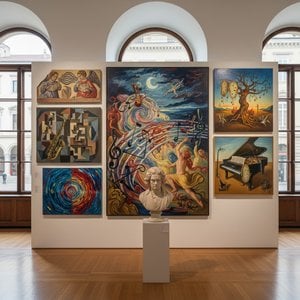
Harmonies on Canvas: Exploring the Visual Representation of Music in Art History
Explore the fascinating history of music's visual representation in art! From ancient symbolism to modern abstraction, discover how artists have captured sound and emotion on canvas. Expert insights & stunning examples.

The Dramatic Flourish: Exploring the Baroque Movement's Enduring Legacy in Art History
Explore the dramatic world of Baroque art! Discover iconic artists like Caravaggio & Rubens, defining techniques, and its lasting impact on art history. Expert insights for collectors & enthusiasts at ArtsDot.

Barok Sanatın Zirveleri: Evinizi Büyüleyecek 10 Eser ve Hikayeleri
Barok sanatın en etkileyici 10 başyapıtını keşfedin! Caravaggio, Rembrandt ve daha fazlasının eserleriyle evinizi dönüştürün. Sanat tarihi, renkler ve duygularla dolu bu yolculukta ArtsDot.com'da müze kalitesinde replikalar bulun. Koleksiyonu çevrimiçi inceleyin!

Crimson Threads of Narrative: Exploring Symbolism & Representation in Artworks Featuring the Red Dress
Explore the rich symbolism of the red dress in art history! From ancient power displays to iconic portraits like Cézanne’s 'Madame Cezanne', discover the cultural and artistic significance behind this captivating color. Expert analysis & insights.

Barok Draması: Çağdaş İç Mekanlara Görkem ve Duygu Katmak
Barok sanatının görkemini evinize taşıyın! ArtsDot'ta el yapımı tablolar, uzman sanat danışmanlığı ve özel siparişlerle iç mekanlarınıza zarafet katıyoruz. Chiaroscuro tekniğiyle hayat bulan eserlerimizi keşfedin.