


 Baskıyı satın al Tabloyu Sipariş Et
 Paylaş
 Paylaş
 Detayları Gör
 Favorilere ekle

 İndir
İndir
 Benzerlerini gör
 X-Işını
 Slayt Gösterisi
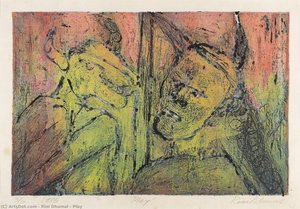
The Cry
 Painting
- Contemporary Art
 1980
1980- Modern
 29.0 x 41.0 cm
 Kerala Museum
 Tümünü Gör
Çevrimiçi önizlemeden çok daha üstün, yüksek çözünürlüklü ve iyileştirilmiş bir dijital görüntü satın alın.
Her dosya, uzman ekibimiz tarafından gelişmiş araçlar ve titiz manuel rötuş teknikleri kullanılarak özenle hazırlanır. Her görüntünün olağanüstü netliğe, kusursuz renk doğruluğuna ve ince ayrıntılara sahip olduğundan emin oluruz.
Son dosya; profesyonel, editoryal ve baskı süreçlerinde anında kullanıma uygun şekilde optimize edilerek 72 saat içinde e-posta yoluyla teslim edilir. Bu, seçkin tasarım stüdyoları, yayıncılar ve galerilerin güvendiği aynı kalite standartlarındadır.
Dijital Görsel
Kişisel sergileme, baskı ve yaratıcı projeleriniz için yüksek çözünürlüklü bir dosya indirin.
Her Dijital Görüntü Siparişinde Dahil Olanlar
Uzman Dijital Teslimat, Garantili
ArtsDot.com seçtiğinizde, sadece bir görsel edinmekle kalmaz; titizlikle hazırlanmış, profesyonelce iyileştirilmiş dijital bir sanat eserine sahip olur ve memnuniyet garantisiyle güvence altına alınırsınız. Siparişinizle birlikte otomatik olarak sunulan her şey şunlardır:

Hızlı E-posta ile Teslimat
Yüksek çözünürlüklü dijital görüntü dosyanız, siparişinizin üzerinden en geç 72 saat geçmeden e-posta ile size gönderilecektir; hemen kullanıma hazırdır.

Yapay Zeka İle İyileştirilmiş Dijital Dosya
Sanat eseriniz; maksimum detay, netlik ve renk doğruluğu sağlamak amacıyla gelişmiş yapay zeka araçları ve manuel düzenleme kullanılarak profesyonelce optimize edilmektedir.

Ömür Boyu Ücretsiz Yeniden Gönderim
Dosyanızı yanlışlıkla mı sildiniz yoksa kayıp mı oldu? Endişelenmeyin; dosyanızı dilediğiniz zaman size ücretsiz olarak tekrar göndereceğiz.

Hiçbir Zaman İthalat Ücreti Ödemeyin
Sanat eserinizin tadını gümrük vergisi, harç veya teslimat ücreti ödemeden anında çıkarın; dijital indirmeler her zaman vergiden muaftır.

Renk Doğruluğu Garantisi
Profesyonel araçlar ve renk yönetimi kullanarak dijital görselinizin orijinal renklere mümkün olduğunca yakın yansıtılmasını sağlıyoruz.

60 Günlük Memnuniyet Garantisi
If you're not satisfied with your digital image, we'll revise it or refund 100% within 60 days - no questions asked.

100% Para İadesi Garantisi
Memnun kalmadınız mı? Dijital dosyanızı aldıktan sonraki 60 gün içinde, hiçbir soru sorulmaksızın tam iade alın.

Toplu Sipariş İndirimleri
Buy 3 images, save 10% - Buy 5, save 15% - Buy 10+, save 20%. Great for creative projects, galleries, and agencies.
Koleksiyon Detayları
Benzer Eserler


Sanatçı Özgeçmişi
Early Life and Artistic Beginnings
James Lewis Dine, born June 16, 1935, in Cincinnati, Ohio, emerged from a surprisingly conventional background to become one of the most influential figures in post-war American art. His early life was marked by a quiet domesticity—he grew up in a modest home with his parents and younger sister, largely shielded from the turbulent artistic currents swirling around him. However, this seemingly ordinary upbringing proved to be fertile ground for an extraordinary creative spirit. A pivotal moment arrived during his teenage years when he encountered a collection of German Expressionist woodcuts through Paul J. Sachs’s *Modern Prints and Drawings* (1954). These stark, emotionally charged images—works by Ernst Ludwig Kirchner, Emil Nolde, and Max Beckmann—profoundly impacted Dine, igniting within him a desire to capture the raw essence of human experience through visual means. He began experimenting with woodcut techniques in his family’s basement, developing a distinctive style characterized by bold lines and simplified forms. This early exploration laid the foundation for his future career as a printmaker, sculptor, and performance artist. His formal artistic education commenced at the Art Academy of Cincinnati in 1952, followed by studies at the University of Cincinnati, where he honed his skills under Donald Roberts, a teacher who encouraged him to explore various printmaking methods including lithography, etching, and intaglio techniques.The Rise of Happenings and Early Experiments
Following graduation from the University of Cincinnati in 1957, Dine relocated to New York City, a hub of artistic innovation at the time. He quickly immersed himself in the burgeoning scene of experimental art, finding collaborators in figures like Claes Oldenburg, Marcus Ratliff, Allan Kaprow, and Bob Whitman. These artists were pushing the boundaries of traditional art forms, embracing spontaneity and audience participation in their performances known as “happenings.” Dine’s early work within this movement is particularly noteworthy. In 1959, he created *The Smiling Workman*, a provocative performance that involved distributing printed images of a smiling worker to passersby on the streets of New York. This piece demonstrated his willingness to engage directly with the public and challenge conventional notions of art’s role in society. This period marked a significant shift from purely visual art towards incorporating elements of theater, social commentary, and audience interaction—a hallmark of Dine's later work.Printmaking as a Central Focus
Throughout his career, printmaking remained a central focus for Jim Dine. He mastered an astonishing array of techniques – woodcuts, linocuts, screenprints, etchings, gravures, and drypoint – each offering unique possibilities for exploring form, texture, and imagery. Dine’s prints are instantly recognizable for their simplicity and directness. Often, he reduces complex subjects to their most essential elements, employing bold lines and reductive techniques to create striking visual statements. He frequently used the process of making the print itself as part of the artwork, incorporating the marks of his hand into the final image. This emphasis on the act of creation—the physical engagement with materials—became a defining characteristic of his work. His prints are not merely reproductions of images; they are embodiments of ideas and emotions, reflecting his ongoing exploration of human experience.The Development of “Dine-ographs” and Conceptual Art
In the 1960s, Dine began to develop a distinctive style he termed "dine-ographs." These works—often simple, hand-drawn images of everyday objects like forks, spoons, or chairs—were executed in various media, including woodcuts, lithographs, and screenprints. The dine-ographs represented a shift towards conceptual art, where the idea behind the artwork was often more important than its aesthetic qualities. Dine’s intention was to strip away any pretense of artistic skill or virtuosity, focusing instead on the inherent simplicity and directness of the subject matter. He sought to challenge viewers' assumptions about what constituted “art” by presenting familiar objects in unfamiliar contexts. This approach resonated with a broader cultural shift towards minimalism and conceptualism, solidifying Dine’s position as a key figure in the development of contemporary art.Legacy and Influence
Jim Dine’s impact on American art is profound and far-reaching. His pioneering work in happenings, his innovative printmaking techniques, and his embrace of conceptual ideas have influenced generations of artists. He demonstrated that art could be accessible, democratic, and engaged with the realities of everyday life. His commitment to simplicity and directness continues to inspire artists today. Dine’s work has been exhibited extensively around the world, and he remains a highly respected and influential figure in the contemporary art scene. His legacy extends beyond his own artistic creations; he fostered a spirit of experimentation and collaboration that helped shape the course of American art history.
naina dalal
1935 - , India
Kısa Bilgiler
- Artistic Movement Or Style: Happenings, Printmaking
- Artists Or Movements Influenced By This Artist: ['Judson Gallery']
- Artists Who Influenced This Artist:
- Paul J. Sachs
- Ernst Ludwig Kirchner
- Date Of Birth: June 16, 1935
- Full Name: James Lewis Dine
- Nationality: American
- Notable Artworks:
- The Smiling Workman
- Cut Cards
- Place Of Birth: Cincinnati, Ohio, USA

