

 Gerçek Boyutta Önizle
 Paylaş
 Paylaş
 Detayları Gör
 Rehber

 İndir
İndir
 Benzer ürünler
 X-Işını
 Slayt Gösterisi
 Soru & Cevap
 İstatistikler
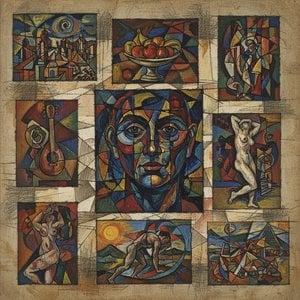
Qāf

- 36.0 x 28.0 cm


 Tümünü Gör
Bu sayfada sergilenen eser telif hakkı yasasıyla korunmaktadır; bu da yasal olarak eserin birebir kopyasını oluşturamayacağımız veya satamayacağımız anlamına gelir. Bu koruma, aşağıdakiler gibi uluslararası anlaşmalar kapsamında uygulanmaktadır: Bern Sözleşmesi ve aşağıdakiler de dahil olmak üzere ulusal yasalarca belirlenen ABD Telif Hakkı Kanunu - 17. Başlık.
Bu yöntem, koruma altındaki sanat eserinin kopyalanmasını veya çoğaltılmasını içermediği için telif hakkı düzenlemelerine tam uyum sağlar. Bunun yerine, yaratıcı bir yeniden yorumlamadır; orijinalinden etkilenen ancak onunla aynı olmayan yeni bir tablodur.
Giclée / Sanat Baskısı
Hızlı üretim ve esnek bitiş seçenekleriyle müze kalitesinde giclée veya kanvas baskı. ( El Yapımı Tablo Satın Al Dijital Görsele Geç)




































Eserin orijinal oranlarıyla uyumlu, önceden belirlenmiş boyutlarımız arasından seçim yapın.

Çerçevenize veya duvarınıza uygun olması için ihtiyacınız olan genişlik ve yüksekliği yazın. Bir baskı yalnızca kesilebilir, görselden daha büyük hale getirilemez; bu nedenle farklı bir formdaki boyut seçimi, görselin bir kısmının kaybına neden olur. Herhangi bir baskı yapmadan önce onaylamanız için size bir dijital taslak gönderiyoruz. Bu sayfada gösterilen resim gerçek kesimi göstermez — bunu yalnızca taslak gösterir.
Dünya Çapında Teslimat (); standart 4/5 hafta yerine 2 haftada. (8 Kasım)

Dünya Çapında Ücretsiz Ekspres Kargo

Yüksek Kaliteli Keten Kanvas

Tam Nakliye Sigortası

Gümrük Vergisi İadesi Garantisi

Gerçek Renk Uyumu Garantisi

100 Günlük İade Politikası (Sadece Kusurlu Ürünler İçin)

%100 Para İade Garantisi

Toplu Alım İndirimi
 Cam seçeneği yalnızca 110 cm altındaki boyutlar için mevcuttur.

Qāf
Giclée / Sanat Baskısı
Reproduksiyon Boyutu
-


Toplam Tutar
₺ 3108
Benzer Eserler


Sanatçı Özgeçmişi
The Soul of Indian Modernism: The Life and Legacy of M.F. Husain
Maqbool Fida Husain, known globally as M.F. Husain, remains a towering figure in the pantheon of 20th-century art, a master who bridged the gap between ancient Indian tradition and the avant-garde movements of the West. Born in 1915 in the small town of Pandharpur, Maharashtra, his early years were steeped in the vibrant cultural textures of rural India. This foundational period instilled in him a lifelong fascination with the rhythms of Indian life, from the sweeping epics of mythology to the humble daily struggles of the common man. His journey was not merely one of personal ambition but a profound response to the seismic shifts of his era, including the transformative power of Gandhian ideals and the heavy, transformative shadows cast by the Partition of 1947.
As his artistic consciousness matured, Husain became a central protagonist in the Bombay Progressive Artists' Group (BPAG). This influential collective sought to break free from the constraints of colonial academic realism, striving instead to forge a new, modern Indian identity. Within this crucible of creativity, Husain developed his signature aesthetic—a breathtaking fusion of European Cubism and indigenous narrative depth. Drawing inspiration from the structural innovations of masters like Picasso and Braque, he did not merely mimic their fragmentation of form; rather, he repurposed the geometric language of Cubism to articulate the fluid, spiritual, and often chaotic energy of the Indian subcontinent. His canvases became windows into a world where bold, sweeping lines and a vibrant, sun-drenched palette could convey both the monumental scale of gods and the intimate dignity of human existence.
A Tapestry of Myth, Humanity, and Social Commentary
The brilliance of Husain’s oeuvre lies in its ability to weave disparate threads of human experience into a singular, cohesive visual language. His work is famously characterized by its narrative power, often drawing heavily from the Ramayana and the Mahabharata. Through these epic tales, he explored themes of dharma, conflict, and cosmic order, using fragmented planes and rhythmic compositions to breathe new life into ancient legends. Yet, his gaze was never solely fixed on the heavens; it was equally grounded in the earthly realities of his time. He possessed a rare ability to capture the essence of contemporary icons, such as his poignant depictions of Mother Teresa, where bold lines and soft, flowing drapes evoke a sense of profound compassion and spiritual weight.
Beyond mythology, Husain’s art served as a vital medium for social commentary and cultural documentation. His fascination with the movement of modern India led him to explore diverse subjects ranging from the cinematic allure of Bollywood to the political gravity of the post-independence era. This versatility allowed him to touch upon various facets of the human condition:
- The Sacred and the Profane: Blending religious iconography with secular, everyday scenes.
- Dynamic Motion: Utilizing energetic brushstrokes to represent the pulse of a developing nation.
- Cultural Identity: Reinterpreting Indian folk motifs through a modern, globalized lens.
An Enduring Artistic Monument
The significance of M.F. Husain extends far beyond the borders of India, marking him as a true global ambassador of modernism. His ability to synthesize the structural rigor of Western abstraction with the emotive richness of Eastern storytelling created a unique visual dialect that resonated across continents. Even as his later years were marked by controversy and eventual exile, his contribution to the evolution of contemporary art remained unassailable. He transformed the canvas into a site of intense dialogue, where history, myth, and modernity collided in a spectacular display of color and form.
Today, the legacy of Maqbool Fida Husain continues to inspire generations of artists and collectors alike. His paintings are not merely objects of aesthetic beauty but are profound historical documents that capture the spirit of an era. To encounter a Husain masterpiece is to witness the heartbeat of a nation—a rhythmic, fragmented, and brilliantly colored celebration of life, struggle, and the eternal dance of the human soul. Through his unwavering dedication to his vision, he ensured that the essence of Indian modernism would forever be etched into the global consciousness.

M.F. Husain
1915 - 2011 , India
Kısa Bilgiler
- Artistic Movement Or Style: Cubist narrative paintings
- Artists Or Movements Influenced By This Artist: ['Indian Modernism']
- Artists Who Influenced This Artist: ['Pablo Picasso']
- Date Of Birth: 1915
- Date Of Death: 2011
- Full Name: Maqbool Fida Husain
- Nationality: Indian
- Notable Artworks:
- Voices
- Qāf
- Fanā Baqā
- Place Of Birth: Pandharpur, India
Benzer Yazılar

The Sublimity of Color: Exploring the Emotional Landscapes of Mark Rothko's Abstract Expressionism
Explore the profound emotional depth of Mark Rothko's abstract expressionism. Discover the history, techniques & lasting impact of this pivotal Color Field painter. Expert insights for collectors and art enthusiasts.

Clyfford Still's Abstract Expressionism: A Study of Color, Form & the Existential Landscape
Explore the profound world of Clyfford Still's Abstract Expressionism with ArtsDot. Discover his unique style, existential themes & investment potential. Expert analysis for discerning collectors.

Deconstructing Reality: A Comprehensive Exploration of Cubist Expression & its Enduring Legacy
Explore the revolutionary world of Cubism with ArtsDot. Discover Picasso & Braque's groundbreaking techniques, its philosophical roots, and lasting impact on modern art. Expert insights for collectors.
Cubist Expressionism's 10 Defining Masterpieces | Art for Your Home
Explore 10 defining Cubist Expressionism masterpieces by Picasso, Braque & more. Discover the stories behind these bold, geometric paintings and bring museum-quality art to your home with ArtsDot.com. Explore the full collection online.