


 Önizleme yap
 Paylaş
 Paylaş
 Detayları Gör
 Rehber

 İndir
İndir
 Benzerlerini gör
 X-Işını
 Slayt Gösterisi
 İstatistikler
Four Demons with a Book
 Acrylic On Paper
- WallArt
- Renaissance draftsmanship
 335.0 x 284.0 cm
 Pierpont Morgan Kütüphanesi & Müzesi
 Tümünü Gör
Giclée / Sanat Baskısı
Hızlı üretim ve esnek bitiş seçenekleriyle müze kalitesinde giclée veya kanvas baskı. ( El yapımı tablo satın al Dijital Görsele Geç)




P118B $10

P118H $10

P118W $10

P438Z $10

P508JH $12

P508YH $12

P805H $10

P805Z $10

P919BZ $10

P919G $10

P919XJ $10

P959ZH $10

P968JZ $12

W106C $8

W218G $10

W218JH $8

W218Y $10

W307PJ $10

W316G $10

W316PJ $8

W316Y $10

W398PJ $8

W4111J $10

W500HY $15

W500JH $15

W692G $12

W849H $8

W940BG $15

W953PJ $8




Eserin orijinal oranlarıyla uyumlu, önceden belirlenmiş boyutlarımız arasından seçim yapın.

Belirli bir çerçeveye veya alana uyması için kendi ölçülerinizi girebilirsiniz. Seçtiğiniz boyut orijinal görüntünün oranlarıyla eşleşmiyorsa, sanat eserini kırpacağız veya görüntüyü aynalanmış ya da düz dolgulu bir kenarlıkla genişleteceğiz. Üretim başlamadan önce onayınız için bir dijital taslak gönderilecektir.
Lütfen ekrandaki önizlemenin gerçek kırpma veya genişletmeyi yansıtmadığını unutmayın. Nihai kompozisyonu yalnızca taslak doğru bir şekilde gösterecektir.
Özel boyutlar mevcut olsa da, orijinal oranları korumak için önceden tanımlanmış listeden bir boyut seçmenizi öneririz.
Dünya Çapında Teslimat (); standart 4/5 hafta yerine 2 haftada. (25 Eylül)

Dünya Çapında Ücretsiz Ekspres Kargo

Yüksek Kaliteli Keten Tuval

Tam Kapsamlı Nakliye Sigortası

Gümrük Vergisi İade Garantisi

Gerçek Renk Uyumu Garantisi

100 Günlük İade Politikası (Sadece Kusurlu Ürünler İçin)

%100 Para İade Garantisi

Toplu Alım İndirimi
 Cam seçeneği yalnızca 110 cm altındaki boyutlar için mevcuttur.

Four Demons with a Book
Giclée / Sanat Baskısı
Reproduksiyon Boyutu
-


Toplam Tutar
$ 62
The Genesis of a Masterpiece: Luca Signorelli's Preparatory Drawing
Luca Signorelli’s “Four Demons with a Book,” a remarkably detailed preparatory study for the monumental fresco cycle adorning Orvieto Cathedral, offers a captivating glimpse into the mind of one of the High Renaissance’s most potent visual storytellers. More than just a sketch, it's a concentrated distillation of ideas, a vibrant testament to Signorelli’s meticulous draftsmanship and his profound understanding of human psychology – particularly as manifested through the unsettling interplay of demonic figures and forbidden knowledge. The drawing itself, rendered in charcoal or silverpoint on aged paper, possesses an immediate power, radiating a palpable sense of urgency and contained chaos.
The work’s genesis lies within the Cappella Nova, a space already steeped in religious narrative through earlier frescoes by Fra Angelico. Signorelli was tasked with expanding this existing framework, creating a dramatic visual representation of the Apocalypse – a subject demanding both grandeur and terrifying intimacy. This preparatory study isn't merely a preliminary sketch; it’s a crucial stage in the artist’s process, revealing his initial compositional choices, anatomical explorations, and the evolution of individual figures before they were unleashed upon the vast cathedral walls.
A Symphony of Line: Technique and Composition
Signorelli's mastery is immediately evident in the drawing’s intensely linear quality. Hatching and cross-hatching dominate, building up volume with a remarkable degree of precision and control. The figures aren’t simply outlined; they are sculpted through layers of carefully applied lines, conveying not just their physical form but also the texture of skin, clothing, and even the suggestion of demonic musculature. The limited palette – primarily shades of gray and white – amplifies this effect, creating a dramatic chiaroscuro that emphasizes the figures’ powerful presence against an implied darkness. The composition itself is deliberately claustrophobic, with the demons crowding together in a dynamic, almost violent arrangement. There's no background; the focus remains entirely on these unsettling characters and their interaction with the central object of contemplation – the book.
The drawing’s flattened perspective, characteristic of preparatory studies, lends it an immediacy and intimacy rarely found in finished works. It feels as though we are witnessing Signorelli wrestling with his ideas directly, capturing a fleeting moment of creative struggle. The subtle erasures and adjustments visible throughout the piece further underscore this sense of process, revealing the artist’s willingness to experiment and refine his vision.
Symbolism and Psychological Depth
The subject matter – four demonic figures clustered around a book – is laden with symbolic weight. Demons, traditionally representing temptation, sin, and the forces of evil, are inherently unsettling. Their muscular physiques and aggressive postures convey power and menace. The book, however, introduces an element of ambiguity. It’s not simply a symbol of knowledge; it suggests a dangerous, potentially corrupting influence – a forbidden text promising enlightenment but ultimately leading to damnation. The positioning of the demons, particularly one holding the book aloft with a look of intense concentration, hints at a struggle between intellect and faith, reason and revelation.
Signorelli’s genius lies in his ability to imbue these archetypal figures with psychological depth. The expressions on their faces – ranging from rage and suspicion to curiosity and perhaps even a hint of despair – suggest a complex internal landscape. The drawing isn't merely a depiction of demons; it’s an exploration of the human condition, confronting us with our own vulnerabilities and temptations.
A Legacy in Stone and Charcoal
“Four Demons with a Book” stands as a pivotal work in Signorelli’s oeuvre, foreshadowing the dramatic intensity and psychological complexity that would define his masterpiece at Orvieto. It's a testament to his extraordinary draftsmanship, his profound understanding of human anatomy, and his ability to translate complex theological ideas into visually arresting imagery. The drawing offers a rare opportunity to connect with the creative process of one of the Renaissance’s most influential artists, revealing the meticulous care and intellectual rigor that underpinned his monumental achievements. Reproductions of this captivating study offer a window into a world of dramatic tension, profound symbolism, and enduring artistic power.
Benzer Eserler


Sanatçı Özgeçmişi
erken yaşam ve eğitim
Luca Signorelli, İtalyan Rönesans döneminin usta ressamlarından biri olarak, 1450 yıllarında Toskana'nın Cortona kentinde dünyaya geldi. Doğum tarihi kesin olmamakla birlikte, 1441 ile 1445 yılları arasına tarihlendiği düşünülmektedir. Sanat dünyasında özellikle bir desen ustası olarak sergilediği olağanüstü yeteneği ve perspektifi derinleştiren kısaltma (foreshortening) tekniğindeki ustalığıyla tanınmıştır.sanatsal kariyer
Signorelli'nin sanata dair ilk izlenimleri, Benedetto Bonfigli, Pinturicchio ve diğer önemli isimlerin üsluplarından etkilendiği Perugia'da şekillenmiştir. Giorgio Vasari'nin kayıtlarına göre Signorelli, teyzesinin oğlu Lazzaro Vasari aracılığıyla Piero della Francesca'nın yanında çıraklık yapmıştır. Sanatçının eserleri Arezzo (1472) ve Città di Castello (1474) gibi çeşitli mekanlarda iz bırakmıştır. Lorenzo de' Medici'ye sunulan "Pan'ın Okulu" adlı eseri, insan formunun gerçekçi bir tasvirini sunarken, Signorelli'nin ışık-gölge (chiaroscuro) ve doğrusal perspektif konusundaki dehasını gözler önüne sermektedir.önemli eserler
- Son Yargı (1499-1503), Orvieto Katedrali - Sanatçının başyapıtı kabul edilen bu devasa fresk, kıyamet ve son yargı anını tasvir etmedeki eşsiz becerisini sergiler.
- St. Medard Poliptiği (1507), San Medardo Müzesi, Arcevia, İtalya - Signorelli'nin insan formunu son derece detaylı ve doğalcı bir şekilde işlediği en seçkin örneklerden biridir.
sanat akımı
Signorelli, Orta Çağ ile Erken Modern Avrupa arasındaki geçiş dönemini simgeleyen İtalyan Rönesansı akımının bir parçasıydı. Bu dönem; klasik geleneklere, natüralizme ve hümanizme yönelik yenilenmiş bir vurguyu beraberinde getirmiştir.- Erken Rönesans sanat akımı - Sanat tarihinin gidişatını şekillendiren bu hareket üzerine kısa bir giriş.
- Fra Angelico - Signorelli'nin çalışmalarına ilham veren, resim yeteneğiyle tanınan ünlü sanatçı.
- Luca Signorelli - Sanatçının önemli eserlerini ve dahil olduğu sanat akımını içeren kısa biyografisi.
miras
Signorelli'nin çalışmaları, Rönesans sanatının gelişimi üzerinde derin bir etki bırakmıştır. Perspektif kullanımındaki ustalığı ve desen yeteneği, izinden giden pek çok sanatçıyı etkilemiştir. İtalyan Rönesansı'nın önde gelen figürlerinden biri olarak Signorelli'nin mirası, bugün İtalya'nın çeşitli müzelerinde ve katedrallerinde sergilenen eserleri aracılığıyla onurlandırılmaya devam etmektedir. önemli tarihler:- 1450: Cortona, Toskana'da doğumu
- 1499-1503: Orvieto Katedrali'nde Son Yargı eserinin yaratılması
- 1523: Vefatı ve geride bıraktığı eşsiz sanat mirası

Luca Signorelli
1450 - 1523 , İtalya
Kısa Bilgiler
- Artistic Movement Or Style: Rönesans
- Artists Or Movements Influenced By This Artist: ['Fra Angelico']
- Artists Who Influenced This Artist: ['Piero della Francesca']
- Date Of Death: 16 Ekim 1523
- Full Name: Luca di Egidio di Ventura Signorelli
- Nationality: İtalyan
- Notable Artworks:
- Mahşerin Dört Atlısı (Son Yargı)
- Pan Okulu
- Place Of Birth: Cortona, İtalya
İlgili Makaleler

The Alchemy of Graphite: An Expert Guide to Mastering Detail and Depth in Pencil Sketching
Unlock the secrets of graphite sketching with our expert guide for art students. Learn to master pencil grades, create realistic depth, and capture intricate textures through professional techniques designed to elevate your observational drawing skills.

Luca Signorelli: Renaissance Innovation & Dramatic Foreshadowing of Modern Artistic Expression
Explore the revolutionary art of Luca Signorelli, a High Renaissance master renowned for his dramatic frescoes & anatomical precision. Discover his lasting impact on art history and techniques like foreshortening.

The Nuances of Graphite: Exploring Emotional Depth & Technical Mastery in Pencil Drawing
Explore the captivating world of graphite drawing! Discover its rich history, master essential techniques like chiaroscuro, and learn how artists evoke emotion through this timeless medium. Expert insights for art enthusiasts.

The Eloquent Line: Exploring the Artistic Significance of Sketches Across Movements and Media
Explore the profound artistic significance of sketches throughout history. From Renaissance masters to modern innovators like Van Gogh & Guston, discover how these foundational works reveal technique, emotion, and vision. Learn more at ArtsDot.
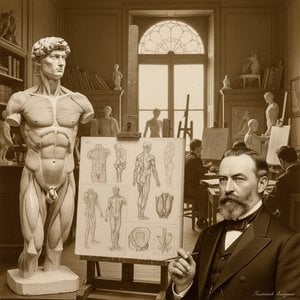
Frederick Bridgman: Anatomical Mastery & the Evolution of Figure Drawing Instruction
Explore the anatomical mastery of George B. Bridgman & his revolutionary figure drawing techniques. Discover how his methods transformed art instruction and continue to inspire artists today. Learn more at ArtsDot.


