


 Önizle
 Gönder
 Paylaş
 Detaylar
 Rehber

 Dosyayı İndir
 Benzerleri
 X-Işını
 Slayt Gösterisi
 İstatistikler
Acacia

 Devamını Oku
Giclée / Sanat Baskısı
Hızlı üretim ve esnek bitiş seçenekleriyle müze kalitesinde giclée veya kanvas baskı. ( El Yapımı Tablo Satın Al Dijital Görsel Satışına Geç)




P118B ₺10

P118H ₺10

P118W ₺10

P438Z ₺10

P508JH ₺12

P508YH ₺12

P805H ₺10

P805Z ₺10

P919BZ ₺10

P919G ₺10

P919XJ ₺10

P959ZH ₺10

P968JZ ₺12

W106C ₺8

W218G ₺10

W218JH ₺8

W218Y ₺10

W307PJ ₺10

W316G ₺10

W316PJ ₺8

W316Y ₺10

W398PJ ₺8

W4111J ₺10

W500HY ₺15

W500JH ₺15

W692G ₺12

W849H ₺8

W940BG ₺15

W953PJ ₺8




Eserin orijinal oranlarıyla uyumlu, önceden belirlenmiş boyutlarımız arasından seçim yapın.

Belirli bir çerçeveye veya alana uyması için kendi ölçülerinizi girebilirsiniz. Seçtiğiniz boyut orijinal görüntünün oranlarıyla eşleşmiyorsa, sanat eserini kırpacağız veya görüntüyü aynalanmış ya da düz dolgulu bir kenarlıkla genişleteceğiz. Üretim başlamadan önce onayınız için bir dijital taslak gönderilecektir.
Lütfen ekrandaki önizlemenin gerçek kırpma veya genişletmeyi yansıtmadığını unutmayın. Nihai kompozisyonu yalnızca taslak doğru bir şekilde gösterecektir.
Özel boyutlar mevcut olsa da, orijinal oranları korumak için önceden tanımlanmış listeden bir boyut seçmenizi öneririz.
Dünya Çapında Teslimat (); standart 4/5 hafta yerine 2 haftada. (8 Ekim)

Dünya Çapında Ücretsiz Ekspres Kargo

Yüksek Kaliteli Keten Tuval

Tam Nakliye Sigortası

Gümrük Vergisi İadesi Garantisi

Gerçek Renk Uyumu Garantisi

100 Günlük İade Koşulları (Sadece Üretim Hatalı Ürünler İçin)

%100 Para İade Garantisi

Toplu Alım Avantajı
 Cam seçeneği yalnızca 110 cm altındaki boyutlar için mevcuttur.

Acacia
Giclée / Sanat Baskısı
Baskı Boyutu
-


Toplam Fiyat
₺ 3008
A Winter’s Reverie: Decoding James Ensor's ‘Acacia’
Acacia, a hauntingly beautiful etching by Belgian master James Ensor, transports viewers to a desolate winter landscape steeped in atmosphere and symbolic weight. This monochromatic work is not merely a depiction of nature; it’s an exploration of time, decay, and the enduring power of memory – themes central to Ensor's complex artistic vision.Subject & Composition: A Dialogue Between Nature and Ruin
The composition centers around a stark, bare tree—an *acacia*, presumably—that dominates the foreground. Its skeletal branches reach upwards, mirroring the verticality of a crumbling stone tower or ruin visible in the distance. This architectural fragment, partially obscured by distant trees and a hazy horizon, suggests a forgotten past. The arrangement isn’t one of idyllic harmony but rather a poignant juxtaposition: nature asserting its presence alongside the remnants of human endeavor. Ensor masterfully uses linear perspective to create depth, though it's subtly flattened – characteristic of etching as a medium – drawing the eye into the scene while maintaining an intriguing sense of ambiguity.Technique & Style: The Etched Soul of Romanticism
Ensor’s technique is exemplary. He employs etching—a process involving acid to create lines on a metal plate—to build up texture and tonal range. Notice the meticulous hatching and cross-hatching used to render the rough bark of the tree and the weathered stonework of the tower. These techniques aren't simply descriptive; they contribute significantly to the artwork’s emotional impact, evoking a sense of fragility and age. The style leans heavily into late 19th-century Romanticism and Symbolism. While not striving for photographic realism, Ensor prioritizes atmospheric effect and emotional resonance. The lines themselves are expressive, carrying the weight of solitude and melancholy.Historical Context: An Artist Ahead of His Time
Born in Ostend, Belgium in 1860, James Ensor was a pivotal figure bridging the gap between Impressionism and Expressionism. He rejected academic conventions early on, developing a highly personal style that often incorporated unsettling imagery – masks, skeletons, carnivals – to explore themes of human alienation and societal critique. While Acacia doesn’t feature these overtly jarring elements, it shares Ensor's characteristic preoccupation with mortality and the passage of time. His work profoundly influenced later movements like Surrealism, establishing him as a true visionary.Symbolism & Emotional Impact: Echoes of Loss and Remembrance
The symbolism within Acacia is layered and open to interpretation. The bare tree can represent both death and resilience—a stark reminder of winter’s harshness but also a promise of eventual renewal. The crumbling tower speaks to the impermanence of human creations, the inevitable decay that time inflicts upon all things. The overall mood is one of quiet contemplation, evoking feelings of solitude, nostalgia, and perhaps even a gentle sadness. It's an artwork that invites introspection, prompting viewers to reflect on their own relationship with memory, loss, and the enduring beauty of the natural world.Collecting & Interior Design: A Timeless Addition
- For Collectors: An original etching by James Ensor is a significant investment, representing a cornerstone of Belgian art history.
- For Interior Designers: The monochromatic palette and evocative subject matter make Acacia incredibly versatile. It would complement a range of interior styles – from traditional to contemporary – adding depth and sophistication to any space. Its subdued tones work particularly well in studies, libraries, or bedrooms, creating a calming and contemplative atmosphere.
- Reproductions: High-quality reproductions capture the intricate detail of Ensor’s etching technique, offering an accessible way to bring this masterpiece into your home.
Soru ve Cevaplar
James Ensor imzalı "Acacia" eserinde hangi renk paleti kullanılmıştır?
James Ensor imzalı "Acacia", Neutrals bir renk paleti kullanıyor. Bu palet, eserin genel renk karakterini özetliyor.
"Acacia" eserinin yağlı boya reprodüksiyonunu sipariş edebilir miyim?
James Ensor imzalı "Acacia" eserinin el boyaması reprodüksiyonunu, sipariş üzerine hazırlanan keten kanvas üzerine el boyaması yağlı boya reprodüksiyon üzerinden doğrudan bu sayfa adresinden sipariş edebilirsiniz.
James Ensor imzalı "Acacia" eserinin kompozisyonuna hangi renk yön veriyor?
"Acacia" adlı eserde en çok öne çıkan renk Espresso (#685848)'dır. Baskın renk, bir sanat eserini iç mekânla eşleştirirken faydalıdır.
"Acacia" eserinde teknik ve üslup nasıl birleşiyor?
James Ensor imzalı "Acacia", Acrylic On Canvas tekniğini Romanticism üslubuyla birleştiriyor. Teknik ve akım, eserin yapılış biçimini ve tarzını tanımlar.
"Acacia" eserinin arkasındaki sanatçı kim?
"Acacia" eserinin arkasındaki sanatçı James Ensor'tir. Eser, James Ensor adına kataloglanmıştır.
"Acacia" adlı eser bir sanat baskısı olarak mevcut mu?
"Acacia", pamuklu kanvas veya arşivlik kanvas kağıt üzerine yüksek kaliteli sanat baskısı olarak temin edilebilir. Siparişlerinizi bu sayfa üzerinden, dilediğiniz boyutta verebilirsiniz.
James Ensor imzalı "Acacia" eserinin baskın rengi nedir?
James Ensor imzalı "Acacia" eserinde Ochre to Sepia bir ton hakimdir.
İlgili Eserler


Sanatçı Biyografisi
James Ensor: A Pioneer of Expressionism and Surrealism
James Sidney Edouard Ensor (Ostend, 13 April 1860-19 November 1949) was a Belgian painter and printmaker, an important influence on expressionism and surrealism who lived in Ostend for almost his entire life. He was associated with the artistic group Les XX.
Early Life and Artistic Training
Ensor’s father, James Frederic Ensor, born in Brussels to English parents, was a cultivated man who studied engineering in England and Germany. Ensor’s mother, Maria Catharina Haegheman, was Belgian. Ensor himself lacked interest in academic study and left school at the age of fifteen to begin his artistic training with two local painters. From 1877 to 1880 he attended the Académie Royale des Beaux-Arts in Brussels, where one of his fellow students was Fernand Khnopff. Ensor first exhibited his work in 1881.
The Emergence of Expressionist Style
During the late 19th century much of Ensor’s work was rejected as scandalous, particularly his painting Christ’s Entry Into Brussels (1888–89). The Belgium art critic Octave Maus famously summed up the response from contemporaneous art critics to Ensor's innovative (and often scathingly political) work: “Ensor is the leader of a clan. Ensor is the limelight. Ensor sums up and concentrates certain principles which are considered to be anarchistic. In short, Ensor is a dangerous person who has great changes. ... He is consequently marked for blows. It is at him that all the harquebuses are aimed. It is on his head that are dumped the most aromatic containers of the so-called serious critics.” Some of Ensor's contemporaneous work reveals his defiant response to this criticism.
Key Works and Recurring Themes
Ensor’s artistic style evolved dramatically over time, reflecting a profound engagement with psychological exploration and social critique. Initially influenced by Rembrandt, Redon, Goya, Japanese woodcuts, Brueghelian images and contemporary spoofs, Ensor developed a highly personal iconography and design. He rejected French Impressionism and Symbolism and lent himself to the expressive qualities of light, line, colour and the grotesque and macabre motifs such as carnival masks and skeletons, which he rendered in massive tableaux such as *The Aureoles of Christ* (1885–86) and *Skeletons Fighting over a Hanged Man* (1891). These grotesque metamorphoses culminate in Ensor’s most well-known and monumental mask tableau: *Christ’s Entry Into Brussels* (1888–89, oil on canvas, Los Angeles, J. Paul Getty Museum).
Legacy and Influence
Ensor is now widely recognized as a pivotal figure in the transition from 19th-century Symbolism to early 20th-century Expressionism and Surrealism—a true pioneer of modern art. His fearless exploration of the subconscious, his embrace of grotesque imagery, and his rejection of academic conventions paved the way for future generations of artists who dared to challenge artistic norms. Despite facing initial resistance, Ensor eventually gained recognition in his later years, being named a Baron by King Albert I in 1929 and awarded the Légion d’honneur in 1933. He died in Ostend in 1949, leaving behind a body of work that continues to captivate, disturb, and inspire.

James Ensor
1860 - 1949 , Belçika
Kısa Bilgiler
- Artistic Movement Or Style: Expressionism, Surrealism
- Artists Who Influenced This Artist:
- Bruegel the Elder
- Francisco Goya
- Whistler
- Date Of Birth: April 13, 1860
- Date Of Death: November 19, 1949
- Full Name: James Sidney Edouard Ensor
- Nationality: Belgian
- Notable Artworks:
- The Scandalized Masks
- Skeletons Fighting...
- Christ's Entry into Brussels
- Place Of Birth: Ostend, Belgium
İlgili Yazılar
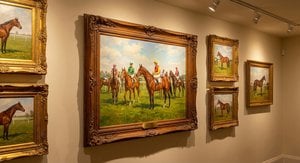
Sir Alfred Munnings' Masterpieces: 25 Paintings That Define Equine Art | ArtsDot
Explore 25 iconic Sir Alfred Munnings paintings! Discover the beauty of British Impressionism, equine art & rural England. Find museum-quality reproductions and elevate your home decor with ArtsDot. Explore the full collection online.

Etching Masters: 10 Legendary Prints That Revolutionized Art | ArtsDot
Journey through 10 legendary etching masterpieces by Rembrandt, Dürer & Goya. Explore the history of printmaking and discover timeless art for your home. Find museum-quality reproductions at ArtsDot.com.

Etching: A Historical Survey of Technique, Aesthetic Qualities & Enduring Artistic Significance
Explore the rich history of etching, from its origins to Rembrandt's masterful innovations. Discover the technique, aesthetic qualities & enduring legacy of this captivating art form. Expert insights for collectors and enthusiasts.

James Abbott McNeill Whistler'ın En İyi 25 Eseri: Sanat ve Dekorasyon Rehberi | ArtsDot
James Abbott McNeill Whistler'ın en iyi 25 eserini keşfedin! Amerikan empresyonizminin öncüsü Whistler'ın nocturne resimleri, portreleri ve sanat tarihine damga vuran diğer başyapıtları ArtsDot.com'da. Ev dekorasyonunuz için lüks tabloları inceleyin.

Katsushika Hokusai'nin En İyi 25 Eseri: Japon Sanatının İkonik Şaheserleri | ArtsDot
Katsushika Hokusai'nin en iyi 25 eserini keşfedin! Kanagawa'daki Büyük Dalga ve Fuji Dağı gibi ikonik ukiyo-e baskılarının hikayelerini öğrenin. Japon sanatının büyüsünü evinize taşıyın. ArtsDot.com'da yüksek kaliteli sanat reproduksiyonları.


