
- Ana Sayfa

- Kanvas baskı
- Georges De La Tour
- The Newborn
 Tabloyu Sipariş Et Görseli Satın Al
 Paylaş
 Paylaş
 Details
 Favorilere ekle

 İndir
İndir
 Benzerlerini gör
 X-Ray
X-Ray
 Slayt Gösterisi
The Newborn


Giclée / Sanat Baskısı
Hızlı üretim ve esnek bitiş seçenekleriyle müze kalitesinde giclée veya kanvas baskı.
 Detaylı bilgi için tıklayın



P118B $10

P118H $10

P118W $10

P438Z $10

P508JH $12

P508YH $12

P805H $10

P805Z $10

P919BZ $10

P919G $10

P919XJ $10

P959ZH $10

P968JZ $12

W106C $8

W218G $10

W218JH $8

W218Y $10

W307PJ $10

W316G $10

W316PJ $8

W316Y $10

W398PJ $8

W4111J $10

W500HY $15

W500JH $15

W692G $12

W849H $8

W940BG $15

W953PJ $8




Eserin orijinal oranlarıyla uyumlu, önceden belirlenmiş boyutlarımız arasından seçim yapın.

Belirli bir çerçeveye veya alana uyması için kendi ölçülerinizi girebilirsiniz. Seçtiğiniz boyut orijinal görüntünün oranlarıyla eşleşmiyorsa, sanat eserini kırpacağız veya görüntüyü aynalanmış ya da düz dolgulu bir kenarlıkla genişleteceğiz. Üretim başlamadan önce onayınız için bir dijital taslak gönderilecektir.
Lütfen ekrandaki önizlemenin gerçek kırpma veya genişletmeyi yansıtmadığını unutmayın. Nihai kompozisyonu yalnızca taslak doğru bir şekilde gösterecektir.
Özel boyutlar mevcut olsa da, orijinal oranları korumak için önceden tanımlanmış listeden bir boyut seçmenizi öneririz.
Dünya Çapında Teslimat (); standart 4/5 hafta yerine 2 haftada. (1 Temmuz)

Dünya Çapında Ücretsiz Ekspres Kargo

Yüksek Kaliteli Keten Tuval

Tam Kapsamlı Nakliye Sigortası

Gümrük Vergisi İade Garantisi

Gerçek Renk Uyumu Garantisi

60 Günlük İade Politikası (Sadece Kusurlu Ürünler İçin)

%100 Para İade Garantisi

Toplu Alım İndirimi
 Cam seçeneği yalnızca 110 cm altındaki boyutlar için mevcuttur.

The Newborn
Giclée / Sanat Baskısı
Reproduksiyon Boyutu
-


Toplam Tutar
-
Eser Açıklaması
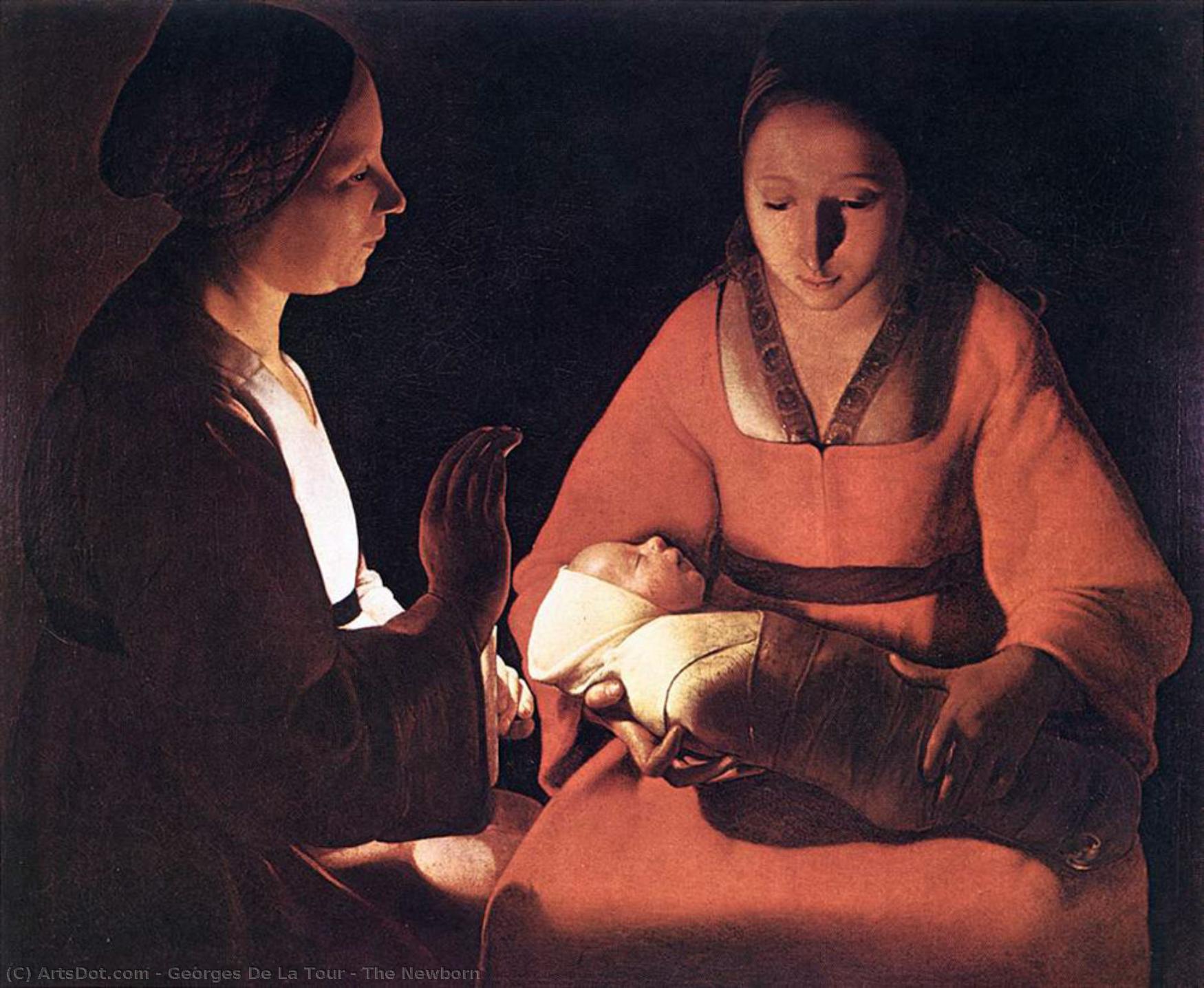
A Moment of Divine Intimacy: Georges de La Tour’s *The Newborn*
Georges de La Tour's 1649 masterpiece, *The Newborn*, is a profoundly moving depiction of the Virgin Mary cradling the infant Jesus. This Baroque painting exemplifies the artist’s signature style – a masterful use of chiaroscuro and an intimate portrayal of religious narrative. It offers a serene yet deeply emotional experience for the viewer, making it a captivating focal point for any collection or interior space.Style & Technique: The Essence of Baroque Tenebrism
De La Tour was a key figure in bringing Caravaggism to France, and *The Newborn* vividly demonstrates this influence. The painting is characterized by dramatic tenebrism, where stark contrasts between light and shadow sculpt the figures and heighten their emotional presence. Oil paints are applied with meticulous detail on canvas, creating smooth transitions of tone and rich color saturation. Notice how the light doesn’t simply illuminate; it *defines* form and directs our gaze to the central subjects. The brushstrokes, while visible upon close inspection, blend seamlessly to create a sense of realism and texture – from the soft skin of Mary and Jesus to the heavier fabrics draped around them.Subject & Composition: A Pyramidal Sanctuary
The composition is elegantly pyramidal, with Mary and the baby forming the apex, drawing the viewer’s eye upwards towards a sense of spiritual elevation. A second female figure leans in, observing this sacred moment – often identified as Saint Anne, mother of Mary. The scene unfolds within a dimly lit interior, creating an atmosphere of quiet reverence and intimacy. This isn't a grand public spectacle; it is a private, tender encounter.Historical Context: Faith & Artistic Innovation
Painted in 1649, *The Newborn* reflects the religious fervor prevalent during the Baroque period. De La Tour lived through turbulent times – France was engaged in conflicts and undergoing significant social change. His art offered a refuge, focusing on deeply personal faith and human connection. He served as “Painter to the King” yet maintained a strong connection to local patrons, reflecting his ability to bridge courtly sophistication with everyday devotion. Interestingly, De La Tour’s work experienced a period of obscurity after his death before being rediscovered in the 20th century.Symbolism & Emotional Resonance
The symbolism within *The Newborn* is rich and layered. The infant Jesus represents divinity incarnate, while Mary embodies motherhood, faith, and compassion. The attendant figure serves as a witness to this holy event, inviting the viewer to share in their contemplation. The painting evokes feelings of reverence, tenderness, and serenity. It’s not merely an illustration of a biblical story; it's an invitation to experience the profound emotional power of maternal love and spiritual devotion.Color Palette & Interior Design Considerations
The color palette is dominated by warm tones – reds, oranges, and browns – creating a sense of intimacy and spiritual warmth. These hues lend themselves beautifully to various interior design schemes, particularly those seeking a classic, elegant, or contemplative atmosphere. A reproduction of *The Newborn* would be stunning in a library, bedroom, or chapel-like space, adding depth and sophistication to the surroundings.- Ideal for: Traditional, Baroque, Eclectic interiors
- Color Harmony: Complements warm neutral palettes, rich wood tones, and jewel-toned accents.
- Placement Suggestions: Above a fireplace, in a reading nook, or as a focal point in a dining room.
Benzer Eserler


Sanatçı Özgeçmişi
Georges de La Tour (1593-1652): French Baroque Master of Dramatic Chiaroscuro & Tenebrism
Georges de La Tour, a name that resonates with the hushed reverence reserved for masters of light and shadow, remains one of the most compelling figures of the French Baroque. Born in 1593 in Vic-sur-Seille, a small town nestled within the Duchy of Lorraine, his life unfolded against a backdrop of religious fervor and political upheaval. While details surrounding his early training remain somewhat elusive—scholars speculate about potential journeys to Italy or apprenticeships with local artists like Jacques Bellange—the seeds of his artistic vision were undoubtedly sown in this environment. He wasn’t born into an artistically established family; his father was a baker, yet the circumstances of his mother's lineage hint at a possible connection to nobility, a subtle influence perhaps reflected in the dignity and quiet grace that permeate his work.
Early Life & Artistic Influences
Georges de La Tour’s formative years were marked by the turbulent political landscape of Lorraine under Habsburg rule. Despite limited formal education—he reportedly received instruction from Jacques Bellange—his innate talent for drawing quickly emerged, demonstrating an exceptional sensitivity to observation and form. Crucially, he absorbed the artistic currents circulating throughout Europe during his youth, notably the dramatic innovations championed by Caravaggio in Rome. This encounter with Caravaggism profoundly shaped De La Tour’s aesthetic sensibilities, instilling him with a fascination for tenebrism—the technique of employing extreme contrasts between light and dark to heighten emotional impact.
The Utrecht School & Artistic Synthesis
De La Tour's artistic development accelerated during his time in Utrecht, where he encountered the influential Utrecht School painters. Artists like Hendrick Terbrugghen championed a style characterized by luminous color palettes and meticulous detail—a stylistic divergence from Caravaggio’s darker palette. However, De La Tour skillfully integrated elements of Dutch Caravaggisti into his own distinctive vision, forging a synthesis that retained Caravaggio's dramatic intensity while tempering it with a refined sense of composition and tonal gradation. This blending of influences resulted in a style that was both powerful and restrained—a hallmark of his oeuvre.
Major Works & Recurring Themes
Georges de La Tour’s artistic legacy rests upon a remarkable corpus of paintings that explore profound themes of faith, doubt, and human emotion. His most celebrated works—including The Fortune-Teller (circa 1630), Adoration of the Shepherds (circa 1640), Saint Joseph Carpenter (circa 1652)—are imbued with an atmosphere of solemn contemplation, achieved through masterful manipulation of candlelight and subtle tonal shifts. These scenes depict ordinary individuals confronted by divine presence—a deliberate choice that underscores De La Tour’s conviction in the transformative power of spiritual experience.
A Rediscovered Legacy & Enduring Appeal
For decades after his death in 1652, Georges de La Tour’s work languished in obscurity, largely unrecognized and frequently misattributed. However, a resurgence of scholarly interest in the mid-20th century—fueled by pioneering research conducted by Hermann Voss—began to illuminate De La Tour's artistic genius and solidify his place as a pivotal figure in European art history. His innovative use of tenebrism—combined with his psychological insight into human character—continues to captivate audiences today, reminding us that even amidst the complexities of life, there remains an enduring fascination for the serene beauty of faith and contemplation. De La Tour’s influence can be discerned in subsequent artists who wrestled with similar questions of spirituality and artistic expression—a testament to his lasting impact on the trajectory of Western art.

Georges De La Tour
1593 - 1652 , Fransa
Kısa Bilgiler
- Artistic Movement Or Style: Tenebrism
- Artists Or Movements Influenced By This Artist: ['French Classicism']
- Artists Who Influenced This Artist:
- Caravaggio
- Hendrick Terbrugghen
- Date Of Birth: Mart 13, 1593
- Full Name: Georges de La Tour
- Nationality: Fransa
- Notable Artworks:
- Fortune Teller
- Adoration Shepherds
- Tears Saint Peter
- Saint Joseph Carpenter
- Place Of Birth: Vic-le-Comte, Fransa
İlgili Makaleler

Barok Sanatın Zirveleri: Evinizi Büyüleyecek 10 Eser ve Hikayeleri
Barok sanatın en etkileyici 10 başyapıtını keşfedin! Caravaggio, Rembrandt ve daha fazlasının eserleriyle evinizi dönüştürün. Sanat tarihi, renkler ve duygularla dolu bu yolculukta ArtsDot.com'da müze kalitesinde replikalar bulun. Koleksiyonu çevrimiçi inceleyin!


The Golden Age Reforged: Dramatic Realism & Religious Zeal in Spanish Baroque Art
Explore the dramatic world of Spanish Baroque art! Discover masters like Zurbarán & the powerful influence of religious zeal on painting techniques – a guide for collectors and enthusiasts.

Baroque Painting's Greatest Hits: 10 Masterpieces for Your Home | ArtsDot
Journey through Baroque painting's glory! Explore 10 masterpieces by Caravaggio, Rembrandt & Vermeer. Discover dramatic lighting, rich colors & timeless stories. Find museum-quality art reproductions for your home at ArtsDot.com.

Georges de La Tour: Luminosity, Spirituality & Realism in Baroque Painting
Discover the captivating world of Georges de La Tour, a Baroque master renowned for his dramatic chiaroscuro & spiritual realism. Explore key works, influences, and his remarkable rediscovery. Learn more at ArtsDot.

From Snapshot to Canvas: The Art of Transforming Travel Photography into Timeless Oil Paintings
Transform your cherished travel photos into timeless oil paintings with expert artists at ArtsDot.com. Museum-quality reproductions & custom portraits – preserve your memories beautifully.



