
- Ana Sayfa

- Yağlı Boya Reprodüksiyonlar
- Georges Braque
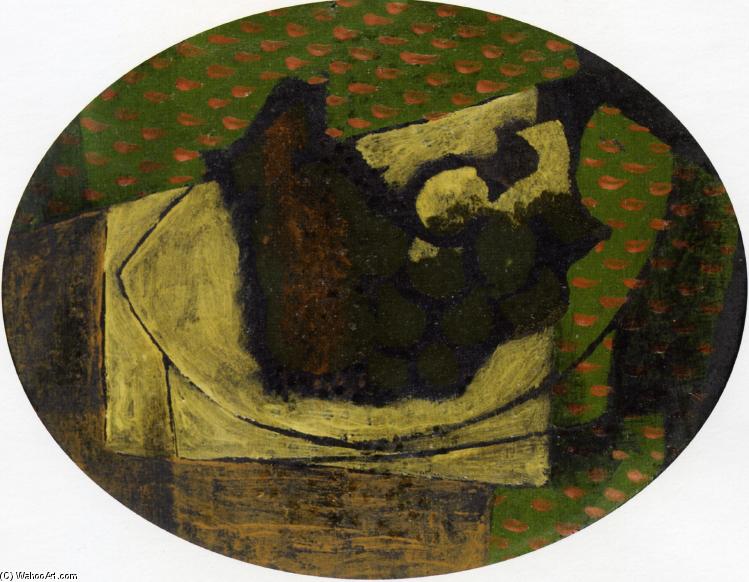
- Still Life with Grapes
 Baskıyı satın al Görseli Satın Al
 Paylaş
 Paylaş
 Details
 Favorilere ekle

 İndir
İndir
 Benzerlerini gör
 X-Ray
X-Ray
 Slayt Gösterisi
Still Life with Grapes
 Acrylic On Canvas
- WallArt
- Cubist Still Life
 1918
1918- Modern
 25.0 x 31.0 cm
El Yapımı Yağlı Boya Reproduksiyon
Sanatçılarımız tarafından sipariş üzerine hazırlanan; istediğiniz boyut ve çerçevede, tuval üzerine el boyaması yağlı boya.




P118B $10

P118H $10

P118W $10

P438Z $10

P508JH $12

P508YH $12

P805H $10

P805Z $10

P919BZ $10

P919G $10

P919XJ $10

P959ZH $10

P968JZ $12

W106C $8

W218G $10

W218JH $8

W218Y $10

W307PJ $10

W316G $10

W316PJ $8

W316Y $10

W398PJ $8

W4111J $10

W500HY $15

W500JH $15

W692G $12

W849H $8

W940BG $15

W953PJ $8




 Detaylı bilgi için tıklayın
Eserin orijinal oranlarıyla uyumlu, önceden belirlenmiş boyutlarımız arasından seçim yapın.

Belirli bir çerçeveye veya alana uyması için kendi boyutlarınızı girebilirsiniz. Seçtiğiniz boyut orijinal görüntünün oranlarıyla eşleşmiyorsa, sanat eserini kırparak veya ek el boyaması öğelerle resmi uzatarak ayarlayacağız. Üretim başlamadan önce onayınız için dijital bir taslak gönderilecektir.
Lütfen ekrandaki önizlemenin gerçek kırpmayı veya uzatmayı yansıtmadığını unutmayın. Nihai kompozisyonu yalnızca hazırlanan taslak doğru şekilde gösterecektir.
Özel boyutlar mevcut olsa da, orijinal oranları korumak adına önceden tanımlanmış listeden bir boyut seçmenizi öneririz.
Siparişten sonra, ArtsDot.com ekibi talimatlar için müşteriye e-posta gönderecek ve bir taslak önizleme sunacaktır
Dünya Çapında Teslimat (); standart 5 hafta yerine 3/4 haftada. (1 Temmuz). Kaliteden ödün verilmez.

Dünya Çapında Ücretsiz Ekspres Kargo

Yüksek Kaliteli Keten Tuval

Tam Kapsamlı Nakliye Sigortası

Gümrük Vergisi İade Garantisi

Gerçek Renk Uyumu Garantisi

60 Günlük İade Politikası (Sadece Kusurlu Ürünler İçin)

%100 Para İade Garantisi

Toplu Alım İndirimi
 Cam seçeneği yalnızca 110 cm altındaki boyutlar için mevcuttur.

Still Life with Grapes
Reproduksiyon Tekniği
Reproduksiyon Boyutu
-


Toplam Tutar
-
Eser Açıklaması
Georges Braque’s Still Life with Grapes: A Fragmented Reflection of Modern Vision
Georges Braque's "Still Life with Grapes," painted in 1918, stands as a cornerstone of Cubist art—a movement that irrevocably altered the course of artistic expression and continues to fascinate audiences today. More than just a depiction of fruit on a tabletop, this monochrome canvas embodies the intellectual rigor and aesthetic daring characteristic of Braque’s groundbreaking approach to representation. Examining its visual elements reveals layers of meaning rooted in both formal innovation and the anxieties of the era.The Geometry of Perception
At first glance, “Still Life with Grapes” presents a deceptively simple scene: a bowl overflowing with ripe grapes rests upon a wooden surface alongside an apple and an egg. However, Braque dismantles traditional perspective—a technique championed by Renaissance artists—employing geometric planes to construct the image. The bowl itself is fractured into overlapping cubes, mirroring the fragmentation of visual experience during the turbulent years following World War I. These angular forms aren’t merely stylistic choices; they represent a deliberate attempt to capture the multifaceted nature of reality as perceived by the human mind – a concept central to Braque's philosophical engagement with Einstein’s theories of relativity. The artist prioritizes spatial relationships over illusionistic depth, forcing viewers to actively engage in reconstructing the image within their own minds.Monochrome Palette and Emotional Resonance
The deliberate restriction to shades of gray amplifies the painting’s impact, stripping away color's emotive power and focusing instead on tonal variations that convey texture and form. This stylistic decision aligns perfectly with Braque’s exploration of Fauvist principles—a reaction against Impressionism’s emphasis on capturing fleeting sensations—where he sought to express emotion through bold colors rather than objective observation. Yet, in “Still Life,” the absence of color paradoxically intensifies the sense of stillness and contemplation. The muted tones evoke a feeling of melancholy, mirroring the pervasive disillusionment felt by artists and intellectuals grappling with the devastation of war and questioning established values.Symbolism Within Fragmentation
Beyond its formal innovations, "Still Life" carries symbolic weight. Grapes, traditionally associated with abundance and fertility, are presented in fragmented form—a visual metaphor for the shattered ideals of pre-war Europe. The apple, a symbol of knowledge and temptation, similarly disrupts conventional representation, hinting at themes of moral ambiguity. Even the egg, representing potential and rebirth, is depicted as an incomplete cube, suggesting that hope persists amidst despair. Braque’s masterful manipulation of these symbols underscores his desire to communicate profound ideas about human experience—ideas that transcend mere visual pleasure.A Legacy of Artistic Transformation
“Still Life with Grapes” cemented Braque's position as a pivotal figure in the birth of Cubism and profoundly influenced subsequent generations of artists. Its enduring appeal lies not only in its pioneering technique but also in its ability to provoke contemplation about perception, representation, and the complexities of human emotion. A high-quality reproduction allows viewers to appreciate the subtle nuances of Braque’s vision—a testament to his unwavering commitment to artistic experimentation and a celebration of modern art's transformative power.Benzer Eserler


Sanatçı Özgeçmişi
Georges Braque (1882–1963): Cubism Pioneer & Fauvist Master
Georges Braque, born in Argenteuil, France, on May 13, 1882, was a pivotal figure in the development of modern art. His upbringing within a family of house painters and decorators instilled in him not only a technical mastery of materials but also an early appreciation for form and structure. Though initially following in his father’s trade, Braque's inherent artistic inclinations soon led him to formal training at the École des Beaux-Arts in Le Havre, marking the beginning of his journey toward becoming one of the most influential painters of the 20th century. This foundation—a blend of practical craftsmanship and academic study—would prove crucial as he later deconstructed and reimagined traditional artistic conventions. Moving to Paris in 1902, Braque continued his studies at the Académie Humbert, immersing himself in the vibrant artistic milieu of the city. It was here that he encountered artists like Marie Laurencin and Francis Picabia, forging connections that would shape his early development. His initial works reflected the prevailing influences of Impressionism and Post-Impressionism, but a pivotal encounter with the bold colors and expressive freedom of Fauvism in 1905 ignited a new direction in his artistic exploration. This period saw him working alongside Henri Matisse and André Derain, experimenting with vibrant palettes and simplified forms—a conscious rejection of Cézanne’s meticulous realism in favor of capturing emotion through color. The Fauves championed an audacious approach to painting, prioritizing expressive intensity over accurate representation.The Embrace of Fauvism and the Dawn of Cubism
Braque's adoption of Fauvist principles is vividly exemplified in paintings like *The Patience*. He sought to distill the essence of a subject into its most striking visual elements—primarily color—creating compositions that pulsed with emotional energy. This stylistic shift represented a decisive break from academic tradition, signaling Braque’s willingness to embrace innovation and challenge established artistic norms. Simultaneously, he began exploring Cézanne's groundbreaking ideas about multiple perspectives—a quest for spatial complexity that would ultimately propel him toward the development of Cubism. A transformative moment arrived in 1907 with his exposure to the retrospective exhibition of Paul Cézanne’s work at the Salon d’Automne. Cézanne’s insistence on geometric forms and simultaneous perspective profoundly impacted Braque, fundamentally altering his artistic trajectory. The exhibition served as a catalyst for rethinking traditional representation—a rejection of illusionistic space in favor of exploring underlying structural relationships. This intellectual engagement fueled Braque's burgeoning fascination with Cubism, marking the genesis of one of art history’s most revolutionary movements.Innovation Through Fragmentation and Collage
The collaborative partnership between Braque and Pablo Picasso began in 1907, culminating in the co-founding of Cubism—a movement that irrevocably transformed European painting. Together, they embarked on a period of intense intellectual exchange that would give birth to Analytical Cubism, characterized by a radical simplification of form and a deliberate restriction of color palette. Works like *Houses at L'Estaque* exemplify this early phase, demonstrating Braque’s unwavering commitment to dismantling conventional perspective—a daring challenge to artistic conventions rooted in Renaissance ideals. The resulting images appeared to defy easy comprehension, inviting viewers to contemplate the multifaceted nature of visual perception. Furthermore, Braque pioneered the technique of *papier collé*, incorporating real-world materials such as newspaper clippings and textured paper into his canvases. This innovative approach disrupted the illusionistic space of traditional painting—blurring boundaries between art and life—and signaled a profound shift toward exploring materiality and texture as expressive elements. By juxtaposing disparate visual stimuli, Braque interrogated the relationship between representation and reality—a preoccupation that would persist throughout his artistic career.Later Years and Enduring Legacy
Braque’s stylistic evolution continued beyond Analytical Cubism, incorporating influences from classical composition and revisiting themes of landscape and still life with renewed sensitivity. Despite abandoning the strict formalism of his initial explorations, he retained a core commitment to investigating fundamental principles—form, space, and representation—that underpinned his artistic vision. His later paintings—characterized by serene atmospheres and subtle harmonies of color—stand as testament to Braque’s enduring legacy as a pioneer of modernist art—a master who dared to transcend convention and redefine the possibilities of painting. His influence on subsequent generations of artists is undeniable, shaping the course of visual culture and inspiring countless painters, sculptors, and collagists. Georges Braque's unwavering dedication to artistic experimentation—coupled with his collaborative spirit—cemented his place as a true visionary—a figure whose groundbreaking contributions continue to resonate throughout the history of art.
Georges Braque
1882 - 1963 , Fransa
Kısa Bilgiler
- Artistic Movement Or Style: Cubism
- Artists Who Influenced This Artist:
- Henri Matisse
- Paul Cézanne
- Date Of Birth: May 13, 1882
- Date Of Death: 1963
- Full Name: Georges Braque
- Nationality: French
- Notable Artworks:
- Houses at L'Estaque
- The Patience
- Place Of Birth: Argenteuil, France
İlgili Makaleler

Georges Braque'ın En İyi 25 Eseri: Kübizm ve Modern Sanatın İkonları | ArtsDot
Georges Braque'ın en iyi 25 eserini keşfedin! Kübizm hareketinin öncüsü olan bu ikonik tablolar, modern sanatın ruhunu yansıtıyor. Sanat tarihine yolculuk yapın ve evinizi ArtsDot.com'un yüksek kaliteli baskılarıyla zenginleştirin.

Deconstructing Reality: A Comprehensive Exploration of Cubist Still Life
Explore the revolutionary world of Cubist Still Life with ArtsDot. Discover Picasso & Braque's groundbreaking techniques, its philosophical roots, and lasting impact on modern art. Expert insights for collectors.

Mutfak Sanatına Yükseliş: Restoranınıza Kişisel Bir Dokunuş Katın!
Restoranınıza özel still life resimlerle lüks bir dokunuş katın! ArtsDot'tan el yapımı, gerçekçi reprodüksiyonlarla mekanı dönüştürün. Uzman sanat danışmanlığı ve güvenilir hizmetle hayallerinizi gerçeğe dönüştürün.

The Bountiful Still Life: Symbolism & Artistic Representation of Fruit Across Art History
Explore the rich history of still life painting & the symbolism of fruit across art movements. Discover masterpieces from Caravaggio to Cézanne with ArtsDot – expert guidance & museum-quality reproductions.

Severin Roesen: Evoking National Identity Through American Still Life Painting
Explore the captivating world of Severin Roesen, a major American still life painter influenced by Dutch masters. Discover his lush compositions and the symbolism within his art – a window into 19th-century America.



