


 Önizle
 Gönder
 Paylaş
 Detaylar
 Rehber

 Dosyayı İndir
 Benzerleri
 X-Işını
 Slayt Gösterisi
 İstatistikler
Tiger
 Acrylic On Canvas
- WallArt
- Cubist Expressionism
 1912
1912 19.0 x 23.0 cm
 Devamını Oku
Giclée / Sanat Baskısı
Hızlı üretim ve esnek bitiş seçenekleriyle müze kalitesinde giclée veya kanvas baskı. ( El Yapımı Tablo Satın Al Dijital Görsel Satışına Geç)




P118B ₺10

P118H ₺10

P118W ₺10

P438Z ₺10

P508JH ₺12

P508YH ₺12

P805H ₺10

P805Z ₺10

P919BZ ₺10

P919G ₺10

P919XJ ₺10

P959ZH ₺10

P968JZ ₺12

W106C ₺8

W218G ₺10

W218JH ₺8

W218Y ₺10

W307PJ ₺10

W316G ₺10

W316PJ ₺8

W316Y ₺10

W398PJ ₺8

W4111J ₺10

W500HY ₺15

W500JH ₺15

W692G ₺12

W849H ₺8

W940BG ₺15

W953PJ ₺8




Eserin orijinal oranlarıyla uyumlu, önceden belirlenmiş boyutlarımız arasından seçim yapın.

Belirli bir çerçeveye veya alana uyması için kendi ölçülerinizi girebilirsiniz. Seçtiğiniz boyut orijinal görüntünün oranlarıyla eşleşmiyorsa, sanat eserini kırpacağız veya görüntüyü aynalanmış ya da düz dolgulu bir kenarlıkla genişleteceğiz. Üretim başlamadan önce onayınız için bir dijital taslak gönderilecektir.
Lütfen ekrandaki önizlemenin gerçek kırpma veya genişletmeyi yansıtmadığını unutmayın. Nihai kompozisyonu yalnızca taslak doğru bir şekilde gösterecektir.
Özel boyutlar mevcut olsa da, orijinal oranları korumak için önceden tanımlanmış listeden bir boyut seçmenizi öneririz.
Dünya Çapında Teslimat (); standart 4/5 hafta yerine 2 haftada. (13 Ekim)

Dünya Çapında Ücretsiz Ekspres Kargo

Yüksek Kaliteli Keten Tuval

Tam Nakliye Sigortası

Gümrük Vergisi İadesi Garantisi

Gerçek Renk Uyumu Garantisi

100 Günlük İade Koşulları (Sadece Üretim Hatalı Ürünler İçin)

%100 Para İade Garantisi

Toplu Alım Avantajı
 Cam seçeneği yalnızca 110 cm altındaki boyutlar için mevcuttur.

Tiger
Giclée / Sanat Baskısı
Baskı Boyutu
-


Toplam Fiyat
₺ 3014
Franz Marc’s ‘Tiger’: A Symphony of Color and Spirit
“Tiger,” painted in 1912 by Franz Marc, stands as a cornerstone of German Expressionism—a movement that sought to convey inner emotions and spiritual truths through bold artistic expression. More than just a depiction of an animal, it's a profound meditation on the primal forces of nature and humanity’s relationship with them. Marc’s unwavering belief in the transformative power of art fueled his dedication to capturing not merely what he saw but what he *felt*, resulting in a painting that resonates powerfully even today.Subject Matter and Composition
The artwork portrays a tiger, rendered in striking black and white hues, traversing a dense forest landscape. Marc’s meticulous attention to detail isn't about photographic realism; rather, it serves to amplify the tiger’s presence as an embodiment of strength and vitality. The inclusion of a bicycle—a jarring juxtaposition against the serene wilderness—introduces an element of human intrusion, subtly questioning our dominion over the natural world. Above the tiger flies a bird, symbolizing freedom and aspiration, furthering the painting's thematic exploration of interconnectedness between animal and human existence. Two figures are positioned in the background, observing the tiger, hinting at a scene unfolding within a public space where contemplation of wildlife is encouraged.Style and Technique: Cubism’s Embrace of Emotion
Marc’s stylistic approach aligns closely with the tenets of Cubism, though he eschewed its fragmentation for a more expressive rendering. Instead of dissecting forms into geometric planes as Picasso pioneered, Marc utilized simplified shapes—primarily rectangular blocks—to convey volume and texture. This technique prioritizes conveying feeling over precise representation. The monochromatic palette – predominantly black and white – intensifies the emotional impact of the artwork. It strips away distracting color nuances, forcing viewers to confront the essence of the tiger’s physicality and its connection to the surrounding environment. The artist skillfully employs hatching and cross-hatching to build up tonal variations, creating a palpable sense of depth and atmosphere.Historical Context: Expressionism's Quest for Authenticity
Created during the burgeoning Expressionist movement, “Tiger” reflects the broader artistic preoccupation with conveying subjective experience—particularly spiritual yearning—during a period marked by social upheaval and intellectual ferment. Marc’s formative years were steeped in theological thought, influencing his conviction that art could serve as a vehicle for accessing deeper truths about existence. The painting emerged from a desire to escape the constraints of academic conventions and embrace a more visceral response to the world around him. It stands alongside other seminal works by artists like Edvard Munch and Wassily Kandinsky—all united in their commitment to expressing inner emotions with uncompromising honesty.Symbolism: Animal Spirit and Harmony
The tiger itself embodies primal energy, courage, and instinct – qualities that resonated deeply within Marc’s spiritual worldview. Its solitary presence underscores the importance of confronting one's own inner demons while simultaneously acknowledging the beauty and power inherent in nature. The bird represents aspiration and transcendence, suggesting a connection between earthly existence and divine inspiration. Ultimately, “Tiger” communicates a profound harmony between humanity and the natural world—a message that continues to inspire artists and collectors alike.Soru ve Cevaplar
Franz Marc imzalı "Tiger" eserinin renkleri canlı mı yoksa mat mı?
Franz Marc imzalı "Tiger" eserinin renkleri, Balanced yoğunluğunda ve Muted bir doygunlukta görünmektedir.
"Tiger" genel olarak ne kadar açık tonlu?
Genel olarak, "Tiger" eseri brilliant olarak kaydedilmiştir. Algılanan parlaklık, eserin ne kadar açık veya koyu göründüğünü tanımlar.
"Tiger" ne zaman yapıldı?
Franz Marc imzalı "Tiger", 1912 yılında yaratılmıştır.
"Tiger" adlı eser, Franz Marc kariyerinin hangi dönemine ait?
"Tiger", Franz Marc sanatçısının Mature Expressionism dönemini temsil etmektedir."
"Tiger" hangi tarza aittir?
Franz Marc imzalı "Tiger" adlı eserin dahil olduğu akım Cubist Expressionism akımıdır. Bu sınıflandırma, çalışmayı ilgili sanatçılar ve sanat eserleri arasında konumlandırır.
"Tiger" eserinde en çok hangi renk öne çıkıyor?
"Tiger" adlı eserde en çok öne çıkan renk Espresso (#615850)'dır. Baskın renk, bir sanat eserini iç mekânla eşleştirirken faydalıdır.
"Tiger" ne hakkında ve nasıl bir atmosfere sahip?
Franz Marc imzalı "Tiger", tiger, animal spirit, forest landscape, cubism, monochromatic print, wildlife observation, geometric composition, expressionist art konularını Calm bir ruh haliyle betimlemektedir. Konu ve atmosfer birlikte eseri tanımlar.
Franz Marc imzalı "Tiger" eserinin renk kompozisyonu nasıl kurgulanmıştır?
"Tiger" eserinde, Statement bir kontrast, Strong Color Unity bir uyumla eşleşiyor.


Sanatçı Biyografisi
Franz Marc (1880-1916): Pioneer of German Expressionism
Franz Moritz Wilhelm Marc, born on February 8, 1880, in Munich, Germany, was a painter whose brief but intensely focused career irrevocably altered the course of German Expressionism. His story is one of profound spiritual seeking translated into a vibrant visual language—a quest to understand the essence of life through the purity he found in the natural world, particularly within the animal kingdom. Initially influenced by his father, Wilhelm Marc, a landscape painter, young Franz’s artistic path wasn't immediately certain. He briefly contemplated theology, grappling with questions of faith and existence before ultimately dedicating himself to art at the Academy of Fine Arts in Munich. These early explorations into religious thought would remain deeply embedded within his work, shaping his belief that art could be a conduit for spiritual experience. His academic training provided him with technical foundations, but it was encounters with the works of Vincent van Gogh during visits to Paris that truly ignited his artistic vision. Van Gogh’s emotive use of color and raw expression resonated profoundly with Marc, liberating him from conventional techniques and setting him on a path toward a more subjective and emotionally charged style.Early Influences and Artistic Development
Marc's formative years were marked by a fascination with both Romantic literature and theology—a duality that would permeate his artistic sensibility throughout his life. His father’s landscape paintings instilled in him an appreciation for the grandeur of nature, while his mother’s Calvinist upbringing fostered a contemplative spirit. He studied drawing first with Gabriel Hackl and then painting with Wilhelm von Diez at Munich Academy, absorbing the stylistic conventions of academic naturalism alongside nascent explorations into Impressionistic color innovations. However, it was his encounter with Van Gogh's paintings during Parisian excursions that fundamentally reshaped his artistic perspective. As Marc himself eloquently expressed, “Van Gogh is for me the most authentic, the greatest, the most poignant painter I know.” He recognized in Van Gogh’s bold use of color and unflinching portrayal of emotion a liberation from formal constraints—a freedom to express inner spiritual truths without resorting to representational accuracy. This influence propelled him toward simplification and heightened emotional intensity, mirroring Symbolist ideals that championed the artist as martyr.The Birth of Der Blaue Reiter
Marc’s artistic journey took an extraordinary turn in 1907 with his relocation to Paris—a pivotal moment fueled by a desire for creative renewal following a period of personal turmoil. During this time, he immersed himself in the vibrant artistic milieu of the city and encountered artists who profoundly impacted his stylistic evolution. Notably, Robert Delaunay’s exploration of abstract forms and chromatic harmonies broadened Marc's horizons beyond traditional representation. This encounter spurred him toward experimentation with geometric abstraction—a departure from Impressionistic color palettes that signaled a decisive shift toward conveying spiritual concepts through simplified shapes and bold hues. Simultaneously, he cultivated friendships with fellow artists who shared his conviction that art could transcend the material realm and engage in dialogue with deeper existential questions. He joined August Macke and Wassily Kandinsky to establish *Der Blaue Reiter* (The Blue Rider) in 1911—a collective dedicated to forging a new artistic path rooted in Symbolist principles. This group’s inaugural exhibition showcased not only Marc's own work but also that of other avant-garde artists, cementing Der Blaue Reiter’s reputation as the epicenter of German Expressionism and initiating a dialogue about art’s capacity for spiritual expression.Animal Painting: A Spiritual Quest
Marc’s artistic preoccupation with animals began in earnest around 1907—a fascination driven by both anatomical curiosity and a profound belief that animals embodied an inherent purity and connection to nature absent from human society. He viewed animals as symbols of innocence, harmony, and spiritual transcendence—subjects he approached with reverence and meticulous attention to detail. Unlike Impressionists who sought to capture fleeting visual impressions, Marc aimed to distill the essence of his subjects into their fundamental forms—reducing figures to geometric shapes that conveyed emotional intensity without resorting to realistic depiction. Paintings like *The Tiger* (1912) exemplify this stylistic approach—a monumental composition characterized by assertive color choices and a deliberate simplification of form that encapsulates Marc’s artistic vision. He believed animals possessed an inner luminosity—a spiritual radiance—that mirrored the divine presence he perceived in the natural world. This conviction fueled his relentless pursuit of expressive abstraction, mirroring Symbolist ideals that championed the artist as martyr.Legacy and Recognition
Franz Marc tragically perished on March 4, 1916, during the Battle of Verdun—a devastating loss for the art world and a poignant reminder of the fragility of artistic creativity amidst the tumult of wartime conflict. Despite his untimely demise, Marc’s influence endured—inspiring generations of artists who embraced his stylistic innovations and championed his unwavering commitment to conveying spiritual truths through abstract forms and symbolic color. His paintings continue to captivate audiences today with their emotional depth and profound contemplation of existential themes—a testament to the enduring power of art to transcend the boundaries of time and place. Marc’s legacy extends beyond his artistic achievements; he remains a symbol of intellectual integrity, spiritual courage, and unwavering devotion to his craft—a figure whose work continues to resonate with viewers seeking solace and inspiration in the face of adversity. His contribution to German Expressionism solidified his position as one of the most important artists of the 20th century—a visionary who dared to explore the intersection between art, spirituality, and the sublime beauty of the natural world.
Franz Marc
1880 - 1916 , Almanya
Kısa Bilgiler
- Artistic Movement Or Style: Dışavurumculuk
- Artists Who Influenced This Artist:
- Vincent van Gogh
- Robert Delaunay
- Date Of Birth: 8 Şubat 1880
- Date Of Death: 4 Mart 1916
- Full Name: Franz Moritz Wilhelm Marc
- Nationality: Alman
- Notable Artworks:
- Tierschicksale
- Kızıl Geyik
- Gökyüzü Şelalesi
- Place Of Birth: Münih, Almanya
İlgili Yazılar

Dark Masterpieces: 10 Iconic Paintings Dominated by Black Tones |
Explore 10 iconic paintings dominated by black tones, from Rembrandt’s chiaroscuro to Goya's dark expressions. Discover the stories behind these masterpieces & find museum-quality art reproductions for your home at .

German Expressionism's 10 Defining Masterpieces | Art for Your Home
Explore 10 defining German Expressionism masterpieces – from Munch's 'The Scream' to Kandinsky’s abstracts. Discover the artists, stories & bold colors behind this powerful art movement. Find museum-quality reproductions at ArtsDot.com.

Sanatta Hayvanlar: İç Mekân Tasarımında Sembolizm ve Estetik Dönüşüm
Sanatta hayvanların sembolik anlamlarını keşfedin! Türk resim sanatından iç mekan tasarımına kadar kapsamlı rehberimizle evinizi dönüştürün. ArtsDot ile kaliteli yağlı boya tablolar ve özel portre siparişleri.
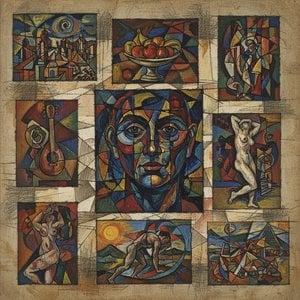
Cubist Expressionism's 10 Defining Masterpieces | Art for Your Home
Explore 10 defining Cubist Expressionism masterpieces by Picasso, Braque & more. Discover the stories behind these bold, geometric paintings and bring museum-quality art to your home with ArtsDot.com. Explore the full collection online.

Franz Marc: Expressionism, Spirituality & the Animal Symbolism of a Modern Master
Explore the profound world of Franz Marc's Expressionist paintings. Discover his spiritual connection to animals, innovative use of color, and lasting impact on modern art history. Learn more at ArtsDot.


