


 Önizle
 Gönder
 Paylaş
 Detaylar
 Rehber

 Dosyayı İndir
 Benzerleri
 X-Işını
 Slayt Gösterisi
 İstatistikler
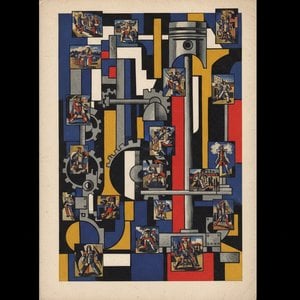
Cheerful Forms
 Acrylic On Canvas
- WallArt
- Cubist Expressionism
 1914
1914 105.0 x 151.0 cm
 Devamını Oku
Giclée / Sanat Baskısı
Hızlı üretim ve esnek bitiş seçenekleriyle müze kalitesinde giclée veya kanvas baskı. ( El Yapımı Tablo Satın Al Dijital Görsel Satışına Geç)




P118B ₺10

P118H ₺10

P118W ₺10

P438Z ₺10

P508JH ₺12

P508YH ₺12

P805H ₺10

P805Z ₺10

P919BZ ₺10

P919G ₺10

P919XJ ₺10

P959ZH ₺10

P968JZ ₺12

W106C ₺8

W218G ₺10

W218JH ₺8

W218Y ₺10

W307PJ ₺10

W316G ₺10

W316PJ ₺8

W316Y ₺10

W398PJ ₺8

W4111J ₺10

W500HY ₺15

W500JH ₺15

W692G ₺12

W849H ₺8

W940BG ₺15

W953PJ ₺8




Eserin orijinal oranlarıyla uyumlu, önceden belirlenmiş boyutlarımız arasından seçim yapın.

Çerçevenize veya duvarınıza uygun olması için ihtiyacınız olan genişlik ve yüksekliği yazın. Bir baskı yalnızca kesilebilir, görselden daha büyük hale getirilemez; bu nedenle farklı bir formdaki boyut seçimi, görselin bir kısmının kaybına neden olur. Herhangi bir baskı yapmadan önce onaylamanız için size bir dijital taslak gönderiyoruz. Bu sayfada gösterilen resim gerçek kesimi göstermez — bunu yalnızca taslak gösterir.
Dünya Çapında Teslimat (); standart 4/5 hafta yerine 2 haftada. (22 Ekim)

Dünya Çapında Ücretsiz Ekspres Kargo

Yüksek Kaliteli Keten Tuval

Tam Nakliye Sigortası

Gümrük Vergisi İadesi Garantisi

Gerçek Renk Uyumu Garantisi

100 Günlük İade Koşulları (Sadece Üretim Hatalı Ürünler İçin)

%100 Para İade Garantisi

Toplu Alım Avantajı
 Cam seçeneği yalnızca 110 cm altındaki boyutlar için mevcuttur.

Cheerful Forms
Giclée / Sanat Baskısı
Baskı Boyutu
-


Toplam Fiyat
₺ 3028
Cheerful Forms: A Symphony of Color and Spirit
Franz Marc’s “Cheerful Forms,” painted in 1914, stands as a cornerstone of German Expressionism—a movement that sought to convey raw emotion and inner experience through bold artistic vision. Measuring 105 x 151 cm, this oil on canvas transcends mere representation; it embodies Marc's profound belief that art could illuminate the spiritual essence of existence. The painting’s genesis lies in Marc’s formative years at Munich’s Academy of Fine Arts, where he honed his technical skills while simultaneously wrestling with existential questions fueled by encounters with Vincent van Gogh’s emotionally charged landscapes.A Bold Palette and Geometric Harmony
The artwork immediately captivates the eye with its audacious use of color—a vibrant tapestry woven from yellows, blues, reds, greens, and oranges. These hues aren't merely decorative; they are deliberately chosen to evoke feelings of joy and vitality, mirroring Marc’s fascination with the natural world and his conviction that it held keys to unlocking spiritual understanding. Dominating the composition is a large circle, radiating outwards like a beacon of serenity, encircled by smaller circles that create an intricate interplay of shapes and textures. This geometric abstraction isn't simply stylistic choice; it reflects Marc’s desire to distill complex ideas into simplified forms—a technique characteristic of both Fauvist and Cubist influences.Echoes of Symbolism and Spiritual Quest
Marc’s artistic journey was deeply rooted in religious contemplation, informing his exploration of themes like innocence and rebirth. The circle itself is a potent symbol – representing wholeness, unity, and the cyclical nature of life—a motif frequently revisited throughout Marc's oeuvre. Its placement at the center underscores the importance of inner harmony and spiritual awareness as pathways to perceiving beauty and truth. Furthermore, the scattered smaller circles contribute to an overall sense of dynamism and interconnectedness, suggesting that all elements within the painting are inextricably linked in a larger cosmic order.Beyond Technique: An Emotional Resonance
“Cheerful Forms” isn’t merely a beautifully executed artwork; it's a conduit for emotion—a testament to Marc’s ability to translate profound spiritual insights into visual form. Exhibited at The University of Iowa Museum of Art, alongside other masterpieces of modern art, the painting continues to inspire viewers with its luminous colors and captivating design. Consider commissioning a high-quality reproduction to infuse your interior space with the spirit of Expressionism—a celebration of color, form, and the enduring quest for beauty and meaning.- Artist: Franz Marc
- Year: 1914
- Medium: Oil on Canvas
- Dimensions: 105 x 151 cm
Soru ve Cevaplar
"Cheerful Forms" eserinin arkasındaki sanatçı kim?
"Cheerful Forms" adlı eserin Franz Marc tarafından yapıldığı düşünülmektedir.
"Cheerful Forms" eserinin üslubu, yaratıcısının dönemle nasıl bir ilişki içindedir?
Franz Marc imzalı "Cheerful Forms" eserinde, Cubist Expressionism akımı Modern Dönem dönemiyle buluşuyor.
"Cheerful Forms" için bir indirme seçeneği mevcut mu?
Franz Marc imzalı "Cheerful Forms" eserinin görseli, eserin İndir sayfasından indirilebilir: yüksek çözünürlüklü dijital görüntü indirme.
İlgili Eserler


Sanatçı Biyografisi
Franz Marc (1880-1916): Pioneer of German Expressionism
Franz Moritz Wilhelm Marc, born on February 8, 1880, in Munich, Germany, was a painter whose brief but intensely focused career irrevocably altered the course of German Expressionism. His story is one of profound spiritual seeking translated into a vibrant visual language—a quest to understand the essence of life through the purity he found in the natural world, particularly within the animal kingdom. Initially influenced by his father, Wilhelm Marc, a landscape painter, young Franz’s artistic path wasn't immediately certain. He briefly contemplated theology, grappling with questions of faith and existence before ultimately dedicating himself to art at the Academy of Fine Arts in Munich. These early explorations into religious thought would remain deeply embedded within his work, shaping his belief that art could be a conduit for spiritual experience. His academic training provided him with technical foundations, but it was encounters with the works of Vincent van Gogh during visits to Paris that truly ignited his artistic vision. Van Gogh’s emotive use of color and raw expression resonated profoundly with Marc, liberating him from conventional techniques and setting him on a path toward a more subjective and emotionally charged style.Early Influences and Artistic Development
Marc's formative years were marked by a fascination with both Romantic literature and theology—a duality that would permeate his artistic sensibility throughout his life. His father’s landscape paintings instilled in him an appreciation for the grandeur of nature, while his mother’s Calvinist upbringing fostered a contemplative spirit. He studied drawing first with Gabriel Hackl and then painting with Wilhelm von Diez at Munich Academy, absorbing the stylistic conventions of academic naturalism alongside nascent explorations into Impressionistic color innovations. However, it was his encounter with Van Gogh's paintings during Parisian excursions that fundamentally reshaped his artistic perspective. As Marc himself eloquently expressed, “Van Gogh is for me the most authentic, the greatest, the most poignant painter I know.” He recognized in Van Gogh’s bold use of color and unflinching portrayal of emotion a liberation from formal constraints—a freedom to express inner spiritual truths without resorting to representational accuracy. This influence propelled him toward simplification and heightened emotional intensity, mirroring Symbolist ideals that championed the artist as martyr.The Birth of Der Blaue Reiter
Marc’s artistic journey took an extraordinary turn in 1907 with his relocation to Paris—a pivotal moment fueled by a desire for creative renewal following a period of personal turmoil. During this time, he immersed himself in the vibrant artistic milieu of the city and encountered artists who profoundly impacted his stylistic evolution. Notably, Robert Delaunay’s exploration of abstract forms and chromatic harmonies broadened Marc's horizons beyond traditional representation. This encounter spurred him toward experimentation with geometric abstraction—a departure from Impressionistic color palettes that signaled a decisive shift toward conveying spiritual concepts through simplified shapes and bold hues. Simultaneously, he cultivated friendships with fellow artists who shared his conviction that art could transcend the material realm and engage in dialogue with deeper existential questions. He joined August Macke and Wassily Kandinsky to establish *Der Blaue Reiter* (The Blue Rider) in 1911—a collective dedicated to forging a new artistic path rooted in Symbolist principles. This group’s inaugural exhibition showcased not only Marc's own work but also that of other avant-garde artists, cementing Der Blaue Reiter’s reputation as the epicenter of German Expressionism and initiating a dialogue about art’s capacity for spiritual expression.Animal Painting: A Spiritual Quest
Marc’s artistic preoccupation with animals began in earnest around 1907—a fascination driven by both anatomical curiosity and a profound belief that animals embodied an inherent purity and connection to nature absent from human society. He viewed animals as symbols of innocence, harmony, and spiritual transcendence—subjects he approached with reverence and meticulous attention to detail. Unlike Impressionists who sought to capture fleeting visual impressions, Marc aimed to distill the essence of his subjects into their fundamental forms—reducing figures to geometric shapes that conveyed emotional intensity without resorting to realistic depiction. Paintings like *The Tiger* (1912) exemplify this stylistic approach—a monumental composition characterized by assertive color choices and a deliberate simplification of form that encapsulates Marc’s artistic vision. He believed animals possessed an inner luminosity—a spiritual radiance—that mirrored the divine presence he perceived in the natural world. This conviction fueled his relentless pursuit of expressive abstraction, mirroring Symbolist ideals that championed the artist as martyr.Legacy and Recognition
Franz Marc tragically perished on March 4, 1916, during the Battle of Verdun—a devastating loss for the art world and a poignant reminder of the fragility of artistic creativity amidst the tumult of wartime conflict. Despite his untimely demise, Marc’s influence endured—inspiring generations of artists who embraced his stylistic innovations and championed his unwavering commitment to conveying spiritual truths through abstract forms and symbolic color. His paintings continue to captivate audiences today with their emotional depth and profound contemplation of existential themes—a testament to the enduring power of art to transcend the boundaries of time and place. Marc’s legacy extends beyond his artistic achievements; he remains a symbol of intellectual integrity, spiritual courage, and unwavering devotion to his craft—a figure whose work continues to resonate with viewers seeking solace and inspiration in the face of adversity. His contribution to German Expressionism solidified his position as one of the most important artists of the 20th century—a visionary who dared to explore the intersection between art, spirituality, and the sublime beauty of the natural world.
Franz Marc
1880 - 1916 , Almanya
Kısa Bilgiler
- Artistic Movement Or Style: Dışavurumculuk
- Artists Who Influenced This Artist:
- Vincent van Gogh
- Robert Delaunay
- Date Of Birth: 8 Şubat 1880
- Date Of Death: 4 Mart 1916
- Full Name: Franz Moritz Wilhelm Marc
- Nationality: Alman
- Notable Artworks:
- Tierschicksale
- Kızıl Geyik
- Gökyüzü Şelalesi
- Place Of Birth: Münih, Almanya
İlgili Yazılar
Fernand Léger'nin En İyi 25 Eseri: Modern Sanatın İkonik Yorumları | ArtsDot
Fernand Léger'nin en iyi 25 eserini keşfedin! Kübist ve tübülist tarzıyla modern sanata yön veren bu ikonik tabloların hikayelerini okuyun. Ev dekorasyonunuz için ilham alın, yüksek kaliteli sanat baskılarıyla ArtsDot’ta sanatı yaşayın. Şimdi koleksiyonu keşfedin!

Geometrik Soyutlamanın Öncü Eserleri: Sanat Tarihinin İzinde 🖼️🎨
Geometrik Soyutlamanın 10 başyapıtını keşfedin! Mondrian, Malevich ve Kandinsky gibi sanatçıların ikonik eserleriyle modern sanatın derinliklerine yolculuk edin. Evinizi lüks sanat baskılarıyla renklendirin. ArtsDot.com'da tüm koleksiyonu inceleyin!

Soyut Ekspresyonizmin İzinden: Sanat Tarihini Derinleştiren 10 Başyapıt
Soyut Ekspresyonizmin zirvesi! Pollock, Rothko ve daha fazlasıyla sanat tarihini şekillendiren 10 başyapıtı keşfedin. Sanatçı hikayeleri, renklerin gücü ve evinizi dönüştürecek müze kalitesinde reprodüksiyonlar için ArtsDot.com'u ziyaret edin.

Kandinsky's Masterpieces: 25 Paintings That Define Abstract Art | ArtsDot
Journey through Wassily Kandinsky's 25 most iconic abstract paintings. Explore his revolutionary use of color, form & spiritual expressionism. Find museum-quality Kandinsky reproductions and elevate your home decor with ArtsDot.com. Discover all masterpieces on ArtsDot.com!

German Expressionism's 10 Defining Masterpieces | Art for Your Home
Explore 10 defining German Expressionism masterpieces – from Munch's 'The Scream' to Kandinsky’s abstracts. Discover the artists, stories & bold colors behind this powerful art movement. Find museum-quality reproductions at ArtsDot.com.


