
Blue-Black Fox Hand-painted in oil, just for your walls


The picture follows your choices: , .
Koleksiyon Açıklaması
Handmade reproductions are available on ArtsDot.com, preserving the authenticity of Marc’s original vision.
 Devamını Oku
Sanatçı Özgeçmişi
Franz Marc’ın ikonik hayvan tabloları, canlı renkleri ve ruhsal temalarıyla öne çıkan Alman dışavurumcu sanatçı Franz Marc (1880-1916)’nın mirasıdır. Doğanın özünü anlamaya yönelik bir arayış olan bu sanatçı yaşamında derin bir ruhsal arayış yaşadı. Münih Güzel Sanatlar Akademisi’nde eğitim aldıktan sonra Wassily Kandinsky ile birlikte Der Blaue Reiter grubunu kurdu ve Alman dışavurumculuğunun dor
El Yapımı Yağlı Boya Reproduksiyon
Sanatçılarımız tarafından sipariş üzerine hazırlanan; istediğiniz boyut ve çerçevede, tuval üzerine el boyaması yağlı boya. ( Baskı Satışına Geç Dijital Görsel Satışına Geç)
Order your painting in four simple steps
Take your time. You can change any answer; the price in your order card follows each choice.
1 Step one of four
Which size would you like?
These sizes keep the proportions of the original painting. The drawing shows your choice on a wall, above a two-metre sofa.
Or give your own measurements
Eserin orijinal oranlarıyla uyumlu, önceden belirlenmiş boyutlarımız arasından seçim yapın.

Çerçevenize veya duvarınıza uygun olması için ihtiyacınız olan genişliği ve yüksekliği yazın. Bu eser el boyamasıdır; bu nedenle farklı bir formdaki boyutlar için sanatçı, resmin etrafına biraz daha fazla boya ekleyebilir veya biraz daha kırpabilir — seçim sizin. Boyama işlemi başlamadan önce onaylamanız için size bir dijital taslak gönderiyoruz. Bu sayfada gösterilen resim gerçek sonucu yansıtmamaktadır — gerçek sonucu yalnızca taslak göstermektedir.
2 Step two of four
How should it be prepared: rolled, stretched or framed?
The prices below are for the size you chose in step one.
Choose the edges of the stretched canvas
Choose your frame

White ₺1

Blurside ₺1

Extended ₺1

P118B ₺10

P118H ₺10

P118W ₺10

P438Z ₺10

P508JH ₺12

P508YH ₺12

P805H ₺10

P805Z ₺10

P919BZ ₺10

P919G ₺10

P919XJ ₺10

P959ZH ₺10

P968JZ ₺12

W106C ₺8

W218G ₺10

W218JH ₺8

W218Y ₺10

W307PJ ₺10

W316G ₺10

W316PJ ₺8

W316Y ₺10

W398PJ ₺8

W4111J ₺10

W500HY ₺15

W500JH ₺15

W692G ₺12

W849H ₺8

W940BG ₺15

W953PJ ₺8

H24-GOLD ₺30

H24-SILVER ₺30

H36-GOLD ₺45

H36-SILVER ₺45
Çerçeveli
Moulding: . Overall size with the frame: .
3 Step three of four
Would you like anything changed in the painting?
Most people answer no. Because each painting is made by hand, our artist can also adapt it for you.
After order, ArtsDot.com team will email client for instructions and provide a mockup preview
4 Step four of four
A few finishing options
All of them are optional. The answers already selected cost nothing extra.
Who paints it?
Dünya Çapında Teslimat (); standart 5 hafta yerine 3/4 haftada. (29 Ekim). Kaliteden ödün verilmez.
A nameplate, as in a museum?
İşlemeli Bronz Plaka Detayları
This elegant plaque features the artist's name and the title of the artwork, finely engraved for a timeless presentation.
It is made from bronze with a refined, elegant finish. The text is precisely laser-engraved for a sharp and permanent result. Measuring 9x2 cm, the plaque is compact yet easy to read. It's built to be durable and scratch-resistant, offering a professional, museum-quality look. Mounting is simple thanks to the included adhesive backing.
Şeffaf Akrilik Plaka Detayları
The plaque includes essential engraved details such as the artist's name, the title of the artwork, the date it was created, the type of media used-like oil on canvas or watercolor-a brief description of the piece, and a QR code that links to the complete artwork information.
It is crafted from clear acrylic, offering a sleek, modern appearance. The text is UV-engraved in black to ensure strong visual contrast. With a size of 10x15 cm, it ensures optimal readability. It comes equipped with two metal hooks for secure wall mounting. The plaque is designed to be weather-resistant, making it suitable for various environments, and it includes interactive features that work seamlessly with smartphone scanning.
Siyah Akrilik Plaka Detayları
This elegant plaque includes engraved information such as the artist's name, the title of the artwork, the date it was created, the type of media used (like oil on canvas or watercolor), a short description of the artwork, and a QR code for quick access to more information.
The plaque itself is made from refined black acrylic with a premium finish. The text is laser-engraved in white for high contrast and readability. Its size is 10x15 cm, designed to be easy to read. It comes with two metal hooks for professional mounting. The design is sleek and fits any interior style. It is also weather-resistant and durable, with built-in digital integration for mobile compatibility.
A protective varnish?
When do you need it?
✓ Check and order
Your painting, as you ordered it

Blue-Black Fox
Baskı Tekniği
Baskı Boyutu
-

Seçkin Kıdemli Sanatçı
Daha fazla detay, incelik ve ek üretim süresi
-

Reproduksiyon Çerçeve Seçenekleri
-
-
Herhangi bir kenarı 105 cm'den (yaklaşık 41 inç) büyük olan sanat eserleri veya reprodüksiyonlar için çerçeve, demonte edilmiş bir kit halinde gönderilecektir. Bu yöntem, güvenli teslimat sağlar ve taşıma sırasında oluşabilecek hasarları önler.
Profesyonel montaj gereklidir; bu ürün kendin yap (DIY) tarzı bir ürün değildir.
Kit; ahşap tutkalı (pakete dahil değildir), kanvas germe pensi ve tutkal kururken çıtaların dik durmasını sağlayacak işkenceler kullanılarak, deneyimli bir profesyonel çerçeveci tarafından monte edilmeli ve kanvas gerilmelidir. Hatalı montaj veya dengesiz kanvas gerginliği sanat eserine kalıcı zarar verebilir ve bu durum garantimiz kapsamında değildir.
 Herhangi bir kenarı 105 cm'den (yaklaşık 41 inç) büyük olan sanat eserleri veya reprodüksiyonlar için çerçeve, demonte edilmiş bir kit halinde gönderilecektir. Bu yöntem, güvenli teslimat sağlar ve taşıma sırasında oluşabilecek hasarları önler.
Tüm masif ahşap çıtalar dahildir, montaj için hassas bir şekilde ölçülmüştür.
Paket içeriğinde bulunan vidalar ve köşe birleşimleri için çerçeve ustanız tarafından temin edilmesi gereken, ancak pakete dahil olmayan ahşap tutkalı ile monte edilir.
Profesyonel araçlar gereklidir ve pakete dahil değildir: bir tuval germe aparatı (gerdirici) ve yapıştırıcı kururken çıtaların dik durmasını sağlayacak kıskaçlar.
Önemli:
Köşe bağlantıları için ahşap tutkalı gereklidir; tutkal tamamen kuruyana kadar çıtalar işkenceler ile sabitlenmelidir ve monte edilmiş çerçeve üzerindeki kanvasın gerilmesi için bir kanvas germe pensine ihtiyaç duyulur. Bunların hiçbiri kit içerisinde yer almamaktadır. Lütfen bu boyutu sipariş etmeden önce deneyimli bir profesyonel çerçeve ustası ile anlaşın.

İsimlik
-
-

Koruyucu Vernik
Parlak Vernik (renkleri canlandırır; ışığa ve neme karşı koruma sağlar)
-

Eserimi Özelleştir
Değiştirilebilecek örneklere göz atın: Yüzü müşteri fotoğrafıyla değiştirin; Evcil hayvan ekleyin (örneğin, kediyi köpek ile değiştirin); Arka plana gizli bir mesaj dahil edin; Arka plan manzarasını veya öğelerini değiştirin.
-

Acil
Dünya Çapında Teslimat (); standart 5 hafta yerine 3/4 hafta içinde. (29 Ekim). Kaliteden ödün verilmez.
-
Hızlı Teslimat
için dünya çapında teslimat süresi 5 haftadır. (5 Kasım).
Dahil
Toplam Fiyat
₺ 12900
Cam seçeneği yalnızca 110 cm altındaki boyutlar için mevcuttur.
Included with every order
- Dünya Çapında Ücretsiz Ekspres Kargo
- Yüksek Kaliteli Keten Tuval
- Tam Nakliye Sigortası
- Gümrük Vergisi İadesi Garantisi
- Gerçek Renk Uyumu Garantisi
- 100 Günlük İade Koşulları (Sadece Üretim Hatalı Ürünler İçin)
- %100 Para İade Garantisi
- Toplu Alım Avantajı


A Primal Encounter in the Heart of the Forest
In the quietude of a primordial woodland, where the shadows of towering trees dance with the light of an unseen sun, Franz Marc’s Blue-Black Fox emerges as a profound meditation on existence. Painted around 1911, this masterpiece is far more than a mere depiction of wildlife; it is a window into the very soul of German Expressionism. As the eye wanders through the verdant depths of the canvas, it encounters a fox rendered in stark, monochromatic black and white—a striking presence that commands immediate reverence. This creature does not merely inhabit the forest; it moves through it as a silent witness to the spiritual vitality pulsing within every leaf and branch. For the discerning collector, this piece offers an invitation to step away from the noise of the modern world and reconnect with the raw, unadulterated essence of nature.
The Chromatic Symphony of Emotion
To gaze upon this work is to experience a symphony of color that defies the boundaries of external reality. While the fox remains grounded in its monochrome simplicity, the surrounding landscape erupts in a breathtaking display of sapphire blue, emerald green, ruby red, and amethyst purple. These are not merely decorative hues; for Marc, color was a spiritual language used to bypass the intellect and speak directly to the human spirit. The deliberate dissonance between the somber tones of the fox and the vibrant, almost electric foliage creates a tension that is both melancholic and exhilarating. This chromatic interplay allows the viewer to feel the artist's internal quest for transcendence, making the painting an ideal centerpiece for an interior designed to evoke deep thought and emotional resonance.
The Tactile Language of Expressionist Technique
The physical presence of the painting is as impactful as its color palette. Marc utilized a technique characterized by bold, gestural strokes that lend the canvas a palpable, textured surface. By applying tempera mixed with linseed oil in thick, energetic layers, he achieved a luminosity and depth that captures the very essence of movement. One can almost feel the purposeful stride of the fox through the undergrowth, as the heavy brushwork mirrors the rhythmic pulse of life itself. For interior designers seeking to add character and movement to a space, a high-quality reproduction of this work provides a much-needed layer of texture and vitality. It is an art piece that does not merely sit upon a wall but actively engages with the light and atmosphere of the room, transforming any environment into a sanctuary of Expressionist beauty.
Soru ve Cevaplar
Franz Marc imzalı "Blue-Black Fox" eserinde hangi konular yer alıyor?
Franz Marc imzalı "Blue-Black Fox" şunları betimler: fox, forest, color palette, wildlife, expressionism, landscape, animal painting.
Franz Marc imzalı "Blue-Black Fox", güçlü kontrastlar mı yoksa yumuşak uyumlar mı kullanıyor?
Franz Marc imzalı "Blue-Black Fox" eserinin renk analizi, Gentle bir kontrast ve Softly Mixed Palette bir uyum kaydetmektedir.
Franz Marc imzalı "Blue-Black Fox" eserini bir slayt gösterisi olarak nasıl izleyebilirim?
Bir slayt gösterüsü mevcuttur: Franz Marc imzalı "Blue-Black Fox" eserinin Slayt Gösterisi sayfası.

Franz Marc
1880 - 1916, Almanya
Sanatçı Biyografisi
Franz Marc (1880-1916): Pioneer of German Expressionism
Franz Moritz Wilhelm Marc, born on February 8, 1880, in Munich, Germany, was a painter whose brief but intensely focused career irrevocably altered the course of German Expressionism. His story is one of profound spiritual seeking translated into a vibrant visual language—a quest to understand the essence of life through the purity he found in the natural world, particularly within the animal kingdom. Initially influenced by his father, Wilhelm Marc, a landscape painter, young Franz’s artistic path wasn't immediately certain. He briefly contemplated theology, grappling with questions of faith and existence before ultimately dedicating himself to art at the Academy of Fine Arts in Munich. These early explorations into religious thought would remain deeply embedded within his work, shaping his belief that art could be a conduit for spiritual experience. His academic training provided him with technical foundations, but it was encounters with the works of Vincent van Gogh during visits to Paris that truly ignited his artistic vision. Van Gogh’s emotive use of color and raw expression resonated profoundly with Marc, liberating him from conventional techniques and setting him on a path toward a more subjective and emotionally charged style.Early Influences and Artistic Development
Marc's formative years were marked by a fascination with both Romantic literature and theology—a duality that would permeate his artistic sensibility throughout his life. His father’s landscape paintings instilled in him an appreciation for the grandeur of nature, while his mother’s Calvinist upbringing fostered a contemplative spirit. He studied drawing first with Gabriel Hackl and then painting with Wilhelm von Diez at Munich Academy, absorbing the stylistic conventions of academic naturalism alongside nascent explorations into Impressionistic color innovations. However, it was his encounter with Van Gogh's paintings during Parisian excursions that fundamentally reshaped his artistic perspective. As Marc himself eloquently expressed, “Van Gogh is for me the most authentic, the greatest, the most poignant painter I know.” He recognized in Van Gogh’s bold use of color and unflinching portrayal of emotion a liberation from formal constraints—a freedom to express inner spiritual truths without resorting to representational accuracy. This influence propelled him toward simplification and heightened emotional intensity, mirroring Symbolist ideals that championed the artist as martyr.The Birth of Der Blaue Reiter
Marc’s artistic journey took an extraordinary turn in 1907 with his relocation to Paris—a pivotal moment fueled by a desire for creative renewal following a period of personal turmoil. During this time, he immersed himself in the vibrant artistic milieu of the city and encountered artists who profoundly impacted his stylistic evolution. Notably, Robert Delaunay’s exploration of abstract forms and chromatic harmonies broadened Marc's horizons beyond traditional representation. This encounter spurred him toward experimentation with geometric abstraction—a departure from Impressionistic color palettes that signaled a decisive shift toward conveying spiritual concepts through simplified shapes and bold hues. Simultaneously, he cultivated friendships with fellow artists who shared his conviction that art could transcend the material realm and engage in dialogue with deeper existential questions. He joined August Macke and Wassily Kandinsky to establish *Der Blaue Reiter* (The Blue Rider) in 1911—a collective dedicated to forging a new artistic path rooted in Symbolist principles. This group’s inaugural exhibition showcased not only Marc's own work but also that of other avant-garde artists, cementing Der Blaue Reiter’s reputation as the epicenter of German Expressionism and initiating a dialogue about art’s capacity for spiritual expression.Animal Painting: A Spiritual Quest
Marc’s artistic preoccupation with animals began in earnest around 1907—a fascination driven by both anatomical curiosity and a profound belief that animals embodied an inherent purity and connection to nature absent from human society. He viewed animals as symbols of innocence, harmony, and spiritual transcendence—subjects he approached with reverence and meticulous attention to detail. Unlike Impressionists who sought to capture fleeting visual impressions, Marc aimed to distill the essence of his subjects into their fundamental forms—reducing figures to geometric shapes that conveyed emotional intensity without resorting to realistic depiction. Paintings like *The Tiger* (1912) exemplify this stylistic approach—a monumental composition characterized by assertive color choices and a deliberate simplification of form that encapsulates Marc’s artistic vision. He believed animals possessed an inner luminosity—a spiritual radiance—that mirrored the divine presence he perceived in the natural world. This conviction fueled his relentless pursuit of expressive abstraction, mirroring Symbolist ideals that championed the artist as martyr.Legacy and Recognition
Franz Marc tragically perished on March 4, 1916, during the Battle of Verdun—a devastating loss for the art world and a poignant reminder of the fragility of artistic creativity amidst the tumult of wartime conflict. Despite his untimely demise, Marc’s influence endured—inspiring generations of artists who embraced his stylistic innovations and championed his unwavering commitment to conveying spiritual truths through abstract forms and symbolic color. His paintings continue to captivate audiences today with their emotional depth and profound contemplation of existential themes—a testament to the enduring power of art to transcend the boundaries of time and place. Marc’s legacy extends beyond his artistic achievements; he remains a symbol of intellectual integrity, spiritual courage, and unwavering devotion to his craft—a figure whose work continues to resonate with viewers seeking solace and inspiration in the face of adversity. His contribution to German Expressionism solidified his position as one of the most important artists of the 20th century—a visionary who dared to explore the intersection between art, spirituality, and the sublime beauty of the natural world.Quick facts about Franz Marc
- Artistic Movement Or Style: Dışavurumculuk
- Artists Who Influenced This Artist:
- Vincent van Gogh
- Robert Delaunay
- Date Of Birth: 8 Şubat 1880
- Date Of Death: 4 Mart 1916
- Full Name: Franz Moritz Wilhelm Marc
- Nationality: Alman
- Notable Artworks:
- Tierschicksale
- Kızıl Geyik
- Gökyüzü Şelalesi
- Place Of Birth: Münih, Almanya
İlgili Eserler


İlgili Yazılar

The Allure of Azure: Exploring the Symbolic & Aesthetic Depths of Blue in Art History
Explore the rich history of blue in art! Discover its symbolism, from ancient pigments to modern masterpieces by Kandinsky & Seurat. Uncover the psychological impact and cultural meanings behind this captivating hue.

German Expressionism's 10 Defining Masterpieces | Art for Your Home
Explore 10 defining German Expressionism masterpieces – from Munch's 'The Scream' to Kandinsky’s abstracts. Discover the artists, stories & bold colors behind this powerful art movement. Find museum-quality reproductions at ArtsDot.com.

Franz Marc: Expressionism, Spirituality & the Animal Symbolism of a Modern Master
Explore the profound world of Franz Marc's Expressionist paintings. Discover his spiritual connection to animals, innovative use of color, and lasting impact on modern art history. Learn more at ArtsDot.

Slate Blue Masterpieces: 10 Iconic Paintings & Timeless Home Decor Ideas
Immerse yourself in the captivating world of slate blue! Explore 10 iconic paintings by Monet, Van Gogh & Renoir. Discover their stories, techniques & find museum-quality art reproductions for your home at .
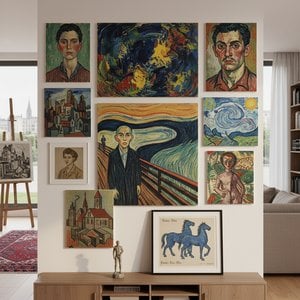
Duygu Voltanıyla Sanatı Yeniden Tanımlayan 10 Empresyonist Başyapıt
İfadeciliğin zirvesi! Van Gogh, Munch ve daha fazlasıyla 10 başyapıtı keşfedin. Sanatın duygusal gücünü deneyimleyin ve evinizi ArtsDot'tan kaliteli sanat baskılarıyla dönüştürün. Keşfetmek için tıklayın!
 Önizle
 Gönder
 Paylaş
 Detaylar
 Rehber

 Dosyayı İndir
 Benzerleri
 X-Işını
 Slayt Gösterisi
 Q&A
Q&A İstatistikler