


 Önizle
 Gönder
 Paylaş
 Detaylar
 Rehber

 Dosyayı İndir
 Benzerleri
 X-Işını
 Slayt Gösterisi
 İstatistikler
Self Portrait


 Devamını Oku
Giclée / Sanat Baskısı
Hızlı üretim ve esnek bitiş seçenekleriyle müze kalitesinde giclée veya kanvas baskı. ( El Yapımı Tablo Satın Al Dijital Görsel Satışına Geç)




P118B ₺10

P118H ₺10

P118W ₺10

P438Z ₺10

P508JH ₺12

P508YH ₺12

P805H ₺10

P805Z ₺10

P919BZ ₺10

P919G ₺10

P919XJ ₺10

P959ZH ₺10

P968JZ ₺12

W106C ₺8

W218G ₺10

W218JH ₺8

W218Y ₺10

W307PJ ₺10

W316G ₺10

W316PJ ₺8

W316Y ₺10

W398PJ ₺8

W4111J ₺10

W500HY ₺15

W500JH ₺15

W692G ₺12

W849H ₺8

W940BG ₺15

W953PJ ₺8




Eserin orijinal oranlarıyla uyumlu, önceden belirlenmiş boyutlarımız arasından seçim yapın.

Çerçevenize veya duvarınıza uygun olması için ihtiyacınız olan genişlik ve yüksekliği yazın. Bir baskı yalnızca kesilebilir, görselden daha büyük hale getirilemez; bu nedenle farklı bir formdaki boyut seçimi, görselin bir kısmının kaybına neden olur. Herhangi bir baskı yapmadan önce onaylamanız için size bir dijital taslak gönderiyoruz. Bu sayfada gösterilen resim gerçek kesimi göstermez — bunu yalnızca taslak gösterir.
Dünya Çapında Teslimat (); standart 4/5 hafta yerine 2 haftada. (24 Ekim)

Dünya Çapında Ücretsiz Ekspres Kargo

Yüksek Kaliteli Keten Tuval

Tam Nakliye Sigortası

Gümrük Vergisi İadesi Garantisi

Gerçek Renk Uyumu Garantisi

100 Günlük İade Koşulları (Sadece Üretim Hatalı Ürünler İçin)

%100 Para İade Garantisi

Toplu Alım Avantajı
 Cam seçeneği yalnızca 110 cm altındaki boyutlar için mevcuttur.

Self Portrait
Giclée / Sanat Baskısı
Baskı Boyutu
-


Toplam Fiyat
₺ 3033
A Study in Vulnerability: Exploring Egon Schiele’s ‘Self Portrait’
Egon Schiele's “Self Portrait,” painted in 1912, stands as a haunting testament to the anxieties of its time and a profound meditation on human existence. More than just a depiction of an individual, it embodies the core tenets of Expressionism—a movement that sought to convey subjective emotion rather than objective reality—and continues to resonate with audiences today. The painting’s stark simplicity belies its complex psychological depth, inviting viewers into a contemplation of isolation and confronting mortality.- Subject Matter: The portrait presents a solitary figure – a man positioned in a seated posture, his arms outstretched as if reaching for an unseen presence. Schiele deliberately obscures the face, prioritizing the torso and hands, which become focal points of intense scrutiny.
- Style & Technique: Executed in watercolor on paper, “Self Portrait” exemplifies Schiele’s signature style characterized by angular lines, flattened perspective, and a deliberate avoidance of idealized beauty. The artist employs a technique that prioritizes tonal variation—a masterful manipulation of light and shadow—to heighten the sense of drama and convey palpable emotion.
- Symbolism: The outstretched arms are arguably the most significant symbolic element. They represent both vulnerability and yearning—a desire for connection amidst profound solitude. Schiele’s deliberate omission of facial features amplifies this sense of detachment, forcing viewers to confront the unspoken anxieties beneath the surface.
- Emotional Impact: “Self Portrait” is undeniably unsettling. The painting evokes feelings of melancholy, apprehension, and a palpable awareness of mortality. Its raw honesty—a refusal to sugarcoat reality—is precisely what distinguishes it from more conventional portraits of its era and secures its place as an enduring masterpiece of Expressionist art.
Soru ve Cevaplar
Egon Şiele imzalı "Self Portrait" eserinin telif hakkı durumunu ne açıklamaktadır?
Egon Şiele imzalı "Self Portrait" adlı eser kamu malıdır - telif hakkı süresi dolmuştur statüsündedir. Telif hakları süresi sanatçının ölüm tarihinden itibaren hesaplanmaktadır ve Egon Şiele, 1918 yılında vefat etmiştir.
"Self Portrait" eserinin yazarı kimdir ve hangi akıma aittir?
"Self Portrait", Egon Şiele tarafından Expressionist Painting üslubunda yaratılmıştır. Sanatçı ve akım, eserin ait olduğu geleneği tanımlar.
Egon Şiele imzalı "Self Portrait" portre, manzara mı yoksa kare kompozisyon mu?
Egon Şiele imzalı "Self Portrait", Portrait formatındadır. Bu format, kompozisyonun oranlarını tanımlar.
İlgili Eserler


Sanatçı Biyografisi
A Life Forged in Expression
Born in 1890 in Tulln an der Donau – a picturesque region with vineyards, onion-domed towers and Baroque monasteries – Egon Schiele’s life was a tempestuous journey marked by both extraordinary artistic vision and profound personal hardship. His early years were shadowed by illness and loss; his father succumbed to syphilis when Egon was just fourteen, a tragedy that would deeply resonate within his work, fueling an obsession with mortality and the fragility of existence. Raised initially by his mother and then under the somewhat controlling guardianship of his uncle Leopold Czihaczek, Schiele’s childhood lacked conventional stability but fostered a fiercely independent spirit. Even as a boy, he displayed an intense fascination with trains—a motif that subtly reappeared in later paintings—and a burgeoning talent for drawing, though this was initially met with disapproval from his father who saw it as a distraction from more practical pursuits. The early death of his sister Elvira also cast a long shadow over the young artist’s psyche. These formative experiences instilled within him a sensitivity and an emotional rawness that would become hallmarks of his artistic expression, a constant grappling with themes of life, death, and the human condition.
Early Influences & Artistic Training
Schiele's formal artistic training began at the Kunstgewerbeschule (School of Arts and Crafts) in Vienna, but he quickly found itself stifled by its conservative approach. He transferred to the Akademie der bildenden Künste (Academy of Fine Arts), only to become further disillusioned with its rigid academic traditions. This dissatisfaction led him to abandon formal training altogether, choosing instead to forge his own path—a testament to his unwavering artistic conviction. The influence of Gustav Klimt was pivotal during these early years; Schiele admired Klimt’s decorative style and exploration of symbolism, even receiving mentorship from the established artist. Klimt's bold use of color and stylized forms captivated young Schiele, shaping his aesthetic sensibilities and inspiring him to experiment with innovative techniques. However, Schiele soon diverged from Klimt's aesthetic, developing a distinctly individual voice characterized by its stark honesty and psychological intensity.
Vienna Secession & Artistic Breakthrough
Schiele joined the Vienna Secession in 1907 alongside fellow artists like Gustav Klimt, Oskar Kokoschka, and Josef Maria Olbrich—a group that championed artistic freedom and challenged the prevailing conservative values of Viennese society. The Secession’s manifesto declared a rejection of academic conventions and an embrace of expressive art as opposed to mere imitation of nature. This commitment to innovation profoundly impacted Schiele's artistic development, propelling him toward experimentation with new materials and techniques—particularly etching and lithography—that allowed him to convey emotion and psychological complexity in ways that traditional painting could not.
Major Themes & Artistic Style
Schiele’s art is immediately recognizable for its raw honesty and psychological depth. He fearlessly confronted themes often considered taboo – sexuality, death, anxiety, isolation – with an unflinching gaze. His distinctive style features elongated figures, contorted poses, and expressive lines that convey a sense of unease and emotional intensity. The human form, particularly the nude, became his primary subject, not as an object of idealized beauty but as a vessel for exploring the complexities of human experience. Schiele didn’t shy away from depicting himself in unflattering or vulnerable poses, revealing a profound level of self-awareness and introspection. Beyond self-portraiture, Schiele created numerous portraits of others, capturing their likenesses with an unsettling realism that seemed to penetrate beneath the surface. His landscapes, while less central to his work than his figurative paintings, demonstrate his mastery of form and color, often reflecting the same emotional intensity as his portraits. The use of line is particularly striking in Schiele’s work; it's not merely a tool for defining shape but an expressive force that conveys emotion and psychological tension.
Legacy & Influence
Despite facing censorship and legal challenges – including a brief imprisonment for allegedly corrupting minors with his art – Schiele gained recognition within Vienna’s avant-garde circles. His work challenged the conventions of the time, provoking both admiration and outrage. By the time of his untimely death during the Spanish flu pandemic in 1918 at the age of twenty-eight, he had established himself as a leading figure in Austrian Expressionism. Significant works such as Self-Portrait with Physalis, Couple Embracing, and Field Landscape (Kreuzberg near Krumau) stand as testaments to his artistic genius. His influence on subsequent generations of artists is undeniable, particularly those interested in exploring psychological themes and challenging conventional artistic norms. Schiele’s bold approach to form and subject matter continues to resonate with audiences today, making him one of the most important and influential figures in early 20th-century art. His paintings are now held in major museum collections worldwide, ensuring his artistic legacy endures.

Egon Şiele
1890 - 1918 , Avusturya
Kısa Bilgiler
- Artistic Movement Or Style: İkinci Ekspresyonizm
- Artists Or Movements Influenced By This Artist: ['Ekspresyonizm']
- Artists Who Influenced This Artist: ['Gustav Klimt']
- Date Of Birth: 12 Haziran 1890
- Date Of Death: 31 Ekim 1918
- Full Name: Egon Schiele
- Nationality: Avusturyalı
- Notable Artworks:
- Portre
- Çift Embracing
- Kreuzberg Manzarası
- Place Of Birth: Tulln, Avusturya
İlgili Yazılar

Ephemeral Visions: Exploring the Artistic Legacy & Contemporary Practice of Watercolor Painting
Explore the captivating world of watercolor painting! Discover its rich history, essential techniques, influential artists & collecting tips. A comprehensive guide for art enthusiasts from ArtsDot.

Ephemeral Visions: Exploring the History & Emotional Resonance of Watercolor Painting
Explore the captivating history of watercolor painting, from ancient techniques to modern masters like Kandinsky & Blake. Discover essential artists, collecting tips & the emotional power of this luminous medium. Expert insights for art enthusiasts.
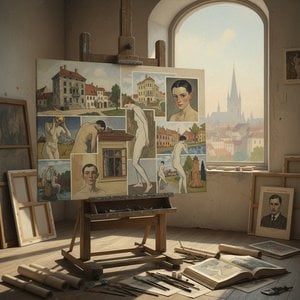
Egon Schiele'nin En İyi 25 Eseri: Duygusal Derinlik ve Sanatsal İkonlar | ArtsDot
Egon Schiele'nin en etkileyici 25 eserini keşfedin! Avusturya ekspresyonizminin güçlü portreleri, çarpıcı figüratif sanat ve duygusal derinliğiyle tanışın. Sanat tarihine yolculuk yapın ve evinizi ArtsDot'ta yüksek kaliteli baskılarla süsleyin. Koleksiyonu şimdi keşfedin!

Egon Schiele: Expressionism, Anxiety & the Modern Condition – A Comprehensive Exploration
Explore the emotionally charged world of Egon Schiele (1890-1918). Discover his Expressionist masterpieces, psychological themes, and lasting impact on modern art. A comprehensive guide for collectors & enthusiasts.

Watercolor Wonders: 10 Masterpieces That Redefined Art History | ArtsDot
Journey through 10 legendary watercolor masterpieces by Sargent, Turner & Homer! Explore iconic landscapes, portraits & floral art that redefined history. Find museum-quality reproductions and curated decor ideas at ArtsDot.com.


