


Görsel seçimlerinize göre şekillenmektedir: , .
Eser Açıklaması
 Tümünü Gör
Sanatçı Biyografisi
Ham, bükülmüş figürleri ve gergin, dışavurumcu çizgi işçiliğiyle tanınan Avusturyalı Ekspresyonist.
siparişinizi dört basit adımda verin
Acele etmeyin. İstediğiniz yanıtı değiştirebilirsiniz; sipariş kartınızdaki fiyat her seçime göre güncellenir.
1 Dört adımdan biri
Hangi boyutu istersiniz?
Bu boyutlar orijinal tablonun oranlarını korur. Çizim, seçtiğiniz eserin iki metrelik bir koltuğun üzerindeki duvarda nasıl duracağını göstermektedir.
Veya kendi ölçülerinizi girin
Eserin orijinal oranlarıyla uyumlu, önceden belirlenmiş boyutlarımız arasından seçim yapın.

Çerçevenize veya duvarınıza uygun olması için ihtiyacınız olan genişlik ve yüksekliği yazın. Bu eser el boyamasıdır; bu nedenle farklı bir formdaki boyutlar için sanatçı, resmin etrafına biraz daha fazla boya ekleyebilir veya kenarlardan biraz kırpabilir — seçim sizin. Boyama işlemi başlamadan önce onaylamanız için size bir dijital taslak gönderiyoruz. Bu sayfada gösterilen resim gerçek sonucu yansıtmamaktadır; gerçek sonucu yalnızca taslak göstermektedir.
2 Dört adımdan ikincisi
Nasıl hazırlanmalı: rulo halinde mi, gerilmiş mi yoksa çerçeveli mi?
Aşağıdaki fiyatlar, birinci adımda seçtiğiniz boyut içindir.
Gergin kanvasın kenarlarını seçin
Çerçevenizi seçin

Beyaz kenar bitişi ₺1

Bulanık kenar bitişi ₺1

Kenar boyalı ₺1

P118B ₺10

P118H ₺10

P118W ₺10

P438Z ₺10

P508JH ₺12

P508YH ₺12

P805H ₺10

P805Z ₺10

P919BZ ₺10

P919G ₺10

P919XJ ₺10

P959ZH ₺10

P968JZ ₺12

W106C ₺8

W218G ₺10

W218JH ₺8

W218Y ₺10

W307PJ ₺10

W316G ₺10

W316PJ ₺8

W316Y ₺10

W398PJ ₺8

W4111J ₺10

W500HY ₺15

W500JH ₺15

W692G ₺12

W849H ₺8

W940BG ₺15

W953PJ ₺8

H24-GOLD ₺30

H24-SILVER ₺30

H36-GOLD ₺45

H36-SILVER ₺45
Çerçeveli
Çerçeve Kenarlığı: . Çerçeve dahil toplam boyut: .
3 Dört adımdan üçüncüsü
Tabloda herhangi bir değişiklik yapılmasını ister misiniz?
Çoğu kişi hayır cevabını veriyor. Her tablo el yapımı olduğu için sanatçımız eseri sizin için uyarlayabilir.
Siparişten sonra, ArtsDot.com ekibi talimatlar için müşteriye e-posta gönderecek ve bir taslak önizleme sunacaktır
4 Dört adımdan dördüncüsü
Birkaç bitiş seçeneği
Hepsi isteğe bağlıdır. Halihazırda seçilmiş olan yanıtlar ek bir maliyet getirmez.
Kim tarafından yapıldı?
Dünya Çapında Teslimat (); standart 5 hafta yerine 3/4 haftada. (23 Kasım). Kaliteden ödün verilmez.
Müzedekiler gibi bir isimlik mi?
İşlemeli Bronz Plaka Detayları
This elegant plaque features the artist's name and the title of the artwork, finely engraved for a timeless presentation.
It is made from bronze with a refined, elegant finish. The text is precisely laser-engraved for a sharp and permanent result. Measuring 9x2 cm, the plaque is compact yet easy to read. It's built to be durable and scratch-resistant, offering a professional, museum-quality look. Mounting is simple thanks to the included adhesive backing.
Şeffaf Akrilik Plaka Detayları
The plaque includes essential engraved details such as the artist's name, the title of the artwork, the date it was created, the type of media used-like oil on canvas or watercolor-a brief description of the piece, and a QR code that links to the complete artwork information.
It is crafted from clear acrylic, offering a sleek, modern appearance. The text is UV-engraved in black to ensure strong visual contrast. With a size of 10x15 cm, it ensures optimal readability. It comes equipped with two metal hooks for secure wall mounting. The plaque is designed to be weather-resistant, making it suitable for various environments, and it includes interactive features that work seamlessly with smartphone scanning.
Siyah Akrilik Plaka Detayları
This elegant plaque includes engraved information such as the artist's name, the title of the artwork, the date it was created, the type of media used (like oil on canvas or watercolor), a short description of the artwork, and a QR code for quick access to more information.
The plaque itself is made from refined black acrylic with a premium finish. The text is laser-engraved in white for high contrast and readability. Its size is 10x15 cm, designed to be easy to read. It comes with two metal hooks for professional mounting. The design is sleek and fits any interior style. It is also weather-resistant and durable, with built-in digital integration for mobile compatibility.
Koruyucu vernik mi?
Ne zaman ihtiyacınız var?
✓ Kontrol et ve sipariş ver
Sipariş ettiğiniz şekilde, tablonuz

Conversion
Reproduksiyon Tekniği
Reproduksiyon Boyutu
-

Seçkin Kıdemli Sanatçı
Daha fazla detay, incelik ve ek üretim süresi
-

Reproduksiyon Çerçevesi
-
-
Herhangi bir kenarı 105 cm'den (yaklaşık 41 inç) büyük olan sanat eserleri veya reprodüksiyonlar için çerçeve, demonte edilmiş bir kit halinde gönderilecektir. Bu yöntem, güvenli teslimat sağlar ve taşıma sırasında oluşabilecek hasarları önler.
Profesyonel montaj gereklidir; bu ürün kendin yap (DIY) tarzı bir ürün değildir.
Kit; ahşap tutkalı (pakete dahil değildir), kanvas germe pensi ve tutkal kururken çıtaların dik durmasını sağlayacak işkenceler kullanılarak, deneyimli bir profesyonel çerçeveci tarafından monte edilmeli ve kanvas gerilmelidir. Hatalı montaj veya dengesiz kanvas gerginliği sanat eserine kalıcı zarar verebilir ve bu durum garantimiz kapsamında değildir.
 Herhangi bir kenarı 105 cm'den (yaklaşık 41 inç) büyük olan sanat eserleri veya reprodüksiyonlar için çerçeve, demonte edilmiş bir kit halinde gönderilecektir. Bu yöntem, güvenli teslimat sağlar ve taşıma sırasında oluşabilecek hasarları önler.
Tüm masif ahşap çıtalar dahildir, montaj için hassas bir şekilde ölçülmüştür.
Paket içeriğinde bulunan vidalar ve köşe birleşimleri için ustanız tarafından temin edilmesi gereken, ancak pakete dahil olmayan ahşap tutkalı ile monte edilir.
Profesyonel araçlar gereklidir ve pakete dahil değildir: bir tuval germe aparatı (gerdirici) ve yapıştırıcı kururken çıtaların dik durmasını sağlayacak kıskaçlar.
Önemli:
Köşe bağlantıları için ahşap tutkalı gereklidir; tutkal tamamen kuruyana kadar çıtalar işkenceler ile sabitlenmelidir ve monte edilmiş çerçeve üzerindeki kanvasın gerilmesi için bir kanvas germe pensine ihtiyaç duyulur. Bunların hiçbiri kit içerisinde yer almamaktadır. Lütfen bu boyutu sipariş etmeden önce deneyimli bir profesyonel çerçeve ustası ile anlaşın.

Eser Etiketi
-
-

Koruyucu Vernik Katmanı
Parlak Vernik (renkleri canlandırır; ışığa ve neme karşı koruma sağlar)
-

Eserimi Özelleştir
Değiştirilebilecek örneklere göz atın: Yüzü müşteri fotoğrafıyla değiştirin; Evcil hayvan ekleyin (örneğin, kediyi köpek ile değiştirin); Arka plana gizli bir mesaj dahil edin; Arka plan manzarasını veya öğelerini değiştirin.
-

Hızlı Teslimat
Dünya Çapında Teslimat (); standart 5 hafta yerine 3/4 hafta içinde. (23 Kasım). Kaliteden ödün verilmez.
-
Hızlı Gönderim
için dünya çapında 5 haftalık teslimat süresi. (30 Kasım).
Dahil
Toplam Tutar
₺ 13082
Cam seçeneği yalnızca 110 cm altındaki boyutlar için mevcuttur.
Her siparişle birlikte gelir
- Dünya Çapında Ücretsiz Ekspres Kargo
- Yüksek Kaliteli Keten Kanvas
- Tam Nakliye Sigortası
- Gümrük Vergisi İadesi Garantisi
- Gerçek Renk Uyumu Garantisi
- 100 Günlük İade Politikası (Sadece Kusurlu Ürünler İçin)
- %100 Para İade Garantisi
- Toplu Alım İndirimi


Composition and Symbolism
"Conversion" depicts three women lying in bed together, their bodies intertwined in a pose that exudes both vulnerability and unity. The central figure is positioned on top of the other two, creating an intimate scene that transcends mere physical closeness. Scattered throughout the room are several chairs, which serve as subtle reminders of the space's dual function as both a living area and a bedroom. The use of light in "Conversion" is noteworthy. Schiele employs chiaroscuro to create deep shadows and highlights, emphasizing the emotional intensity of the scene. This technique, discussed extensively in Light in Painting, adds depth and dimensionality to the work.Artistic Context
Egon Schiele was a prominent figure in the early 20th-century art movement. His works, such as "Trieste Fishing Boat" /art/list/?Filter=6WHKNL-Egon-Schiele-Trieste-Fishing-Boat and "Vorstadt" /art/list/?Filter=8XXUEM-Egon-Schiele-Vorstadt, showcase his ability to capture the human form in various settings. Schiele's style, characterized by elongated figures and expressive lines, is a hallmark of Art Nouveau.Relevance and Legacy
"Conversion" stands as a powerful example of Schiele's exploration of human relationships and emotions. The painting's themes of intimacy and unity resonate deeply with contemporary audiences. For those interested in acquiring a piece that reflects the essence of early 20th-century art, ArtsDot offers high-quality, handmade oil painting reproductions of "Conversion" /art/list/?Filter=6WHKFQ-Egon-Schiele-Conversion. In conclusion, "Conversion" by Egon Schiele is a masterpiece that encapsulates the emotional and symbolic depth of human connection. Its place in the history of art is secured through its innovative use of light and shadow, as well as its exploration of intimate relationships.- Artist: Egon Schiele
- Painting Title: Conversion
- Museum: The Leopold Museum, Vienna, Austria
- Year: 1912
- Style: Art Nouveau
- Medium: Oil on Canvas
The enduring appeal of "Conversion" lies in its ability to evoke powerful emotions and spark introspection. As a testament to the human experience, it remains an invaluable part of our artistic heritage.
Soru ve Cevaplar
Egon Schiele imzalı "Conversion" benzeri sanat eserlerini nerede bulabilirim?
Egon Schiele imzalı "Conversion" eserine ait Benzer Eserler sayfası, benzer sanat eserlerini sunar.
Egon Schiele imzalı "Conversion" reprodüksiyonunu nasıl önizleyebilirim?
Egon Schiele imzalı "Conversion" eserinin ön izlemesine eserin Önizleme sayfasından ulaşabilirsiniz.
"Conversion" eserini kaç kişi görüntülüyor?
Egon Schiele imzalı "Conversion" hakkındaki istatistiklere eserin İstatistikler sayfasından ulaşabilirsiniz: eserin aylık ziyaret sayıları, sanatçının diğer eserlerinin ziyaret edilme oranları ile son dönem ziyaretçilerin ülke ve dil dağılımları bu sayfada yer almaktadır.
Bu tablo hakkında daha fazla bilgi
 Gerçek Boyutta Önizle
 Baskı Satışına Geç
 Paylaş
 Paylaş
 Detayları Gör
 Rehber

 İndir
İndir
 Benzer ürünler
 X-Işını
 Slayt Gösterisi
 Soru & Cevap
 İstatistikler
Benzer Eserler


Egon Schiele
1890 - 1918, Avusturya
Sanatçı Özgeçmişi
Egon Schiele'nin Hayatı
Egon Schiele'nin yaşamının ilk yılları, Aşağı Avusturya'nın Tulln şehriyle şekillenir. 12 Haziran 1890'da dünyaya gelen sanatçı, Avusturya-Macaristan İmparatorluğu'nun katı yapılarıyla tanımlanan bir dünyaya adım atar. Babası Adolf Schiele, Avusturya Federal Demiryolları'nda istasyon şefi olarak görev yaparken; annesi Marie, kızlık soyadı Soukup ile tanınır. Aile içinde Egon; kız kardeşleri Elvira, Melanie ve Gertrude ile birlikte büyür.
Bu ev içindeki huzurlu yaşam, çok erken yaşlarda sarsılır. Hastalığın gölgesi evin içine çökerken, genç sanatçının ruhunda silinmez izler bırakır. Yaşanan bu kişisel yıkımlar sadece gelip geçici birer anı olarak kalmaz; gelecekteki eserlerinin en derinlerine, iliklerine kadar işler. Ölümün ve faniliğin farkındalığıyla dünyayı, Avusturya Ekspresyonizmi'ndeki yerini belirleyecek olan o hassas duyarlılıkla algılamaya başlar. Onun varoluşu, içsel gerilimi tuvalin yüzeyine aktarma çabasıyla dolu bir mücadeleye dönüşür.
Sanatçının izlediği yol, onu değişen bir Avrupa manzarasının tam merkezine sürükler. Geleneksel akademik beklentiler ile ham, psikolojik bir hakikate duyulan o yükselen ihtiyaç arasındaki gerilimde yolunu bulmaya çalışır. Egon Schiele'nin hayatı, insanlık durumuyla kurulan yoğun ve çoğu zaman rahatsız edici yüzleşmelerden ibarettir. O, dünyayı gözün gördüğü gibi tasvir etmeyi değil, sinir sisteminin içinde nasıl titreştiğini resmetmeyi amaçlar.
Erken Yaşam, Aile ve Eğitim
Schiele'nin gençlik yıllarındaki o kırılgan denge, 1904 yılında paramparça olur. Bir istasyon şefi olan babası Adolf Schiele, sifiliz hastalığına yenik düşer. Trieste'deki bir balayı sırasında kapılan bu hastalık, aileyi yoksulluğa sürüklerken genç sanatçının ruhunda babasının zihinsel karmaşasının ve öfkesinin karanlık gölgesini bırakır. Egon; kız kardeşleri Elvira, Melanie ve Gertrude ile birlikte, eniştesi Leopold Czihaczek'in himayesinde büyür. Bu çalkantılı yıllarda bile, trenlere olan tutkusu hiç sönmez; bu motif, ilerleyen yıllarda eserlerinde kendini yeniden gösterecek bir imge olarak kalbinde yer eder.
Resmi eğitimi, özel ders veren Ludwig Karl Strauch'un rehberliğinde başlar. 1906 yılına gelindiğinde Schiele, Güzel Sanatlar Akademisi'nde (Akademie der bildenden Künste) eğitim görmek üzere Viyana'ya taşınır. Ancak buradaki atmosfer oldukça katı ve kısıtlayıcıdır. Kendisini, Profesör Christian Griepenkerl'in aşırı muhafazakâr öğretileriyle giderek daha fazla çatışırken bulur. Bu sürtüşme, bir noktadan sonra katlanılamaz bir hal alır. Üç yıl boyunca bu katı akademik geleneklerin içinde yolunu bulmaya çalışan Schiele, kendi özgün yolunu çizmek adına Akademiyi tamamen terk eder.
Her şey, Gustav Klimt ile tanışmasıyla köklü bir değişime uğrar. Köklü ve saygın sanatçı, genç ressam için bir akıl hocasına dönüşür; ona modeller sağlar ve onu Viyana Sezession çevreleriyle tanıştırır. Bu bağ, geleneklere karşı mücadele eden bir öğrenciden, yükselen avangart hareketin merkezi figürlerinden birine dönüşümün dönüm noktası olur.
Viyana'da Sanatsal Gelişim
Viyana, Egon Schiele'nin yaratıcı sürtünmelerinin merkez üssü haline gelir. Şehrin sanatsal çevrelerinde mekik dokuyan sanatçı, nihayet Gustav Klimt ile tanışır. Bu karşılaşma, sanatçının izlediği yolda çok önemli bir kırılma noktasını temsil eder. Mentorunun etkisini bünyesine katarken, Schiele sadece Secession'ın dekoratif desenlerini kopyalamakla yetinmez; aksine, süslemeden arınmaya başlar. O, çok daha içsel ve ham bir hakikatin peşine düşer. 1909 yılına gelindiğinde, Neues Wiener Kunstgruppe ve Neukunstgruppe'un kurucu üyeleri arasında yer alarak yerleşik düzene aktif bir şekilde meydan okumaktadır. Bu hareketler, onun gelenekle olan bağlarını koparışının birer işaretidir.
Sanatçının şehirdeki varlığı, kentsel merkezler ile daha sakin dış mahalleler arasında gidip gelen huzursuz bir devinimle karakterize edilir. Viyana, Krems, Klosterneuburg, Neulengbach ve Prag arasında mekik dokuyarak eserlerini üretir. Bu coğrafi yayılım, aslında psikolojik bir genişlemenin yansımasıdır. Sanatı, ilk eğitim yıllarının biçimsel kısıtlamalarından sıyrılarak, insanlık durumunun çıplak ve korumasız bir keşfine doğru evrilir. Dönemin ruhundaki o yoğun gerilim, sanatçının gelişen eskizlerinde ve kompozisyonlarında tüm çıplaklığıyla görünür hale gelir.
- Portrait of Leopold Czihaczek, 1907
- Portrait of the Art Critic, Arthur Roessler, 1910
- Composition with Three Male Nudes, 1910
Teknik ve Ekspresyonist Üslup
Çizgi, Egon Schiele’nin vizyonunun temel motorudur. Onun fırçası bir formu yalnızca dış hatlarıyla belirlemekle kalmaz; çizgi, sinirli ve huzursuz bir enerjiyle titreşir. Psikolojik gerilimi haritalandırmak için dışavurumcu hatlar kullanan sanatçı, bu yaklaşımıyla sıklıkla bükülmüş pozlar ve çarpıtılmış vücut formları yaratır. Figürler uzatılmış bir yapıda görünür; uzuvlar, bir huzursuzluk hissi uyandırmak amacıyla doğal oranların ötesine doğru gerilir. Bu, anatomik bir mükemmellik arayışı değil, aksine öznenin içsel durumunu gün yüzüne çıkarma çabasıdır. Ten renkleri genellikle zayıflamış veya hastalıklı bir tonda görünerek, kırılganlık ve fiziksel savunmasızlık hissini pekiştirir.
Teknik yaklaşımı kullanılan malzemeye göre değişiklik gösterse de, yarattığı yoğunluk her zaman sabittir. Suluboya çalışmalarında, derinlik ve ruh hali yaratmak için gevşek renk yıkamalarından yararlanır; izolasyon hissini artırmak için kağıdın büyük bir kısmını boş bırakır. Tuval üzerinde yağlı boya ile çalışırken ise fırça darbeleri, çizimlerinde rastladığımız o keskin ve acil dürtüselliği taşır. İki boyutlu düzlemin ötesinde, insan varlığının ağırlığını yakalamak için kil ve alçı kullanarak heykel yoluyla da formu keşfetmiştir.
Temel Eserler ve Konu Seçimi
Tuval, Egon Schiele için adeta psikolojik bir kazı alanına dönüşür. Sanatçı; ölümün, cinselliğin, kaygının ve yalnızlığın ağır varlığıyla sarsılmaz bir dürüstlükle yüzleşir. 1915 yılında ortaya koyduğu Ölüm ve Genç Kız (Death and the Maiden), ölümlülüğün erotizmle kesiştiği çarpıcı bir eserdir. Figürler, sanatçının vizyonunu tanımlayan içsel çatışmaları yansıtacak şekilde gergin bir halde var olurlar. Egon Schiele, bu görünmez ruhsal durumları haritalandırmak için sık sık insan formuna geri döner ve bedeni, varoluşun karmaşıklıklarını taşıyan bir kap olarak kullanır.
Otoportre çalışmak, sanatçı için sürekli bir içsel gözlem yöntemi işlevi görür. Kusursuz veya parlatılmış bir imaj sunmak yerine, genellikle bükülmüş veya zayıflamış halleriyle kırılgan bir benliği ortaya çıkarır. Physalis ile Otoportre eserinde, Physalis bitkisini tekrarlanan bir motif olarak kullanır. Hassas ve kağıdımsı kabuğuyla bu bitki, geçiciliği ve hayatın kırılganlığını simgeler. Bu botanik unsur, sanatçının çürüme ve insanlık durumunun uçucu doğası üzerine olan saplantılı düşüncelerini temellendirir.
Sanatçının en mahrem bağları da kompozisyonlarında kendine yer bulur. 1915 yılında, eşini kendi özgün dışavurumcu diliyle betimlediği Edith Schiele Portresi adlı eseri resmeder. Konuları nadiren durağandır; dönemin değişen sosyal ve psikolojik manzaralarını yansıtan sinirli bir enerjiyle nabız gibi atarlar. Aşağıdaki eserler, bu temaların keşfinde önemli dönüm noktalarını temsil eder:
- Ölüm ve Genç Kız (1915)
- Physalis ile Otoportre
- Edith Schiele Portresi (1915)
Son Yıllar ve Ölüm
Birinci Dünya Savaşı yaklaşırken, Schiele'nin hayatının manzarası köklü bir değişime uğrar. Edith Harms ile evlenmesi, sanatçının yaşamında önemli bir kişisel dönüm noktasını temsil eder. Ancak evliliğin getirdiği huzur, savaşın amansız talepleriyle kısa sürede kesintiye uğrar. Askerlik hizmetine çağrılan sanatçı, kendisini savaşın yarattığı o büyük kaosun tam ortasında bulur.
Son, ani ve biyolojik bir şiddetle gelir. 1918 yılında, İspanyol gribinin yarattığı pandemi Viyana sokaklarını kasıp kavururken, virüs Schiele'yi henüz 28 yaşındayken aramızdan ayırır. Sanatçı, 31 Ekim 1918 tarihinde hayata gözlerini yumar. Bu veda, aynı hastalıktan hayatını kaybeden eşi Edith'in ölümünden kısa bir süre sonra gerçekleşir. Egon Schiele'nin yaşamı, çökmekte olan bir dünyanın gerilimini ve sancılarını ölümsüzleştiren devasa bir sanat mirası bırakarak aniden sona erer.
Miras ve Sanatsal Etki
Egon Schiele, 20. yüzyılın başlarında Avusturya Ekspresyonizmi'nin öncü figürlerinden biri olarak yükselir. Secession hareketinin o dekoratif altın varaklı dünyasından koparak insan formunun daha içsel ve psikolojik bir keşfine yönelmesi, figüratif resmin seyrini kökten değiştirmiştir. O, yüzeydeki süslemleri bir kenara itip sinir sistemini haritalandırmak adına, kaygının ve arzunun titremelerini yakalamak için keskin, huzursuz çizgiler kullanmıştır. İdealize edilmiş güzellik yerine içsel manzaraya odaklanması, onu döneminin en önemli figüratif ressamlarından biri haline getirmiştir.
Eserlerinin etkisi Viyana sınırlarının çok ötesine uzanır. Sanatın sonraki nesilleri, özellikle insan psişesinin daha karanlık ve karmaşık katmanlarına ilgi duyanlar, onun radikal dürüstlüğünde kendilerine bir yol gösterici bulurlar. Kişisel travmaları ve varoluşsal gerilimi evrensel bir görsel dile dönüştürme yeteneği, modern sanat söylemindeki yerini sarsılmaz kılar. Bugün tabloları, kendi döneminin psikolojik dönüşümlerinin vazgeçilmez kayıtları olarak dünyanın dört bir yanındaki önemli müze koleksiyonlarında korunmaktadır.
- Self-Portrait with Physalis
- Couple Embracing
- Field Landscape (Kreuzberg near Krumau)
- Death and the Maiden
Eserleri Bugün Nerede Görebilirsiniz?
Egon Schiele’nin sanat mirasının ağırlığı, en çok Viyana’nın sokaklarında hissedilir. Leopold Müzesi, sanatçının eskizlerindeki ve tablolarındaki o ham enerjiyi koruyarak, eserlerinin çok büyük bir kısmına ev sahipliği yapar. Hemen yakınlardaki Österreichische Galerie Belvedere ise, Death and the Maiden (1915) gibi çok önemli tuvalleri bünyesinde barındırır. Şehrin kültürel dokusu, sanatçının külliyatından vazgeçilmez parçalar sunan Kunsthistorisches Museum ve Albertina aracılığıyla onun mirasını korumaya devam etmektedir.
Avusturya'nın başkentinin ötesinde, Çek Cumhuriyeti'nin Český Krumlov kentindeki Egon Schiele Sanat Merkezi, sanatçının dünyasına adanmış özel bir alan sunar. Bu müze, suluboyalar ve mürekkep çizimlerini içeren kalıcı koleksiyonuyla onun sanatsal evrimini izleyiciye aktarır. Ziyaretçiler, ekspresyonist üslubunun gelişimine odaklanan bu mekanda, Schiele'nin çizgilerindeki o kendine has ve sarsıcı yoğunlukla yüzleşme fırsatı bulurlar.
- Death and the Maiden (1915)
- Self-Portrait with Physalis
- Couple Embracing
- The Family


Benzer Yazılar
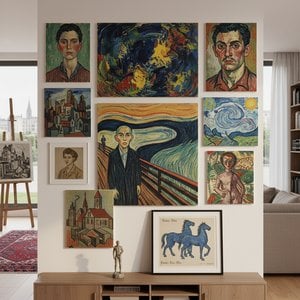
Duygu Voltanıyla Sanatı Yeniden Tanımlayan 10 Empresyonist Başyapıt
İfadeciliğin zirvesi! Van Gogh, Munch ve daha fazlasıyla 10 başyapıtı keşfedin. Sanatın duygusal gücünü deneyimleyin ve evinizi ArtsDot'tan kaliteli sanat baskılarıyla dönüştürün. Keşfetmek için tıklayın!
The Weight of a Gesture: Examining Human Connection Through the Embrace in Art
Explore how masters like Picasso and Schiele depict human intimacy through art history. Discover the power of connection today.

Unveiling Emotion: The 25 Most Iconic Masterpieces by Alexej von Jawlensky
Explore 25 iconic Expressionist works by Alexej von Jawlensky. Discover these timeless masterpieces on ArtsDot.com.