

 Önizleme yap
 Paylaş
 Paylaş
 Detayları Gör

 İndir
İndir
 Benzerlerini gör
 X-Işını
 Slayt Gösterisi
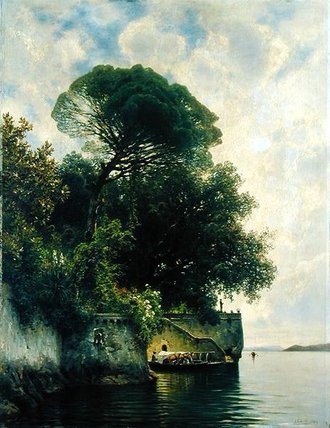
Isola Bella
 Tümünü Gör
El Yapımı Yağlı Boya Reproduksiyon
Sanatçılarımız tarafından sipariş üzerine hazırlanan; istediğiniz boyut ve çerçevede, tuval üzerine el boyaması yağlı boya. ( Baskı satın al Görsel satın al)




































Eserin orijinal oranlarıyla uyumlu, önceden belirlenmiş boyutlarımız arasından seçim yapın.

Belirli bir çerçeveye veya alana uyması için kendi boyutlarınızı girebilirsiniz. Seçtiğiniz boyut orijinal görüntünün oranlarıyla eşleşmiyorsa, sanat eserini kırparak veya ek el boyaması öğelerle resmi uzatarak ayarlayacağız. Üretim başlamadan önce onayınız için dijital bir taslak gönderilecektir.
Lütfen ekrandaki önizlemenin gerçek kırpmayı veya uzatmayı yansıtmadığını unutmayın. Nihai kompozisyonu yalnızca hazırlanan taslak doğru şekilde gösterecektir.
Özel boyutlar mevcut olsa da, orijinal oranları korumak adına önceden tanımlanmış listeden bir boyut seçmenizi öneririz.
Siparişten sonra, ArtsDot.com ekibi talimatlar için müşteriye e-posta gönderecek ve bir taslak önizleme sunacaktır
Dünya Çapında Teslimat (); standart 5 hafta yerine 3/4 haftada. (17 Ağustos). Kaliteden ödün verilmez.

Dünya Çapında Ücretsiz Ekspres Kargo

Yüksek Kaliteli Keten Tuval

Tam Kapsamlı Nakliye Sigortası

Gümrük Vergisi İade Garantisi

Gerçek Renk Uyumu Garantisi

60 Günlük İade Politikası (Sadece Kusurlu Ürünler İçin)

%100 Para İade Garantisi

Toplu Alım İndirimi
 Cam seçeneği yalnızca 110 cm altındaki boyutlar için mevcuttur.

Isola Bella
Reproduksiyon Tekniği
Reproduksiyon Boyutu
-


Toplam Tutar
$ 263
Benzer Eserler


Sanatçı Özgeçmişi
The Soul of the Landscape: The Life and Art of Ascan Lutteroth
In the golden age of German Romanticism, few artists captured the quiet majesty of the natural world with as much technical precision and emotional resonance as Ascan Lutteroth. Born in the vibrant maritime city of Hamburg in 1842, Lutteroth was a child of tradition and intellect. His lineage was one of civic duty and commercial stability; his grandfather, Ascan Wilhelm Lutteroth, had navigated the complexities of the Hamburg Parliament as a Senator, while his father, Christian Alexander Ascan Lutteroth, stood as a prominent figure in the banking sector. This foundation of discipline and analytical thought would later manifest in the meticulous detail and structural integrity of his canvases, allowing him to translate the fleeting light of the outdoors into permanent, breathtaking oil paintings.
Lutteroth’s artistic journey was shaped by the prestigious corridors of Europe's most renowned academies. His formal education began in Geneva under the watchful eye of Alexandre Calame, a master whose influence instilled in Lutter andoth a profound respect for plein air painting. From Calame, he learned to observe the subtle shifts in atmospheric light and the delicate textures of the earth. This pursuit of naturalism led him to the legendary Kunstakademie Düsseldorf, where he studied under Oswald Achenbach. Within the influential circle of the Düsseldorfer Malerschule, Lutteroth absorbed the movement's signature blend of Romantic idealism and psychological depth, learning to infuse his landscapes with a sense of the sublime that transcended mere topographical recording.
A Journey Through Light and Place
The true breadth of Lutteroth’s vision was revealed through his travels, which acted as a continuous dialogue between his German roots and the Mediterranean sun. Between 1868 and 1870, his sojourn in Italy—specifically on the sun-drenched island of Capri—provided him with a new palette of warmth and brilliance. These years allowed him to experiment with the interplay of azure waters and rugged cliffs, themes that would become hallmarks of his Mediterranean period. Later, his travels took him to San Remo in 1879, where he even served as a tutor for the amateur painter Crown Princess Victoria, further cementing his connection to the cultural elite of Europe.
Despite his wanderlust, Lutteroth maintained a profound connection to his beloved Hamburg. His work often returned to the atmospheric harbor vistas and the rugged beauty of the German landscape, such as the Lüneburg Heath. This duality—the ability to capture both the exotic light of Italy and the moody, mist-laden scenes of Northern Germany—is what defines his unique contribution to 19th-century art. His technical mastery was recognized by his peers and patrons alike; notably, he was commissioned to create three monumental paintings for the Hamburg Town Hall, a testament to his status as a painter of civic importance.
The legacy of Ascan Lutteroth remains etched in the quiet moments of his landscapes:
- Technical Precision: A seamless blend of Calame’s naturalism and Achenbach’s expressive brushwork.
- Atmospheric Mastery: An unparalleled ability to depict the changing qualities of light, from the Mediterranean noon to the German twilight.
- Historical Significance: A vital representative of the Düsseldorf School who bridged the gap between Romanticism and a more modern, observational realism.
Though history occasionally focuses on his more famous contemporaries, Lutteroth’s work endures as a window into a vanished era of European elegance. His paintings are not merely depictions of scenery; they are emotional landscapes that invite the viewer to experience the stillness, the grandeur, and the eternal beauty of the natural world.

ascan lutteroth
1842 - 1823 , Germany
Kısa Bilgiler
- Artistic Movement Or Style: Romanticism
- Artists Who Influenced This Artist:
- Alexandre Calame
- Oswald Achenbach
- Date Of Birth: 1842
- Full Name: Ascan Wilhelm Lutteroth
- Nationality: German
- Notable Artworks:
- On the Lagoon, Venice
- Villa D’Este, Tivoli
- The caves at Posillipo
- Place Of Birth: Hamburg, Germany

