


Snabbfakta
- Works on this site: 1
- Nationality: People's Republic of China
- Also known as:
- Tiande Wang
- 王天德 (1960年)
- Top-ranked work: Chinese costume
- Museums on this site: Hong Kong Museum of Art
Snabbquiz
Det finns endast ett korrekt svar på varje fråga.
Fråga 1:
Which artistic movement is most closely associated with Andy Warhol?
Fråga 2:
In the context of 1960s art, what does 'Happenings' typically refer to?
Fråga 3:
Which of the following best describes the core philosophy of Minimalism in art?
Fråga 4:
What was a key influence on the development of Pop Art in the 1960s?
Fråga 5:
Which artist is known for his exploration of chance and randomness in art, often incorporating everyday objects into their work?
Lästips

Renässansens Mänsklighet: 10 Mästerverk som Formade Konsten – ArtsDot
Utforska 10 renässansmästerverk som definierade humanismen! Lär känna Leonardo da Vinci, Michelangelo och Botticelli. Köp museumkvalitativa konsttryck & inred med klassisk italiensk renässanskonst på ArtsDot.com – din källa till tidlös skönhet.

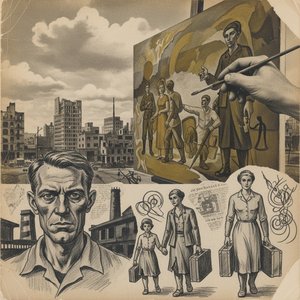
Echoes of a Decade: Artistic Responses to Sociopolitical Realities in 1940s Art
Explore the powerful artistic responses to the sociopolitical realities of the 1940s. Discover key movements like Expressionism & Abstract Expressionism, and learn how to collect investment-worthy masterpieces with ArtsDot.

From Warhol to Today's Stars: Recontextualizing Pop Culture Icons Through the Lens of Oil Painting Tradition
Explore the captivating evolution of Pop Art through oil painting! Discover contemporary artists reinterpreting iconic imagery & invest in museum-quality reproductions. Expert art consultation at ArtsDot.

Frågor och svar
Vilken konstperiod tillhörde Wang Tiande?
Contemporary
In the context of 1960s art, what does 'Happenings' typically refer to?
Large-scale abstract paintings
Hur många av Wang Tiande's målningar finns på ArtsDot.com?
1
What was a key influence on the development of Pop Art in the 1960s?
Mass media and consumer culture
Vilka andra namn är Wang Tiande känd under?
Tiande Wang
Vem är Wang Tiande?
The Crucible of Change: An Exploration of the Art of the 1960s The decade of the 1960s wasn’t merely a period marked by social upheaval and political protest; it was, fundamentally, an artistic crucible. A rejection of established norms – both in art and society – fueled a remarkable explosion of creativity, challenging conventions and forging entirely new visual languages. Emerging from the shadow of Abstract Expressionism, which had dominated the post-war art world, artists began to grapple
Which artistic movement is most closely associated with Andy Warhol?
Abstract Expressionism
Which of the following best describes the core philosophy of Minimalism in art?
Emphasis on emotional expression and subjective experience
Vilken är den högst rankade målningen av Wang Tiande på ArtsDot.com?
Chinese costume
Which artist is known for his exploration of chance and randomness in art, often incorporating everyday objects into their work?
Robert Rauschenberg