

Echoes of Time: Narratives & Transformations in Renaissance Art History

Innehållsförteckning
The Renaissance Rediscovery: Classical Roots & Humanist Ideals
The Renaissance, a term meaning “rebirth,” wasn’t simply a revival of ancient forms; it was a profound re-evaluation of humanity's place in the universe. Emerging from the late medieval period, this era—beginning around 1350 in Italy—witnessed an extraordinary flourishing of art, literature, and thought fueled by a renewed interest in classical antiquity. Scholars rediscovered texts from Greece and Rome, not merely as historical curiosities but as blueprints for a more fulfilling life. This rediscovery wasn’t just intellectual; it was deeply emotional. The idealized forms of Greek sculpture, the philosophical inquiries of Plato and Aristotle, resonated with a growing humanist sensibility—a belief in human potential and achievement. This shift moved focus away from solely divine concerns towards an exploration of earthly beauty, individual expression, and rational understanding. Patrons like the Medici family weren’t just commissioning art; they were investing in a vision of a new world order where human intellect and creativity could thrive. The very air seemed charged with possibility, prompting artists to break free from established conventions and forge new paths.
Geometric Harmony & Emotional Depth: Analyzing Piero della Francesca’s ‘The Flagellation’
Piero della Francesca's ‘The Flagellation,’ painted around 1455-60, exemplifies the Renaissance pursuit of both classical order and profound emotional resonance. At first glance, the scene—depicting the scourging of Christ—appears serene, almost detached. However, beneath this calm surface lies a meticulously constructed composition steeped in symbolism. The painting’s most striking feature is its use of perspective; a single vanishing point draws the viewer's eye deep into the scene, creating an illusion of depth and realism unprecedented for its time. The architecture isn’t merely a backdrop but actively participates in the narrative. The perfectly symmetrical buildings, bathed in clear light, evoke a sense of divine order. Yet, this order is subtly disrupted by the brutal act unfolding within it. Christ's acceptance of his fate, the stoicism of the onlookers, and the stark contrast between light and shadow all contribute to a powerful emotional undercurrent. The artist’s mastery lies in his ability to convey complex theological ideas through precise geometric forms and restrained emotion. It is not a painting that shouts its message but whispers it, inviting contemplation on themes of sacrifice, redemption, and human suffering.
Botticelli's 'Primavera': A Celebration of Beauty, Grace, and Mythological Narrative
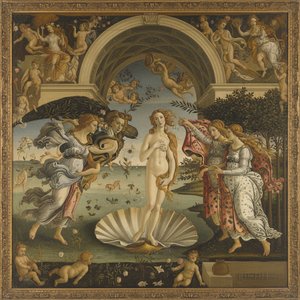
Sandro Botticelli’s ‘Primavera,’ completed around 1482, is arguably the quintessential Renaissance painting—a vibrant ode to beauty, grace, and classical mythology. Unlike the somber realism of some contemporaries, Botticelli embraced a lyrical style characterized by flowing lines, delicate colors, and an ethereal atmosphere. The painting depicts a scene from classical literature, likely inspired by Poliziano’s poem ‘Stanze per la giostra,’ featuring Venus presiding over a garden filled with allegorical figures: Zephyrus chasing Flora, the Three Graces dancing, and Mercury dispersing clouds. The lush foliage, meticulously rendered botanical details, and the nude figures—a daring departure from medieval conventions—celebrate the beauty of the natural world and the human form. ‘Primavera’ isn't simply a depiction of a mythological story; it is an exploration of Neoplatonic ideals—the belief that earthly beauty reflects divine perfection. The painting’s symbolism is rich and layered, inviting multiple interpretations related to love, fertility, and the cyclical nature of life. The exquisite oil painting stands as a testament to Botticelli's skill in capturing movement, emotion, and the sheer joy of existence.
Biblical Scenes Reimagined: Lucas Cranach the Elder’s ‘Adam and Eve’ and Northern Renaissance Symbolism
Lucas Cranach the Elder’s ‘Adam and Eve,’ painted in 1525, offers a fascinating contrast to the Italian Renaissance aesthetic. Representing the Northern Renaissance style, this work emphasizes detailed realism, symbolic imagery, and a more direct engagement with religious themes. While the subject—the biblical story of Adam and Eve—is familiar, Cranach’s interpretation is distinctly his own. The painting depicts Adam and Eve in a lush garden setting, but unlike idealized depictions, they are portrayed as fully realized human figures, vulnerable and aware of their nakedness. The inclusion of animals—some symbolic of temptation (the snake), others representing innocence (the stag)—adds layers of meaning to the scene. Cranach’s attention to detail is remarkable; the textures of skin, fabric, and foliage are rendered with meticulous precision. The painting also reflects the growing religious tensions of the Reformation era. The artist subtly critiques the Catholic Church's interpretation of original sin, emphasizing individual responsibility and the consequences of free will. This work isn’t merely a beautiful depiction of a biblical story; it is a powerful statement about faith, morality, and the human condition.
The Enduring Legacy: How Renaissance Art Shaped Western Aesthetics & Beyond
The impact of Renaissance art extends far beyond its historical context. The innovations in perspective, anatomy, and composition pioneered by artists like Piero della Francesca, Botticelli, and Cranach the Elder fundamentally changed the course of Western aesthetics. Their emphasis on realism, humanism, and individual expression laid the foundation for subsequent artistic movements—from Baroque to Romanticism to Modernism. The Renaissance also fostered a new appreciation for art as a form of intellectual inquiry. Artists were no longer seen solely as craftsmen but as thinkers, scholars, and innovators. This shift led to the development of art history as a discipline—a systematic study of artistic production and its cultural context. The humanist ideals that underpinned the Renaissance continue to resonate today, inspiring artists to explore themes of identity, morality, and the human experience. The masterpieces of this era remain powerful symbols of creativity, innovation, and the enduring quest for beauty and understanding.
Collecting Renaissance Masterpieces: A Beginner's Guide for History Enthusiasts
Embarking on a journey to collect art from the Renaissance period can be incredibly rewarding. However, it’s essential to approach this endeavor with knowledge and discernment. Begin by focusing on a specific area of interest—perhaps a particular artist, movement, or theme. Research is paramount; familiarize yourself with the key characteristics of Renaissance painting, sculpture, and decorative arts. Understanding techniques like oil layering, fresco painting, and bronze casting will help you assess authenticity. Consider your budget and space limitations. Smaller drawings or prints can be more accessible than large-scale paintings. Explore reputable galleries, auction houses, and online platforms specializing in Renaissance art. Don’t hesitate to seek expert advice from art historians or appraisers. Authentication is crucial; ensure the artwork comes with a provenance—a documented history of ownership. Finally, remember that collecting art should be driven by passion and appreciation, not solely by investment potential. A carefully chosen Renaissance masterpiece can bring joy and inspiration for generations.
Relaterade artiklar

The Dawn of a New Aesthetic: Exploring Artistic Innovation in 15th-Century European Painting
Explore the groundbreaking artistic innovations of 15th-century European painting! Discover how Humanism & masters like Masaccio redefined art with perspective, realism & classical influence. Learn more at ArtsDot.


Tio Renässansmästerverk som Formade Konsten – Upptäck Klassikerna med ArtsDot
Upptäck 10 renässansmästerverk av Botticelli, Leonardo da Vinci & Michelangelo! Fördjupa dig i italiensk konsthistoria och tidig renässans. Hitta inspiration för ditt hem med museumskvalitets reproduktioner på ArtsDot.com.

Renässansens 10 Mästerverk: Konsthistoriens Bästa Verk för Ditt Hem
Upptäck renässansens 10 mest ikoniska mästerverk! Lär känna Leonardo da Vinci, Michelangelo och Botticelli. Inspireras av italiensk konsthistoria & hitta din perfekta tavla för hemmet på ArtsDot.com.
Sandro Botticellis 25 Mästerverk: En Konsthistorisk Resa för Hemmet
Utforska Sandro Botticellis 25 mest ikoniska målningar! Fördjupa dig i renässansens skönhet, klassisk mytologi och tidlösa konstverk. Köp högkvalitativa reproduktioner & hitta inspiration för ditt hem på ArtsDot.com.

