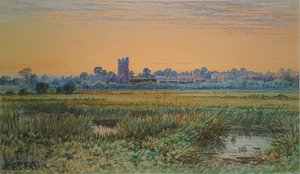
A Life Painted in Light: The Evocative World of Robert Winter Fraser
Robert Winter Fraser, born in the United Kingdom in 1872 and passing away in 1930, remains a compelling figure within the landscape of
British art. Though not as widely celebrated as some of his contemporaries, Fraser’s work possesses a quiet power, a delicate sensitivity to light and atmosphere that continues to resonate with viewers today. His paintings are windows into a world steeped in Romantic tradition, yet subtly infused with a distinctly personal vision. Information regarding his early life is scarce, adding an air of mystery to the origins of this talented artist; however, it’s clear from his oeuvre that he received a solid artistic training, likely within the established conventions of the time. He wasn't merely replicating scenes but interpreting them through a lens of emotion and poetic sensibility.
The Embrace of Romanticism and Landscape
Fraser’s artistic development was deeply rooted in the Romantic movement, an era that prioritized emotional experience and the sublime beauty of nature. While the height of
Romanticism had passed by his birth, its influence permeated the art world, particularly within
landscape painting. Fraser embraced this tradition wholeheartedly, depicting scenes often characterized by
soft light,
atmospheric perspective, and a sense of tranquility. His canvases are not grand statements about the power of nature, but rather intimate encounters with it – quiet woodlands, mist-shrouded rivers, and sun-dappled meadows. He excelled in capturing the
fleeting moments of
natural beauty, the way light transforms a landscape throughout the day.
His work often evokes a feeling of nostalgia, a yearning for a simpler time connected to the land. This is not to say his landscapes are devoid of detail; rather, they demonstrate a meticulous attention to the particulars of nature – the texture of bark, the ripple of water, the delicate hues of wildflowers.
Portraiture and the Human Touch
While Fraser is primarily known for his landscape work, he also produced a significant number of portraits. These paintings reveal another facet of his artistic talent: an ability to capture not just physical likeness but also the inner character of his sitters. His portrait style shares many similarities with his landscapes – a soft palette, delicate brushwork, and a focus on creating a harmonious composition.
He wasn’t interested in portraying wealth or status; instead, he sought to reveal the humanity of his subjects. The portraits often feature individuals set within natural settings, further emphasizing Fraser's connection to the landscape and his belief in the interconnectedness of all things.
Themes and Symbolism
Recurring themes in Fraser’s work include the passage of time, the beauty of the
English countryside, and the importance of finding solace in nature. His paintings often feature elements that symbolize these ideas – ancient trees representing longevity, flowing water symbolizing the constant flow of life, and secluded gardens evoking a sense of peace and tranquility.
- The use of light is particularly significant.
- Fraser frequently employed soft, diffused light to create a dreamlike atmosphere.
- Shadows are used not to obscure but to enhance the sense of depth and mystery.
His paintings aren’t overtly symbolic; rather, the
symbolism is subtle and integrated into the overall composition. It's an invitation for viewers to contemplate the deeper meaning behind the scenes he depicts.
Historical Significance and Legacy
Robert Winter Fraser’s work occupies a unique position within British
art history. He wasn’t a revolutionary artist challenging established conventions, but rather a skilled practitioner who refined and perfected existing traditions. His paintings offer a glimpse into a bygone era – a time when artists sought to capture the beauty of the natural world and convey emotional experience through their work. While his name may not be as familiar as some of his more famous contemporaries, Fraser’s legacy lives on in the evocative landscapes and sensitive portraits that continue to captivate audiences today.
His paintings serve as a reminder of the power of art to transport us to another time and place, and to connect us with the beauty and tranquility of the natural world. The
ArtsDot collection provides an excellent opportunity to appreciate the depth and subtlety of this often-overlooked British artist, ensuring his work continues to inspire future generations.