Franz Bischoffs lysande arv
Franz Albert Bischoff framstår som en lågmäld men inflytelserik gestalt i den amerikanska konsthistorien, en målare vars pensel fångade ljusets flyktiga väsen och det kaliforniska landskapets fridfulla själ. Han föddes 1864 i Steinschön𝘪ön am Inn, Österrike, och hans tidiga liv var djupt präglat av de rika dekorativa traditionerna i det österrikisk-ungerska imperiet. Denna grundläggande utbildning inom tillämpad design, akvarell och keramisk dekoration gav honom en nitisk känsla för detaljer och en djup respekt för färgharmoni. När han emigrerade till USA vid femton års ålder bar han med sig en gammal världs estetik som så småningom skulle smälta samman med den växande optimismen i det amerikanska västern, vilket skapade en stil som var både tekniskt precis och känslomässigt resonant.
Allt eftersom hans karriär utspelade sig genom de industriella landskapen i New York, Ohio och Michigan, uppnådde Bischoff först betydande erkännande genom den delikata konsten att måla på porslin. Denna disciplin krävde en extraordinär behärskning av färgblandning och fina detaljer, färdigheter som senare skulle bli kännetecknande för hans landskapskompositioner. Hans förmåga att manipulera subtila lasyrer och laseringar gjorde det möjligt för honom att blåsa liv i porslinet, en föregångare till de eteriska kvaliteter som återfinns i hans senare oljeverk. Det var just detta unika möte mellan dekorativ precision och atmosfärisk känslighet som definierade hans konstnärliga identitet när han övergick från keramikens noggranna värld till den amerikanska gränslandets vidsträckta vyer.
Impressionismen och det kaliforniska ljuset
Den sanna metamorfosen av Bischoffs konstnärskap skedde vid hans ankomst till Kalifornien, där den dramatiska topografin och de unika atmosfäriska förhållandena erbjöd en ny musa. Genom att omfamna impressionismens principer strävade han efter att fånga de efemära ljusögon som definierar regionen. Hans teknik blev en sofistikerade dialog mellan delikata akvarelltvättar och subtila oljelasyrer, vilket resulterade i dukar som tycks glöda inifrån. Han besatt en sällsynt förmåga att destillera komplex visuell information till harmoniska kompositioner, oavsett om han avbildade bergskedjornas karga majestät eller Stillahavets mjuka kustdimmor.
Hans samlade verk fungerar som ett levande register över den naturliga världen under en transformativ era i amerikansk historia. Genom hans ögon upplever vi bland annat:
- Cloud Shadows: Ett mästerverk från 1912 där dramatiska berg och livfulla träd väcks till liv genom ett impressionistiskt lins, vilket erbjuder en fridfull inblick i naturens kraft.
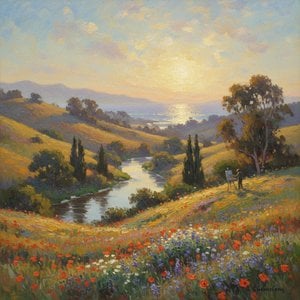
- Pasadena Foothills: En slående oljemålning från 1917 som fångar den amerikanska landsbygdens essens och visar hans förmåga att återge ljus över böljande terräng.
- Mist-Veiled Days, Monterey: En stämningsfull utforskning av kustatmosfären, där samspelet mellan dimma och hav demonstrerar hans mästerskap i tonala nyanser.
Ett bestående intryck på konsthistorien
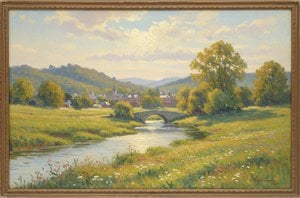
Utöver den rena avbildningen av landskap förkroppsligar Bischoffs arbete en känsla av nostalgi och vördnad för det orörda landskapets skönhet. Hans målningar, såsom det mästerliga Landscape at Saint Valery-sur-Somme, uppvisar en förmåga att överbrygga hans europeiska rötter med hans amerikanska erfarenheter, genom att förena den strukturerade elegansen från hans utbildning med den vilda, spontana energin hos den kaliforniska kusten. Han målade inte bara vad han såg; han målade hur ljuset kändes, och gav sina motiv en känsla av frid och beständighet.
Den historiska betydelsen av Franz Bischoff ligger i hans roll som en bro mellan konsthantverk och det fina landskapsmåleriet. Genom att föra den noggrannhet som krävdes vid porslinsmålning till den storslagna skalan i impressionistiska oljemålningar, skapade han en nisch som var helt unik för honom själv. Idag förblir hans verk älskade för sin förmåga att transportera betraktaren till en svunnen era av upptäckter och naturlig prakt, och påminner oss om den bestående kraften i ett delikat penseldrag och en lysande vision.
Frågor och svar
Var kan jag hitta statistik gällande Franz A. Bischoffs verk?
Sidan Besöksstatistik för Franz A. Bischoff presenterar statistik baserad på konstnärens verk som finns listade på denna webbplats.
Finns det en kronologisk genomgång av Franz A. Bischoff?
Karriärlinje för Franz A. Bischoff är en rullningsbar tidslinje som presenterar konstnärens verk i kronologisk ordning, uppdelade i kapitel efter olika karriärperioder.
Hur hittar jag verk av Franz A. Bischoff inom ett specifikt tema?
För att hitta verk av Franz A. Bischoff inom ett specifikt tema, besök artistens sida för Efter nyckelord, där konstverken är grupperade efter nyckelord.