


 Visa i rummet
 Skicka
 Dela
Dela
 Detaljer
 Studentguide för konstverk

 Ladda ner
 Liknande objekt
 Röntgen
 Bildspel
 Besökstatistik
Work
 Oil On Canvas
- WallArt
- Abstract Expressionism
 1957
1957- Modern
 101.0 x 101.0 cm
 Läs mer
Konstverket som visas på denna sida skyddas av upphovsrättslagen, vilket innebär att vi inte lagligt kan skapa eller sälja en identisk reproduktion. Detta skydd upprätthålls genom internationella avtal såsom den Bernkonventionen och genom nationella lagar, inklusive de som fastställs av Amerikansk upphovsrättslag – Titel 17. Alla rättigheter förbehållna. Återgivning av konstverk är förbjuden utan skriftligt tillstånd från WahooArt.
Denna metod följer fullt ut upphovsrättsliga regler eftersom den inte innebär kopiering eller duplicering av det skyddade konstverket. Istället är det en kreativ nytolkning – en ny målning som är influerad av originalet men inte identisk med det.
Giclée / Konsttryck
Giclée- eller canvasprint av museumskvalitet med snabb produktion och flexibla ytbehandlingsalternativ. ( Köp handmålat konstverk Byt till digital bildförsäljning)




P118B Skr10

P118H Skr10

P118W Skr10

P438Z Skr10

P508JH Skr12

P508YH Skr12

P805H Skr10

P805Z Skr10

P919BZ Skr10

P919G Skr10

P919XJ Skr10

P959ZH Skr10

P968JZ Skr12

W106C Skr8

W218G Skr10

W218JH Skr8

W218Y Skr10

W307PJ Skr10

W316G Skr10

W316PJ Skr8

W316Y Skr10

W398PJ Skr8

W4111J Skr10

W500HY Skr15

W500JH Skr15

W692G Skr12

W849H Skr8

W940BG Skr15

W953PJ Skr8




Välj bland våra förinställda storlekar som motsvarar konstverkets ursprungliga proportioner.

Ange den bredd och höjd du behöver, för att passa din ram eller din vägg. Ett tryck kan endast beskäras, aldrig göras större än bilden, vilket innebär att ett format med en annan formform leder till att en del av bilden går förlorad. Vi skickar en digital mockup för godkännande innan vi trycker något. Bilden som visas på denna sida visar inte den faktiska beskärningen — det är endast mockuppen som gör det.
Leverans över hela världen () på 2 veckor istället för standard 4/5 veckor. (21 oktober)

Fri expressfrakt över hela världen

Högkvalitativ linnecanvas

Fullständig fraktförsäkring

Garantier för återbetalning av tullavgifter

Garantier för exakt färgåtergivning

100 dagars returrätt vid fabrikationsfel

100% pengarna tillbaka-garanti

Mängdrabatt erbjuds
 Glasalternativet är endast tillgängligt i storlekar under 110 cm.

Work
Giclée / Konsttryck
Reproduktionsstorlek
-


Totalpris
Skr 610
A Symphony of Form and Color: The Abstract Vision of Yoo Youngkuk
In the realm of modern Korean abstraction, few names resonate with as much structural integrity and emotional depth as Yoo Youngkuk. His 1957 masterpiece, Work, serves as a breathtaking window into a mind that sought to distill the rugged majesty of the natural world into the pure language of geometry. This painting is not merely a depiction of a landscape; it is an architectural reconstruction of nature itself. Through a masterful command of color and shape, Yoo transcends the boundaries of traditional representation, inviting the viewer into a space where mountains are no longer just earth and stone, but rhythmic pulses of light and pigment.
The composition is a captivating dance of planar depth and vibrant energy. At its heart lies a striking, dark arch-like structure that acts as a focal point, a gateway through which the eye travels across layers of saturated hues. The upper reaches of the canvas are bathed in a warm, glowing red-orange that bleeds into a sun-drenched yellow, evoking the fleeting brilliance of a mountain sunrise. Below this celestial warmth, the palette shifts toward the grounded and the cool, with deep greens and midnight blues anchoring the base of the work. This deliberate juxtaposition of warm and cool tones creates a visual tension that is both dynamic and profoundly balanced, much like the equilibrium found in the natural landscapes that inspired him.
Mastery of Technique and Tactile Presence
Technically, Work showcases the artist's profound mastery of the oil medium. The surface of the canvas bears the tactile evidence of his process; visible, expressive brushstrokes suggest an impasto technique that lends a sculptural quality to the flat shapes. These thick applications of paint catch the light, creating a subtle topography that mirrors the very hills and ridges depicted in the abstraction. There is no traditional perspective here; instead, Yoo utilizes overlapping planes and bold, black outlines to build a sense of depth that feels both modern and primordial.
For the discerning collector or interior designer, this piece offers a unique sensory experience. The way the light interacts with the textured surface allows the artwork to change character depending on the time of day and the lighting of the room. It is a work that demands presence, providing a sophisticated anchor for contemporary spaces that value both bold aesthetic statements and the quiet contemplation of fine art.
A Legacy of Korean Modernism
To understand Work, one must understand the historical weight carried by Yoo Youngkuk. As a pioneer of the first wave of abstract painting in Korea, his journey was one of relentless exploration during a period of immense social and political upheaval. Born in Uljin, his early life was steeped in the natural beauty of the Korean landscape—specifically the majestic mountains that would become a recurring motif throughout his career. His formal training at Bunka Gakuin University in Tokyo exposed him to Western abstract movements, yet his heart remained tethered to the essence of his homeland.
This painting represents the intersection of global modernism and local soul. It is an invitation to witness the moment when representation dissolved into pure emotion. Whether viewed as a study in geometric balance or a spiritual meditation on the dawn, Work remains a timeless testament to Yoo's ability to capture the eternal through the ephemeral. Owning a reproduction of such a significant piece allows one to bring a fragment of this monumental artistic legacy into the private sphere, fostering an environment of inspiration and intellectual depth.
Frågor och svar
Vilket rum föreslås för visning av "Work", med tanke på dess färgpalett?
Med sin Earthy-palett rekommenderas "Work" av Yoo Youngkuk för ett Living Room. Färgerna är en del av anledningen till detta förslag.
Vilka motiv förekommer i "Work" av Yoo Youngkuk?
Motiven i "Work" är abstract landscape, geometric forms, mountain motif, color block, serene composition, korean art, modern painting, arch structure.
Vad har "Work" gemensamt med resten av Yoo Youngkuks produktion?
"Work" tillhör Yoo Youngkuks Abstract Expressionism-period, vars dokumenterade teman inkluderar geometric abstraction, expressionism, korean modernism, mountain series pioneer, early abstract exploration, geometric focus, korean identity, landscape as symbol.


Om konstnären
En pionjär inom koreansk abstraktion: Yoo Youngkuks liv och konst
Yoo Youngkuk, ett namn synonymt med den abstrakta konstens födelse i Korea, framträdde som en central gestalt under en period av enorm social och politisk omvälvning. Han föddes 1916 i kuststaden Uljin i Sydkorea, och hans konstnärliga resa präglades av en outtröttlig utforskning och en orubblig hängivenhet till att skapa ett nytt visuellt språk för en nation som kämpade med sin identitet och modernitet. Hans tidiga liv, djupt rotat i det koreanska landskapets naturliga skönhet – särskilt de majestätatiska bergen som skulle bli ett återkommande motiv under hela hans karriär – gav honom en djup koppling till naturen, en känsla som subtilt genomsyrade även hans mest geometriskt strikta kompositioner. Denna formativa erfarenhet lade grunden för en konstnärlig vision som inte bara strävade efter att representera den yttre världen, utan att destillera dess essens till ren form och färg. Yoos väg mot abstraktionen började med formell utbildning vid Bunka Gakuin University i Tokyo, där han tog examen från institutionen för oljemåleri 1938. Det var här han kom i kontakt med västerländska abstrakta rörelser och mötte banbrytande japanska konstnärer som Murai Masanari och Hasegawa Saburo, gestalter som djupt påverkade hans tidiga experimenterande och befäste hans engagemang för den icke-föreställande konsten.Att bana en ny väg: Sinsasil-pa och tidiga experiment
När Yoo återvände till Korea 1943, mitt under andra världskrigets turbulens, mötte han betydande utmaningar i sitt sökande efter en konstnärlig vision. Krigsåren präglades av nöd och avbrott, vilket tvingade honom att försörja sig på olika sätt samtidigt som han upprätthöll sin orubbliga tro på konsten. Men med Koreas befrielse och det efterföljande etablerandet av Republiken Korea, grydde en ny era för nationens konstnärliga gemenskap. År 1948 gick Yoo Youngkuk samman med Kim Whanki och Lee Kyusang för att bilda Sinsasil-pa (New Realism Group), ett avgörande ögonblick i koreansk konsthistoria. Detta avantgardistiska kollektiv representerade det första organiserade försöket att bryta sig loss från traditionella föreställande stilar och omfamna ett modernt abstrakt uttryck. Gruppens manifest krävde en konst som speglade verkligheten i det efterkrigstida Korea, men tolkad genom en abstrakt lins – ett djärvt drag som utmanade konventionella konstnärliga normer och tände debatten inom den koreanska konstvärlden. Yoos tidiga verk under denna period uppvisar ett dynamiskt samspel mellan färgfält och framväxande geometriska former, vilket antyder den riktning hans stil skulle ta under senare år. Han delade även kortvarigt med sig av sin expertis som professor vid Seoul National University under två år, där han fostrade nästa generation konstnärer.Berget inom: Stilens evolution och symbolisk resonans
Under 1950-talet och början av 60-talet genomgick Yoo Youngkuks konstnärliga stil en betydande transformation. Medan hans tidigare verk utforskade färgfältsmåleri, började han gradvis att införliva mer definierade geometriska former, influerad av sin pågående dialog med naturen och sina personliga erfarenheter. Denna period såg framväxten av vad som skulle bli hans signaturmotiv: berget. Ofta kallad ”bergens målare”, avbildade Yoo inte berg i bokstavlig mening; snarare abstraherade han deras essens – deras soliditet, deras storslagenhet, deras andliga resonans – till kraftfulla kompositioner av färg och form. Berget blev en symbol för Korea själv, en representation av motståndskraft, uthållighet och nationens eviga anda. Efter sitt deltagande i São Paulo-biennalen 1963 upplevde Yoo en period av konstnärlig konsolidering, där han drog sig tillbaka från gruppaktiviteter för att fokusera på soloutställningar som hölls vartannat år under två decennier. Detta gjorde det möjligt för honom att förfina sin unika stil, pressa gränserna för geometrisk abstraktion och utforska alltmer komplexa relationer mellan färg, linje och rymd. Trots att han drabbades av svåra sjukdomar som band honom till en rullstol från 1960-talet och framåt, förblev Yoos kreativa energi obändig; han fortsatte att måla med orubblig hängivenhet ända fram till bara tre år före sin död 2002, vid ålderåttiosex.Ett bestående arv: Erkännande och evig influens
Yoo Youngkuks bidrag till koreansk modern konst var allmänt erkända under hans livstid, vilket kulminerade i en undersökning av tidskriften Monthly Art som hyllade honom som den mest framstående konstnären bland över hundra av hans samtida. Hans verk har ställts ut omfattande både nationellt och internationellt, vilket har befäst hans position som en ledande figur på den globala abstrakta konstscenen. Hans arv sträcker sig bortom hans målningar; han banade väg för efterföljande generationer av koreanska konstnärer att utforska abstraktion och experimentera med nya uttrycksformer. Yoos orubbliga engagemang för konstnärlig innovation, parat med hans djupa koppling till koreansk kultur och landskap, fortsätter att inspirera konstnärer än idag. Hans förmåga att översätta naturens emotionella och andliga kvaliteter till ett rent abstrakt visuellt språk förblir ett bevis på hans djupa konstnärskap och bestående inflytande. Att utforska Yoo Youngkuks mästerverk – såsom ”Mountain” eller ”Work” – erbjuder en inblick i sinnet hos en sann pionjär, en konstnär som vågade bryta med traditionen och skapa en ny väg för koreansk konst. Hans arbete står som en kraftfull påminnelse om abstraktionens transformativa kraft och dess förmåga att fånga essensen av både den yttre världen och det inre självet.
Yoo Youngkuk
1916 - 2002 , Sydkorea
Snabbfakta
- Artistic Movement Or Style: Abstrakt konst
- Artists Or Movements Influenced By This Artist:
- Konstruktivism
- Suprematism
- Artists Who Influenced This Artist:
- Murai Masanari
- Hasegawa Saburo
- Date Of Birth: 1916
- Full Name: Yoo Youngkuk
- Nationality: Sydkorea
- Notable Artworks:
- Berg
- Verk
- Place Of Birth: Uljin, Sydkorea
Relaterade artiklar

Beyond Form & Color: Geometric Abstraction's Enduring Legacy in Art History
Explore the captivating world of geometric abstraction! Discover its origins, key artists like Malevich & Mondrian, and why this movement remains highly valued by art collectors today. Expert insights at ArtsDot.
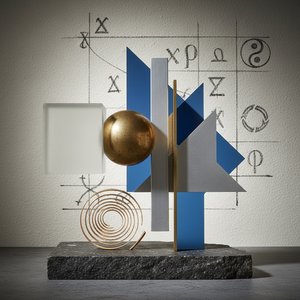
Beyond Form: Exploring the Philosophical Foundations of Geometric Abstraction
Explore the philosophical roots & artistic evolution of geometric abstraction with ArtsDot. Discover Mondrian, Malevich, De Stijl & more. Expert insights for collectors and art enthusiasts.

Geometrisk Abstraktion: Topp 10 Mästverk som Formade Konsten | ArtsDot.com
Utforska de 10 mästerverk som definierade geometrisk abstraktion! Lär känna Mondrian, Kandinsky & Malevich. Hitta inspiration och museumskvalitativa konsttryck för ditt hem på ArtsDot.com. Upptäck hela samlingen online!

Beyond Form & Color: Geometric Abstraction's Evolution in 20th/21st Century Art
Explore the evolution of geometric abstraction from Cubism to contemporary art. Discover key artists like Malevich & Mondrian, investment insights, and expert collecting advice at ArtsDot.

Kandinskys 25 Mästerverk: En Färgstark Resa i Abstrakt Konst | ArtsDot
Utforska Wassily Kandinskys 25 mest ikoniska verk – från expressionism till abstrakt konst. Lär känna historien bakom mästerverken och hitta inspiration för din heminredning med ArtsDot.com. Upptäck hela samlingen online!