

 Förhandsvisa
 Skicka
 Dela
Dela
 Visa detaljer
 Guide
Guide

 Ladda ner
 Liknande objekt
 Röntgen
 Bildspel
 Frågor och svar
 Statistik
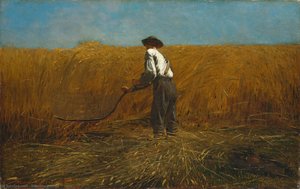
Militia Drilling

- 16.0 x 24.0 cm


 Visa mer
Giclée / Konsttryck
Giclée- eller canvasprint av museumskvalitet med snabb produktion och flexibla ytbehandlingsalternativ. ( Beställ handmålad reproduktion Byt till digital bild)




P118B Skr10

P118H Skr10

P118W Skr10

P438Z Skr10

P508JH Skr12

P508YH Skr12

P805H Skr10

P805Z Skr10

P919BZ Skr10

P919G Skr10

P919XJ Skr10

P959ZH Skr10

P968JZ Skr12

W106C Skr8

W218G Skr10

W218JH Skr8

W218Y Skr10

W307PJ Skr10

W316G Skr10

W316PJ Skr8

W316Y Skr10

W398PJ Skr8

W4111J Skr10

W500HY Skr15

W500JH Skr15

W692G Skr12

W849H Skr8

W940BG Skr15

W953PJ Skr8




Välj bland våra förinställda storlekar som motsvarar konstverkets ursprungliga proportioner.

Ange den bredd och höjd du behöver för att passa din ram eller vägg. Ett tryck kan endast beskäras, aldrig göras större än originalbilden, vilket innebär att ett format med en annan proportion leder till att en del av bilden går förlorad. Vi skickar en digital mockup för godkännande innan vi påbörjar tryckningen. Bilden som visas på denna sida visar inte den faktiska beskärningen — det är endast mockuppen som gör det.
Leverans över hela världen () på 2 veckor istället för standard 4/5 veckor. (6 november)

Fri expressfrakt över hela världen

Högkvalitativ linnecanvas

Fullständig fraktförsäkring

Garantier för återbetalning av tullavgifter

Garantier för exakt färgåtergivning

100 dagars returrätt (endast vid fel)

100% pengarna tillbaka-garanti

Mängdrabatt erbjuds
 Glasalternativet är endast tillgängligt i storlekar under 110 cm.

Militia Drilling
Giclée / Konsttryck
Storlek på reproduktion
-


Slutgiltigt pris
Skr 629
Frågor och svar
Är färgerna i "Militia Drilling" av William P Chappel mättade eller dämpade?
Färgerna i "Militia Drilling" av William P Chappel har en Muted mättnad. Mättnad beskriver hur livfulla eller dämpade färgerna är.
Vem har skapat "Militia Drilling" och i vilken stil är den utförd?
"Militia Drilling" skapades av William P Chappel i Realism-stil. Konstnären och stilen definierar verkets tradition.
Vilken fas av William P Chappels konstnärliga utveckling representerar "Militia Drilling"?
"Militia Drilling" tillhör William P Chappels Late Medieval i konstnärskarriären. Denna klassificering relaterar verket till konstnärens utveckling.
Liknande konstverk


Konstnärsbiografi
The Visionary Lens of Walter Chappell
The artistic legacy of Walter Chappell (1925–2000) resides not merely in his photographs but in a profound, almost spiritual connection to the natural world. His work represents a lineage traceable back to the pioneering visionaries of American photography, most notably Alfred Stieglitz and Edward Weston. Emerging from the creative crucible of postwar New York City, Chappell developed an unwavering dedication to capturing the very essence of landscapes. He achieved this through a distinctive and sophisticated blend of black and white printing techniques and experimental electron imagery—a stylistic duality that cemented his place as a significant figure within the mid-century avant-garde movement.
Chappell’s formative years were steeped in an intense intellectual curiosity, nurtured by his early studies at the Eastman Kodak Company. This technical foundation was later honed through vital collaborations with influential masters of the medium. From Stieglitz, Chappell inherited the conviction that photography could transcend mere documentation to become a vessel for emotion and philosophical contemplation. From Weston, he drew a meticulous attention to detail and a masterful command of tonal range. These influences are palpable throughout his entire oeuvre, where his compositions prioritize a striking geometric precision alongside subtle, breathing textural nuances.
A Study in Light, Shadow, and Stillness
The heart of Chappell’s photographic practice was an intimate exploration of the interplay between light and shadow within expansive, often desolate vistas. He famously eschewed grand, sweeping narratives or overtly expressive gestures, choosing instead to embrace a quiet, disciplined observation of geological formations. His lens focused on the silent majesty of mountains, the rugged depths of canyons, and the stark emptiness of deserts, examining how these ancient structures impact human perception. There is an almost meditative stillness achieved in his work, a quality born from deliberate cropping and the careful, rhythmic manipulation of his printing processes.
While many of his contemporaries were drawn to the burgeoning vibrancy of color, Chappell remained steadfastly committed to the monochrome print. He believed that the absence of color allowed for a deeper engagement with form and texture, stripping away the distractions of the spectrum to reveal the skeletal beauty of the earth. His images are characterized by:
- Geometric Precision: A structural approach to landscape that finds order in natural chaos.
- Tonal Depth: An extraordinary range of grays that lends a tactile, three-dimensional quality to flat surfaces.
- Atmospheric Texture: The use of experimental techniques to evoke the grain and grit of the physical world.
Historical Significance and Lasting Impact
Chappell’s contribution to the history of 20th-century photography lies in his ability to bridge the gap between the traditionalist landscape school and the experimental avant-garde. By integrating technical experimentation with a deep, classical respect for composition, he helped evolve the photographic language of the American West. His work does not simply show us a place; it invites us into a state of being, demanding that the viewer slow down and witness the quiet evolution of the terrain.
Today, his presence in prestigious institutions such as MoMA and the Princeton University Art Museum serves as a testament to his enduring relevance. Through the preservation of his archives—including significant gelatin silver prints—the art world continues to find inspiration in his ability to distill the vastness of the American landscape into a singular, hauntingly beautiful moment of clarity. His life's work remains a profound reminder that through the lens, the most silent landscapes can speak with an incredible, enduring voice.

William P Chappel
1800 - 1880
Kortfakta
- Full Name: Walter Chappell
- Nationality: American
- Date Of Birth: 1800
- Date Of Death: 1880
- Place Of Birth: New York City, USA
- Notable Artworks: ['Paris Opera Opening']
- Artistic Movement Or Style: Landscape Photography
- Artists Who Influenced This Artist:
- Edward Weston
- Alfred Stieglitz
- Artists Or Movements Influenced By This Artist: ['Modernism']
Relaterade artiklar

American Realism: Social Commentary & Artistic Representation in Early 20th-Century Painting
Explore the powerful social commentary & artistic representation of American Realism. Discover key artists like Bellows & Sloan, and understand the movement's lasting impact on 20th-century art history.

Echoes of Place: Regionalism & American Identity in Interwar Art
Explore the rise of American Regionalism in interwar art! Discover Grant Wood, Thomas Hart Benton & the movement's impact on American identity. Expert analysis & historical context.

American Regionalism: A Crucible of Identity – Exploring Themes of Place, Labor & Social Commentary
Explore American Regionalism's powerful depiction of the American heartland during the Great Depression. Discover Grant Wood, Thomas Hart Benton & more. Expert analysis & high-quality art reproductions at ArtsDot.

Amerikansk realism: Topp 10 mästerverk som definierade en rörelse – konsttryck hos ArtsDot
Utforska de 10 mästerverk som definierade amerikansk realism! Lär känna Winslow Homer, Edward Hopper & andra ikoniska konstnärer. Högkvalitativa konsttryck och inredningsinspiration hos ArtsDot.com – upptäck tidlösa tavlor online.

Grant Wood & American Regionalism: Identity, Myth & the Rural Landscape
Explore the world of Grant Wood & American Regionalism with ArtsDot. Discover the symbolism behind 'American Gothic', recurring themes, and the movement's lasting impact on art history. High-quality reproductions available.