

 Förhandsvisa
 Skicka
 Dela
Dela
 Visa detaljer
 Guide
Guide

 Ladda ner
 Liknande objekt
 Röntgen
 Bildspel
 Q&A
Q&A Statistik
Cagnes

- 58.0 x 71.0 cm


 Visa mer
Konstverket som visas på denna sida skyddas av upphovsrättslagen, vilket innebär att vi inte lagligt kan skapa eller sälja en identisk reproduktion. Detta skydd upprätthålls genom internationella avtal såsom den Bernkonventionen och genom nationella lagar, inklusive de som fastställs av Amerikansk upphovsrättslag – Titel 17. Alla rättigheter förbehållna. Återgivning av konstverk är förbjuden utan skriftligt tillstånd från WahooArt.
Denna metod följer fullt ut upphovsrättsliga regler eftersom den inte innebär kopiering eller duplicering av det skyddade konstverket. Istället är det en kreativ nytolkning – en ny målning som är influerad av originalet men inte identisk med det.
Giclée / Konsttryck
Giclée- eller canvasprint av museumskvalitet med snabb produktion och flexibla ytbehandlingsalternativ. ( Beställ handmålad reproduktion Byt till digital bild)




P118B Skr10

P118H Skr10

P118W Skr10

P438Z Skr10

P508JH Skr12

P508YH Skr12

P805H Skr10

P805Z Skr10

P919BZ Skr10

P919G Skr10

P919XJ Skr10

P959ZH Skr10

P968JZ Skr12

W106C Skr8

W218G Skr10

W218JH Skr8

W218Y Skr10

W307PJ Skr10

W316G Skr10

W316PJ Skr8

W316Y Skr10

W398PJ Skr8

W4111J Skr10

W500HY Skr15

W500JH Skr15

W692G Skr12

W849H Skr8

W940BG Skr15

W953PJ Skr8




Välj bland våra förinställda storlekar som motsvarar konstverkets ursprungliga proportioner.

Ange den bredd och höjd du behöver för att passa din ram eller vägg. Ett tryck kan endast beskäras, aldrig göras större än originalbilden, vilket innebär att ett format med en annan proportion leder till att en del av bilden går förlorad. Vi skickar en digital mockup för godkännande innan vi påbörjar tryckningen. Bilden som visas på denna sida visar inte den faktiska beskärningen — det är endast mockuppen som gör det.
Leverans över hela världen () på 2 veckor istället för standard 4/5 veckor. (2 november)

Fri expressfrakt över hela världen

Högkvalitativ linnecanvas

Fullständig fraktförsäkring

Garantier för återbetalning av tullavgifter

Garantier för exakt färgåtergivning

100 dagars returrätt (endast vid fel)

100% pengarna tillbaka-garanti

Mängdrabatt erbjuds
 Glasalternativet är endast tillgängligt i storlekar under 110 cm.

Cagnes
Giclée / Konsttryck
Storlek på reproduktion
-


Slutgiltigt pris
Skr 623
A Window into the Soul of Cagnes
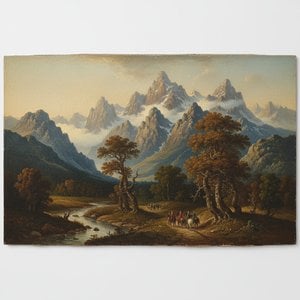
In his 1929 masterpiece, Cagnes, William H. Johnson invites the viewer to step into a world where time seems to both stand still and slowly dissolve. This evocative oil on canvas captures a poignant moment in the French landscape, presenting a scene that is as much about memory as it is about physical space. The painting depicts a mountainous terrain punctuated by structures that bear the heavy weight of history; some houses stand firm, while others appear to be crumbling under the gentle but relentless pressure of the passing years. Through his masterful use of light and form, Johnson transforms a simple street scene into a profound meditation on the impermanence of human existence and the enduring strength of the natural world.
The composition is a delicate dance between the architectural and the organic. In the foreground, trees frame the view, their presence grounding the viewer in the earthiness of the setting. As the eye wanders toward the background, the buildings emerge from the landscape, their weathered facades telling stories of lives lived and eras passed. A solitary figure stands near the center of the canvas, a quiet observer caught in the rhythm of daily life. This person serves as an emotional anchor, providing a sense of scale and a human connection to the vast, decaying beauty surrounding them. The presence of this figure invites us to contemplate our own place within the grand, unfolding narrative of history.
The Fusion of Modernism and Folk Tradition
What makes Cagnes particularly captivating for collectors and enthusiasts is Johnson’s unique ability to blend the avant-garde with the ancestral. During this period of his career, Johnson was experimenting with a style that bridged the gap between European modernism and the soulful simplicity of folk art. The technique employed here utilizes bold, deliberate strokes that define the shapes of the mountains and dwellings without sacrificing the textured, tactile quality of the oil medium. There is a rhythmic quality to the way the colors are applied, creating a visual melody that resonates with the vibrancy of the French countryside while maintaining a certain structural discipline.
For the interior designer, this piece offers a sophisticated layer of depth and narrative. The palette—a blend of earthy tones and atmospheric light—allows it to serve as a focal point in a room that values character and historical resonance. Whether placed in a contemporary gallery-style setting or a more traditional, curated space, the painting brings an air of contemplative elegance. It is not merely a decoration; it is a conversation piece that prompts reflection on the beauty found in decay and the resilience of spirit that Johnson so famously championed throughout his illustrious career.
A Legacy of Resilience
To understand Cagnes, one must understand the hand that held the brush. As a pivotal figure of the Harlem Renaissance, William H. Johnson infused his work with a profound sense of identity and spiritual depth. Even when painting European landscapes, his visual language remained deeply connected to themes of perseverance and the interconnectedness of all living things. The crumbling houses in this work are not merely symbols of loss, but rather markers of a cycle—a reminder that from the old, new life and new stories inevitably emerge.
Owning a high-quality reproduction of this work allows one to possess a fragment of this historical dialogue. It is an opportunity to surround oneself with art that does more than please the eye; it challenges the heart. For those seeking to curate a collection defined by emotional intelligence and artistic significance, Cagnes stands as a testament to the enduring power of vision, making it an invaluable addition to any serious collection of American modernism.
Frågor och svar
Vilken historisk plats har "Cagnes" i konsthistorien?
Historiskt sett är "Cagnes" ett Modernism-verk från den bredare Modern-eran.
Vilken färg dominerar i "Cagnes"?
Celadon (#c1b8ab) är den dominerande färgen i "Cagnes" av William H. Johnson.
När skapades "Cagnes" av William H. Johnson?
"Cagnes" dateras till 1929. Datumet placerar verket inom William H. Johnsons karriär och dess epok.
Liknande konstverk


Konstnärsbiografi
William H. Johnsons liv och konstnärskap: En röst av motståndskraft och vision
William Henry Johnson (1901–1970) är en hörnsten i amerikansk konsthistoria, särskilt inom den pulserande väven av Harlemrenässansen. Född i Florence, South Carolina, började hans konstnärliga resa mitt i komplexiteten i Jim Crow-Amerikas segregation, vilket formade hans världsbild och djupt påverkade hans distinkta visuella språk – en blandning av modernistisk abstraktion och djuprotade folktraditioner som fortsätter att resonera idag. Johnsons formativa år ingjöt en djup koppling till afroamerikansk kultur och andlighet. Han absorberade influenser från gospelmusik, berättelsetraditioner som gått vidare genom generationer och ikonografin av Yoruba-religionen, element som skulle bli integrala i hans konstnärliga process. Denna förankring i muntlig tradition översattes till dukar fyllda med symbolisk imagery – andar, djur och geometriska mönster – som förmedlade berättelser om kamp, uthållighet och andlig transcendens. Hans konstnärliga utveckling vecklades ut över kontinenter, från Europa till Mexiko, där han finslipade sina färdigheter genom att experimentera med olika medier inklusive oljefärg, akvarell och collage. Han omfamnade tekniker som impasto – applicering av tjocka pigmentlager – för att ge sina målningar en påtaglig textur och emotionell intensitet. Denna metod speglade den uttrycksfulla glöden karakteristisk för expressionismen, men Johnson upprätthöll en unik estetik rotad i hans personliga arv.Från Europa till Harlem: Formandet av en unik stil
Efter att ha studerat vid National Academy of Design i New York City reste Johnson till Frankrike på 1920-talet, där han utsattes för den europeiska modernismen. Han absorberade influenser från kubism och fauvism, men fann dessa stilar otillräckliga för att uttrycka hans unika erfarenheter som afroamerikan i USA. En avgörande vändpunkt kom under en vistelse i Mexiko på 1930-talet, där han fascinerades av den mexikanska muralismen och dess engagemang för social realism. Han återvände till Harlem med ett nytt syfte: att skapa konst som talade direkt till livet och kampen för afroamerikaner. Under 1930-talet utvecklade Johnson en distinkt stil som kombinerade element av expressionism, folkkonst och afrikansk ikonografi. Hans porträtt var särskilt kraftfulla, fångande värdigheten och motståndskraften hos afroamerikanska individer. Han använde djärva färger, förenklade former och symboliska mönster för att förmedla sina motivs inre liv och kulturella identitet.Teman och verk: Porträtt av ett folk
Johnsons oeuvre präglas av en häpnadsväckande mångfald av ämnen – porträtt som fångar värdigheten och motståndskraften hos afroamerikanska individer, landskap som skildrar skönheten i det lantliga South Carolina och fantastiska visioner som utforskar teman om mytologi och andlighet. Bland anmärkningsvärda verk finns “The Black Christ” (1938), en monumental duk genomsyrad av Yoruba-symbolik som kraftfullt kommunicerar tro och medkänsla; "The Great Spirit" (1964), som förkroppsligar Johnsons utforskning av shamanistisk imagery och andlig strävan; och “Black Boy” (1937), en gripande skildring av ungdomlig oskuld som konfronterar motgång. Hans serie "From Slavery to Freedom" (1939-40) är ett särskilt kraftfullt exempel på hans engagemang för att berätta afroamerikansk historia. Serien skildrar viktiga händelser och figurer från slaveriets tid till medborgarrättsrörelsen, vilket ger en gripande visuell berättelse om kampen för frihet och jämlikhet.Arv och betydelse: En pionjär inom afroamerikansk konst
Utöver sina konstnärliga prestationer sträcker sig William H. Johnsons arv till hans roll som lärare och mentor, främja talangerna hos yngre artister som omfamnade liknande stilistiska utforskningar. Hans inflytande kan ses i efterföljande generationer av afroamerikanska målare som sökte att artikulera upplevelser av identitet och kulturellt arv genom innovativa visuella vokabulärer. Idag finns Johnsons målningar inhysta i prestigefyllda museer över hela världen – inklusive Smithsonian American Art Museum och Hampton University Museum – ett bevis på deras bestående konstnärliga meriter och historiska betydelse som emblem för Harlemrenässansens engagemang för att skildra svart liv med ärlighet och värdighet. Han betraktas nu som en pionjär inom afroamerikansk konst, vars verk fortsätter att inspirera och utmana tittare att konfrontera frågor om ras, identitet och social rättvisa. Hans unika blandning av modernism och folktradition har banat väg för otaliga artister och säkerställt hans plats som en central figur i amerikansk konsthistoria.Snabbfakta
- Konströrelse eller stil: Harlemrenässansen; Expressionism
- Artister eller rörelser som påverkats av denna artist: Expressionism
- Artister som påverkade denna artist: John Wollaston
- Födelsedatum: 1901
- Fullständigt namn: William Henry Johnson
- Nationalitet: Amerikansk
- Anmärkningsvärda konstverk: Sir William Johnson Presenting Medals..., William Johnson Fox
- Födelseplats: Florence, USA

William H. Johnson
1901 - 1970 , USA
Kortfakta
- Artistic Movement Or Style: Harlem Renaissance; Expressionism
- Artists Or Movements Influenced By This Artist: ['Expressionism']
- Artists Who Influenced This Artist: ['John Wollaston']
- Date Of Birth: 1901
- Date Of Death: 1970
- Full Name: William Henry Johnson
- Nationality: Amerikansk
- Notable Artworks:
- The Black Christ
- The Great Spirit
- Place Of Birth (City And Country): Florence, USA
Relaterade artiklar
Majestic Peaks on Canvas: A Historical & Artistic Exploration of Mountains in Fine Art
Explore the history of mountain painting! Discover Romantic masterpieces & key artists like Dahl & Calame. Learn about the Sublime & Picturesque aesthetics and find your perfect artwork at ArtsDot.

Echoes of Tradition: Exploring the Enduring Legacy of Folk Art Movements
Explore the rich history of folk art movements worldwide! Discover definitions, notable artists, and the enduring legacy of this captivating tradition. Expert insights & high-quality reproductions at ArtsDot.

Bortom Galleriväggarna: Den samtida gatukonstens uppkomst och utveckling
Utforska gatukonstens värld! Vi analyserar dess historia, uttryck och påverkan på stadsrummet. Få insikter om samtida konst och de kreativa processerna bakom.

Edward Hicks’ ‘Peaceable Kingdom’: American Folk Art & the Shaping of a National Identity
Explore the profound symbolism & historical context of Edward Hicks’ ‘Peaceable Kingdom.’ Discover how this iconic American folk art masterpiece reflects Quaker values and shaped a nation's identity. Learn more at ArtsDot.

Beyond Graffiti: Exploring the Evolution & Cultural Impact of Street Art for Collectors
Explore the evolution of street art from rebellious origins to a respected fine art form. Discover key artists like Banksy & learn how to collect urban art with confidence. Expert insights for discerning investors.