

 Förhandsvisa
 Skicka
 Dela
Dela
 Visa detaljer
 Guide
Guide

 Ladda ner
 Liknande objekt
 Röntgen
 Bildspel
 Frågor och svar
 Statistik
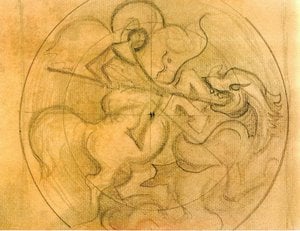
Spugnato

- 274.0 x 229.0 cm

 Visa mer
Få en utskriftsfärdig fil som vida överträffar webbförhandsvisningen. Varje digital bild vi säljer kommer från en högupplöst master i vår bilddatabas – vanligtvis mellan 5 000 och 15 000 pixlar bred – så att du med trygghet kan göra stora utskrifter, beskära tätt eller återge fina detaljer.
Ingen fil lämnar vår studio utan att ha bearbetats. En digital expert kontrollerar färgerna mot originalmålningen och korrigerar dem vid behov, för att sedan förbättra skärpa och detaljrikedom med professionella retuscheringsverktyg — alltid med full respekt för konstnärens penseldrag och stil. Resultatet är en bild som ser ut som målningen, inte som en filtrerad skanning.
Du godkänner innan arbetet slutförs: vår expert skickar bilden via e-post inom 72 timmar för din granskning. Inte nöjd? Be om förbättringar eller korrigeringar, eller begär återbetalning om kvaliteten inte lever upp till förväntningarna.
Detta är den kvalitet som förlag, designstudior, gallerier och tryckerier litar på.
Digital bild
Ladda ner en högupplöst fil för personlig visning, utskrift och kreativa projekt. ( Byt till tryck Beställ handmålad reproduktion)
Ingår i varje beställning av digital bild
Professionell digital leverans, garanterad
När du väljer ArtsDot.com får du inte bara en bild – du får ett professionellt förädlat digitalt konstverk, skapat med precision och med en garanterad tillfredsställelse. Här är allt som ingår i din beställning, automatiskt:

Snabb leverans via e-post
Din högupplösta digitala bild skickas till dig via e-post inom 72 timmar efter beställning – redo för omedelbar användning.

AI-förbättrad digital fil
Ditt konstverk optimeras professionellt med hjälp av avancerade AI-verktyg och manuell redigering, vilket garanterar maximal detaljrikedom, skärpa och färgnoggrannhet.

Fri livstidsåterleverans
Har du råkat radera eller tappa bort din fil? Ingen oro – vi skickar den kostnadsfritt till dig när som helst.

Inga importavgifter – någonsin
Njut av ditt konstverk omedelbart utan tull, importavgifter eller leveranskostnader – digitala nedladdningar är alltid skattefria.

Garanterad färgåtergivning
Vi säkerställer att din digitala bild återger de ursprungliga färgerna så exakt som möjligt med hjälp av professionella verktyg och färghantering.

100 dagars nöjdhetsgaranti
Om du inte är nöjd med din digitala bild kommer vi att revidera den eller återbetala 100% inom 100 dagar – utan frågor.

100% pengarna-tillbaka-garanti
Inte nöjd? Få full återbetalning inom 100 dagar efter att du mottagit din digitala fil – utan frågor.

Rabatt vid storköp
Köp 3 bilder, spara 10% – Köp 5, spara 15% – Köp 10+, spara 20%. Perfekt för kreativa projekt, gallerier och byråer.
Frågor och svar
Kan jag se "Spugnato" som ett bildspel i helskärm?
Ett bildspel finns tillgängligt på sidan Bildspel för "Spugnato" av Sottsass.
Hur intensiv är färgsättningen i "Spugnato" av Sottsass?
"Spugnato" av Sottsass har en Vivid färgintensitet.
Hur upplevs ljusstyrkan i "Spugnato" av Sottsass?
Den upplevda ljusstyrkan i "Spugnato" av Sottsass är deep_shadow. Den kan anpassas efter ljuset i det avsedda rummet.
Liknande konstverk


Konstnärsbiografi
A Life in Color: The Radical Vision of Ettore Sottsass
Ettore Sottsass, born in Innsbruck, Austria, in 1917, was more than just a designer; he was a cultural provocateur who shattered the conventions of mid-century modernism. His journey began steeped in architectural tradition—his father, also named Ettore Sottsass, was a prominent figure within Italy’s rationalist architecture movement. Growing up in Turin during the rise of Fascism, young Sottsass absorbed the principles of functional design but would ultimately rebel against its austere rigidity. His early education at Politecnico di Torino provided a solid foundation, yet his path took an unexpected turn with military service during World War II, experiences he later recounted in his autobiography *Scritto di notte*. This period, marked by conflict and disillusionment, profoundly shaped his artistic sensibility, instilling a desire to break free from established norms. After the war, he established his own studio in Milan, embarking on an exploration of form, color, and material that would define his career.From Olivetti to Global Tools: A Developing Aesthetic
Sottsass’s initial foray into design was largely within the realm of industrial production. His long association with Olivetti, beginning in 1958, proved pivotal. He wasn't merely designing typewriters and office equipment; he was imbuing them with personality, transforming utilitarian objects into expressions of pop culture vibrancy. The Valentine typewriter (1968), a bright red icon, stands as a testament to this approach—a playful challenge to the seriousness often associated with technology. However, Sottsass’s creative spirit extended beyond corporate commissions. He simultaneously pursued independent projects in ceramics, glasswork, and jewelry, experimenting with bold colors, geometric forms, and a growing fascination with ancient cultures. This period saw him involved in several avant-garde groups—Global Tools, Studio Alchimia—each contributing to the development of his unique aesthetic. He sought to infuse everyday life with joy and sensuality, rejecting the cold functionality that had dominated post-war design.The Memphis Group: A Revolution in Design
In 1981, Sottsass founded the Memphis Group, a collective of designers who launched a full-scale assault on the established order. Named after Bob Dylan’s song “Like a Rolling Stone,” Memphis was characterized by its exuberant use of color, pattern, and unconventional materials—laminates, plastics, and terrazzo were embraced with unapologetic boldness. The Carlton Room Divider (1981), perhaps the group's most iconic creation, became a symbol of postmodern defiance. It wasn’t about creating “good taste”; it was about challenging the very notion of taste itself. Memphis designs weren’t intended to blend seamlessly into domestic interiors; they were meant to provoke, disrupt, and stimulate conversation. The movement, though relatively short-lived, had an immeasurable impact on design history, paving the way for a more pluralistic and expressive approach.Beyond Furniture: A Holistic Vision
While often celebrated for his furniture designs, Sottsass’s creative output was remarkably diverse. He worked extensively in architecture, designing retail spaces for Esprit and private residences that reflected his playful sensibility. He also created glass objects, ceramics, jewelry, textiles, and paintings—each medium serving as a platform for exploring his core themes: the relationship between form and function, the power of color, and the influence of ancient cultures. His later work saw a shift towards more refined craftsmanship, utilizing precious materials like wood and metal to create pieces that were both sculptural and functional. He wasn’t simply designing objects; he was creating environments—total works of art that encompassed every aspect of daily life.A Lasting Legacy: The Enduring Influence of Sottsass
Ettore Sottsass died in Milan in 2007, leaving behind a prolific body of work that continues to inspire designers today. His rejection of modernist dogma and his embrace of playful experimentation revolutionized the field, paving the way for a more inclusive and expressive design landscape. His influence can be seen in everything from contemporary furniture to graphic design and fashion. He demonstrated that design could be both intellectually rigorous and emotionally engaging—a powerful force for social change and cultural expression. Sottsass’s legacy is not simply about the objects he created, but about the freedom he championed—the freedom to challenge conventions, embrace individuality, and celebrate the beauty of imperfection. His work remains a potent reminder that design should be more than just functional; it should be a reflection of our deepest desires and aspirations.
Kort om konstnären
- Full Name: Ettore Sottsass
- Nationality: Italian
- Date Of Birth: September 14, 1917
- Date Of Death: December 31, 2007
- Place Of Birth: Innsbruck, Austria
- Notable Artworks:
- Carlton Room Divider
- Valentine Typewriter
- Elea 9003 Computer
- Artistic Movement Or Style: Postmodernism
- Artists Or Movements Influenced By This Artist: ['Memphis Group']