


 Visa i rummet
 Skicka
 Dela
Dela
 Detaljer
 Studentguide för konstverk

 Ladda ner
 Liknande objekt
 Röntgen
 Bildspel
 Besökstatistik
Untitled
 Contemporary
 37.0 x 92.0 cm
 Läs mer
Konstverket som visas på denna sida skyddas av upphovsrättslagen, vilket innebär att vi inte lagligt kan skapa eller sälja en identisk reproduktion. Detta skydd upprätthålls genom internationella avtal såsom den Bernkonventionen och genom nationella lagar, inklusive de som fastställs av Amerikansk upphovsrättslag – Titel 17. Alla rättigheter förbehållna. Återgivning av konstverk är förbjuden utan skriftligt tillstånd från WahooArt.
Denna metod följer fullt ut upphovsrättsliga regler eftersom den inte innebär kopiering eller duplicering av det skyddade konstverket. Istället är det en kreativ nytolkning – en ny målning som är influerad av originalet men inte identisk med det.
Giclée / Konsttryck
Giclée- eller canvasprint av museumskvalitet med snabb produktion och flexibla ytbehandlingsalternativ. ( Köp handmålat konstverk Byt till digital bildförsäljning)




P118B Skr10

P118H Skr10

P118W Skr10

P438Z Skr10

P508JH Skr12

P508YH Skr12

P805H Skr10

P805Z Skr10

P919BZ Skr10

P919G Skr10

P919XJ Skr10

P959ZH Skr10

P968JZ Skr12

W106C Skr8

W218G Skr10

W218JH Skr8

W218Y Skr10

W307PJ Skr10

W316G Skr10

W316PJ Skr8

W316Y Skr10

W398PJ Skr8

W4111J Skr10

W500HY Skr15

W500JH Skr15

W692G Skr12

W849H Skr8

W940BG Skr15

W953PJ Skr8




Välj bland våra förinställda storlekar som motsvarar konstverkets ursprungliga proportioner.

Ange den bredd och höjd du behöver, för att passa din ram eller din vägg. Ett tryck kan endast beskäras, aldrig göras större än bilden, vilket innebär att ett format med en annan formform leder till att en del av bilden går förlorad. Vi skickar en digital mockup för godkännande innan vi trycker något. Bilden som visas på denna sida visar inte den faktiska beskärningen — det är endast mockuppen som gör det.
Leverans över hela världen () på 2 veckor istället för standard 4/5 veckor. (24 oktober)

Fri expressfrakt över hela världen

Högkvalitativ linnecanvas

Fullständig fraktförsäkring

Garantier för återbetalning av tullavgifter

Garantier för exakt färgåtergivning

100 dagars returrätt vid fabrikationsfel

100% pengarna tillbaka-garanti

Mängdrabatt erbjuds
 Glasalternativet är endast tillgängligt i storlekar under 110 cm.

Untitled
Giclée / Konsttryck
Reproduktionsstorlek
-


Totalpris
Skr 614
Liknande konstverk


Om konstnären
Sadamasa Motonaga: A Dance of Form and Feeling
Sadamasa Motonaga (1922-2011) wasn’t merely an artist; he was a conjurer of atmosphere, a sculptor of light and water, and a provocateur who dared to challenge the rigid boundaries of postwar Japanese art. Born in Iga Ueno, a town steeped in ancient ninja lore, Motonaga’s early life fostered a spirit of playful rebellion – a sensibility that would profoundly shape his artistic trajectory. He initially pursued manga as a young man, but it was the burgeoning world of abstract expressionism and the radical experimentation of Gutai Art Association that truly ignited his creative fire. His work, often described as “biomorphic abstraction,” isn’t about precise representation; instead, it's an exploration of fluidity, chance, and the inherent beauty found in ephemeral materials – water, smoke, and even the simple act of pouring paint.
The Gutai Years: Experimentation and Rebellion
Joining Gutai in 1955 was a pivotal moment for Motonaga. Led by Jiro Yoshihara, Gutai sought to dismantle traditional notions of art, embracing performance, installation, and unconventional materials. Motonaga’s early contributions within the group were characterized by a fascination with the unpredictable – he famously created “Work (Water)” in 1955, suspending vinyl tubes filled with colored water, allowing them to drift and shimmer under natural light. This piece, initially dismissed as a simple trick, became a cornerstone of Gutai’s philosophy: art wasn't about control but about embracing the unexpected dance between intention and chance. He also explored stage art, utilizing smoke as a medium, creating immersive environments that blurred the lines between performance and sculpture. These early experiments were deeply influenced by the post-war anxieties and the desire to break free from the constraints of established artistic conventions.
Fluid Forms: Painting, Performance, and the Language of Materials
Following his departure from Gutai in 1971, Motonaga’s work expanded dramatically. He continued to experiment with painting, developing a distinctive “informel” style characterized by loose brushstrokes, vibrant colors, and the deliberate pouring of paint onto canvases – a technique he termed "tarashikomi," drawing inspiration from traditional Japanese watercolor techniques. However, his most enduring legacy lies in his exploration of unconventional materials. He created intricate ceramic murals, designed interiors for public spaces, and produced a series of beloved children’s picture books alongside poet Shuntaro Tanikawa, imbuing them with a whimsical charm and playful spirit. His use of airbrushing, initially adopted from Western techniques, became integral to his style, allowing him to create delicate washes of color and subtle gradations.
A Legacy of Playfulness and Intuition
Motonaga’s artistic philosophy was rooted in a deep appreciation for the natural world and a rejection of rigid formalism. He famously described his style as “aho ha” – a self-deprecating term that acknowledged the inherent absurdity and spontaneity of his creative process. This playful approach, combined with an unwavering belief in intuition and a willingness to embrace chance, set him apart from many of his contemporaries. His work wasn’t about achieving technical perfection; it was about capturing fleeting moments of beauty and evoking a sense of wonder. Despite never receiving formal artistic training, Motonaga's influence on Japanese art is undeniable, inspiring generations of artists to explore new materials, embrace experimentation, and prioritize emotional expression over strict adherence to traditional rules.
Key Achievements and Recognition
- Gutai Art Association (1954-1971): A core member, contributing significantly to the group’s groundbreaking performances and installations.
- International Recognition (1960s): His work gained international attention through exhibitions in Europe and New York, largely thanks to the support of Michel Tapié.
- New York Residency (1966-1967): This period saw him develop his airbrush technique and explore new approaches to painting.
- Children’s Picture Books (1970s onwards): Collaborations with Shuntaro Tanikawa produced a series of critically acclaimed and commercially successful books, showcasing his playful aesthetic.
- Continued Innovation (2000s): Continued exploration of ceramics, murals, and public art installations throughout his long career.
Sadamasa Motonaga’s work remains a testament to the power of intuition, experimentation, and a deep connection with the world around us. His legacy lies not just in the beauty of his creations but also in his unwavering commitment to artistic freedom and his joyful embrace of the unexpected.

Sadamasa Motonaga
1922 - 2011
Snabbfakta
- Full Name: Sadamasa Motonaga
- Nationality: Japanese
- Date Of Birth: 1922
- Date Of Death: 2011
- Place Of Birth: Iga Ueno, Mie Prefecture
- Notable Artworks:
- Work (Water)
- Untitled (Howa Howa)
- Tsunagatteiru
- Artistic Movement Or Style: Gutai, Informel, Biomorphic
- Artists Who Influenced This Artist: ['Jiro Yoshihara']
- Artists Or Movements Influenced By This Artist:
- Michel Tapié
- Gutai Art Association
Relaterade artiklar

Serene Blue Backgrounds: Discover Soulful Art to Transform Your Space with Timeless Elegance
Transform your home with soulful blue art. From serene Monet impressions to modern textured sculptures, discover curated masterpieces designed to inspire calm. Explore expert art consultations and bespoke hand-painted reproductions to create your personal sanctuary.
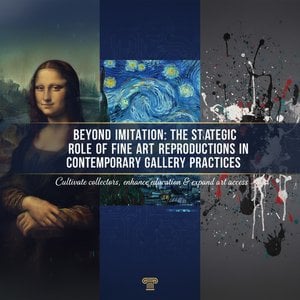
Beyond Imitation: Strategiska rollen av fina konsttryck i samtida galleripraktiker
Utforska konsttryckets strategiska roll i dagens gallerivärld. Djupgående analys av autenticitet, investeringar och kuratoriska möjligheter för samlare och experter. Få insikter om framtidens konstmarknad.

Azure Visions: Exploring Representations of the Blue Dress in Western Art History
Explore the rich history of the blue dress in Western art! Discover its symbolism, from Renaissance masterpieces to modern interpretations by artists like Martin & Schiele. Uncover cultural meanings and artistic techniques.

De 10 mest ikoniska målningarna i nyansen 'Skifferblått' – Konst & Inredning
Utforska de 10 mest ikoniska målningarna dominerade av nyansen 'skifferblått'. Lär känna Monet, Van Gogh & andra mästare. Hitta inspiration för din inredning och köp museumkvalitativa konsttryck på ArtsDot.com – din källa till tidlös skönhet.
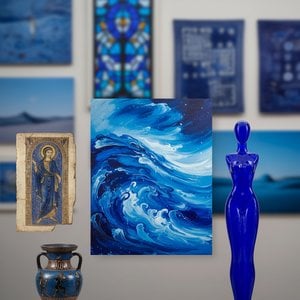
The Allure of Azure: Exploring the Symbolic & Aesthetic Depths of Blue in Art History
Explore the rich history of blue in art! Discover its symbolism, from ancient pigments to modern masterpieces by Kandinsky & Seurat. Uncover the psychological impact and cultural meanings behind this captivating hue.