

 Skicka
 Dela
Dela
 Visa detaljer
 Guide
Guide

 Ladda ner
 Liknande objekt
 Bildspel
 Frågor och svar
 Statistik
Objects for everyday use


 Visa mer
Giclée / Konsttryck
Giclée- eller canvasprint av museumskvalitet med snabb produktion och flexibla ytbehandlingsalternativ. ( Beställ handmålad reproduktion Byt till digital bild)




































Välj bland våra förinställda storlekar som motsvarar konstverkets ursprungliga proportioner.

Ange den bredd och höjd du behöver för att passa din ram eller vägg. Ett tryck kan endast beskäras, aldrig göras större än originalbilden, vilket innebär att ett format med en annan proportion leder till att en del av bilden går förlorad. Vi skickar en digital mockup för godkännande innan vi påbörjar tryckningen. Bilden som visas på denna sida visar inte den faktiska beskärningen — det är endast mockuppen som gör det.
Leverans över hela världen () på 2 veckor istället för standard 4/5 veckor. (7 november)

Fri expressfrakt över hela världen

Högkvalitativ linnecanvas

Fullständig fraktförsäkring

Garantier för återbetalning av tullavgifter

Garantier för exakt färgåtergivning

100 dagars returrätt (endast vid fel)

100% pengarna tillbaka-garanti

Mängdrabatt erbjuds
 Glasalternativet är endast tillgängligt i storlekar under 110 cm.

Objects for everyday use
Giclée / Konsttryck
Storlek på reproduktion
-


Slutgiltigt pris
Skr 629
A Window into 19th-Century India
In the quiet, sepia-toned depths of Raja Deen Dayal’s "Objects for everyday use," we are invited to step through a temporal threshold into the heart of 19th-century Indian life. This evocative albumen print serves as more than just a photographic record; it is a poignant piece of social realism that captures a fleeting moment of communal existence. The composition centers on a group of four men gathered around a table, their forms arranged in a gentle semi-circle that draws the viewer into their intimate circle of labor and companionship. As we gaze upon the scene, the soft, aged textures of the photograph evoke a sense of nostalgia, pulling us toward a world where the rhythms of daily life were defined by craftsmanship and shared purpose.
The artistry of Deen Dayal lies in his ability to find profound beauty within the mundane. The table is laden with an array of pottery and cooking utensils, their geometric shapes—circles, ovals, and cylinders—creating a rhythmic visual language that anchors the composition. Through the masterful use of light and shadow, the photographer emphasizes the tactile surfaces of these objects, from the smooth glaze of ceramics to the coarse weave of the men's garments. This interplay of light does not merely illuminate; it sculpts the scene, casting shadows that lend depth to the doorway and weight to the figures, transforming a simple documentary moment into a rich, textured tableau of human industry.
The Mastery of the Lens and Historical Resonance
As a pioneer of Indian photography and a photographer to royalty, Raja Deen Dayal possessed a unique technical command over the medium. In this work, his training as an engineer is subtly evident in the balanced, structured perspective that guides the eye across the frame. The technique of the albumen print, characterized by its warm, brownish tones, lends a soulful quality to the subject matter, softening the harsh realities of poverty and labor with a layer of historical grace. This piece stands as a testament to the documentary tradition, where the camera acts as an observer of truth, capturing the essence of Indian social structures and the quiet dignity of traditional pottery-making.
For the discerning collector or interior designer, "Objects for everyday use" offers a sophisticated narrative element for any curated space. The sepia palette provides a neutral yet warm foundation that complements both classical and contemporary decor, offering a sense of historical weight and intellectual depth. To display a high-quality reproduction of this work is to bring a piece of global heritage into the home—a conversation starter that speaks of resilience, community, and the enduring beauty found in the simplest of human endeavors. It is an invitation to reflect on our shared connection to the tools and traditions that shape our very existence.
Frågor och svar
Vilken färgpalett används i "Objects for everyday use"?
"Objects for everyday use" av Raja Deen Dayal använder en Pastels färgpalett. Paletten sammanfattar verkets övergripande färgkaraktär.
Har "Objects for everyday use" starka ljus-mörkerkontraster?
Ljus-mörker-kontrasten i "Objects for everyday use" är registrerad som Serene. Kontrast beskriver hur starkt ljusa och mörka partier skiljer sig åt.
Vilken atmosfär förmedlar "Objects for everyday use"?
"Objects for everyday use" har en Nostalgic atmosfär.
Liknande konstverk


Konstnärsbiografi
tidigt liv och utbildning
Raja Deen Dayal, även känd som Lala Deen Dayal, var en indisk fotograf född i Sardhana, Indien, år 1844. Hans resa genom livet tog slut 1905, men hans visuella arv lever vidare. Efter att ha utbildat sig till ingenjör vid Thomason College of Civil Engineering i Roorkee, påbörjade Dayal sin banbrytande karriär inom fotografi under mitten av 1870-talet.karriärhöjdpunkter
Dayals professionella resa var fylld av prestigefyllda uppdrag och framgångar. Han etablerade studior i Indore, Mumbai och Hyderabad, där han kom att bli hovfotograf åt den sjätte nizam av Hyderabad, Mahbub Ali Khan, Asif Jah VI. Hans betydelse för det koloniala Indien cementerades ytterligare när han år 1885 utnämndes till fotograf åt vicekungen av Indien, och år 1897 mottog han det prestigefyllda kungliga certifikatet från drottning Victoria.
noterbara verk och samlingar
Dayals fotografier är världsberömda för sitt sätt att fånga de storslagna indiska templen, palatsen och monumenten, samt de fängslande porträtten av indiska härskare och brittiska tjänstemän. Bland hans mest framstående verk finner vi:
- Moosi River, Hyderabad (J. Paul Getty Museum, Los Angeles, USA), som visar hans exceptionella förmåga att fånga essensen av det indiska landskapet.
- Kanalen nära Punchukki, Aurangabad (J. Paul Getty Museum, Los Angeles, USA), som belyser hans konstnärliga talang att rama in den indiska arkitekturens skönhet.
museer och samlingar med Raja Deen Dayals verk
Hans omfattande produktion finns bevarad i några av världens mest betydelsefulla institutioner:
- J. Paul Getty Museum (Los Angeles, USA)
- Indira Gandhi National Centre for the Arts (New Delhi, Indien)
- Peabody Essex Museum (USA)
- Alkazi Collection (Delhi, Indien)
arv och betydelse
Raja Deen Dayals bidrag till den indiska fotografin är odiskutabla. Hans verk fångade inte bara själen i Indiens arkitektoniska och kulturella arv, utan banade också väg för kommande generationer av fotografer.
se fler verk av Raja Deen Dayal på ArtsDot: https://ArtsDot.com/@/raja-deen-dayal
utforska indisk konst och fotografi på ArtsDot: /en/art/show/art-d3c8xr-en/

Raja Deen Dayal
1844 - 1905 , Indien
Kortfakta
- Artistic Movement Or Style: Fotografi (Hovfotografi)
- Artists Or Movements Influenced By This Artist: ['British Raj-konst']
- Artists Who Influenced This Artist: ['Thomason College']
- Date Of Birth: 1844
- Date Of Death: 1905
- Full Name: Raja Deen Dayal / Lala Deen Dayal
- Nationality: Indisk
- Notable Artworks:
- Moosi River
- Channel Aurangabad
- Objects Everyday Use
- Place Of Birth: Sardhana, Indien
Relaterade artiklar

Monochrome Visions: Exploring the Aesthetic & Historical Significance of Black & White Photography
Explore the rich history & artistic power of black and white photography. From early techniques to iconic masters like Ansel Adams, discover why monochrome continues to captivate art lovers today. Expert insights for collectors.

Topp 10 Dokumentära Fotografier som Formade Konsten – ArtsDot.com
Utforska 10 ikoniska fotografier som formade dokumentär fotografi. Lär känna Dorothea Lange, Robert Capa och andra mästare. Hitta konsttryck & inspiration för ditt hem på ArtsDot.com – museumskvalitet!
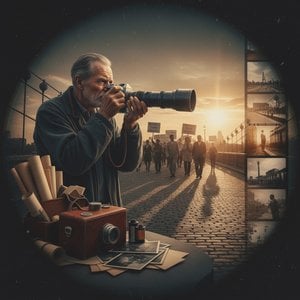
Witnessing History Through Lens & Light: Documentary Photography's Enduring Legacy
Explore the powerful history of documentary photography – from its origins to contemporary masters like Gordon Parks & W. Eugene Smith. Discover how this art form shapes our understanding of society and witness pivotal moments in time.

Raja Ravi Varma: Bridging Tradition & Modernity in 19th-Century Indian Art
Explore the life & art of Raja Ravi Varma, a pioneer who fused European techniques with Indian iconography. Discover his iconic paintings, lasting legacy, and influence on modern Indian art at ArtsDot.

Beyond the Lens: Photography's Enduring Influence on Modern & Contemporary Art
Explore photography's pivotal role in shaping modern & contemporary art. Discover key movements, influential artists like Stieglitz, and expert collecting advice from ArtsDot.