


 Visa i rummet
 Skicka
 Dela
Dela
 Detaljer
 Studentguide för konstverk

 Ladda ner
 Liknande objekt
 Röntgen
 Bildspel
 Besökstatistik
The Grey
 Oil On Panel
- Dutch Golden Age
 1646
1646- Early Modern
 44.0 x 38.0 cm
 Rijksmuseum
 Läs mer
Handgjord oljereproduktion
Handmålad olja på duk i din valda storlek och ram, tillverkad efter beställning av våra konstnärer. ( Byt till tryckta exemplar Byt till digital bildförsäljning)




P118B Skr10

P118H Skr10

P118W Skr10

P438Z Skr10

P508JH Skr12

P508YH Skr12

P805H Skr10

P805Z Skr10

P919BZ Skr10

P919G Skr10

P919XJ Skr10

P959ZH Skr10

P968JZ Skr12

W106C Skr8

W218G Skr10

W218JH Skr8

W218Y Skr10

W307PJ Skr10

W316G Skr10

W316PJ Skr8

W316Y Skr10

W398PJ Skr8

W4111J Skr10

W500HY Skr15

W500JH Skr15

W692G Skr12

W849H Skr8

W940BG Skr15

W953PJ Skr8




Välj bland våra förinställda storlekar som motsvarar konstverkets ursprungliga proportioner.

Du kan ange egna mått för att passa en specifik ram eller yta. Om den valda storleken inte matchar originalbildens proportioner kommer vi antingen att beskära konstverket eller utöka målningen med ytterligare handmålade element. En digital skiss skickas till dig för godkännande innan produktionen påbörjas.
Observera att förhandsvisningen på skärmen inte återspeglar den faktiska beskärningen eller utökningen. Endast skissen visar den slutgiltiga kompositionen korrekt.
Även om anpassade storlekar är möjliga, rekommenderar vi att du väljer en dimension från den fördefinierade listan för att bevara originalproportionerna.
Efter beställning kommer ArtsDot.com team att mejla kunden för instruktioner och tillhandahålla en skissförhandsvisning
Leverans över hela världen () på 3–4 veckor istället för standard 5 veckor. (11 oktober). Inga kompromisser med kvaliteten.

Fri expressfrakt över hela världen

Högkvalitativ linnecanvas

Fullständig fraktförsäkring

Garantier för återbetalning av tullavgifter

Garantier för exakt färgåtergivning

100 dagars returrätt vid fabrikationsfel

100% pengarna tillbaka-garanti

Mängdrabatt erbjuds
 Glasalternativet är endast tillgängligt i storlekar under 110 cm.

The Grey
Tryckteknik
Reproduktionsstorlek
-


Totalpris
Skr 2544
A Window Into Seventeenth Century Pastoral Life
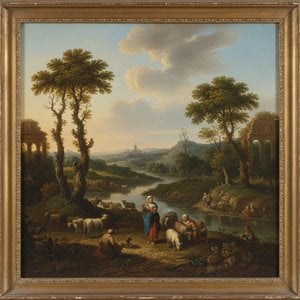
The painting “The Grey,” attributed to Philips Wouwerman, offers a breathtaking glimpse into the artistic sensibilities of the Dutch Golden Age—specifically around 1646. Currently residing at the Rijksmuseum in Amsterdam, this diminutive panel (44 x 38 cm) transcends its modest dimensions through Wouwerman’s masterful command of technique and his profound understanding of capturing atmosphere and emotion. It's a scene meticulously rendered in oil on panel, mirroring the prevalent artistic practices of the era where artists prioritized realism alongside expressive qualities.The Equestrian Vision: Style and Technique
Wouwerman’s signature style is instantly recognizable—characterized by dynamic compositions featuring equestrian subjects, often depicting hunts or military campaigns. However, “The Grey” distinguishes itself with a remarkable sensitivity to detail that elevates it beyond mere spectacle. Observe the artist's painstaking layering of brushstrokes, creating an illusionistic depth that convincingly portrays the rugged landscape and the calm demeanor of the horse and rider. The muted palette—dominated by earthy tones—further reinforces this impression of authenticity, reflecting Wouwerman’s commitment to portraying the natural world with uncompromising accuracy. His use of chiaroscuro – dramatic contrasts between light and shadow – skillfully illuminates the horse's musculature and highlights the boy’s focused gaze, drawing the viewer’s eye into the heart of the composition.Historical Context: Echoes of Pieter van Laer
Wouwerman’s artistic lineage extends back to Pieter van Laer (1592/99–after 1642), a *bamboccianti* painter who championed the depiction of rural life and animal subjects. Like Van Laer, Wouwerman skillfully employed observational methods—a hallmark of the burgeoning scientific spirit of the time—to faithfully reproduce the textures and colors of the natural environment. The painting’s setting—a rolling hillside under a cloudy sky—was not merely decorative; it served as a conduit for conveying broader ideas about human interaction with nature, mirroring prevailing philosophical currents that questioned traditional hierarchies and celebrated the beauty of simplicity.Symbolism: Harmony and Observation
Beyond its visual splendor, “The Grey” embodies symbolic resonances pertinent to seventeenth-century thought. The horse itself represents nobility, strength, and dominion—themes frequently explored in equestrian art during this period. Yet, Wouwerman’s portrayal transcends mere symbolism; he presents a harmonious tableau where man and animal coexist peacefully, reflecting the humanist values that underpinned artistic endeavors of the time. The boy's attentive posture underscores the importance of careful observation—a skill valued by artists and intellectuals alike—as they sought to comprehend the workings of the universe through empirical investigation.Emotional Resonance: A Moment Frozen in Time
Ultimately, “The Grey” succeeds in transporting the viewer back to a bygone era, capturing not just the visual elements but also the palpable atmosphere of rural life. The painting evokes feelings of tranquility, contemplation, and admiration for the natural world—qualities that continue to resonate with audiences today. It stands as a testament to Wouwerman’s artistic genius—his ability to transform observation into art and to imbue his canvases with enduring emotional power. Its presence at the Rijksmuseum ensures that this captivating masterpiece will inspire generations of art lovers for years to come.Frågor och svar
Hur passar "The Grey" in i Philips Wouwermanss teman och stil?
"The Grey" tillhör Philips Wouwermanss Dutch Golden Age-period, vars dokumenterade teman inkluderar dutch equestrian tradition, religious symbolism, pastoral, moral instruction, observation, landscape rendering mastery, artist’s peak creative output.
Hur skapades "The Grey" och vilken är dess storlek?
"The Grey" är utförd i Oil On Panel och mäter 44 x 38 cm i sin ursprungliga form.
Hur gammal var Philips Wouwermans när "The Grey" skapades?
När "The Grey" skapades år 1646, var Philips Wouwermans – född 1619 – 27 år gammal.
Hur är färgkompositionen i "The Grey" av Philips Wouwermans uppbyggd?
Färgkompositionen i "The Grey" av Philips Wouwermans förenar en Statement kontrast med en Discordant Palette harmoni.
Upplevs färgerna i "The Grey" som starka eller mjuka?
"The Grey" av Philips Wouwermans uppvisar en Monochromatic färgintensitet.
Under vilket år skapades "The Grey" av Philips Wouwermans?
Skapandet av "The Grey" av Philips Wouwermans dateras till 1646.
Vilken konstnär tillskrivs "The Grey"?
"The Grey" tillskrivs Philips Wouwermans.
Liknande konstverk


Om konstnären
Philips Wouwerman: Ett liv under den nederländska guldåldern
- Född: Haarlem, Nederländerna (1619)
- Död: 1668
Philips Wouwerman (döpt den 24 maj 1619 – död den 19 maj 1668) var en ytterst produktiv och mångsidig nederländsk målare, berömd för sina skildringar av jaktscener, landskap och slagfält. Han står som en betydelsefull gestalt inom det konstnärliga landskapet under den nederländska guldåldern.
Tidigt liv och utbildning
Philips Wouwerman föddes i Haarlem, Nederländerna, som son till Pouwels Joostsz Wouwerman, även han en målare, om än mindre känd än sin son. Detaljer kring hans tidiga konstnärliga utbildning är något knappa, men det tros att han studerade under Frans Hals (1581/85–1m666), en framstående porträttist i Haarlem. Även om Hals distinkta stil inte hade ett tungt inflytande på Wouwermans mogna verk, var den grundläggande träningen sannolikt ovärderlig. Tidigt i sin karriär påverkades Wouwerman av bamboccianti-traditionen, särskilt genom verken av Pieter van Laer (1592/99–efter 1642), och antog deras fokus på vardagsliv och genremåleri.
Konstnärlig utveckling och stil
- Tidiga influenser: Genom att initialt efterlikna bamboccianti-målarna, präglades Wouwermans tidiga verk av skildringar av det dagliga livet.
- Framväxande stil (mitten av 1640-talet): Ett karakteristiskt kompositionselement växte fram – en diagonal sluttning i landskapet, ofta åtföljd av ett träd som fungerade som en repoussoir (ett grepp för att skapa djup). Scenerna befolketades av figurer, ofta i sällskap med hästar.
- Mogen period (ca 1650–1660): Wouwerman utvecklade sin egen individuella stil och utvidgade sitt motivval avsevärt. Han målade genrebilder, landskap med resande, kavallerislag, militärläger och festliga sammankomster bland bönder.
- Mästerskap i hästskildring: Wouwerman hyllas särskilt för sin exceptionella skicklighet i att avbilda hästar av olika raser i dynamisk rörelse. Konsthistorikern Frederik J. Duparc har berömt kallat honom "utan tvekan den mest fulländade och framgångsrika nederländska hästmålaren från 1600-talet".
- Karakteristiska drag: Hans målningar kännetecknas av dämpade färger, en sval atmosfär och en noggrann detaljrikedom som skapar kvicka och anekdotiska berättelser inom hans scener. Han kombinerade ofta föreställda sydliga landskap med en utpräglat nederländsk stämning.
Stora prestationer och arv
Wouwermans verk var mycket eftertraktade under hans livstid och fortsatte att vinna popularitet under 1700-talet. Hans målningar letade sig in i framstående samlingar över hela Europa, inklusive de kungliga husen i Dresden och Sankt Petersburg, vilket vittnar om en utbredd beundran för hans konstnärskap.
- Produktivitet: Wouwerman var anmärkningsvärt produktiv; tidiga kataloger listade omkring 800 verk tillskrivna honom, vilket senare översteg 1200. En mer modern förteckning (Schumacher, 2006) identifierar ungefär 570 autentiska verk, vilket erkänner de många efterföljare och imitatörer som producerade verk i hans stil.
- En familj av konstnärer: Hans bröder, Jan (1629–1666) och Pieter (1rag23–1682), var också målare, och deras verk tillskrevs ofta Philips i ett tidigt skede. Medan Pieters arbete tydligt speglade Philips inflytande, utvecklade han en egen stil. Jan erkändes som en mer självständig landskapsmålare.
- Inflytande på senare konstnärer: Wouwermans stil påverkade ett flertal konstnärer, däribland Jan van Huchtenburgh (1647–1733), bröderna Jan Frans och Joseph van Bredael (1688–1739) samt Carel van Falens (1683–1733).
- Gillesmedlemskap och samhällsroll: Han var medlem i Haarlems Sankt Lukas-gille och innehade flera officiella positioner inom detta. Utöver sina konstnärliga strävanden tjänstgjorde Wouwerman även som fastighetsmäklare i Haarlem, vilket speglade hans engagemang i det civila livet.
Historisk betydelse
Philips Wouwermans bidrag till den nederländska guldåldern ligger i hans förmåga att fånga ett brett spektrum av scener – från myllrande marknadsplatser och jaktexpeditioner till dramatiska slagfält och fridfulla landskap – med enastående detaljrikedom och dynamik. Hans mästerskap i att skildra hästar, kombinerat med hans skarpa blick för anekdotiskt berättande, befäste hans plats som en av sin tids mest hyllade och inflytelserika målare. En retrospektiv utställning i Kassel och Haag (2009/2010) belyste ytterligare hans bestående arv.

Philips Wouwermans
1619 - 1668 , Nederländerna
Snabbfakta
- Artistic Movement Or Style: Dutch Guldålder
- Artists Or Movements Influenced By This Artist: ['Jan van Huchtenburgh']
- Artists Who Influenced This Artist:
- Frans Hals
- Pieter van Laer
- Date Of Birth: 24 maj 1619
- Date Of Death: 19 maj 1668
- Full Name: Philips Wouwerman
- Nationality: Nederländska
- Notable Artworks:
- Två hästar
- Två ryttare vid en spant
- Sönderrinne med en signalpost
- Place Of Birth: Haarlem, Nederländerna
Relaterade artiklar

Golden Age Reflections: Dutch Baroque Painting & Cultural Innovation
Explore the Dutch Golden Age of painting! Discover key artists like Vermeer & ter Borch, their innovative techniques, and the rich cultural context behind these Baroque masterpieces. Learn about collecting & appreciating this iconic art period.
Nicolaes Berchem: Dutch Golden Age Pastoralism & the Evolution of Landscape Painting
Explore the captivating world of Nicolaes Berchem, a leading Dutch Golden Age painter. Discover his idyllic landscapes, masterful technique & lasting influence on art history. Learn more at ArtsDot.

Nederländsk Guldålder: Topp 10 mästerverk som definierade epoken – konst & heminredning
Utforska de 10 ikoniska mästerverken från den nederländska guldåldern! Lär känna Rembrandt, Vermeer och Hals – deras teknik & berättelser. Hitta konsttryck och inspiration för din heminredning på ArtsDot.com. Upptäck hela samlingen online!

Charles Leickert: Capturing the Dutch Golden Age Light – A Comprehensive Study of Technique, Context, and Legacy
Explore the captivating winter landscapes of Charles Leickert, a master of Dutch Golden Age light & atmosphere. Discover his techniques, symbolism, and lasting legacy – a comprehensive study for art enthusiasts and collectors.

Golden Light & Dutch Skies: Bringing the Magic of Dutch Golden Age Landscapes into Your Home
Transform your home with the breathtaking light of Dutch Golden Age landscapes. Discover how hand-painted oil reproductions of masterworks like Ruisdael and Vermeer bring timeless elegance, atmosphere, and soulful texture to modern interiors. Elevate your space with museum-quality art.

