


 Visa i rummet
 Skicka
 Dela
Dela
 Detaljer
 Studentguide för konstverk

 Ladda ner
 Liknande objekt
 Röntgen
 Bildspel
 Besökstatistik
War


 Läs mer
Giclée / Konsttryck
Giclée- eller canvasprint av museumskvalitet med snabb produktion och flexibla ytbehandlingsalternativ. ( Köp handmålat konstverk Byt till digital bildförsäljning)




P118B Skr10

P118H Skr10

P118W Skr10

P438Z Skr10

P508JH Skr12

P508YH Skr12

P805H Skr10

P805Z Skr10

P919BZ Skr10

P919G Skr10

P919XJ Skr10

P959ZH Skr10

P968JZ Skr12

W106C Skr8

W218G Skr10

W218JH Skr8

W218Y Skr10

W307PJ Skr10

W316G Skr10

W316PJ Skr8

W316Y Skr10

W398PJ Skr8

W4111J Skr10

W500HY Skr15

W500JH Skr15

W692G Skr12

W849H Skr8

W940BG Skr15

W953PJ Skr8




Välj bland våra förinställda storlekar som motsvarar konstverkets ursprungliga proportioner.

Ange den bredd och höjd du behöver, för att passa din ram eller din vägg. Ett tryck kan endast beskäras, aldrig göras större än bilden, vilket innebär att ett format med en annan formform leder till att en del av bilden går förlorad. Vi skickar en digital mockup för godkännande innan vi trycker något. Bilden som visas på denna sida visar inte den faktiska beskärningen — det är endast mockuppen som gör det.
Leverans över hela världen () på 2 veckor istället för standard 4/5 veckor. (21 oktober)

Fri expressfrakt över hela världen

Högkvalitativ linnecanvas

Fullständig fraktförsäkring

Garantier för återbetalning av tullavgifter

Garantier för exakt färgåtergivning

100 dagars returrätt vid fabrikationsfel

100% pengarna tillbaka-garanti

Mängdrabatt erbjuds
 Glasalternativet är endast tillgängligt i storlekar under 110 cm.

War
Giclée / Konsttryck
Reproduktionsstorlek
-


Totalpris
Skr 610
War: A Descent into Chaos – Jackson Pollock’s Post-Traumatic Masterpiece
Jackson Pollock's *War*, painted in 1947, isn’t merely a canvas splashed with color; it’s a visceral embodiment of the anxieties and turmoil gripping America in the aftermath of World War II. This monumental work, rendered in thick layers of black ink and colored pencil on paper, plunges the viewer into a maelstrom of fragmented figures, violent gestures, and unsettling symbols – a direct reflection of the psychological landscape of a nation grappling with unprecedented devastation and uncertainty. The painting’s power lies not in representational accuracy but in its raw emotional intensity, a hallmark of Jackson Pollock's pioneering approach to Abstract Expressionism. It’s a piece that demands attention, inviting contemplation on themes of conflict, loss, and the enduring scars of war.The Language of Drip: Technique and Process
Pollock’s signature “drip” technique is utterly central to *War*'s impact. He abandoned traditional brushwork, instead pouring, dripping, and splattering paint directly onto the canvas laid flat on the floor – a revolutionary act that liberated him from the constraints of easel painting. This method wasn't random; it was meticulously controlled chaos. The layering of ink creates a dense, almost sculptural surface, punctuated by sharp lines and frantic bursts of color—primarily black, red, and yellow—that seem to writhe with barely contained energy. Notice how he utilizes both linear strokes and areas of broad, diffused color, creating a dynamic tension between order and disorder. The sheer physicality of the process is evident in the visible texture and the sense that the painting was actively *made*, rather than passively observed. It’s as if Pollock wrestled with his demons onto the surface, channeling his anxieties into this monumental expression.Abstract Expressionism: A Reflection of a Fractured World
*War* stands as a pivotal example of Abstract Expressionism, an artistic movement that exploded in New York during the 1940s and 50s. Rejecting European traditions, American artists like Pollock sought to express raw emotion and subjective experience through non-objective forms. Unlike earlier movements focused on depicting reality, Abstract Expressionists aimed to capture the inner world—the anxieties, fears, and hopes—of the individual. *War* embodies this ethos perfectly, eschewing recognizable imagery in favor of a symbolic language that speaks directly to the viewer’s subconscious. It's deeply connected to the broader cultural context of the post-war era, a time marked by disillusionment, fear of nuclear annihilation, and a profound sense of societal upheaval.Decoding the Symbols: Figures of Conflict and Despair
The painting is populated with unsettling figures—human and animal—engaged in what appears to be a chaotic battle or ritualistic sacrifice. A hooded figure, reminiscent of Christ on the cross, dominates the right side of the composition, while a bull, often associated with primal instincts and aggression, looms over a pile of human debris. The fragmented nature of these forms suggests a breakdown of order and humanity, mirroring the devastation of war. The presence of the animal adds another layer of complexity, hinting at the brutal, instinctual forces that drive conflict. Some art historians have linked the imagery to Picasso’s *Guernica*, suggesting a dialogue between two artists grappling with the horrors of modern warfare. The overall effect is profoundly disturbing, forcing the viewer to confront the uncomfortable realities of violence and loss.A Legacy of Raw Emotion: Pollock's Enduring Impact
*War* remains a powerfully resonant work, not just for its historical significance but also for its enduring emotional impact. It’s a testament to Jackson Pollock’s innovative technique and his willingness to explore the darkest corners of the human psyche. Reproductions of *War*, offered by ArtsDot.com, allow you to bring this monumental piece into your own space, experiencing its raw energy and unsettling beauty firsthand. Its continued relevance speaks volumes about the timeless nature of art's ability to capture and convey the complexities of the human experience—particularly in times of profound turmoil. Consider exploring other works by Pollock, Mark Rothko, or Lee Krasner – artists who similarly sought to express the emotional realities of their era through bold, innovative approaches to painting.Frågor och svar
Från vilken era härstammar "War"?
Den historiska perioden för "War" av Paul Jackson Pollock är Modern. Denna klassificering placerar verket i konsthistorien.
Var bör en reproduktion av "War" av Paul Jackson Pollock hängas?
Format (Landscape) och rekommenderat utrymme (Living Room) är de två placeringsfakta som finns registrerade för "War" av Paul Jackson Pollock.
Hur välkänd är "War" av Paul Jackson Pollock?
"War" klassificeras som Iconic.
Liknande konstverk


Om konstnären
Early Life and the Seeds of Innovation
Paul Jackson Pollock, född den 28 januari 1912 i Cody, Wyoming, var en man från början präglad av rörelse och ett djupt band till naturen. Hans barndom var fylld med ständig omflyttning – hans far sökte arbete som lantmätare över de vidsträckta landskapen i det amerikanska västlandet, vilket innebar att familjen flyttade ofta. Denna nomadiska uppväxt gav honom en stark anknytning till den naturliga världen och en exponering för olika kulturer, särskilt genom möten med konst från ursprungsbefolkningen under dessa lantmäteriarbeten – intryck som skulle subtilt påverka hans konstnärliga vision senare i livet. Även om han aldrig direkt imiterade inhemska stilar, så fanns det en rå energi och andlig resonans i dessa tidiga erfarenheter som utan tvekan lämnade ett avtryck på honom. Pollock’s formella konstutbildning inleddes på Manual Arts High School i Los Angeles, följt av studier vid Art Students League of New York under ledning av Thomas Hart Benton. Benton, en framstående figur inom Regionaliströrelsen, betonade rytmisk komposition och berättande teman rotade i amerikansk liv. Pollock absorberade först Bentons läror, men hans inneboende tendens lutar mot mer abstrakta utforskningar. Han var också djupt påverkad av mexikanska muralister som José Clemente Orozco, vars kraftfulla skildringar av social kamp gjorde intryck på honom. Dessa tidiga influenser lade en grund, men det var Surrealismens blomstrande värld som verkligen öppnade upp för Pollocks konstnärliga potential.The Birth of Action Painting and a Revolutionary Technique
1930-talet såg Pollock experimentera med olika tekniker, på jakt efter alternativ till traditionell penseldragning. Han började hälla färg, utforskade dess flyt och oförutsägbarhet. Men runt 1947 genomgick hans konstnärliga bana en radikal förändring. Han lämnade tavlan helt enkelt liggande på golvet och inledde vad som skulle bli känt som hans "drip-teknik". Han började sedan droppa, spruta och kasta färg på kanvasen från ovan, orkestrerade en dynamisk dans mellan konstnär, medium och yta. Det handlade inte bara om att applicera färg; det var om att förkroppsliga själva skapandets handling. Pollocks tavlor blev arenor för fysiskt uttryck, fångande den omedelbara intensiteten i hans gester och känslor. De resulterande målarierna präglades av sin "all-over"-komposition – en brist på central fokus som bjuder in betraktaren att utforska hela ytan som ett samlat energifält. Intrikata nätverk av linjer och färger sammanflätas, vilket skapar en visuell komplexitet som är både fängslande och utmanande. Han använde ovana verktyg – pinnar, knivar, till och med sprutor – för att manipulera färgen på oförutsägbara sätt, vilket ytterligare betonade den spontana naturen i hans process. Denna innovativa metod positionerade Pollock som en central figur i den blomstrande Abstract Expressioniströrelsen, som uppstod i post-krigstidens New York City. Rörelsen prioriterade spontan gest, stor skala och icke-representativ bildspråk, vilket återspeglade en bredare kulturell förskjutning bort från traditionella konstnärliga konventioner. Hans äktenskap med den kvinnliga konstnären Lee Krasner var också avgörande; hon gav honom ovillkorligt emotionellt stöd och uppmuntrade aktivt hans konstnärliga utveckling, erkände det banbrytande i hans verk.Iconic Works and Lasting Legacy
Pollocks mest kända verk – såsom *Number 1, 1950 (Lavender Mist)*, *One: Number 31, 1950*, *Blue Poles: Number 11, 1952* och *Convergence* – är vittnesbörd om hans revolutionerande teknik. Dessa målarier är inte bara bilder; de är inspelningar av en prestation, fyllda med konstnärens fysiska närvaro och känslomässiga intensitet. Den dynamiska energin som utgår från dessa tavlor är påtaglig, bjuder in betraktaren att fördjupa sig i en värld av ren abstraktion. Hans stil överträffar bara estetiken; det är en utforskning av processen över produkten. Pollock sökte fånga den omedelbara intensiteten i sina handlingar och känslor på en tavla, avvisade traditionella idéer om komposition och representation. Han grävde djupare in sig i Jungiansk psykologi, utforskade arketyper och det undermedvetna i sin konst, sökte fånga universella symboler och uråldriga energier. Pollocks inflytande på konohistoriens gång är obestridligt. Han förändrade fundamentalt hur konstnärer angrep målandet, bröt med tavla-baserade metoder och omfamnade ett mer performativt tillvägagångssätt. Hans verk etablerade New York City som ett globalt centrum för modern konst, flyttade fokus bort från europeiskt dominerande. Hans inflytande kan ses i arbetet hos otaliga konstnärer som följde honom, inklusive de som är associerade med Color Field painting och senare former av abstrakt expressionism.Influences and Artistic Context
Pollock var starkt influerad av en rad olika konstnärliga strömmar och individuella konstnärer. Som nämnts ovan, så var hans tidiga påverkan från Thomas Hart Benton, med sin betoning på rytm och berättande, tydlig. Han studerade även mexikanska muralister som Diego Rivera och José Clemente Orozco, vars kraftfulla skildringar av social kamp resonerade djupt med honom. Dessutom utforskade han Surrealismens idéer om det undermedvetna och drömmar, vilket påverkade hans experimentella teknik. Pollocks arbete kan också placeras i ett bredare kulturellt sammanhang. Efter andra världskriget sökte konstnärer nya sätt att uttrycka sig, bortom traditionella former. Abstract Expressionism var en del av denna rörelse, och Pollock var en av dess ledande figurer. Hans verk speglade den post-krigstidens oro och osäkerhet, men också ett hopp om framtiden. Pollock’s legacy extends beyond his artistic achievements. He remains a symbol of creative freedom and innovation, inspiring artists to push boundaries and challenge conventions. His work continues to be studied and admired by art lovers around the world.
Paul Jackson Pollock
1912 - 1956 , USA
Snabbfakta
- Artistic Movement Or Style: Abstrack expressionism
- Artists Or Movements Influenced By This Artist:
- Color Field
- Abstrack exp
- Artists Who Influenced This Artist:
- Thomas Hart Benton
- Orozco
- Masson
- Date Of Birth: 28 januari 1912
- Date Of Death: 11 augusti 1956
- Full Name: Paul Jackson Pollock
- Nationality: Amerikansk
- Notable Artworks:
- Nummer 1, 1949
- Eftermiddagsrytm
- Konvergens
- Place Of Birth: Cody, Wyoming
Relaterade artiklar

Topp 10 mästerverk inom abstrakt expressionism – konst för ditt hem | ArtsDot.com
Utforska de 10 mest inflytelserika verken inom abstrakt expressionism – från Rothkos färgfält till Pollocks action painting. Lär känna konstnärerna och deras teknik. Hitta museumskvalitativa tryck på ArtsDot.com och förvandla ditt hem med tidlös konst!

Beyond Representation: Emotional Depth & Formal Innovation in Abstract Expressionism
Explore the profound emotional depth & formal innovation of Abstract Expressionism. Discover key artists, collecting insights, and investment potential with expert guidance. Learn more now.
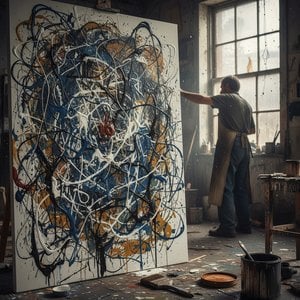
Paul Jackson Pollock: A Radical Departure – Exploring Abstract Expressionism's Pioneering Figure and His Enduring Legacy
Explore the revolutionary art of Jackson Pollock & Abstract Expressionism. Discover his iconic drip paintings, lasting impact, and considerations for collecting this pivotal American artist. Expert insights at ArtsDot.

Beyond Representation: Exploring the Emotional Landscape of Abstract Expressionism
Explore the profound emotional world of Abstract Expressionism with ArtsDot. Discover key artists like Pollock & Rothko, learn about collecting, and find museum-quality reproductions to inspire your space.

Geometrisk Abstraktion: Topp 10 Mästverk som Formade Konsten | ArtsDot.com
Utforska de 10 mästerverk som definierade geometrisk abstraktion! Lär känna Mondrian, Kandinsky & Malevich. Hitta inspiration och museumskvalitativa konsttryck för ditt hem på ArtsDot.com. Upptäck hela samlingen online!


