


The picture follows your choices: , .
Beskrivning av samlarobjekt
Explore Pablo Picasso's 'Plat Ovale,' a striking Naive Art piece from 1953 featuring a black plate with a face. Discover its symbolism and Picasso’s innovative style in this captivating masterpiece.
 Visa mer
Konstnärens biografi
Pablo Picasso (1881-1973) var en revolutionerande spansk målare och skulptör, medgrundare av kubismen och mästare av olika stilar. Känd för ikoniska verk som Guernica & Les Demoiselles d'Avignon, fortsätter hans arv att inspirera.
Handgjord oljereproduktion
Handmålad olja på duk i din valda storlek och ram, tillverkad efter beställning av våra konstnärer. ( Byt till tryck Byt till digital bild)
Detta konstverk är upphovsrättsligt skyddat
Konstverket som visas på denna sida skyddas av upphovsrättslagen, vilket innebär att vi inte lagligt kan skapa eller sälja en identisk reproduktion. Detta skydd upprätthålls genom internationella avtal såsom den Bernkonventionen och genom nationella lagar, inklusive de som fastställs av Amerikansk upphovsrättslag – Titel 17. Alla rättigheter förbehållna. Återgivning av konstverk är förbjuden utan skriftligt tillstånd från WahooArt.
Som ett respektfullt och lagligt alternativ erbjuder vi skräddarsydda, handmålade konstverk inspirerade av originalet. Våra skickliga och professionella konstnärer studerar noggrant originalets stil, stämning och konstnärliga essens för att skapa ett nytt, unikt verk som väcker samma känsla – samtidigt som det förblir en originell skapelse i egen rätt.
Denna metod följer fullt ut upphovsrättsliga regler eftersom den inte innebär kopiering eller duplicering av det skyddade konstverket. Istället är det en kreativ nytolkning – en ny målning som är influerad av originalet men inte identisk med det.
More about this painting
 Förhandsvisa
 Skicka
 Dela
Dela
 Visa detaljer
 Guide
Guide

 Ladda ner
 Liknande objekt
 Röntgen
 Bildspel
 Q&A
Q&A Statistik
Order your painting in four simple steps
Take your time. You can change any answer; the price in your order card follows each choice.
1 Step one of four
Which size would you like?
These sizes keep the proportions of the original painting. The drawing shows your choice on a wall, above a two-metre sofa.
Or give your own measurements
Välj bland våra förinställda storlekar som motsvarar konstverkets ursprungliga proportioner.

Ange den bredd och höjd du behöver för att passa din ram eller din vägg. Eftersom detta är handmålat kan konstnären, vid ett annat format, måla lite mer runt bilden eller beskära den något – det är du som väljer. Vi skickar en digital mockup för godkännande innan målningen påbörjas. Bilden som visas på denna sida representerar inte det slutgiltiga resultatet — det är endast mockuppen som visar det.
2 Step two of four
How should it be prepared: rolled, stretched or framed?
The prices below are for the size you chose in step one.
Choose the edges of the stretched canvas
Choose your frame

White Skr1

Blurside Skr1

Extended Skr1

P118B Skr10

P118H Skr10

P118W Skr10

P438Z Skr10

P508JH Skr12

P508YH Skr12

P805H Skr10

P805Z Skr10

P919BZ Skr10

P919G Skr10

P919XJ Skr10

P959ZH Skr10

P968JZ Skr12

W106C Skr8

W218G Skr10

W218JH Skr8

W218Y Skr10

W307PJ Skr10

W316G Skr10

W316PJ Skr8

W316Y Skr10

W398PJ Skr8

W4111J Skr10

W500HY Skr15

W500JH Skr15

W692G Skr12

W849H Skr8

W940BG Skr15

W953PJ Skr8

H24-GOLD Skr30

H24-SILVER Skr30

H36-GOLD Skr45

H36-SILVER Skr45
Inramad
Moulding: . Overall size with the frame: .
3 Step three of four
Would you like anything changed in the painting?
Most people answer no. Because each painting is made by hand, our artist can also adapt it for you.
After order, ArtsDot.com team will email client for instructions and provide a mockup preview
4 Step four of four
A few finishing options
All of them are optional. The answers already selected cost nothing extra.
Who paints it?
Leverans över hela världen () på 3–4 veckor istället för standard 5 veckor. (3 november). Inga kompromisser med kvaliteten.
A nameplate, as in a museum?
Detaljer för graverad bronsplatta
This elegant plaque features the artist's name and the title of the artwork, finely engraved for a timeless presentation.
It is made from bronze with a refined, elegant finish. The text is precisely laser-engraved for a sharp and permanent result. Measuring 9x2 cm, the plaque is compact yet easy to read. It's built to be durable and scratch-resistant, offering a professional, museum-quality look. Mounting is simple thanks to the included adhesive backing.
Detaljer för transparent akrylplatta
The plaque includes essential engraved details such as the artist's name, the title of the artwork, the date it was created, the type of media used-like oil on canvas or watercolor-a brief description of the piece, and a QR code that links to the complete artwork information.
It is crafted from clear acrylic, offering a sleek, modern appearance. The text is UV-engraved in black to ensure strong visual contrast. With a size of 10x15 cm, it ensures optimal readability. It comes equipped with two metal hooks for secure wall mounting. The plaque is designed to be weather-resistant, making it suitable for various environments, and it includes interactive features that work seamlessly with smartphone scanning.
Detaljer för svart akrylplatta
This elegant plaque includes engraved information such as the artist's name, the title of the artwork, the date it was created, the type of media used (like oil on canvas or watercolor), a short description of the artwork, and a QR code for quick access to more information.
The plaque itself is made from refined black acrylic with a premium finish. The text is laser-engraved in white for high contrast and readability. Its size is 10x15 cm, designed to be easy to read. It comes with two metal hooks for professional mounting. The design is sleek and fits any interior style. It is also weather-resistant and durable, with built-in digital integration for mobile compatibility.
A protective varnish?
When do you need it?
✓ Check and order
Your painting, as you ordered it

Plat ovale
Reproduktionsmetod
Storlek på reproduktion
-

Elitkonstnär av högsta klass
Mer detaljrikedom, finess och extra produktionstid
-

Inramning av reproduktion
-
-
För konstverk eller reproduktioner som är större än 105 cm (cirka 41 tum) på någon sida, levereras ramen som ett isärplockat kit. Denna metod säkerställer en trygg leverans och förhindrar skador under transport.
Professionell montering krävs – detta är inte en produkt för självmontering.
Kitet måste monteras och duken spännas av en erfaren professionell inramare med hjälp av trälim (ingår ej), en spänntång för duk och klämmor för att hålla sargen rak medan limmet torkar. Felaktig montering eller ojämn spänning av duken kan orsaka permanenta skador på konstverket och täcks
 För konstverk eller reproduktioner som är större än 105 cm (cirka 41 tum) på någon sida, levereras ramen som ett isärplockat kit. Denna metod säkerställer en trygg leverans och förhindrar skador under transport.
Alla massiva träribbor ingår, exakt tillkapade efter mått.
Monteras med de medföljande skruvarna, samt trälim för hörnfogarna, vilket inte ingår och måste anskaffas av din ramverkare.
Professionella verktyg krävs och ingår ej: en dukspännare och klämmor för att hålla listerna raka medan limmet torkar.
Viktigt:
Hörnjunctionerna kräver trälim, listerna måste hållas på plats med tvingar tills limmet har torkat helt, och för att spänna duken på den monterade ramen krävs en spänntång för duk. Inget av detta ingår i kitet. Vänligen kontakta en erfaren professionell rammakare innan du beställer denna storlek.

Namnskylt
-
-

Skyddande fernissa
Glansig fernissa (förstärker färgerna, skyddar mot ljus och fukt)
-

Anpassa mitt konstverk
Exempel på vad som kan ändras: Byt ut ansiktet mot ett foto från kunden; Lägg till ett husdjur (t.ex. byt ut en katt mot en hund); Inkludera ett dolt meddelande i bakgrunden; Ändra bakgrundens landskap eller detaljer.
-

Expressleverans
Leverans över hela världen () inom 3–4 veckor istället för standardiserade 5 veckor. (3 november). Inga kompromisser med kvaliteten.
-
Expressleverans
Leverans över hela världen () inom 5 veckor. (10 november).
Ingår
Slutgiltigt pris
Skr 2640
Glasalternativet är endast tillgängligt i storlekar under 110 cm.
Included with every order
- Fri expressfrakt över hela världen
- Högkvalitativ linnecanvas
- Fullständig fraktförsäkring
- Garantier för återbetalning av tullavgifter
- Garantier för exakt färgåtergivning
- 100 dagars returrätt (endast vid fel)
- 100% pengarna tillbaka-garanti
- Mängdrabatt erbjuds


A Singular Vision: Unpacking Pablo Picasso’s “Plat Ovale”
Pablo Ruiz Picasso, a name synonymous with artistic revolution, wasn't merely an artist; he was a relentless interrogator of form and perception. Born in Málaga, Spain, in 1881, his life became a vibrant tapestry woven with experimentation, innovation, and a profound engagement with the human condition. From his early training under his father, a respected academic painter, Picasso quickly surpassed his mentor’s technical skills, revealing an innate curiosity and a willingness to dismantle established artistic conventions – qualities that would define his extraordinary career. The move to Barcelona and later Paris proved crucial, immersing him in environments teeming with intellectual ferment and artistic dynamism, fueling his constant evolution. “Plat Ovale,” created in 1953, stands as a potent distillation of this restless spirit, a deceptively simple work brimming with layers of meaning and reflecting Picasso’s enduring fascination with the interplay between representation and abstraction.Naive Art's Primitive Echoes
“Plat Ovale” is firmly rooted within the realm of Naive Art/Primitivism, a movement that challenged the established norms of academic art. Emerging in the early 20th century, this style prioritized raw emotion and direct expression over meticulous technique or illusionistic realism. Artists associated with Naive Art often lacked formal training, relying instead on instinct and an unfiltered approach to their subjects. Picasso’s engagement with this style isn't a straightforward imitation; rather, he skillfully employs its principles – bold lines, simplified forms, and a deliberate lack of detail – to create a powerful visual statement. The work’s immediate impact is one of arresting simplicity, yet it hints at a deeper complexity, drawing the viewer into a contemplation of form, function, and the very nature of perception. It's important to note that this style was later emulated by trained artists, leading to what is called pseudo-naïve or faux naïve art, blurring the lines between intention and execution.The Plate as Canvas: Symbolism and Form
At first glance, “Plat Ovale” presents a striking image: a large, black plate adorned with a rudimentary face. This seemingly straightforward composition belies a wealth of symbolic significance. The plate itself, reminiscent of ancient pottery or even a primitive shield, immediately evokes notions of antiquity, ritual, and the enduring presence of human history. Picasso’s deliberate choice of a stark black surface amplifies this effect, creating a dramatic contrast with the simplified features of the face. The face, rendered in bold, linear strokes, possesses an almost mask-like quality – a suggestion of anonymity, perhaps even a primal archetype. It's not a portrait in the traditional sense; instead, it’s a distilled representation of humanity, stripped bare of extraneous detail and reduced to its essential elements. Picasso uses oil paint to add depth and texture, enhancing the visual impact and suggesting a tactile quality that invites closer examination. The plate serves as a canvas for this primal image, symbolizing the artist's exploration of form and function – how an object can simultaneously represent something concrete and carry symbolic weight.Picasso’s Legacy: A Continuing Dialogue
“Plat Ovale” is but one facet of Picasso’s extraordinarily diverse oeuvre. Throughout his career, he relentlessly pushed the boundaries of artistic expression, experimenting with Cubism, Surrealism, and countless other styles. Works like “Pablo Picasso:Child playing in camomilles,” a tender depiction of childhood innocence, and “Pablo Picasso:Portrait of Jacqueline Roque with her hands crossed,” a study of emotional intimacy, demonstrate his remarkable versatility. Even his surrealist work, "Woman sitting in an armchair," showcases his ability to capture the essence of human experience through unconventional perspectives and evocative imagery. These paintings, alongside “Plat Ovale,” collectively illuminate Picasso’s innovative spirit and his profound contribution to modern art—a legacy that continues to inspire and challenge viewers today. His exploration of themes like form, function, and the relationship between representation and reality remains remarkably relevant in our contemporary world.Bringing "Plat Ovale" to Life: A ArtsDot Reproduction
ArtsDot is proud to offer meticulously crafted, hand-painted reproductions of “Plat Ovale.” These aren’t merely prints; they are faithful recreations of Picasso's original vision, imbued with the same attention to detail and emotional resonance. By commissioning a reproduction, you acquire not just an image but a tangible connection to one of art history’s most influential figures. Explore more of Picasso’s works at ArtsDot.com for high-quality, handmade oil painting reproductions that bring these masterpieces to life.Frågor och svar
Hur hittar jag konstverk som påminner om "Plat ovale" av Pablo Picasso?
Hitta verk som liknar "Plat ovale" på verkets sida Liknande verk.
När skapades "Plat ovale" och vilken stilriktning tillhör det?
"Plat ovale" skapades år 1953 som ett verk inom Naive Art/Primitivism-rörelsen. Datum och stil förankrar konstverket i konsthistorien.
Hur ljus är "Plat ovale" i sin helhet?
Sammantaget har "Plat ovale" registrerats som medelstark. Upplevd ljusstyrka beskriver hur ljust eller mörkt verket framstår.
Liknande konstverk


Pablo Picasso
1881 - 1973, Spanien
Konstnärsbiografi
Pablo Picassos bestående arv
Pablo Ruiz y Picasso, ett namn synonymt med konstnärlig revolution, föddes i Málaga, Spanien, den 25 oktober 1881. Hans själva existens verkade ödesbestämd för kreativt uttryck; legenden säger att hans första uttalade ord var ”piz, piz”, ett försök att säga ’penna’. Denna tidiga benägenhet odlades av hans far, José Ruiz y Blasco, en målare och konstlärare som gav den unge Pablo grundläggande utbildning. Men eleven överträffade snabbt sin lärare och uppvisade en anmärkningsvärda förmåga för naturalistisk avbildning som antydde den prodigiösa talang som fanns inom honom. Familjens efterföljande flyttar – först till A Coruña, sedan Barcelona – präglades av personliga tragedier, särskom förlusten av Picassos syster, upplevelser som subtilt skulle genomfärga hans senare verk med teman om melankoli och dödlighet. Även under formella studier vid konstskolan i Barcelona och en kort tid vid Kungliga akademin San Fernando i Madrid, revolterade Picasso mot stela akademiska begränsningar och föredrog istället att fördjupa sig i mästare som Velázquez och Goya, för att på så sätt bana sin egen väg mot konstnärlig innovation.
Från melankolisk blåton till rosafärgade nyanser
Det tidiga 1900-talet bevittnade framväxten av två distinkta perioder i Picassos oeuvre: den blå perioden (ungefär 1901–1904) och den rosa perioden (1904–1906). Den blå perioden, född ur personliga svårigheter och en skarp medvetenhet om socialt lidande, kännetecknas av målningar dränkta i dämpade nyanser av blått och blågrönt. Dessa verk är befolkade av marginaliserade gestalter – tiggare, blinda, prostituerade – framställda med en hjärtskärande empati som talar till teman om isolering och förtvivlan. La Vie (1903) och Den gamle gitarristen (1903–1904) står som gripande exempel på denna känslomässigt laddade fas. En förändring i Picassos personliga liv, tillsammans med en flytt till Paris, förebådade den rosa periodens ankomst. Paletten värmdes avsevärt och omfamnade rosa, orange och rött, vilket speglade en mer optimistisk utblick. Denna period präglades av en fascination för cirkusartister – harlekiner, akrobater och familjetrupper – figurer som förkroppsligade både skörhet och motståndskraft. Familjen med saltimbanquer (1905) fångar vackert denna övergång och antyder de stilistiska utforskningar som låg framför honom.
Perspektivets sammanbrott: Kubismen och bortom
Året 1907 markerade ett avgörande ögonblick i konsthistorien med skapandet av Les Demoiselles d'Avignon. Inspirerad av iberisk skulptur och afrikanska masker, krossade denna banbrytande målning traditionella föreställningar om perspektiv och representation. Det var ett radikragt avsteg, ett medvetet förkastande av århundraden gamla konventioner som banade väg för kubismen. Genom ett nära samarbete med Georges Braque var Picasso medgrundare till denna revolutionära rörelse, vilket fundamentalt förändrade hur konstnärer uppfattade och avbildade verkligheten. Den analytiska kubismen (1909–1912) innebar en fragmentering av objekt i geometriska former, utförda i dämpade färger, som om själva formen dissekerades. Detta utvecklades till den syntetiska kubismen (1912–1919), som inkorporerade collage-element – tidningsurklipp, tygbitar – vilket tillförde textur och nya lager av visuell komplexitet. Picasso var inte nöjd med att bara representera världen; han strävade efter att dekonstruera den och rekonstruera den på sina egna villkor.
En rastlös experimenterare: Neoklassicism, surrealism och krig
1920-talet såg Picasso kortvarigt utforska neoklassiska stilar, där han skapade monumentala figurer som ekade klassiska former men behöll en distinkt modern känsla. Samtidigt engagerade han sig i den framväxande surrealistiska rörelsen, även om han aldrig fullt ut anslöt sig till dess principer. Hans arbete under denna period blandade tidigare stilistiska influenser med surrealistisk bildspråk och förvrängda perspektiv, vilket demonstrerade hans outtröttliga experimentlusta. Det spanska inbördeskrigets fasor påverkade Picasso djupt och kulminerade i skapandet av Guernica (1937), ett visceralt och känslomässigt förödande svar på bombningen av Guernica. Detta monumentala verk blev en bestående symbol för krigets grymheter och befäste Picassos roll inte bara som konstnär utan även som en kraftfull röst för fred och social rättvisa. Under 1950- och 60-talen fortsatte han att tänja på gränserna genom att utforska keramik, skulptur och grafik med orubblig nyfikenhet och skicklighet. Hans äktenskap med Jacqueline Roque 1961 tillförde en ny dimension till hans personliga liv och konstnärliga uttryck.
Ett omätbart inflytande
Pablo Picasso avled den 8 april 1973 i Mougins, Frankrike, och lämnade efter sig en häpnadsväckande produktion – uppskattningsvis över 50 000 verk – som fortsätter att fängsla och inspirera. Hans konstnärliga utveckling formades av ett brett spektrum av influenser, från spanska mästare som Velázquez och Goya till iberisk skulptur, afrikansk konst och Henri Matisses livfulla färgpaletter. Hans inflytande på 1900-talets konst är omätbart. Han var medgrundare till kubismen, pionjär inom collage och konstruerad skulptur, och utmanade ständigt konstnärliga konventioner. Picassos outtröttliga experimenterande omdefinierade den moderna konsten och lämnade ett outplånligt märke på generationer av konstnärer, vilket befäste hans position som en av de viktigaste och mest inflytelserika gestalterna i historien. Hans arv sträcker sig bortom duken, ekar i otaliga aspekter av den samtida kulturen och påminner oss om den transformativa kraften i en konstnärlig vision.


Relaterade artiklar
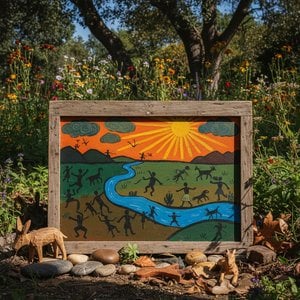
The Untamed Vision: Exploring Naïve Art & Primitivism's Rejection of Convention
Explore the revolutionary world of Naïve Art & Primitivism! Discover how artists challenged academic traditions with raw emotion & unique styles. Learn about Picasso, Rousseau & more at ArtsDot.

Pablo Picasso: A Revolutionary Vision – Cubism, Symbolism & Enduring Legacy
Explore the revolutionary art of Pablo Picasso with ArtsDot.com. Discover Cubism's origins, symbolism in his masterpieces & investment insights for collectors. Expert appraisal & custom reproductions available.

Mästverk i svart: Topp 10 målningar som fascinerar – ArtsDot.se
Utforska 10 ikoniska målningar dominerade av svart – från Rembrandts djupa skuggor till Munchs ångest. Lär känna historien bakom mästerverken och hitta inspiration för din inredning på ArtsDot.se. Upptäck hela kollektionen online!