

 Förhandsvisa
 Skicka
 Dela
Dela
 Visa detaljer
 Guide
Guide

 Ladda ner
 Liknande objekt
 Röntgen
 Bildspel
 Frågor och svar
 Statistik
Ignudo (29)


 Visa mer
Giclée / Konsttryck
Giclée- eller canvasprint av museumskvalitet med snabb produktion och flexibla ytbehandlingsalternativ. ( Beställ handmålad reproduktion Byt till digital bild)




P118B Skr10

P118H Skr10

P118W Skr10

P438Z Skr10

P508JH Skr12

P508YH Skr12

P805H Skr10

P805Z Skr10

P919BZ Skr10

P919G Skr10

P919XJ Skr10

P959ZH Skr10

P968JZ Skr12

W106C Skr8

W218G Skr10

W218JH Skr8

W218Y Skr10

W307PJ Skr10

W316G Skr10

W316PJ Skr8

W316Y Skr10

W398PJ Skr8

W4111J Skr10

W500HY Skr15

W500JH Skr15

W692G Skr12

W849H Skr8

W940BG Skr15

W953PJ Skr8




Välj bland våra förinställda storlekar som motsvarar konstverkets ursprungliga proportioner.

Ange den bredd och höjd du behöver för att passa din ram eller vägg. Ett tryck kan endast beskäras, aldrig göras större än originalbilden, vilket innebär att ett format med en annan proportion leder till att en del av bilden går förlorad. Vi skickar en digital mockup för godkännande innan vi påbörjar tryckningen. Bilden som visas på denna sida visar inte den faktiska beskärningen — det är endast mockuppen som gör det.
Leverans över hela världen () på 2 veckor istället för standard 4/5 veckor. (15 november)

Fri expressfrakt över hela världen

Högkvalitativ linnecanvas

Fullständig fraktförsäkring

Garantier för återbetalning av tullavgifter

Garantier för exakt färgåtergivning

100 dagars returrätt (endast vid fel)

100% pengarna tillbaka-garanti

Mängdrabatt erbjuds
 Glasalternativet är endast tillgängligt i storlekar under 110 cm.

Ignudo (29)
Giclée / Konsttryck
Storlek på reproduktion
-


Slutgiltigt pris
Skr 624
The Silent Strength of *Ignudo (29)*: A Window into Michelangelo’s Genius
Within the breathtaking grandeur of the Sistine Chapel ceiling lies a series of figures known as *Ignudi* – nude male forms rendered with an unparalleled mastery of anatomy and emotion. Among these captivating studies, *Ignudo (29)* stands out not merely for its technical brilliance but also for the profound sense of contemplation it embodies. Created in 1509 during Michelangelo’s ambitious undertaking to adorn Pope Julius II's chapel, this fresco offers a rare glimpse into the artist’s creative process and his deep understanding of the human condition. More than just anatomical studies, these figures represent a deliberate exploration of idealized beauty and inner stillness – qualities that resonate powerfully even centuries later.
Michelangelo’s commission to paint the Sistine Chapel ceiling was an immense undertaking, demanding not only artistic skill but also organizational prowess. The project, spanning from 1508 to 1512, involved a vast team of assistants and apprentices, yet Michelangelo maintained meticulous control over every detail, ensuring that his vision – a celebration of human form and biblical narrative – was faithfully realized. *Ignudo (29)* is part of a larger group of these figures, each presented in varying poses and states of repose, suggesting a deliberate study of the male nude as a subject of artistic exploration. The fresco’s palette is restrained, primarily utilizing earthy tones—ochres, siennas, and umbers—to create a sense of solidity and timelessness, further emphasizing the figure's sculptural quality.
The Anatomy of Emotion: A Study in Form and Feeling
What immediately draws the eye to *Ignudo (29)* is the sheer physicality of the subject. He’s depicted with powerfully sculpted muscles, a testament to Michelangelo’s profound understanding of human anatomy – honed through years of studying classical sculpture and dissecting cadavers. Yet, this isn't merely a celebration of physical strength; there’s an underlying sense of vulnerability and introspection in his posture. His hand rests gently on his head, a gesture that invites the viewer to contemplate his thoughts and feelings. The subtle curve of his spine, the slight tilt of his torso – these details contribute to a dynamic balance between power and serenity.
The background, subtly rendered with two indistinct figures, adds depth and complexity to the composition. These secondary forms aren’t merely decorative; they serve to frame the central figure, emphasizing his isolation and intensifying the feeling of quiet contemplation. The use of *contrapposto*, a technique where the weight shifts slightly from one leg to the other, creates a naturalistic sense of movement within the static pose, further enhancing the figure's lifelike quality.
Contextualizing the Masterpiece: Renaissance Ideals and Artistic Innovation
*Ignudo (29)* is inextricably linked to the broader artistic context of the High Renaissance. Michelangelo’s work reflects a renewed interest in classical ideals of beauty, proportion, and harmony – values that had been rediscovered through the study of ancient Greek and Roman art. However, unlike the idealized figures of classical sculpture, Michelangelo's *Ignudi* are imbued with a distinctly human quality, reflecting the Renaissance emphasis on individual experience and emotion. The fresco’s placement within the Sistine Chapel ceiling, alongside scenes from the Book of Genesis, underscores this connection to biblical narrative, suggesting that these nude figures represent humanity in its purest form – capable of both strength and contemplation.
Michelangelo's innovative use of *fresco* as a medium further elevates the significance of *Ignudo (29)*. Fresco painting involves applying pigments directly onto wet plaster, creating a durable and enduring image. This technique demanded meticulous planning and execution, requiring Michelangelo to work quickly and decisively while the paint was still wet. The immediacy of fresco allowed for a direct connection between the artist’s hand and the wall, resulting in a remarkably vibrant and textured surface.
Bringing *Ignudo (29)* Home: A Reproduction Worthy of Display
At ArtsDot, we are proud to offer meticulously crafted oil painting reproductions of Michelangelo’s masterpieces, including *Ignudo (29)*. Our skilled artisans painstakingly recreate the original fresco's details, color palette, and textural nuances, ensuring that your reproduction captures the essence of this iconic artwork. Whether you’re an art enthusiast, a collector seeking to expand your collection, or simply someone looking for a stunning piece to adorn your home, our *Ignudo (29)* reproduction provides a beautiful and authentic representation of Michelangelo’s genius. Explore our other reproductions of *Ignudo* series – Ignudo (14), Ignudo (detail) and Ignudo (13) – to discover the full spectrum of Michelangelo’s artistic vision.
Photo Description: The image is a painting of a man with his hand on his head, possibly in the form of a statue or fresco. The man appears to be naked, with a muscular build. He has a look of contemplation on his face as he rests his hand on his head. In addition to the main figure, there are two other people visible in the painting. One person is located near the top left corner and another person can be seen at the bottom right corner. The background features a chair situated towards the lower left side of the image. Size: Unknown Date: 1509 ARTIST INFORMATION: ================== Artist: Michelangelo Buonarroti Birth Year: 1475 Death Year: 1564 Birth City: Caprese Michelangelo Birth Country: Italy Biography:A Renaissance Forged in Stone and Paint
Michelangelo di Lodovico Buonarroti Simoni, a name synonymous with the High Renaissance, resonates through centuries as a testament to human artistic potential. Born on 6 March 1475, in Caprese Michelangelo, nestled in the Tuscan hills of Italy, his life was an extraordinary convergence of talent, ambition, and divine inspiration. Though initially met with resistance from his father Ludovico regarding an artistic path, young Michelangelo’s innate gift for drawing proved undeniable, setting him on a course to redefine the boundaries of sculpture, painting, and architecture. His early apprenticeship under Domenico Ghirlandaio provided foundational skills in fresco and draftsmanship, but it was within the Medici gardens—a haven of classical antiquity—that his artistic soul truly awakened. Immersed in the study of Greek and Roman sculptures, Michelangelo absorbed the principles of anatomy, proportion, and idealized beauty that would become hallmarksFrågor och svar
Vem är upphovspersonen till "Ignudo (29)" och inom vilken stilriktning?
Bakom "Ignudo (29)" står Michelangelo och Renaissance-rörelsen.
Hur hög är kontrasten i "Ignudo (29)" av Michelangelo?
Ljus-mörker-kontrasten i "Ignudo (29)" är registrerad som Kontrastnivå. Kontrast beskriver hur starkt ljusa och mörka partier skiljer sig åt.
Vilket nationellt ursprung ligger bakom Renaissance i "Ignudo (29)"?
"Ignudo (29)" förenar Renaissance-rörelsen med Italien genom sin skapares födelseplats.
Liknande konstverk


Konstnärsbiografi
Stenens och dammets tyngd
I kullarna i Caprese lärde sig en pojke känna till stenens tyngd och marmordammets strävhet. Född 1475, tillbringade Michelangelo Buonarroti sina tidiga år nära Settignano, där hans far ägde ett stenbrott. Doften av fuktig jord och ljudet av hammare mot klippan var en del av hans barndom. Han började inte med penslar utan med mejseln. Hans lärlingsskap under Domenico Ghirlandaio i Florens förde honom i kontakt med stadens växande intresse för den mänskliga formen, men det var Medicis trädgårdar som verkligen formade hans blick. Där, bland antika grekiska och romerska fragment, studerade han hur ljuset faller över muskel och ben.
Hans arbete började ta form genom djupgående anatomiska studier. Han betraktade hur en lem bär sin vikt och hur huden sträcks över en led. Detta fokus på kroppens fysiska verklighet blev hans främsta språk. När han nådde Rom 1496, högg han redan figurer som besatt en tung, påtaglig närvaro. Pietà, färdigställd 1499, uppvisar denna tidiga förmåga att få marmor att framstå som mjuk som kött, trots att den bär tyngden av en död man.
Takets spänning
Uppdraget med Sixtinska kapellets tak var inget han sökte. Han betraktade sig själv som en skulptör, någon som frammanar liv ur sten snarare än att sprida pigment på puts. Ändå arbetade han i fyra år i kapellets höga valv och målade över 300 figurer från Första Moseboken. Den fysiska påfrestningen var synlig i hans dagliga liv. Han tillbringade timmar i svåra ställningar, med en kropp som töjdes av räckvidden och den tunga appliceringen av freskteknik. I paneler som Adams skapelse återfinns spänningen i det lilla gapet mellan två fingrar, ett ögonblick av nästan-kontakt som fångar betraktarens uppmärksamhet genom ren komposition.
Allteftersom tiden gick rörde sig hans stil bort från högrenässansens balanserade ideal mot något mer rastlöst. Hans senare verk, såsom Yttersta domen på altarväggen, visar en förskjutning mot manierismen. Figurerna blev mer utdragna och kompositionerna mer trånga och dramatiska. Denna förändring speglade ett skiftande andligt klimat i Rom. Han fortsatte att arbeta med en intensitet som många fann överväldigande, och lämnade ofta projekt ofullbordade i takt med att hans sinne rörde sig mot nya arkitektoniska eller skulpturala problem.
Arkitektur och de sista åren
Under sina senare decennier riktade Michelangelo mycket av sin uppmärksamhet mot byggnaders struktur. Vid 71 års ålder övertog han arbetet med Peterskyrkan och ändrade planerna för att skapa en mer massiv och imponerande design. Han ritade även Laurentinska biblioteket, där hans användning av arkitektoniska element bröt mot traditionen och skapade en känsla av rörelse inom själva stenen. Hans arbete på Piazza del Campidoglio i Rom visade hur han kunde organisera ett offentligt rum genom att använda symmetri och klassiska motiv för att leda ögat genom torget.
Han dog i Rom 1564 och lämnade efter sig ett arv skrivet i marmor, fresk och sten. Hans liv definierades av flera nyckelroller:
- Skulptör: Som högg verk som David ur enskilda block av Carrara-marmor.
- Målare: Som utförde de enorma narrativa cyklerna i Sixtinska kapellet.
- Arkitekt: Som ritade om grunderna för Peterskyrkan och Laurentinska biblioteket.
- Poet: Som uttryckte sina innersta tankar genom vers.

Michelangelo
1475 - 1564 , Italien
Kortfakta
- Artistic Movement Or Style: Högrenässans, manierism
- Artists Or Movements Influenced By This Artist: ['Manierism']
- Artists Who Influenced This Artist: ['Domenico Ghirlandaio']
- Date Of Birth: 1475
- Date Of Death: 1564
- Full Name: Michelangelo di Lodovico Buonarroti Simoni
- Nationality: Italiensk
- Notable Artworks:
- Pietà
- David
- Sixtinska kapellets tak
- Yttersta domen
- Place Of Birth: Caprese Michelangelo, Italien
Relaterade artiklar

25 Masterpieces You Must See in the Sistine Chapel, Vatican City
Explore Michelangelo's divine frescoes and Renaissance icons. Discover all masterpieces on ArtsDot.com.

Michelangelos 25 Mästerverk: Konsthistoriens Största Skönheter – ArtsDot
Utforska Michelangelos 25 mest ikoniska konstverk – från Pietà till Sixtinska kapellet. Lär känna renässansens mästare och hans tidlösa skulpturer & målningar. Köp museumkvalitativa reproduktioner på ArtsDot.com.

25 Must-See Masterpieces of the Sistine Chapel, Vatican City
Embark on a divine journey through the Sistine Chapel’s most iconic frescoes. Discover the genius of Michelangelo and the breathtaking beauty of Renaissance art. Find inspiration for museum-quality reproductions and elegant decor. Explore the full collection online at ArtsDot.com.

Akrylkonstens Mästerverk: 10 Verk Som Förändrade Konsthistorien – ArtsDot
Utforska 10 legendariska akrylmålningar som revolutionerade konsthistorien! Lär känna mästare som Rothko & Richter, deras tekniker och färgrikedom. Hitta inspiration för din inredning och köp museumkvalitativa reproduktioner på ArtsDot.com.
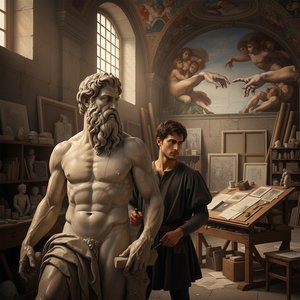
Michelangelo Buonarroti: A Renaissance Titan – Life, Works & Enduring Legacy
Explore the life, works & enduring legacy of Michelangelo Buonarroti, a Renaissance titan. Discover his iconic sculptures, frescoes, and architectural achievements. Expert art consultation & high-quality reproductions at ArtsDot.


