


 Visa i rummet
 Skicka
 Dela
Dela
 Detaljer
 Guide
Guide

 Ladda ner
 Liknande objekt
 Röntgen
 Bildspel
 Besökstatistik
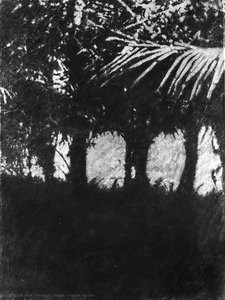
Purple Hearts
 1986
1986 76.0 x 57.0 cm
 Läs mer
Handgjord oljereproduktion
Handmålad olja på duk i din valda storlek och ram, tillverkad efter beställning av våra konstnärer. ( Byt till tryckta exemplar Byt till digital bildförsäljning)




































Välj bland våra förinställda storlekar som motsvarar konstverkets ursprungliga proportioner.

Du kan ange egna mått för att passa en specifik ram eller yta. Om den valda storleken inte matchar originalbildens proportioner kommer vi antingen att beskära konstverket eller utöka målningen med ytterligare handmålade element. En digital skiss skickas till dig för godkännande innan produktionen påbörjas.
Observera att förhandsvisningen på skärmen inte återspeglar den faktiska beskärningen eller utökningen. Endast skissen visar den slutgiltiga kompositionen korrekt.
Även om anpassade storlekar är möjliga, rekommenderar vi att du väljer en dimension från den fördefinierade listan för att bevara originalproportionerna.
Efter beställning kommer ArtsDot.com team att mejla kunden för instruktioner och tillhandahålla en skissförhandsvisning
Leverans över hela världen () på 3–4 veckor istället för standard 5 veckor. (24 september). Inga kompromisser med kvaliteten.

Fri expressfrakt över hela världen

Högkvalitativ linnecanvas

Fullständig fraktförsäkring

Garantier för återbetalning av tullavgifter

Garantier för exakt färgåtergivning

100 dagars returrätt vid fabrikationsfel

100% pengarna tillbaka-garanti

Mängdrabatt erbjuds
 Glasalternativet är endast tillgängligt i storlekar under 110 cm.

Purple Hearts
Tryckteknik
Reproduktionsstorlek
-


Totalpris
$ 263
Liknande konstverk


Om konstnären
Early Life and Formation in Buffalo
Michael Zwack, born in Buffalo, New York, in 1949, emerged as a significant voice within the Pictures Generation of artists. His artistic journey began with a foundation in sculpture at Buffalo State College, where he received his BA in 1970. However, it was his collaborative spirit and intellectual curiosity that truly defined this early period. Before relocating to New York City’s burgeoning art scene in 1976, Zwack co-founded Hallwalls Contemporary Arts Center alongside fellow artists Robert Longo, Cindy Sherman, Charles Clough, and Nancy Dwyer. This wasn't merely the establishment of a gallery; it was the creation of a vital space for experimental art—a non-profit organization that continues to thrive today, fostering dialogue and innovation within the artistic community.
The Pictures Generation and Appropriation
Moving to New York City placed Zwack at the epicenter of a transformative moment in contemporary art. He became closely associated with The Pictures Generation, a group of artists who challenged traditional notions of originality by embracing appropriation—borrowing imagery from mass media, advertising, and popular culture. This approach wasn’t about simple replication; it was a critical engagement with the pervasive influence of images on society, questioning their authenticity and power. Zwack's work distinguished itself through its unique layering of text and image, often incorporating ancient symbols and references to diverse cultures—from Mayan traditions to English literary sources. He didn’t simply *use* imagery; he wove it into complex narratives that invited contemplation and reinterpretation.
Developing a Distinct Visual Language
Zwack's paintings evolved into richly textured surfaces where fragments of history, mythology, and the natural world converged. He sought to “seduce people into worlds that they may not ordinarily take themselves—into a world of morality, a world of humanity,” creating spaces imbued with potential meanings and a palpable sense of life. His canvases weren’t depictions *of* reality but rather invitations to explore alternate realities, where everything resonated with symbolic weight. This pursuit led him to delve into Haitian Vodou music and traditions in the 1990s, eventually achieving the highest level of initiation as a *houngan asogwe*, a Vodou priest. This immersion profoundly influenced his artistic practice, adding another layer of spiritual depth and cultural resonance to his work.
Exhibitions and Recognition
Throughout his career, Zwack’s art was showcased in prominent galleries including Metro Pictures and Paul Kasmin Gallery in New York, as well as Thaddaeus Ropac in Salzburg, Austria. These exhibitions provided a platform for his distinctive vision to reach a wider audience. A major milestone came with his inclusion in the landmark 2009 exhibition *The Pictures Generation* at the Metropolitan Museum of Art, curated by Douglas Eklund. This retrospective solidified his position as a key figure within this influential artistic movement. Rosetta Brooks, writing about Zwack’s 1996 exhibition at Thomas Soloman's Garage in Artforum, highlighted his ability to “reconsider the impact of the photographic on our way of seeing,” praising his work for its contemplative quality and evocative depth.
Legacy and Historical Significance
Michael Zwack’s untimely death in New York City on May 5, 2017, at the age of 67, due to lung cancer marked a loss for the art world. However, his artistic legacy continues to inspire. He was not simply an artist who appropriated images; he was a storyteller, a cultural explorer, and a spiritual seeker whose work challenged viewers to question their perceptions of reality and engage with the complex layers of history and symbolism that shape our understanding of the world. His contributions to The Pictures Generation remain vital, demonstrating the power of art to critique, provoke, and ultimately, transform our way of seeing.
michael zwack
1949 - 2017 , United States of America
Snabbfakta
- Artistic Movement Or Style: Pictures Generation
- Artists Who Influenced This Artist:
- Robert Longo
- Cindy Sherman
- Date Of Birth: 1949
- Date Of Death: May 5, 2017
- Full Name: Michael Zwack
- Nationality: American
- Notable Artworks: ['Purple Hearts']
- Place Of Birth: Buffalo, USA