

The picture follows your choices: , .
Konstnärens biografi
A pioneer of American portraiture and landscape painting, Matthew Harris Jouett captured historical figures like Thomas Jefferson with a unique Romantic sensibility that invites you to discover his evocative legacy.
 Visa mer
Handgjord oljereproduktion
Handmålad olja på duk i din valda storlek och ram, tillverkad efter beställning av våra konstnärer. ( Byt till tryck Byt till digital bild)
More about this painting
 Förhandsvisa
 Skicka
 Dela
Dela
 Visa detaljer
 Guide
Guide

 Ladda ner
 Liknande objekt
 Röntgen
 Bildspel
 Q&A
Q&A Statistik
Order your painting in four simple steps
Take your time. You can change any answer; the price in your order card follows each choice.
1 Step one of four
Which size would you like?
These sizes keep the proportions of the original painting. The drawing shows your choice on a wall, above a two-metre sofa.
Or give your own measurements
Välj bland våra förinställda storlekar som motsvarar konstverkets ursprungliga proportioner.

Ange den bredd och höjd du behöver för att passa din ram eller din vägg. Eftersom detta är handmålat kan konstnären, vid ett annat format, måla lite mer runt bilden eller beskära den något – det är du som väljer. Vi skickar en digital mockup för godkännande innan målningen påbörjas. Bilden som visas på denna sida representerar inte det slutgiltiga resultatet — det är endast mockuppen som visar det.
2 Step two of four
How should it be prepared: rolled, stretched or framed?
The prices below are for the size you chose in step one.
Choose the edges of the stretched canvas
Choose your frame

White Skr1

Blurside Skr1

Extended Skr1

P118B Skr10

P118H Skr10

P118W Skr10

P438Z Skr10

P508JH Skr12

P508YH Skr12

P805H Skr10

P805Z Skr10

P919BZ Skr10

P919G Skr10

P919XJ Skr10

P959ZH Skr10

P968JZ Skr12

W106C Skr8

W218G Skr10

W218JH Skr8

W218Y Skr10

W307PJ Skr10

W316G Skr10

W316PJ Skr8

W316Y Skr10

W398PJ Skr8

W4111J Skr10

W500HY Skr15

W500JH Skr15

W692G Skr12

W849H Skr8

W940BG Skr15

W953PJ Skr8

H24-GOLD Skr30

H24-SILVER Skr30

H36-GOLD Skr45

H36-SILVER Skr45
Inramad
Moulding: . Overall size with the frame: .
3 Step three of four
Would you like anything changed in the painting?
Most people answer no. Because each painting is made by hand, our artist can also adapt it for you.
After order, ArtsDot.com team will email client for instructions and provide a mockup preview
4 Step four of four
A few finishing options
All of them are optional. The answers already selected cost nothing extra.
Who paints it?
Leverans över hela världen () på 3–4 veckor istället för standard 5 veckor. (3 november). Inga kompromisser med kvaliteten.
A nameplate, as in a museum?
Detaljer för graverad bronsplatta
This elegant plaque features the artist's name and the title of the artwork, finely engraved for a timeless presentation.
It is made from bronze with a refined, elegant finish. The text is precisely laser-engraved for a sharp and permanent result. Measuring 9x2 cm, the plaque is compact yet easy to read. It's built to be durable and scratch-resistant, offering a professional, museum-quality look. Mounting is simple thanks to the included adhesive backing.
Detaljer för transparent akrylplatta
The plaque includes essential engraved details such as the artist's name, the title of the artwork, the date it was created, the type of media used-like oil on canvas or watercolor-a brief description of the piece, and a QR code that links to the complete artwork information.
It is crafted from clear acrylic, offering a sleek, modern appearance. The text is UV-engraved in black to ensure strong visual contrast. With a size of 10x15 cm, it ensures optimal readability. It comes equipped with two metal hooks for secure wall mounting. The plaque is designed to be weather-resistant, making it suitable for various environments, and it includes interactive features that work seamlessly with smartphone scanning.
Detaljer för svart akrylplatta
This elegant plaque includes engraved information such as the artist's name, the title of the artwork, the date it was created, the type of media used (like oil on canvas or watercolor), a short description of the artwork, and a QR code for quick access to more information.
The plaque itself is made from refined black acrylic with a premium finish. The text is laser-engraved in white for high contrast and readability. Its size is 10x15 cm, designed to be easy to read. It comes with two metal hooks for professional mounting. The design is sleek and fits any interior style. It is also weather-resistant and durable, with built-in digital integration for mobile compatibility.
A protective varnish?
When do you need it?
✓ Check and order
Your painting, as you ordered it

Thomas Smith
Reproduktionsmetod
Storlek på reproduktion
-

Elitkonstnär av högsta klass
Mer detaljrikedom, finess och extra produktionstid
-

Inramning av reproduktion
-
-
För konstverk eller reproduktioner som är större än 105 cm (cirka 41 tum) på någon sida, levereras ramen som ett isärplockat kit. Denna metod säkerställer en trygg leverans och förhindrar skador under transport.
Professionell montering krävs – detta är inte en produkt för självmontering.
Kitet måste monteras och duken spännas av en erfaren professionell inramare med hjälp av trälim (ingår ej), en spänntång för duk och klämmor för att hålla sargen rak medan limmet torkar. Felaktig montering eller ojämn spänning av duken kan orsaka permanenta skador på konstverket och täcks
 För konstverk eller reproduktioner som är större än 105 cm (cirka 41 tum) på någon sida, levereras ramen som ett isärplockat kit. Denna metod säkerställer en trygg leverans och förhindrar skador under transport.
Alla massiva träribbor ingår, exakt tillkapade efter mått.
Monteras med de medföljande skruvarna, samt trälim för hörnfogarna, vilket inte ingår och måste anskaffas av din ramverkare.
Professionella verktyg krävs och ingår ej: en dukspännare och klämmor för att hålla listerna raka medan limmet torkar.
Viktigt:
Hörnjunctionerna kräver trälim, listerna måste hållas på plats med tvingar tills limmet har torkat helt, och för att spänna duken på den monterade ramen krävs en spänntång för duk. Inget av detta ingår i kitet. Vänligen kontakta en erfaren professionell rammakare innan du beställer denna storlek.

Namnskylt
-
-

Skyddande fernissa
Glansig fernissa (förstärker färgerna, skyddar mot ljus och fukt)
-

Anpassa mitt konstverk
Exempel på vad som kan ändras: Byt ut ansiktet mot ett foto från kunden; Lägg till ett husdjur (t.ex. byt ut en katt mot en hund); Inkludera ett dolt meddelande i bakgrunden; Ändra bakgrundens landskap eller detaljer.
-

Expressleverans
Leverans över hela världen () inom 3–4 veckor istället för standardiserade 5 veckor. (3 november). Inga kompromisser med kvaliteten.
-
Expressleverans
Leverans över hela världen () inom 5 veckor. (10 november).
Ingår
Slutgiltigt pris
Skr 2640
Glasalternativet är endast tillgängligt i storlekar under 110 cm.
Included with every order
- Fri expressfrakt över hela världen
- Högkvalitativ linnecanvas
- Fullständig fraktförsäkring
- Garantier för återbetalning av tullavgifter
- Garantier för exakt färgåtergivning
- 100 dagars returrätt (endast vid fel)
- 100% pengarna tillbaka-garanti
- Mängdrabatt erbjuds


Liknande konstverk


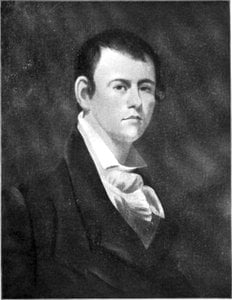
Matthew Harris Jouett
1788 - 1827, United States of America
Konstnärsbiografi
A Legacy Captured in Light and Shadow
Matthew Harris Jouett remains an enigmatic and profound figure within the early annals of American art, a painter whose brush captured the very essence of a burgeoning nation. Born in Mercer County, Kentucky, Jouett’s life was marked by both the ruggedness of the American frontier and the refined pursuit of classical beauty. While history often remembers him through the lens of his notable subjects, his true contribution lies in his ability to translate the psychological depth of his sitters and the sublime atmosphere of the wilderness onto canvas. Though his career was tragically cut short, he left behind a body of work that serves as a vital window into the Romantic sensibility of the early nineteenth century.
His journey as an artist was one of both duty and devotion. A graduate of Transylvania University who briefly studied law, Jouett’s path took a decidedly more creative turn, much to the chagrin of his father, a hero of the American Revolution. Beyond the studio, he served with distinction as a volunteer officer in the 2 .8th Kentucky Infantry during the War of 1812. It was during these turbulent years that his artistry met necessity; he famously used his own earnings to restore missing militia funds and captured the likenesses of his fellow soldiers from memory, imbuing these portraits with a raw, human energy born of shared experience.
Mastery of Portraiture and Landscape
Jouett’s artistic development was shaped by a pursuit of excellence that led him far beyond the borders of Kentucky. Seeking to refine his craft, he traveled to Boston to study under the legendary Gilbert Stuart, an encounter that undoubtedly deepened his understanding of portraiture. This training allowed him to execute works of immense historical significance, earning commissions to paint luminaries such as Thomas Jefferson, George Rogers Clark, and the Marquis de Lafayette. His portraits are characterized by a masterful use of chiaroscuro, where dramatic contrasts of light and dark sculpt the features of his subjects, creating a sense of presence that transcends time.
While he is celebrated for his portraits, Jouett also emerged as a pioneer in the realm of American landscape painting. He possessed an unwavering dedication to capturing the Appalachian wilderness, focusing on the intimate and evocative beauty of the Kentucky and Tennessee landscapes. His approach to the land was not one of monumental scale, but rather an exploration of subtle tonal variations and atmospheric effects. In his landscapes, one finds a unique blend of Romantic idealism and meticulous observation, often utilizing watercolor to achieve luminous color palettes and delicate textures that resonate with the soul of the American frontier.
Artistic Style and Historical Significance
The stylistic hallmarks of Jouett’s work represent a fascinating intersection of classical tradition and emerging modern sensibilities. His technique can be described as a form of Romantic Impressionism, where he adopted the idealized forms and dramatic lighting reminiscent of masters like Claude Lorrain and Nicolas Poussin, yet infused them with a looser, more fluid brushwork. This ability to balance Neoclassical structure with a restless, human energy allowed him to create works that were both dignified and deeply emotive.
Though his fame was not fully realized until the 1893 Chicago World Fair, Jouett’s impact on the American artistic landscape is undeniable. His work stands as a testament to a period of transition in the United States—a time when artists were beginning to find their own visual language, separate from European traditions, by looking closely at the faces and the forests of their own soil. Today, his paintings are cherished not merely as historical artifacts, but as profound explorations of character and nature.