


 Visa i rummet
 Skicka
 Dela
Dela
 Detaljer
 Guide
Guide

 Ladda ner
 Liknande objekt
 Röntgen
 Bildspel
 Besökstatistik
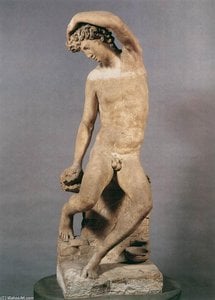
St sebastian

 Läs mer
Köp en högupplöst, förbättrad digital bild med betydligt högre kvalitet än förhandsvisningen online.
Varje fil är noggrant förberedd av våra interna specialister med hjälp av avancerade verktyg och professionell manuell retuschering. Vi säkerställer att varje bild har exceptionell skärpa, exakt färgåtergivning och fina detaljer.
Den slutgiltiga filen levereras via e-post inom 72 timmar, optimerad för omedelbar användning i professionella sammanhang, redaktionellt bruk och tryckmiljöer. Detta är samma kvalitet som med förtroende används av ledande designstudior, förlag och gallerier.
Digital bild
Ladda ner en högupplöst fil för personlig visning, utskrift och kreativa projekt. ( Byt till tryckta exemplar Köp handmålat konstverk)
Ingår i varje beställning av digital bild
Professionell digital leverans, garanterad
När du väljer ArtsDot.com får du inte bara en bild – du får ett professionellt förädlat digitalt konstverk, skapat med precision och med en garanterad tillfredsställelse. Här är allt som ingår i din beställning, automatiskt:

Snabb leverans via e-post
Din högupplösta digitala bild skickas till dig via e-post inom 72 timmar efter beställning – redo för omedelbar användning.

AI-förbättrad digital fil
Ditt konstverk optimeras professionellt med hjälp av avancerade AI-verktyg och manuell redigering, vilket garanterar maximal detaljrikedom, skärpa och färgnoggrannhet.

Gratis livstidsåterutskick
Har du råkat radera eller tappa bort din fil? Ingen oro – vi skickar den kostnadsfritt till dig när som helst.

Inga importavgifter – någonsin
Njut av ditt konstverk omedelbart utan tull, importavgifter eller leveranskostnader – digitala nedladdningar är alltid skattefria.

Garanterad färgåtergivning
Vi säkerställer att din digitala bild återger de ursprungliga färgerna så exakt som möjligt med hjälp av professionella verktyg och färghantering.

100 dagars nöjdhetsgaranti
Om du inte är nöjd med din digitala bild kommer vi att revidera den eller återbetala 100% inom 100 dagar – utan frågor.

100% pengarna-tillbaka-garanti
Inte nöjd? Få full återbetalning inom 100 dagar efter att du mottagit din digitala fil – utan frågor.

Rabatt vid storköp
Köp 3 bilder, spara 10% – Köp 5, spara 15% – Köp 10+, spara 20%. Perfekt för kreativa projekt, gallerier och byråer.
Liknande konstverk



Konstnärsbiografi
The Renaissance Spirit of Lucca: The Life of Matteo Civitale
In the heart of the Italian Renaissance, amidst the burgeoning cultural dynamism of Lucca, a singular talent emerged to bridge the worlds of stone and pigment. Matteo Civitale (c. 1436 – 1501) stands as a profound testament to the multifaceted artistic spirit of his era. While historical records suggest a life of surprising transitions—with some accounts even suggesting he practiced as a surgeon before dedicating himself fully to the chisel—his legacy is indelibly etched into the marble and wood of the Tuscan landscape. Born in Lucca on June 5, 1436, Civitale became a leading artistic personality of the Early Renaissance, embodying the humanist ideal of the polymath who masters both the physical and the aesthetic realms.
His formative years were shaped by the rigorous traditions of his hometown, yet his vision was expanded through essential training in Florence. It was there that he encountered the transformative styles of Antonio Rossellino and Mino da Fiesole, masters whose delicate handling of form and classical grace would deeply inform his mature style. This exposure to Florentine innovation allowed Civitale to infuse his work with a sophisticated elegance that transcended local boundaries, blending the sturdy traditions of Lucchese craftsmanship with the burgeoning anatomical precision and classical revival sweeping through Italy.
A Mastery of Form: Sculpture and the Human Soul
Civitale’s true renown rests upon his extraordinary ability to breathe life into inanimate matter. As a sculptor, he was perhaps the most significant marble artist working outside of Florence during the latter half of the fifteenth century. His work is characterized by a remarkable textural detail and an ability to capture the profound emotional depth of his subjects. One of his most poignant achievements is the wooden sculpture of St. Sebastian, currently housed in the Palermo Cathedral. This piece exemplifies his mastery of carving, utilizing painstaking techniques to create a sense of physical presence and spiritual vulnerability. The figure reflects the influence of Flemish sculptural traditions, where meticulous detail serves to heighten the viewer's emotional connection to the divine.
Beyond the monumental, Civitale possessed a keen eye for the subtle nuances of human expression. His sculptures often reflect the humanist preoccupation with moral virtue and spiritual contemplation. Whether working in the enduring strength of marble or the warmer, more organic medium of wood, his hands sought to translate the complexities of the human condition into permanent form. This dedication to capturing the essence of his subjects—be they saints or civic patrons—ensured that his work functioned not merely as decoration, but as a profound dialogue between the earthly and the eternal.
The Elusive Brush: Painting and Architectural Legacy
While history primarily remembers him as a master of sculpture, Civitale’s artistic reach extended into the delicate realms of painting and even engineering. His painting career, though more elusive and often collaborative, reveals an artist capable of great versatility. The discovery of historical contracts has illuminated his work on altarpieces, such as the triptych for the church of San Michele di Antraccoli, where he worked alongside the Florentine painter Baldassarre di Biagio. In works like the Madonna and Child with Saints, one can observe a profound reverence for the masters of the past; his painted figures often echo the iconic strength of Donatello’s sculptures, showcasing a seamless integration of his sculptural sensibilities into the medium of oil and tempera.
The breadth of Civitale's contribution to the Renaissance cannot be measured by a single medium alone. His intellect and technical skill led him to engage with architecture and engineering, further cementing his role as a vital figure in the reconstruction of the classical world. His life’s work represents a harmonious convergence of several key artistic elements:
- Versatility: The rare ability to move between the heavy demands of marble carving and the delicate precision of portrait painting.
- Humanism: A dedication to portraying the dignity, emotion, and spiritual depth of the human figure.
- Cultural Synthesis: The blending of local Lucchese traditions with the high-style innovations of Florentine masters.
- Enduring Legacy: A body of work that remains a cornerstone of Early Renaissance art in Italy.
Ultimately, Matteo Civitale was more than a craftsman; he was an architect of the Renaissance spirit. Through his hands, the stone became flesh, and the wood became a vessel for the divine, leaving behind a legacy that continues to inspire awe in all who encounter the quiet strength of his creations.

matteo civitale
1436 - 1501 , Italy
Kortfattad info
- Artistic Movement Or Style: Renaissance
- Date Of Birth: Lucca, Italy (1436)
- Date Of Death: 1501
- Full Name: Matteo Civitale
- Nationality: Italian
- Notable Artworks:
- St Sebastian
- Untitled
- Place Of Birth: Lucca