


Bilden anpassas efter dina val: , .
Beskrivning av samlarobjekt
Biblical Subject by Marc Chagall - Lithograph depicting a man riding a horse with a beer bottle, symbolizing Jewish tradition and artistic expression amidst a dreamlike landscape.
 Visa mer
Konstnärens biografi
Marc Chagall var en mästare på drömlik symbolism, känd för Jag och byn. Upptäck hans livfulla och poetiska färgvärld idag.
Handgjord oljereproduktion
Handmålad olja på duk i din valda storlek och ram, tillverkad efter beställning av våra konstnärer. ( Byt till tryck Byt till digital bild)
Detta konstverk är upphovsrättsligt skyddat
Konstverket som visas på denna sida skyddas av upphovsrättslagen, vilket innebär att vi inte lagligt kan skapa eller sälja en identisk reproduktion. Detta skydd upprätthålls genom internationella avtal såsom den Bernkonventionen och genom nationella lagar, inklusive de som fastställs av Amerikansk upphovsrättslag – Titel 17. Alla rättigheter förbehållna. Återgivning av konstverk är förbjuden utan skriftligt tillstånd från WahooArt.
Som ett respektfullt och lagligt alternativ erbjuder vi skräddarsydda, handmålade konstverk inspirerade av originalet. Våra skickliga och professionella konstnärer studerar noggrant originalets stil, stämning och konstnärliga essens för att skapa ett nytt, unikt verk som väcker samma känsla – samtidigt som det förblir en originell skapelse i egen rätt.
Denna metod följer fullt ut upphovsrättsliga regler eftersom den inte innebär kopiering eller duplicering av det skyddade konstverket. Istället är det en kreativ nytolkning – en ny målning som är influerad av originalet men inte identisk med det.
Mer om denna målning
 Förhandsvisa
 Skicka
 Dela
Dela
 Visa detaljer
 Guide
Guide

 Ladda ner
 Liknande objekt
 Röntgen
 Bildspel
 Frågor och svar
 Statistik
Beställ din målning i fyra enkla steg
Ta god tid på dig. Du kan ändra alla svar; priset i din varukorg uppdateras efter varje val.
1 Steg ett av fyra
Vilken storlek önskar du?
Dessa storlekar bibehåller originalmålningens proportioner. Illustrationen visar ditt val på en vägg, ovanför en två meter lång soffa.
Eller ange egna mått
Välj bland våra förinställda storlekar som motsvarar konstverkets ursprungliga proportioner.

Ange den bredd och höjd du behöver för att passa din ram eller din vägg. Eftersom detta är handmålat kan konstnären, vid ett annat format, måla lite mer runt bilden eller beskära den något – det är du som väljer. Vi skickar en digital mockup för godkännande innan målningen påbörjas. Bilden som visas på denna sida representerar inte det slutgiltiga resultatet — det är endast mockuppen som visar det.
2 Steg två av fyra
Hur ska den förberedas: rullad, uppspänd eller inramad?
Priserna nedan gäller för den storlek du valde i steg ett.
Välj kanter för den uppspända duken
Välj din ram

Vit kant Skr1

Suddig kantfinish Skr1

Fortsatt motiv Skr1

P118B Skr10

P118H Skr10

P118W Skr10

P438Z Skr10

P508JH Skr12

P508YH Skr12

P805H Skr10

P805Z Skr10

P919BZ Skr10

P919G Skr10

P919XJ Skr10

P959ZH Skr10

P968JZ Skr12

W106C Skr8

W218G Skr10

W218JH Skr8

W218Y Skr10

W307PJ Skr10

W316G Skr10

W316PJ Skr8

W316Y Skr10

W398PJ Skr8

W4111J Skr10

W500HY Skr15

W500JH Skr15

W692G Skr12

W849H Skr8

W940BG Skr15

W953PJ Skr8

H24-GOLD Skr30

H24-SILVER Skr30

H36-GOLD Skr45

H36-SILVER Skr45
Inramad
Profil: . Total storlek inklusive ram: .
3 Steg tre av fyra
Skulle du vilja ändra något i målningen?
De flesta svarar nej. Eftersom varje målning är handgjord kan vår konstnär även anpassa den efter dina önskemål.
Efter beställning kommer ArtsDot.com team att skicka ett e-postmeddelande till kunden för instruktioner och tillhandahålla en förhandsvisning av utkastet
4 Steg fyra av fyra
Några alternativ för ytbehandling
Alla är valfria. De svar som redan har valts kostar inget extra.
Vem är konstnären?
Leverans över hela världen () på 3–4 veckor istället för standard 5 veckor. (11 november). Inga kompromisser med kvaliteten.
En skylt, precis som på ett museum?
Detaljer för graverad bronsplatta
This elegant plaque features the artist's name and the title of the artwork, finely engraved for a timeless presentation.
It is made from bronze with a refined, elegant finish. The text is precisely laser-engraved for a sharp and permanent result. Measuring 9x2 cm, the plaque is compact yet easy to read. It's built to be durable and scratch-resistant, offering a professional, museum-quality look. Mounting is simple thanks to the included adhesive backing.
Detaljer för transparent akrylplatta
The plaque includes essential engraved details such as the artist's name, the title of the artwork, the date it was created, the type of media used-like oil on canvas or watercolor-a brief description of the piece, and a QR code that links to the complete artwork information.
It is crafted from clear acrylic, offering a sleek, modern appearance. The text is UV-engraved in black to ensure strong visual contrast. With a size of 10x15 cm, it ensures optimal readability. It comes equipped with two metal hooks for secure wall mounting. The plaque is designed to be weather-resistant, making it suitable for various environments, and it includes interactive features that work seamlessly with smartphone scanning.
Detaljer för svart akrylplatta
This elegant plaque includes engraved information such as the artist's name, the title of the artwork, the date it was created, the type of media used (like oil on canvas or watercolor), a short description of the artwork, and a QR code for quick access to more information.
The plaque itself is made from refined black acrylic with a premium finish. The text is laser-engraved in white for high contrast and readability. Its size is 10x15 cm, designed to be easy to read. It comes with two metal hooks for professional mounting. The design is sleek and fits any interior style. It is also weather-resistant and durable, with built-in digital integration for mobile compatibility.
Ett skyddande fernissa?
När behöver du den?
✓ Kontrollera och beställ
Din målning, precis som du beställt den

Biblical subject
Reproduktionsmetod
Storlek på reproduktion
-

Elitkonstnär av högsta klass
Mer detaljrikedom, finess och extra produktionstid
-

Inramning av reproduktion
-
-
För konstverk eller reproduktioner som är större än 105 cm (cirka 41 tum) på någon sida, levereras ramen som ett isärplockat kit. Denna metod säkerställer en trygg leverans och förhindrar skador under transport.
Professionell montering krävs – detta är inte en produkt för självmontering.
Kitet måste monteras och duken spännas av en erfaren professionell inramare med hjälp av trälim (ingår ej), en spänntång för duk och klämmor för att hålla sargen rak medan limmet torkar. Felaktig montering eller ojämn spänning av duken kan orsaka permanenta skador på konstverket och täcks
 För konstverk eller reproduktioner som är större än 105 cm (cirka 41 tum) på någon sida, levereras ramen som ett isärplockat kit. Denna metod säkerställer en trygg leverans och förhindrar skador under transport.
Alla massiva träribbor ingår, exakt tillkapade efter mått.
Monteras med de medföljande skruvarna, samt trälim för hörnfogarna, vilket inte ingår och måste anskaffas av din ramverkare.
Professionella verktyg krävs och ingår ej: en dukspännare och klämmor för att hålla listerna raka medan limmet torkar.
Viktigt:
Hörnjunctionerna kräver trälim, listerna måste hållas på plats med tvingar tills limmet har torkat helt, och för att spänna duken på den monterade ramen krävs en spänntång för duk. Inget av detta ingår i kitet. Vänligen kontakta en erfaren professionell rammakare innan du beställer denna storlek.

Namnskylt
-
-

Skyddande fernissa
Glansig fernissa (förstärker färgerna, skyddar mot ljus och fukt)
-

Anpassa mitt konstverk
Exempel på vad som kan ändras: Byt ut ansiktet mot ett foto från kunden; Lägg till ett husdjur (t.ex. byt ut en katt mot en hund); Inkludera ett dolt meddelande i bakgrunden; Ändra bakgrundens landskap eller detaljer.
-

Expressleverans
Leverans över hela världen () inom 3–4 veckor istället för standardiserade 5 veckor. (11 november). Inga kompromisser med kvaliteten.
-
Expressleverans
Leverans över hela världen () inom 5 veckor. (18 november).
Ingår
Slutgiltigt pris
Skr 2622
Glasalternativet är endast tillgängligt i storlekar under 110 cm.
Ingår i varje beställning
- Fri expressfrakt över hela världen
- Högkvalitativ linnecanvas
- Fullständig fraktförsäkring
- Garantier för återbetalning av tullavgifter
- Garantier för exakt färgåtergivning
- 100 dagars returrätt (endast vid fel)
- 100% pengarna tillbaka-garanti
- Mängdrabatt erbjuds


A Dreamscape in Motion: The Lyrical Vision of Marc Chagall
To encounter Marc Chagall’s "Biblical Subject" is to step through a portal into a realm where the boundaries between memory, faith, and fantasy dissolve. Created in 1984, during the twilight of the artist's long and illustrious life, this work serves as a profound visual pilgrimage. It is not merely a depiction of a narrative, but an immersive experience that captures the essence of Chagall’s soul. The piece vibrates with the energy of a man looking backward through the lens of a lifetime, weaving together the vibrant folklore of his Belarusian childhood and the spiritual weight of biblical tradition. In this lithograph, we find a world where gravity is optional, and the heavy textures of history are lightened by the whimsical touch of a dreamer.
The composition presents a striking, surrealist tableau that defies conventional logic to achieve a higher emotional truth. At the heart of the scene, a man rides atop a horse, a powerful symbol of journey and masculine vitality, yet he holds aloft a beer mug—a sudden, playful juxtaposition that grounds the celestial atmosphere in the earthly joys of communal life. Around him, figures drift through a landscape that feels both intimately familiar and otherworldly. The presence of an insect hovering above adds a delicate, almost microscopic layer of detail to the atmosphere, reminding the viewer of the interconnectedness of all living things. This is the hallmark of Chagall’s genius: his ability to marry the monumental with the mundane, creating a symphony of color and movement that feels as spontaneous as a passing thought.
Technique and the Alchemy of Light
Executed as a lithograph, this artwork benefits from a technique that allows for an extraordinary range of tonal nuances. Lithography, which relies on the chemical properties of ink and stone, provides Chagall with the perfect medium to capture what he often called "the fleeting light." The print preserves the subtle gradations of shadow and the luminous glow that seems to emanebate from within the paper itself. For collectors and interior designers, this technical mastery translates into a piece that possesses incredible depth; the colors do not merely sit upon the surface but appear to float within layers of atmosphere. Whether viewed in the soft light of a morning study or under the focused glow of a gallery spotlight, the lithograph maintains its ability to surprise the eye with new details and shifting intensities.
The historical resonance of the work is deeply intertwined with the artist's personal displacement and resilience. Having witnessed the upheaval of the Soviet occupation of his beloved Vitebsk, Chagall used his art to reconstruct a lost world. In "Biblical Subject," we see the echoes of those golden domes and bustling marketplaces, reimagined through a surrealist lens. The piece acts as a bridge between the earthly struggles of the 20th century and the eternal truths of spiritual narrative. For those seeking to adorn a space with art that offers both intellectual depth and aesthetic beauty, this work provides a focal point of profound character—a masterpiece of memory that invites endless contemplation and brings a sense of poetic wonder to any environment.
Frågor och svar
Hur välkänd är "Biblical subject" av Marc Chagall?
"Biblical subject" av Marc Chagall har en Iconic popularitetsnivå. Denna klassificering återspeglar hur väl känt verket är.
Hur harmoniska är färgerna i "Biblical subject" av Marc Chagall?
Färgharmonin i "Biblical subject" beskrivs som Strong Color Unity.
Vilken teknik användes för "Biblical subject" och när skapades den?
"Biblical subject" skapades år 1984 med tekniken Lithography. Material och datum beskriver hur och när originalet tillverkades.
Liknande konstverk


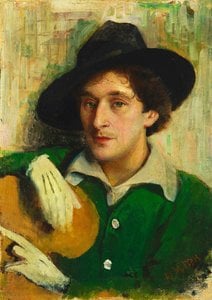
Marc Chagall
1887 - 1985, Belarus
Konstnärsbiografi
Tidigt liv, familj och utbildning
Marc Chagall träder in i världen den 7 juli 1887 i Vitebsk, i det ryska imperiet, född som Moishe Segal. Han är det första av nio barn i en anspråkslös judisk familj. Livet formas av arbetets och den småskaliga handelns rytmer. Hans far, Khatskel Segal, arbetar som sillinläggare vid ett lager, medan hans mor, Feïga-Ita Tchernina, driver en liten livsmedelsbutik. Dessa tidiga år är djupt rotade i den provinsiella småstadens unika texturer, där världens gränser definieras av ett stort hushålls behov och det lokala samfundets traditioner.
Utbildningen tar sin början inom hederns väggar, den traditionella judiska grundskolan. Här ligger fokus på religiös undervisning och de fundamentala texter som utgör grunden i hans uppfostran. Vid tretton års ålder vidgas horisonten mot det sekulära; han börjar i Vitebsks officiella folkskola för att få en rysk utbildning, ett steg som markerar en brytning med den strikt religiösa sfär som präglat hans barndom. Denna dubbla tillvaro – mellan hederns heliga traditioner och statsskolans världsliga krav – skapar en inneboende spänning som kommer att komma att definiera hans tidiga utveckling.
Den konstnärliga impulsen finner sitt första formella uttryck i Vitebsk. Chagall får sin första utbildning vid en lokal konstskola under ledning av Iouri Pen. Det är här som den råa instinkten för visuellt uttryck börjar formas till en disciplinerad praktik. Han rör sig från klassrummets strukturerade lektioner mot en djupare förståelse för själva seendet, vilket lägger grunden för ett liv ägnat åt att översätta minnen till form.
De formativa åren i Sankt Petersburg
Övergången från Vitebsks provinsiella lugn till det kejserliga Sankt Petersburgs storslagenhet är präglad av kamp. Mellan 1907 och 1909 erbjuder huvudstaden lite av den komfort man kan hoppas på. Fattigdomen är en ständig följeslagare; det finns stunder av hunger så svår att fysisk kollaps blir en realitet. För att överleva ger han sig ut på gatorna och tjänar ett magert levebröd genom att måla skyltar för butiker. Dessa kommersiella uppdrag ger de nödvändiga rublerna för att upprätthålla en närvaro i staden, samtidigt som han navigerar i komplexiteten av att vara en judisk student i ett enormt, föränderligt imperium.
Den akademiska strävan är obeveklig. Han anmäler sig till flera akademier i sökandet efter en formell struktur för sitt framväxande visuella språk. Huvudstadens atmosfär är tung av avantgardets inflytande, en spänning som drar honom bort från den klassiska skolningen. Han finner sig själv i ateljén hos Léon Bakst, en scenograf för Ballets Russes, där teaterns estetik och scenografins dramatik börjar sippra in i hans perception av rum och form. Denna period är en kollision mellan nödvändighet och ambition, en tid av skissande för överlevnad, samtidigt som han absorberar de radikala skiften som sker inom den ryska konstscenen.
Parisåren och avantgardets inflytande
Paris anländer omkring 1910 eller 1911, som ett plötsligt skifte från det ryska imperiets provinsiella begränsningar. Staden erbjuder en sensorisk chock. I Montparnasses gator finner han ljus, färg och frihet. Detta är inte längre sillhandlarens värld eller den traditionella heder-skolans ramar; det är ett landskap av radikala möjligheter. Han bosätter sig i La Ruche, det berömda konstnärshemmet, där luften är mättad av den nya avantgardets närvaro. Här delar han utrymme med Amedeo Modigliani och Fernand Léger, gestalter som håller på att omdefiniera de moderna uttryckens gränser. Epokens inflytande är oundvikligt, men han förblir en outsider som absorberar fauvismens och kubismens upptäckter utan att någonsin ge vika för sin egen inre logik.
De verk som skapas under denna period börjar spegla ett avsteg från den bokstavliga representationen. Han rör sig mot en stil som prioriterar emotionella och poetiska associationer framför den strikta bildlogikens regler. Färgerna klarnar och blir mer intensiva, drivna av mötet med den parisiska scenen. Han navigerar i spänningsfältet mellan sin bakgrunds formella utbildning och nuets experimentella frihet. Denna period av intensiv kreativ friktion fortsätter ända tills krigets politiska omvälvningar drar honom tillbaka mot öst. Det är först 1923 som han återvänder till Paris med sin familj och återupprättar sin närvaro i den stad som en gång låste upp hans visuella språk.
- The Betrothed and Eiffel Tower (1913)
- Hommage à Apollinaire (1912-1913)
De ryska åren och revolutionen
Revolutionen drar Marc Chagall tillbaka till Vitebsk. Han är inte bara en passiv observatör av det sociala upproret; han försöker aktivt forma dess kulturella landskap. Han tar på sig rollen som Vitebsks kommissionär för bildkonst och övertar ledningen för en lokal konstskola. Hans vision är djupt rotad i gemenskap och utbildning, men det politiska klimatet skiftar ständigt under hans fötter. Suprematismens framväxt skapar en djup spricka i det konstnärliga landskapet. Gestalter som Malevitj och Lissitzkij driver på för en radikal, icke-objektiv abstraktion, en riktning som står i skarp kontrast till Marc Chagalls mer lyriska och figurativa tillvägagångssätt. Spänningen blir till slut ohållbar. Han tvingas lämna sina positioner när hans dröm om en lokal konstnärlig renässans kolliderar med det nya regimens rigida krav.
Vid 1920-talet skiftar fokus mot Moskva. Han arbetar med dekorationerna till den judiska teatern, ett projekt som fångar skärningspunkten mellan hans personliga identitet och den offentliga scenen. Hans linjer är självsäkra, hans färger både kraftfulla och bleka, även när världen omkring honom håller på att splittras. Han navigerar genom en period av intensiv kreativ produktion och djup materiell kamp, ständigt rörande sig mellan minnet av shtetln och den föränderliga statens krav. Denna era definieras av just denna friktion: försöket att bygga ett kulturellt hem samtidigt som själva grundvalarna för hans värld skrivs om.
- Over the Town (1914–1918)
- Apparition (omkring 1917-18)
Livet i USA
Utbrottet av andra världskriget tvingade fram ett plötsligt geografiskt skifte. År 1941 sökte Marc Chagall och hans familj asyl i USA, på flykt från det ockuperade Frankrikes instabilitet. Han slog sig ner i och omkring New York, en vistelse som skulle pågå fram till 1948. Staden utgjorde en fond av djup emotionell oro; mitt i krigsårens ångest fångade hans pensel spänningen i en värld i ständig förändring. Hans verk reflekterar tidens osäkerhet och översätter både personlig och global oro till ett visuellt språk präglat av lidande och hopp.
Under dessa sju år fann konstnären en väg att engagera sig i storskaliga institutionella projekt. Han åtagit sig betydande uppdrag för Förenta nationernas högkvarter, där han översatte sin poetiska vision till den arkitektoniska väven i en global institution. Denna period i Amerika markerar ett betydelsefullt kapitel av experimentlusta och överlevnad, en bro mellan hans europeiska rötter och en ny, intensiv verklighet. Han förblev en man mellan världar, med ett hjärta som ständigt drogs mot Frankrike, även medan han navigerade genom det amerikanska exilens komplexitet.
- White Crucifixion (1938)
Teknik och konstnärlig stil
Logiken får ge vika för känslan. Marc Chagall förkastar de strikta reglerna för bildmässig logik och väljer istället att komponera sina motiv genom poetiska associationer. Hans dukar verkar enligt drömmens mekanik; figurer svävar genom luften i trots mot tyngdlagen, medan färgerna pulserar med en icke-naturalistisk intensitet. Detta tillvägagångssätt gör det möjligt för honom att fånga själva essensen av en känsla snarare än världens bokstavliga utseende. Han rör sig bortom ren imitation och använder en djärv palett för att översätta minnet till ett visuellt språk.
Hans estetik är en kollision av influenser. Han absorberar kubismens fragmenterade strukturer och fauvismens intensiva färgstarkhet, men filtrerar dessa avantgardistiska rörelser genom en djupt personlig lins. Resultatet är en stil som överbryggar gapet mellan expressionism och abstraktion. Han väver samman det heliga med det vardagliga och befolkar sina scener med symbolisk och surrealistisk bildvärld. Judiska folksagor och de stillsamma, levda detaljerna från livet i shtetln blir byggstenarna i en privat mytologi. Det välbekanta förvandlas till det fantastiska.
Bildspråket kretsar ofta kring återkommande motiv: flygande älskande, fiolspelare och massiva blomsterbuketter. Dessa element är inte enbart dekorationer, utan symboler för ett andligt och emotionellt landskap. I verk som De älskande (1929) skapar känslan av viktlöshet och användandet av intensiva färger ett rum där världens fysiska lagar inte längre gäller. Hans konstnärskap förblir en ständig förhandling mellan den påtagliga verkligheten i hans uppväxt och fantasinens gränslösa möjligheter.
- Jag och byn (1911)
- Den gröna violinisten (1924)
- Vit korsfästelse (1938)
Mecenater, ateljé och beställningsverk
Under mitten av 1920-talet befinner sig Marc Chagall i Paris, där han navigerar genom konstmarknadens inflytelserika kretsar. Han hamnar i omloppsbana kring Ambroise Vollard, en konsthandlare vars inflytande kom att forma banan för många avantgardistiska konstnärer. Vollard beställer en serie gravyrer av Chagall och ger honom i uppdrag att illustrera Nikolaj Gogols verk, specifikt Döda själar. Denna period markerar en förskjutning mot grafikens precision, en rörelse bort från den flytande spontaniteten i hans tidigare dukar.
År 1931 skiftar fokus mot Mellanöstern. Borgmästaren i Tel Aviv sträcker ut en inbjudan till Chagall att resa till Palestina. Målet är ambitiöst: grundandet av ett judiskt konstmuseum. Denna period fördjupar hans engagemang för religiös och kulturell symbolism, ett tema som skulle bestå genom hans senare, storskaliga arkitektoniska verk. Hans förmåga att översätta personligt och kollektivt minne till fysiskt rum blir ett definierande drag i hans konstnärliga gärning.
I takt med att hans rykte växer, expanderar omfattningen av hans arbete från den intima sidan till det monumentala. Han rör sig in i ljusets och arkitekturens rike, där han designar glasmålningar till katedralen i Metz och till FN-byggnaden i New York. Dessa verk kräver en mästerlig förståelse för hur färgen samspelar med solljuset. År 1964 når han en höjdpunkt av allmän uppskattning genom ett uppdrag för taket i Pariseroperan, ett massivt projekt som för hans drömlika bildspråk in i en av Europas mest betydelsefulla kulturella institutioner.
Var man kan se hans verk idag
Arvet efter hans vision förblir förankrat i flera centrala institutioner över hela världen. I Nice, Frankrike, hyser Musée National Marc Chagall en omfattande samling av hans verk, som bevarar kärnan i hans kreativa produktion. Detta museum erbjuder en koncentrerad inblick i den bildvärld som definierade hans långa karriär. Samtidigt upprätthåller Staten ryska museet i Sankt Petersburg, Ryssland, en betydande närvaro av hans konst, med verk som knyter an till hans tidiga år och hans tid i det ryska imperiet.
Hans verks räckvidd sträcker sig över Atlanten till USA. Museum of Modern Art i New York City rymmer verk som speglar hans komplexa relation till staden under hans år i exil. I amerikanska Mellanvästern presenterar Art Institute of Chicago hans konst, vilket säkerställer hans närvaro i stora internationella samlingar. Dessa platser utgör de främsta fysiska mötespunkterna för dem som söker uppleva hans unika användning av färg och form.
- I and the Village (1911)
- The Wedding (1944)
- White Crucifixion (1938)
- The Lovers (1929)
- The Circus (1964)


Relaterade artiklar

Tysk Expressionism: 10 Mästerverk som Definierade en Epok – Konst & Inredning
Utforska 10 ikoniska mästerverk inom tysk expressionism! Lär känna konstnärer som Nolde, Kirchner & Heckel. Upptäck historien bakom dessa färgstarka målningar och finn inspiration till din inredning med ArtsDot.com – museumkvalitet för ditt hem.

Illuminating Faith: Biblical Narrative & Artistic Expression Through the Ages
Explore the rich history of biblical art from Giotto to the Renaissance masters with ArtsDot. Discover symbolism, techniques & enduring legacies. Museum-quality reproductions & expert insights.
Dreamscapes & Disrupted Realities: Exploring Surrealism's Enduring Influence
Explore the fascinating world of Surrealism! Discover its origins, key artists like Dalí & Magritte, and enduring influence on art & culture. Expert insights & high-quality reproductions at ArtsDot.