


 Förhandsvisa
 Skicka
 Dela
Dela
 Visa detaljer

 Ladda ner
 Liknande objekt
 Röntgen
 Bildspel
 Statistik
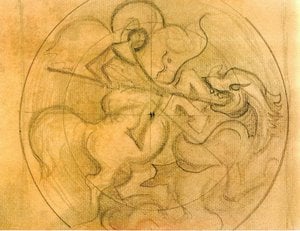
Abstract Composition


 Visa mer
Handgjord oljereproduktion
Handmålad olja på duk i din valda storlek och ram, tillverkad efter beställning av våra konstnärer. ( Byt till tryck Byt till digital bild)




































Välj bland våra förinställda storlekar som motsvarar konstverkets ursprungliga proportioner.

Du kan ange egna mått för att passa en specifik ram eller yta. Om den valda storleken inte matchar originalbildens proportioner kommer vi antingen att beskära konstverket eller utöka målningen med ytterligare handmålade element. En digital skiss skickas till dig för godkännande innan produktionen påbörjas.
Observera att förhandsvisningen på skärmen inte återspeglar den faktiska beskärningen eller utökningen. Endast skissen visar den slutgiltiga kompositionen korrekt.
Även om anpassade storlekar är möjliga, rekommenderar vi att du väljer en dimension från den fördefinierade listan för att bevara originalproportionerna.
Efter beställning kommer ArtsDot.com team att mejla kunden för instruktioner och tillhandahålla en skissförhandsvisning
Leverans över hela världen () på 3–4 veckor istället för standard 5 veckor. (10 september). Inga kompromisser med kvaliteten.

Fri expressfrakt över hela världen

Högkvalitativ linnecanvas

Fullständig fraktförsäkring

Garantier för återbetalning av tullavgifter

Garantier för exakt färgåtergivning

100 dagars returrätt (endast vid defekter)

100% pengarna tillbaka-garanti

Mängdrabatt erbjuds
 Glasalternativet är endast tillgängligt i storlekar under 110 cm.

Abstract Composition
Reproduktionsmedium
Storlek på reproduktion
-


Slutgiltigt pris
$ 263
Liknande konstverk


Konstnärsbiografi
Konrad Ernst Otto Zuse: Pioneer of Computing
Early Life and Education
- Konrad Ernst Otto Zuse was born on June 22, 1910, in Berlin, Germany.
- He studied mechanical engineering at the Technical University of Braunschweig, graduating in 1933.
- Even during his studies, Zuse demonstrated a keen interest in automation and calculation, laying the groundwork for his future innovations.
The Genesis of Computing: Early Machines
- Driven by frustration with repetitive calculations during his engineering work, Zuse began designing calculating machines in the 1930s.
- His first creation was the Z1 (1936-1938), a mechanical binary computer using floating-point numbers and limited programmability. Though mechanically unreliable, it demonstrated key concepts.
- The Z2 (1939) improved upon the Z1 with electromechanical relays, offering greater reliability but was destroyed during World War II.
The Z3: The First Functional Programmable Computer
- In May 1941, Zuse completed the Z3, widely considered the world’s first functional program-controlled Turing-complete computer.
- It was electromechanical, using relays, and operated with binary floating-point arithmetic.
- The Z3 was destroyed during a bombing raid in 1943, but its design principles were revolutionary.
Further Developments: The Z4 and Beyond
- Zuse continued his work, developing the Z4 (completed in 1945), which became the world’s first commercial computer. It was sold to the Aerodynamische Versuchsanstalt (AVA) for aerodynamic calculations.
- He founded one of the earliest computer businesses, Zuse KG, to produce and sell computers.
Plankalkül: A Visionary Programming Language
- Between 1943 and 1945, amidst wartime conditions, Zuse designed Plankalkül, the first high-level programming language.
- It was remarkably advanced for its time, featuring concepts like data structures and conditional statements. However, it remained largely unimplemented during his lifetime due to lack of resources and computing power.
Later Life and Theoretical Work
- In 1969, Zuse published Rechnender Raum (Calculating Space), proposing the concept of a computation-based universe – a precursor to digital physics.
- He received belated recognition for his pioneering work in the latter part of his life, including the Turing Award in 1968.
- Konrad Zuse died in Hünfeld, Germany, on December 18, 1995.
Historical Significance and Legacy
- Zuse’s work was largely overlooked during World War II due to the conflict and limited communication with Allied researchers.
- His contributions were crucial in laying the foundations for modern computing, influencing subsequent generations of computer scientists and engineers.
- He is rightfully regarded as a founding father of computer science, whose vision extended beyond mere calculation to encompass the very nature of reality itself.

konrad ernst otto zuse
1910 - 1995 , Germany
Kortfakta
- Birth Date: 1910
- Birth Place: Berlin, Germany
- Death Date: 1995
- Movement: Early Computing / Pioneer of Computer Science
- Name: Konrad Ernst Otto Zuse
- Nationality: German
- Notable Works:
- Z3
- Plankalkül
- Z4