


 Visa i rummet
 Skicka
 Dela
Dela
 Detaljer
 Studentguide för konstverk

 Ladda ner
 Liknande objekt
 Röntgen
 Bildspel
 Besökstatistik
Nāve


 Läs mer
Giclée / Konsttryck
Giclée- eller canvasprint av museumskvalitet med snabb produktion och flexibla ytbehandlingsalternativ. ( Köp handmålat konstverk Byt till digital bildförsäljning)




































Välj bland våra förinställda storlekar som motsvarar konstverkets ursprungliga proportioner.

Du kan ange egna mått för att passa en specifik ram eller yta. Om det valda måttet inte överensstämmer med originalbildens proportioner kommer vi antingen att beskära konstverket eller utöka bilden med en speglad eller enfärgad kant. En digital mockup skickas för ditt godkännande innan produktionen påbörjas.
Vänligen notera att förhandsvisningen på skärmen inte återspeglar den faktiska beskärningen eller utökningen. Endast mockuppen visar den slutgiltiga kompositionen korrekt.
Även om anpassade storlekar är möjliga, rekommenderar vi att du väljer ett mått från den fördefinierade listan för att bevara de ursprungliga proportionerna.
Leverans över hela världen () på 2 veckor istället för standard 4/5 veckor. (26 september)

Fri expressfrakt över hela världen

Högkvalitativ linnecanvas

Fullständig fraktförsäkring

Garantier för återbetalning av tullavgifter

Garantier för exakt färgåtergivning

100 dagars returrätt vid fabrikationsfel

100% pengarna tillbaka-garanti

Mängdrabatt erbjuds
 Glasalternativet är endast tillgängligt i storlekar under 110 cm.

Nāve
Giclée / Konsttryck
Reproduktionsstorlek
-


Totalpris
$ 62
Understanding the Artist's Vision
Janis Rozentāls was a prominent Latvian artist known for his contributions to the development of Latvian art. His work often featured everyday scenes, portraits, and landscapes, but Nāve stands out for its unique blend of realism and symbolism. The painting depicts a woman holding a baby in her arms, surrounded by other elements that add to the overall meaning of the piece.- The woman's gentle gaze towards the baby conveys a sense of care and nurturing.
- The presence of a cat and bird in the scene may symbolize the cycle of life and death.
- The two bottles in the background could represent the duality of life and death.
Appreciating the Artistic Value
Nāve is not only a significant work by Janis Rozentāls but also an important piece in the history of Latvian art. Its themes and symbolism continue to fascinate art lovers today. For those interested in exploring more of Janis Rozentāls' work, https://ArtsDot.com offers high-quality reproductions of his paintings, including Nāve. Visit Nāve, 1897 by Janis Rozentāls to discover more about this captivating piece.The Latvian National Museum of Arts is home to an extensive collection of Latvian art, including works by Janis Rozentāls. To learn more about the museum and its collections, visit https://ArtsDot.com. For a deeper understanding of Janis Rozentāls' life and work, see his biography on Wikipedia.
Liknande konstverk


Om konstnären
A Pioneer of Latvian Painting: The Life and Art of Janis Rozentāls
Janis Rozentāls, born on March 18, 1866, in the tranquil countryside of Bebri Farmstead near Saldus, stands as a towering figure in the history of Latvian art. His life’s journey—from the son of a blacksmith to a celebrated painter—mirrors the nation's own evolving identity during a period of profound cultural and political transformation. Rozentāls wasn’t merely an artist; he was a key architect in shaping a distinctly Latvian artistic voice, blending traditional influences with modern sensibilities and forging a path for future generations of Latvian painters. His early years were deeply rooted in the rural landscape of Courland, an environment that would forever inform his artistic vision—a connection to nature and folklore that permeates much of his work. He received his initial education at H. Krause’s Elementary School in Saldus, followed by studies at Kuldīga District School, but it was a fervent desire for artistic expression that ultimately led him to Riga at the age of fifteen, marking the beginning of his formal training.Blending Tradition and Modernity: Artistic Development and Style
Rozentāls’s artistic development is characterized by a remarkable synthesis of influences. While he studied formally at the Saint Petersburg Academy of Arts from 1888, grounding him in classical techniques and European art traditions, he never abandoned his Latvian roots. Instead, he skillfully integrated these influences into a uniquely Latvian style—a harmonious blend of Impressionism and Art Nouveau, yet imbued with a distinctly national spirit. His compositions often feature an intentional asymmetry, coupled with a flowing, wavelike rhythm – hallmarks of the Art Nouveau movement. However, Rozentāls masterfully balanced this decorative quality with a subtle understanding of tonal variations and color relationships, preventing his work from becoming overly ornamental or superficial. He was adept at creating images that were both visually striking and emotionally evocative, capturing not just appearances but also the underlying mood and atmosphere. His subject matter was incredibly diverse: portraits that offered profound insights into the inner lives of his subjects, landscapes celebrating the breathtaking beauty of Latvian nature – particularly vibrant spring scenes brimming with life and color – and symbolic works inspired by biblical narratives and folklore. A significant commission in 1910 to create decorative friezes for the Riga Latvian Society showcased his ability to work on a monumental scale while maintaining artistic integrity and demonstrating his understanding of public art. Beyond painting, Rozentāls was also a prolific graphic artist, producing book designs, magazine illustrations, posters, and drawings—a testament to the breadth of his creative talent.A Finnish Interlude: Marriage and Artistic Exchange
A pivotal chapter in Rozentāls’s life unfolded in 1902 when he met Elli Forssell, a celebrated Finnish singer, in Riga. Their marriage in 1903 wasn't simply a personal union; it served as a catalyst for artistic exchange and broadened horizons significantly. The connection with Finland profoundly influenced his interests, leading him to deeply appreciate the work of Finnish artists such as Gallen-Kallela, Järnefelt, Halonen, and Saarinen. Rozentāls wrote extensively about their art, recognizing in them a kindred spirit—a shared commitment to national identity expressed through innovative artistic forms. From 1905 to 1916, the couple resided in Helsinki, providing Rozentāls with an immersive experience of Finnish culture and further enriching his artistic perspective. This period was marked by continued artistic productivity; he seamlessly integrated his Latvian roots with the influences of his adopted environment, creating a truly unique and compelling body of work.Lasting Legacy: Major Works and Historical Significance
Rozentāls’s legacy is firmly established through a remarkable collection of works that continue to resonate with audiences today. His portraits—including those of A. Dombrovskis, Rūdolfs Blaumanis, and his beloved wife Elli Forssell—are not merely likenesses but insightful studies of character and personality, capturing the essence of their subjects with remarkable sensitivity. Landscapes such as “From Church” (1894) and “Picnic” (1913) beautifully capture the serene beauty of the Latvian countryside, imbued with a sense of nostalgia and reverence for nature. His symbolic works—including "Temptation" and "Eve with the Apple"—explore universal themes of morality, desire, and spirituality with a unique blend of realism and symbolism. He also created altar pieces for Latvian churches, adapting his style to suit a broader audience while maintaining artistic quality and reflecting his deep faith. Janis Rozentāls died on December 26, 1916, in Helsinki, Finland, but was later reburied in Forest Cemetery, Riga, in 1920. His impact extends far beyond his paintings; the Janis Rozentāls Art High School in Riga stands as a lasting testament to his dedication to artistic education, and a memorial museum located in the building he designed in Saldus preserves his life and work for future generations. He remains a pivotal figure in Latvian art history—celebrated not only for his artistic achievements but also for his crucial role in fostering a distinct national identity through art. He was truly a pioneer.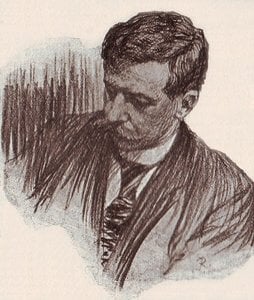
Jānis Rozentāls
1866 - 1916 , Lettland
Snabbfakta
- Artistic Movement Or Style: Impressionism, Art Nouveau
- Artists Or Movements Influenced By This Artist: ['Europas konstnärer']
- Artists Who Influenced This Artist:
- Latviju
- Finland
- Date Of Birth: 18 mars 1866
- Date Of Death: 26 dec 1916
- Full Name: Janis Rozentāls
- Nationality: Lettisk
- Notable Artworks:
- Nāve
- Nojeļi
- Pildzenes
- Place Of Birth: Saldus, Lettland
Relaterade artiklar

Echoes of Society: Exploring Social Realism's Enduring Legacy in Art
Explore the powerful world of Social Realism art! Discover key artists, masterpieces & its profound social commentary. Expert insights into this influential movement's history and enduring legacy.

Romantic Realism's Finest: 10 Masterpieces for Your Home | ArtsDot
Explore 10 defining masterpieces of Romantic Realism! Discover Courbet, Millet & Daumier's powerful paintings—capturing emotion and social realities. Find museum-quality reproductions for your home at ArtsDot.com.

The Poetic Truth of Observation: Exploring 19th-Century Realism in Painting
Explore the captivating world of 19th-century Realism! Discover key artists like Courbet & Millet, masterpieces, and the powerful social commentary behind this influential art movement. Expert insights at ArtsDot.

Akademisk Realism: Topp 10 Mästerverk som Definierade Konsten | ArtsDot
Utforska de 10 mästerverk som definierade Akademisk Realism! Lär känna Bouguereau, Gérôme & Cabanel. Upptäck historien bakom klassiska målningar och hitta inspiration för din inredning med ArtsDot.com – museumkvalitet hem till dig.

The Evocative Embrace of Reality: Exploring Romantic Realism in 19th-Century Painting
Explore the captivating world of Romantic Realism! Discover key artists like Courbet & Millet, masterpieces, and the social context behind this influential art movement. Expert insights for collectors at ArtsDot.