

 Förhandsvisa
 Skicka
 Dela
Dela
 Visa detaljer
 Guide
Guide

 Ladda ner
 Liknande objekt
 Röntgen
 Bildspel
 Frågor och svar
 Statistik
Grande vue de Mariakerke


 Visa mer
Giclée / Konsttryck
Giclée- eller canvasprint av museumskvalitet med snabb produktion och flexibla ytbehandlingsalternativ. ( Beställ handmålad reproduktion Byt till digital bild)




P118B Skr10

P118H Skr10

P118W Skr10

P438Z Skr10

P508JH Skr12

P508YH Skr12

P805H Skr10

P805Z Skr10

P919BZ Skr10

P919G Skr10

P919XJ Skr10

P959ZH Skr10

P968JZ Skr12

W106C Skr8

W218G Skr10

W218JH Skr8

W218Y Skr10

W307PJ Skr10

W316G Skr10

W316PJ Skr8

W316Y Skr10

W398PJ Skr8

W4111J Skr10

W500HY Skr15

W500JH Skr15

W692G Skr12

W849H Skr8

W940BG Skr15

W953PJ Skr8




Välj bland våra förinställda storlekar som motsvarar konstverkets ursprungliga proportioner.

Ange den bredd och höjd du behöver för att passa din ram eller vägg. Ett tryck kan endast beskäras, aldrig göras större än originalbilden, vilket innebär att ett format med en annan proportion leder till att en del av bilden går förlorad. Vi skickar en digital mockup för godkännande innan vi påbörjar tryckningen. Bilden som visas på denna sida visar inte den faktiska beskärningen — det är endast mockuppen som gör det.
Leverans över hela världen () på 2 veckor istället för standard 4/5 veckor. (9 november)

Fri expressfrakt över hela världen

Högkvalitativ linnecanvas

Fullständig fraktförsäkring

Garantier för återbetalning av tullavgifter

Garantier för exakt färgåtergivning

100 dagars returrätt (endast vid fel)

100% pengarna tillbaka-garanti

Mängdrabatt erbjuds
 Glasalternativet är endast tillgängligt i storlekar under 110 cm.

Grande vue de Mariakerke
Giclée / Konsttryck
Storlek på reproduktion
-


Slutgiltigt pris
Skr 629
A Belgian Pastoral: The Soul of the Landscape
In the quietude of the Belgian countryside, there exists a scene that transcends mere topography to touch upon the very essence of nostalgia and solitude. James Ensor’s Grande vue de Mariakerke is not simply a depiction of a village nestled in a valley; it is an invitation into a world where the earth breathes through thick, textured strokes of paint. The composition unfolds as a sweeping vista, dominated by expansive fields of tall grasses and reeds that sway under the weight of a dramatic, heavy sky. At the heart of this landscape lies a small, tranquil village, anchored by a prominent church tower that reaches upward, acting as a silent sentinel between the terrestrial realm and the swirling, atmospheric heavens above. The horizontal format of the work emphasizes the immense breadth of the Belgian plains, creating an immersive experience that draws the viewer into a state of quiet contemplation.
The emotional resonance of this piece lies in its delicate balance between peace and a subtle, underlying melancholy. There is a profound sense of stillness, yet the landscape feels vibrantly alive, as if caught in a moment of transition between light and shadow. For the collector or the interior designer, this artwork offers a unique atmospheric depth; it possesses the ability to anchor a room with its grounded, earthy tones while simultaneously providing a window into a dreamlike, emotive space. It is a work that does not merely decorate a wall but breathes life into an environment, offering a sense of historical weight and poetic grace.
Mastery of Light and Impasto Technique
To look closely at Grande vue de Mariakerke is to witness the physical struggle and triumph of the artist’s hand. Ensor employs a masterful impasto technique, where the paint is applied so thickly that it creates a sculptural quality on the canvas. This tactile approach is most evident in the undulating fields of grass and the turbulent, billowing clouds, where every brushstroke contributes to a sense of movement and energy. The visible texture catches the light, creating miniature shadows within the painting itself, which lends an incredible depth to the vegetation and the sky.
While Ensor is often celebrated for his later, more grotesque and masked figures, this particular work reveals a profound stylistic kinship with the Impressionist movement, particularly the expressive spirit of Vincent van Gogh. The color palette is vibrant yet tempered by the naturalistic tones of the Belgian landscape—rich ochres, deep greens, and moody blues that coalesce under a diffused, overcast light. This use of color and gestural brushwork allows the artist to prioritize emotional impact over strict realism, utilizing atmospheric perspective to make distant objects appear paler and more ethereal. The result is a painting that feels less like a photographic record and more like a subjective, sensory memory of a place.
A Bridge Between Eras
Historically, this work serves as a vital link in the evolution of modern art, capturing a pivotal moment when the traditions of landscape painting began to merge with the burgeoning movements of Expressionism. Born in Ostend, Ensor was a figure who bridged the gap between the observational beauty of Impressionism and the raw, psychological intensity of the 20th century. In Grande vue de Mariakerke, we see an artist experimenting with the landscape as a vessel for internal feeling, moving away from academic precision toward a more liberated, personal truth.
The symbolism within the piece is subtle yet profound. The church tower, a recurring motif in Ensor’s work, represents the enduring presence of community and faith amidst the vast, indifferent beauty of nature. The expansive, untamed fields evoke themes of isolation and the sublime, reminding the viewer of the smallness of human structures when compared to the eternal cycles of the natural world. For those seeking a high-quality reproduction, this painting offers more than just aesthetic beauty; it provides a piece of art history that speaks to the enduring human connection to the land, making it an exquisite choice for any curated collection or sophisticated interior design project.
Frågor och svar
Vilket rum rekommenderas "Grande vue de Mariakerke" av James Ensor för?
En reproduktion av "Grande vue de Mariakerke" passar bra i ett Living Room.
Hur ljus är "Grande vue de Mariakerke" i sin helhet?
Sammantaget har "Grande vue de Mariakerke" registrerats som bright. Upplevd ljusstyrka beskriver hur ljust eller mörkt verket framstår.
Vilken typ av konstverk är "Grande vue de Mariakerke" av James Ensor?
"Grande vue de Mariakerke" av James Ensor är klassificerat som WallArt. Kategorin beskriver vilken typ av konstverk originalet är.
Liknande konstverk


Konstnärsbiografi
A Life Immersed in Masks and Shadows: The World of James Ensor
James Sidney Edouard Ensor, Baron Ensor, född den 13 april 1860 i Ostend, Belgien, död den 19 november 1949 i samma stad, var en belgisk målare och grafiker – en konstnär vars verk präglades av en djupgående fascination för masker, illusioner och det mörka under ytan. Hans livsverk är ett fascinerande möte mellan engelsk och belgiskt arv, en barndom i en levande hamnstad och en konstnärlig resa som ledde honom bortom traditionella gränser och in i de mest obekväma och spännande territorierna inom den moderna konsten.Ensor föddes till ett familjeliv där hans far, James Frederic Ensor, var en välutbildad ingenjör från England, och hans mor, Maria Catherina Haegheman, var belgiskt härkomst. Denna kulturella blandning kan ha bidragit till den dualitet som genomsyrade hans konst – en ständig utforskning av identitet, maskering och det dolda. Hans barndom i Ostend, en livlig hamnstad fylld med karnevaler, souvenirbutiker och ovanliga föremål, var en central inspiration för hans framtida verk. Hans föräldrars butik, där de sålde skivor, masker och andra märkliga prydnadssaker, fungerade som ett levande museum – en kista av intryck som formade hans konstnärliga synvinkel.
From Somber Realism to Grotesque Visions
Ensor’s tidiga målningar återspeglar en mer traditionell stil, där han skildrade vardagliga scener i dämpade toner. Verk som *Russian Music* (1881) och *The Drunkards* (1883) visar en ung konstnär som kämpar med realismen, men även här finns antydningar om den obehagliga bildvärld som skulle komma. En avgörande vändpunkt inträffade när hans färgpalett ljusnade och hans motiv blev alltmer bisarra. Han började fylla sina dukar med karnevaler, skelett, dockor och allegoriska figurer – en värld präglad av fantasi och ofta nära det groteska. Detta var inte bara en stilistisk förändring; det var en medveten utforskning av de mörkare aspekterna av mänsklig existens, ett avståndstagande från samhällets normer och en omfamning av det irrationella.
Hans konstnärliga stil blev omedelbart igenkännbar genom sin kraftfulla penseldragning, livfulla färger och teaterliknande kvalitet – ett visuellt språk som var unikt för honom. Han använde sig ofta av stark kontrast mellan ljus och mörker, och hans verk är fyllda med en känsla av spänning och obekvämhet. Hans konst handlade inte om att bara representera verkligheten; det handlade om att avslöja den underliggande sanningen – ofta en skrämmande eller obehaglig sanning.
Key Works and Recurring Themes
Under sin långa karriär (han levde och arbetade i över 70 år) producerade Ensor ett antal verk som fortsätter att chockera och fascinera betraktare. *The Scandalized Masks* (1883) är ett tidigt exempel på hans fascination för maskeringens makt och dess förmåga att avslöja dolda känslor. Hans mest kontroversiella verk, *Christ’s Entry Into Brussels* (1888-1889), fortsätter att vara en kraftfull satir över religiös hyckleri och samhällets likgiltighet – ett målning som initialt möttes med hård kritik men nu betraktas som ett mästerverk. Bilden av Kristus som marscherar in i en stad full av groteska, maskerade figurer är en kraftfull kommentar till klyftan mellan andliga ideal och mänskligt beteende.
Andra betydande verk inkluderar *Skeletons Fighting over a Hanged Man* (1891), som utforskar teman kring död, förfall och livets absurditet, samt *Tribulations of Saint Anthony* (1887), som dyker ner i komplexa allegoriska teman om lockelse, synd och andlig kamp. Genom hela hans verk finns en återkommande utforskning av döden, samhällskritik, religiös satir och den oändliga kraften hos fantasin – teman som resonerar med en tidlös relevans.
A Pioneer of Modernism: Influences and Legacy
Även om Ensor motvilligt klassificerades, var hans konstnärliga arv komplext och fascinerande. Han erkände inflytanden från mästare som Pieter Bruegel den Äldre, vars trängselrika scener och moraliserande berättelser resonerade med hans egen vision, samt Francisco Goya, vars mörk humor och skoningslösa skildringar av mänskligt lidande lämnade ett bestående intryck. James Abbott McNeill Whistler’s betoning på estetik spelade också en roll i att forma hans konstnärliga känslor.
Men Ensor var inte bara en imitator; han syntetiserade dessa influenser till något helt nytt och originellt. Han är nu allmänt erkänd som en nyckelperson i övergången från 1800-talets symbolism till tidig 20:a århundradets expressionism och surrealism – en sann pionjär inom modern konst. Hans modiga utforskning av det undermedvetna, hans omfamning av groteska bilder och hans avståndstagande från akademiska normer banade väg för framtida generationer av konstnärer som vågade utmana konstens gränser. Trots initial motstånd fick han slutligen erkännande i sin senare ålder, där han blev baron av kung Alberts I beviljande 1929 och belönades med Légion d’honneur 1933.
Han dog i Ostend 1949, lämnade efter sig ett verk som fortsätter att fängsla, störa och inspirera. Hans arv består som ett testamente till konstens kraft att konfrontera obekväma sanningar och utforska djupet av den mänskliga erfarenheten.

James Ensor
1860 - 1949 , Belgien
Kortfakta
- Artistic Movement Or Style: Expressionism, Surrealism
- Artists Or Movements Influenced By This Artist:
- Expressionism
- Surrealism
- Artists Who Influenced This Artist:
- Bruegel d.ä.
- Goya
- Whistler
- Date Of Birth: 13 april 1860
- Date Of Death: 19 november 1949
- Full Name: James Sidney Edouard Ensor
- Nationality: Belgisk
- Notable Artworks:
- Maskerna i skandal
- Skelett...
- Kristi intrång...
- Place Of Birth: Ostend, Belgien
Relaterade artiklar

Rembrandts 25 Mästerverk: En Konsthistorisk Resa för Hemmet
Utforska Rembrandts 25 mest ikoniska målningar! Lär känna historien bakom mästerverken, hans unika teknik och barockens ljusspel. Köp exklusiva konsttryck & tavlor online på ArtsDot.com – för en tidlös inredning.

Impressionistic Realism's Finest: 10 Masterpieces for Your Home | ArtsDot
Journey through Impressionistic Realism with 10 iconic masterpieces by Monet, Renoir & Van Gogh. Explore art history, techniques & find museum-quality reproductions for your home at ArtsDot.com. Discover all masterpieces online!
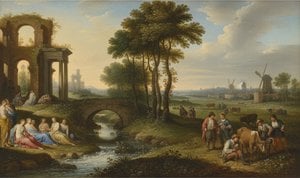
Cornelis van Poelenburch: Bridging Mannerism & the Dutch Baroque Landscape
Discover Cornelis van Poelenburch, a pivotal Dutch Baroque landscape painter bridging Mannerism & Italianate styles. Explore his life, key works, and lasting influence on 17th-century art with ArtsDot.

Sir Alfred James Munnings: Topp 25 mästerverk – Konst för hemmet & själen
Utforska Sir Alfred James Munnings 25 mest ikoniska målningar! Upptäck hästkonstens mästare, hans impressionistiska landskap & gripande krigskonst. Köp exklusiva konsttryck på ArtsDot.com – för en tidlös inredning.

Jan van Goyen: Master of Dutch Landscape & Atmospheric Perspective
Discover Jan van Goyen, the master of Dutch landscape painting. Explore his subtle technique, atmospheric realism & lasting influence on art history. Learn about this 17th-century pioneer at ArtsDot.


