


 Visa i rummet
 Skicka
 Dela
Dela
 Detaljer
 Studentguide för konstverk

 Ladda ner
 Liknande objekt
 Röntgen
 Bildspel
 Besökstatistik
Tea
 Oil On Canvas
- WallArt
- Realism
 1872
1872- 19th Century
 66.0 x 48.0 cm
 Metropolitan Museum of Art
 Läs mer
Giclée / Konsttryck
Giclée- eller canvasprint av museumskvalitet med snabb produktion och flexibla ytbehandlingsalternativ. ( Köp handmålat konstverk Byt till digital bildförsäljning)




P118B Skr10

P118H Skr10

P118W Skr10

P438Z Skr10

P508JH Skr12

P508YH Skr12

P805H Skr10

P805Z Skr10

P919BZ Skr10

P919G Skr10

P919XJ Skr10

P959ZH Skr10

P968JZ Skr12

W106C Skr8

W218G Skr10

W218JH Skr8

W218Y Skr10

W307PJ Skr10

W316G Skr10

W316PJ Skr8

W316Y Skr10

W398PJ Skr8

W4111J Skr10

W500HY Skr15

W500JH Skr15

W692G Skr12

W849H Skr8

W940BG Skr15

W953PJ Skr8




Välj bland våra förinställda storlekar som motsvarar konstverkets ursprungliga proportioner.

Ange den bredd och höjd du behöver, för att passa din ram eller din vägg. Ett tryck kan endast beskäras, aldrig göras större än bilden, vilket innebär att ett format med en annan formform leder till att en del av bilden går förlorad. Vi skickar en digital mockup för godkännande innan vi trycker något. Bilden som visas på denna sida visar inte den faktiska beskärningen — det är endast mockuppen som gör det.
Leverans över hela världen () på 2 veckor istället för standard 4/5 veckor. (23 oktober)

Fri expressfrakt över hela världen

Högkvalitativ linnecanvas

Fullständig fraktförsäkring

Garantier för återbetalning av tullavgifter

Garantier för exakt färgåtergivning

100 dagars returrätt vid fabrikationsfel

100% pengarna tillbaka-garanti

Mängdrabatt erbjuds
 Glasalternativet är endast tillgängligt i storlekar under 110 cm.

Tea
Giclée / Konsttryck
Reproduktionsstorlek
-


Totalpris
Skr 614
A Moment Frozen in Victorian Elegance
In the quiet, sun-dappled atmosphere of James Jacques Joseph Tissot’s Tea, we are invited into a private sanctuary of nineteenth-century refinement. This exquisite oil painting, dating from 1872, serves as more than just a depiction of a domestic ritual; it is a window into the soul of the Victorian era. The scene centers on a woman poised with grace in a tea room, her presence commanding yet serene. Clad in a sophisticated black dress accented by a delicate yellow ribbon at her throat, she embodies the meticulous fashion and social etiquette of her time. As she tends to the teapot, surrounded by the fine porcelain of cups and bowls, there is an intimate sense of stillness, as if the bustling world outside has momentarily ceased to exist.
The composition masterfully balances the intimacy of the interior with a breathtaking glimpse of the wider world. Beyond the immediate warmth of the tea service, the eye is drawn through the window to the dense, sprawling cityscape and the shimmering waters of the Thames. This juxtaposition between the sheltered, domestic sphere and the industrial vitality of London creates a profound narrative tension. It reminds the viewer that even in our most private moments of repose, the pulse of the modern city beats just beyond the glass. The inclusion of a distant boat on the river adds a layer of movement and life, grounding this elegant portrait within the real, breathing geography of Tissot’s adopted home.
Mastery of Realism and Light
Tissot, a painter who bridged the gap between the meticulous detail of Realism and the atmospheric light of Impressionism, demonstrates his technical prowess through the textures present in this work. Every element—from the reflective surface of the tea service to the heavy, luxurious fabric of the woman’s gown—is rendered with an almost tactile precision. His ability to capture the play of light across different surfaces creates a sense of depth that draws the collector into the room. The artist uses light not merely to illuminate, but to sculpt the scene, highlighting the delicate contours of the porcelain and the soft shadows that dance within the tea room.
For the discerning art lover or interior designer, Tea offers a versatile emotional resonance. It possesses a quiet dignity that can anchor a sophisticated living space, providing a focal point of calm and historical depth. The painting’s palette, rich with deep blacks, warm yellows, and the soft blues of the distant London sky, makes it an ideal piece for those looking to introduce a sense of timeless luxury and narrative complexity into a room. To possess a reproduction of this work is to hold a fragment of history—a beautifully preserved moment of Victorian grace that continues to inspire awe and contemplation in the modern age.
Frågor och svar
Hur beskrivs stämningen i "Tea" av James Tissot?
Den övergripande stämningen i "Tea" av James Tissot är Elegant. Stämningen beskriver verkets allmänna atmosfär.
Hur passar "Tea" in i James Tissots teman och stil?
"Tea" delar med James Tissots övriga verk sin Realism-stil och de återkommande temana: realism and impressionism, victorian social elegance, london urban life, domestic genre painting, refined society scenes.
Hur intensiva är färgerna i "Tea" av James Tissot?
Färgintensiteten i "Tea" är Monochromatic. Intensitet beskriver hur starka färgerna upplevs.
Liknande konstverk


Relaterade artiklar

James Abbott McNeill Whistler: Topp 25 mästerverk för konstälskaren – ArtsDot.com
Utforska James Abbott McNeill Whistlers 25 mest ikoniska verk – från stämningsfulla Nocturnes till gripande porträtt. Upptäck konsthistoria, tekniker och inspiration för din inredning. Köp reproduktioner av högsta kvalitet på ArtsDot.com.

Romantic Realism's Finest: 10 Masterpieces for Your Home | ArtsDot
Explore 10 defining masterpieces of Romantic Realism! Discover Courbet, Millet & Daumier's powerful paintings—capturing emotion and social realities. Find museum-quality reproductions for your home at ArtsDot.com.

Sir Alfred James Munnings: Topp 25 mästerverk – Konst för hemmet & själen
Utforska Sir Alfred James Munnings 25 mest ikoniska målningar! Upptäck hästkonstens mästare, hans impressionistiska landskap & gripande krigskonst. Köp exklusiva konsttryck på ArtsDot.com – för en tidlös inredning.
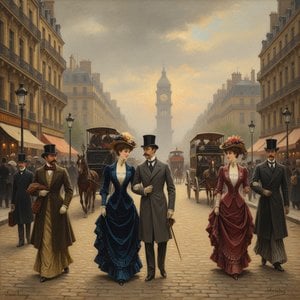
Jacques Joseph Tissot: A Chronicle of Parisian Life & Narrative Evolution
Explore the captivating world of Jacques Joseph Tissot, a master painter of Belle Époque society. Discover his realism, Impressionistic style, and lasting influence on art history. Learn more at ArtsDot.

The Gaze of a Changing World: Victorian Realism & Modern Life
Explore the captivating world of Victorian Realism! Discover genre painting's rise, social commentary in art, & masters like Fedotov and Wilkie. Expert analysis & high-quality reproductions at ArtsDot.