


 Visa i rummet
 Skicka
 Dela
Dela
 Detaljer
 Studentguide för konstverk

 Ladda ner
 Liknande objekt
 Röntgen
 Bildspel
 Besökstatistik
untitled (716)


 Läs mer
Giclée / Konsttryck
Giclée- eller canvasprint av museumskvalitet med snabb produktion och flexibla ytbehandlingsalternativ. ( Köp handmålat konstverk Byt till digital bildförsäljning)




P118B Skr10

P118H Skr10

P118W Skr10

P438Z Skr10

P508JH Skr12

P508YH Skr12

P805H Skr10

P805Z Skr10

P919BZ Skr10

P919G Skr10

P919XJ Skr10

P959ZH Skr10

P968JZ Skr12

W106C Skr8

W218G Skr10

W218JH Skr8

W218Y Skr10

W307PJ Skr10

W316G Skr10

W316PJ Skr8

W316Y Skr10

W398PJ Skr8

W4111J Skr10

W500HY Skr15

W500JH Skr15

W692G Skr12

W849H Skr8

W940BG Skr15

W953PJ Skr8




Välj bland våra förinställda storlekar som motsvarar konstverkets ursprungliga proportioner.

Ange den bredd och höjd du behöver, för att passa din ram eller din vägg. Ett tryck kan endast beskäras, aldrig göras större än bilden, vilket innebär att ett format med en annan formform leder till att en del av bilden går förlorad. Vi skickar en digital mockup för godkännande innan vi trycker något. Bilden som visas på denna sida visar inte den faktiska beskärningen — det är endast mockuppen som gör det.
Leverans över hela världen () på 2 veckor istället för standard 4/5 veckor. (23 oktober)

Fri expressfrakt över hela världen

Högkvalitativ linnecanvas

Fullständig fraktförsäkring

Garantier för återbetalning av tullavgifter

Garantier för exakt färgåtergivning

100 dagars returrätt vid fabrikationsfel

100% pengarna tillbaka-garanti

Mängdrabatt erbjuds
 Glasalternativet är endast tillgängligt i storlekar under 110 cm.

untitled (716)
Giclée / Konsttryck
Reproduktionsstorlek
-


Totalpris
Skr 615
Unveiling the Enigma: An Exploration of Moreau’s “Untitled (716)”
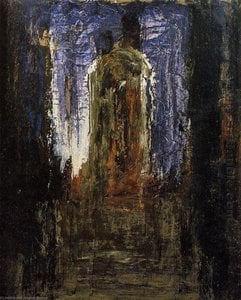
Gustave Moreau's "Untitled (716)" presents a profoundly unsettling and captivating vision, a quintessential example of the Symbolist movement’s fascination with the subconscious and the realms beyond rational understanding. Painted in 1898, just before his death, this portrait transcends mere representation; it is an immersion into a dreamscape populated by potent symbols and imbued with a palpable sense of unease. The subject, a man crowned with horns – a clear allusion to demonic or mythical figures – immediately commands attention, drawing the viewer into a world where the boundaries between reality and fantasy blur. Moreau’s masterful manipulation of color and form creates an atmosphere thick with mystery, inviting contemplation on themes of power, transgression, and the darker aspects of human nature.
A Symbolist Vision: Context and Influences
- The Rise of Symbolism: Moreau was a key figure in the burgeoning Symbolist movement, which arose as a reaction against the perceived superficiality of Realism and Impressionism. Symbolists sought to express inner emotions and spiritual truths through evocative imagery rather than objective observation.
- Mythological and Religious Sources: Moreau’s work is deeply rooted in classical mythology, religious iconography, and esoteric traditions. The horned figure echoes ancient depictions of demons and fallen angels, while the crown suggests a corrupted authority or a descent into darkness.
- Influence of Pre-Raphaelites: Like the Pre-Raphaelite Brotherhood, Moreau was interested in reviving medieval art and literature, particularly its symbolic richness. However, unlike the Pre-Raphaelites’ often romanticized depictions, Moreau's work is characterized by a darker, more unsettling tone.
Technical Mastery and Atmospheric Depth
Moreau’s technique is immediately recognizable – a deliberate layering of paint that creates an almost sculptural effect. He employed meticulous brushwork to build up textures and imbue the scene with a remarkable sense of depth. The yellowish hue dominating the background isn't merely a decorative choice; it contributes significantly to the painting's mood, evoking a feeling of decay, antiquity, and perhaps even spiritual corruption. The use of glazing techniques – applying thin layers of translucent paint over dried underlayers – allows light to penetrate deeply into the composition, enhancing the sense of volume and creating an ethereal glow around the central figure. The meticulous detail in the figures' clothing and the architectural elements further emphasizes Moreau’s commitment to a highly polished, almost jewel-like quality.
Decoding the Symbolism: Narrative and Interpretation
The composition itself is laden with symbolic meaning. The man holding the sword represents power, both destructive and potentially protective. His position beside another figure wearing a crown suggests a complex relationship of dominance and submission, or perhaps a struggle for control. The presence of two additional figures – one central and one to the right – adds further layers of ambiguity. These elements invite multiple interpretations, reflecting the Symbolist preoccupation with subjective experience and the inherent instability of meaning. Some scholars suggest connections to medieval bestiaries and alchemical symbolism, while others interpret the scene as a meditation on the duality of human nature—the conflict between good and evil within ourselves.
Emotional Resonance and Artistic Legacy
"Untitled (716)" remains a powerfully evocative work, capable of unsettling and captivating viewers even today. Moreau’s ability to translate psychological states into visual form is remarkable, creating an image that lingers in the mind long after viewing. This painting exemplifies Moreau's profound artistic vision and his enduring contribution to the Symbolist movement. A hand-painted reproduction offers a unique opportunity to experience the full impact of this enigmatic masterpiece, bringing its haunting beauty and symbolic depth into your own space.
Frågor och svar
Finns det en AR-förhandsvisning för "untitled (716)"?
"untitled (716)" av Gustave Moreau kan förhandsvisas på din egen vägg via konstverkets AR-förhandsvisning-sida med hjälp av förstärkt verklighet (AR) på en kompatibel enhet.
Hur knyter "untitled (716)" av Gustave Moreau samman Symbolist Painting med konstnärens hemland?
"untitled (716)" förenar Symbolist Painting-rörelsen med Frankrike genom sin skapares födelseplats.
Hur många personer ser "untitled (716)"?
Sidan Statistik för "untitled (716)" av Gustave Moreau presenterar statistik över publika besök: månatliga besök för detta konstverk, en jämförelse med konstnärens mest sedda verk samt varifrån besökarna kommer.
Liknande konstverk




Om konstnären
A Dream Weaver of Symbolism: The Life and Art of Gustave Moreau
Gustave Moreau, en namn synonymt med den eteriska skönheten och de gåtfulla djupen av symbolistisk målning, steg fram ur 1800-talets Paris som en unik konstnärlig röst. Född 1826 i en borgerskapfamilj – hans far arkitekt och archivarie – var Moreaus tidiga liv genomsyrade av intellektuell nyfikenhet och estetisk känslighet. Redan i unga år visade han en anmärkningsvärd talang för teckning, fostrad genom traditionell akademisk utbildning vid École des Beaux-Arts under figurer som François-Édouard Picot. Men Moreaus konstnärliga väg skulle avvika skarpt från de rådande realistiska och impressionistiska strömningarna av sin tid. Han var inte intresserad av att fånga flyktiga ögonblick eller objektiv verklighet; istället sökte han att låsa upp de dolda rikena av myt, religion och den mänskliga psykén genom ett djupt personligt och symboliskt visuellt språk. Hans resa var en av inåtvänd utforskning, översättande subjektiva känslor och andliga längtan till duken med en besatt uppmärksamhet på detaljer och en livlig, ofta överflödig palett.The Forge of Imagination: Influences and Artistic Development
Moreaus konstnärliga utveckling föddes inte i ett vakuum. Medan han avvisade de dominerande trenderna i sin tid, drog han inspiration från olika källor. Den dramatiska användningen av färg och exotiska motiv som fanns i Eugène Delacroix’s verk resonerade djupt med honom, vilket antände en passion för berättarperspektiv fyllt av emotionell intensitet. Han beundrade också renässansmästare som Michelangelo och Leonardo da Vinci, beundrade deras behärskning av komposition, anatomi och psykologisk insikt. Men Moreau kopierade inte bara dessa konstnärer; han syntetiserade deras inflytande till något helt nytt. Hans resor till Italien på 1850-talet visade sig vara avgörande, vilket fördjupade honom i antikens och renässanskonstens konst, vilket gav en rikedom av motiv och stilistiska ledtrådar som skulle befolka hans framtida verk. Han kopierade noggrant gamla målningar, inte som en övning i replikering, utan som ett sätt att absorbera deras tekniker och låsa upp deras hemligheter. Denna dedikation till hantverk, kombinerat med hans växande intresse för mytologi och litteratur, lade grunden för hans unika konstnärliga vision.A World of Symbols: Themes and Techniques
Moreaus målningar är inte bara illustrationer av myter eller bibliska berättelser; de är komplexa allegorier som bjuder in till eftertanke och tolkning. Han grävde i berättelser som Salomes, Orpheus, Jupiter och Semele och otaliga andra, inte för att berätta dem bokstavligt talat, utan för att utforska deras underliggande psykologiska och andliga sanningar. Hans dukar är fyllda med symboliskt motiv – ormar som representerar lockelse, juveler som signalerar jordiska önskningar och figurer som uttrycker abstrakta koncept som sorg, förlust eller upplärning. Han skapade skickligt en drömlik atmosfär genom invecklad detaljrikedom, rika texturer och ofta ett kuslig samspel mellan ljus och skugga. Moreaus teknik kännetecknades av besatt lagerfärgning, vilket skapade ytor som skimrar med iriserande färger och väcker en känsla av övernaturlig skönhet. Hans användning av bladguld förstärkte detta effektfullt och lånade hans verk en bysantinsk kvalitet som understryker deras andliga dimension. Han var inte intresserad av att fånga realistiska texturer eller perspektiv; istället prioriterade han den uttrycksfulla kraften hos färg och form för att förmedla stämning och mening.Notable Works and Historical Significance
Moreau’s oeuvre is vast and varied, encompassing over 8,000 paintings, watercolors, and drawings. His most celebrated works include *Salome Dancing before Herod* (1876), a mesmerizing depiction of the biblical tale that showcases his opulent style and fascination with mythological narratives; *Jupiter and Semele*, a dramatic portrayal of Greek mythology emphasizing composition and color; and numerous interpretations of Orpheus, each imbued with personal symbolism. Moreau’s work exerted a significant influence on subsequent generations of artists, particularly during the Symbolist movement. He encouraged his students to embrace imagination, symbolism, and individual expression, urging them to break free from conventional artistic norms. Although initially met with mixed reactions, he became a central figure in the Symbolist movement, shaping its aesthetic direction and inspiring countless artists. Gustave Moreau’s Musée Gustave Moreau, housed within his former studio and home in Paris, stands as a testament to his enduring legacy—a sanctuary where visitors can immerse themselves in the captivating world of this extraordinary artist. His paintings continue to resonate with audiences today, offering glimpses into the hidden depths of the human soul and reminding us of the power of art to transcend the boundaries of reality.Influences on Later Artists
Moreau’s impact extended far beyond his own lifetime. He is considered a key influence on artists such as Henri Matisse and Georges Rouault, who admired his use of color, symbolism, and evocative imagery. His emphasis on psychological depth and emotional expression paved the way for later movements in modern art, demonstrating the lasting relevance of his artistic vision.
Gustave Moreau
1826 - 1898 , Frankrike
Snabbfakta
- Artistic Movement Or Style: Symbolism
- Artists Or Movements Influenced By This Artist:
- Matisse
- Rouault
- Artists Who Influenced This Artist:
- Delacroix
- Michelangelo
- Leonardo
- Date Of Birth: 6 april 1826
- Date Of Death: 18 april 1898
- Full Name: Gustave Moreau
- Nationality: Fransk
- Notable Artworks:
- Salome
- Jupiter
- Orpheus
- Apparition
- Desdemona
- Place Of Birth: Paris, Frankrike
Relaterade artiklar

Echoes of Time: Exploring the Enduring Appeal & Historical Context of Vintage Art Prints
Explore the captivating world of vintage art prints! Discover their history, collecting tips & enduring appeal. Expert insights on chromolithography and building a legacy collection with ArtsDot.

The Enduring Legacy of Fine Art Prints: Technique, History & Aesthetic Impact
Explore the rich history & techniques of fine art prints. Discover investment potential, assess authenticity, and learn how to preserve your collection with expert guidance. Trusted insights for discerning collectors.

Gustave Moreau: Symbolism's Enigmatic Visionary & Precursors of Modern Fantasy Art
Explore the captivating world of Gustave Moreau, the leading Symbolist painter. Discover his iconic masterpieces, influences, and lasting legacy. Expert analysis for collectors & art enthusiasts.

Giclée Prints: Archival Quality & Aesthetic Nuances for the Discerning Collector
Explore the world of giclée prints with ArtsDot. Learn about archival quality, aesthetic nuances & investment potential. Expert guidance for discerning art collectors seeking museum-quality reproductions and lasting value.
The Enduring Legacy of Printmaking: Techniques, Themes & Artistic Innovation Across Centuries
Explore the rich history of printmaking with ArtsDot. Discover techniques from intaglio to lithography, learn about collecting valuable prints & find museum-quality reproductions. Expert insights for art enthusiasts and collectors.


