

 Förhandsvisa
 Skicka
 Dela
Dela
 Visa detaljer
 Guide
Guide

 Ladda ner
 Liknande objekt
 Röntgen
 Bildspel
 Frågor och svar
 Statistik
Strips


 Visa mer
Konstverket som visas på denna sida skyddas av upphovsrättslagen, vilket innebär att vi inte lagligt kan skapa eller sälja en identisk reproduktion. Detta skydd upprätthålls genom internationella avtal såsom den Bernkonventionen och genom nationella lagar, inklusive de som fastställs av Amerikansk upphovsrättslag – Titel 17. Alla rättigheter förbehållna. Återgivning av konstverk är förbjuden utan skriftligt tillstånd från WahooArt.
Denna metod följer fullt ut upphovsrättsliga regler eftersom den inte innebär kopiering eller duplicering av det skyddade konstverket. Istället är det en kreativ nytolkning – en ny målning som är influerad av originalet men inte identisk med det.
Giclée / Konsttryck
Giclée- eller canvasprint av museumskvalitet med snabb produktion och flexibla ytbehandlingsalternativ. ( Beställ handmålad reproduktion Byt till digital bild)




P118B Skr10

P118H Skr10

P118W Skr10

P438Z Skr10

P508JH Skr12

P508YH Skr12

P805H Skr10

P805Z Skr10

P919BZ Skr10

P919G Skr10

P919XJ Skr10

P959ZH Skr10

P968JZ Skr12

W106C Skr8

W218G Skr10

W218JH Skr8

W218Y Skr10

W307PJ Skr10

W316G Skr10

W316PJ Skr8

W316Y Skr10

W398PJ Skr8

W4111J Skr10

W500HY Skr15

W500JH Skr15

W692G Skr12

W849H Skr8

W940BG Skr15

W953PJ Skr8




Välj bland våra förinställda storlekar som motsvarar konstverkets ursprungliga proportioner.

Ange den bredd och höjd du behöver för att passa din ram eller vägg. Ett tryck kan endast beskäras, aldrig göras större än originalbilden, vilket innebär att ett format med en annan proportion leder till att en del av bilden går förlorad. Vi skickar en digital mockup för godkännande innan vi påbörjar tryckningen. Bilden som visas på denna sida visar inte den faktiska beskärningen — det är endast mockuppen som gör det.
Leverans över hela världen () på 2 veckor istället för standard 4/5 veckor. (7 november)

Fri expressfrakt över hela världen

Högkvalitativ linnecanvas

Fullständig fraktförsäkring

Garantier för återbetalning av tullavgifter

Garantier för exakt färgåtergivning

100 dagars returrätt (endast vid fel)

100% pengarna tillbaka-garanti

Mängdrabatt erbjuds
 Glasalternativet är endast tillgängligt i storlekar under 110 cm.

Strips
Giclée / Konsttryck
Storlek på reproduktion
-


Slutgiltigt pris
Skr 629
Frågor och svar
Hur förhåller sig stilen i "Strips" till sin skapares epok?
"Strips" av Gordon Bennett Ao tillhör Contemporary Folk Art-rörelsen och skapades under sin konstnärs Samtidskonst-era.
När skapades "Strips"?
"Strips" av Gordon Bennett Ao skapades år 2005.
Vilket nationellt ursprung ligger bakom Contemporary Folk Art i "Strips"?
"Strips" skapades av Gordon Bennett Ao, född i Australien, inom Contemporary Folk Art-rörelsen. Konstnärens ursprung knyter verket till Contemporary Folk Art så som det utövades av konstnärer från Australien.
Liknande konstverk


Konstnärsbiografi
en banbrytande gestalt inom australisk urfolkskonst
Gordon Bennett Ao, en framstående australisk konstnär med både aboriginska och anglo-keltiska rötter, lämnade ett outplånligt avtryck på den samtida konstscenen. Född den 9 oktober 1955 i Monto, Queensland, var Bennetts liv ett vittnesbörd om hans mångfacetterade identitet, något han vågade uttrycka genom sin konst. Hans resa började på allvar efter att han vid 32 års ålder lämnade sitt arbete på Telecom Australia för att helt och hållet ägna sig åt det konstnärliga skapandet, en övergång som markerade början på en oerhört produktiv karriär. Hans konstnärliga stil, känd för att vara både livfull och tankeväckande, utmanade djupt rotade föreställningar om identitet, historia och hur kunskap konstrueras. Genom ett djärvt men samtidigt humanistiskt tillvägagångssätt lyckades hans verk resonera hos en publik över hela världen. Som en ledande gestalt inom samtida australisk urfolkskonst speglade Bennetts verk inte bara hans eget arv, utan banade också väg för kommande generationer av aboriginska konstnärer.noterbara verk och utställningar
Även om den exakta listan över Bennetts mest framstående verk inte presenteras här, är hans bidrag till konstvärlden väl dokumenterade på ArtsDot.com. Vissa av hans verk kan återfinnas under sektionen art movements 1/2, vilket erbjuder en fascinerande inblick i hans konstnärliga evolution.arv och inflytande
Bennetts inflytande sträcker sig långt bortom hans egen generation och har inspirerat nya konstnärer att utforska teman kring identitet och kulturarv. Hans livsverk har säkerställt att den australiska urfolkskonsten förblir relevant och erkänd på en global skala.att minnas Gordon Bennett Ao
Trots att Bennett gick bort den 3 juni 2014, lever hans arv vidare. För dem som är intresserade av att utforska mer av hans produktion eller fördjupa sig i den australiska urfolkskonstens värld, erbjuder prints that you can afford på ArtsDot.com en unik möjlighet att uppleva hans konst på ett påtagligt och prisvärt sätt.- viktigaste lärdom: Gordon Bennett AOs liv och verk fungerar som en kraftfull påminnelse om den inverkan en enskild konstnär kan ha på det bredare kulturella landskapet.
- framtida riktningar: i takt med att vi rör oss framåt är det avgörande att fortsätta fira och stödja konstnärer som, likt Bennett, utmanar våra perceptioner och vidgar vår förståelse av världen.
slutsats
Gordon Bennett Ao:s anmärkningsvärda resa, även om den blev för tidigt avbruten, har lämnat ett outplånligt märke på konstvärlden. Hans arv fungerar som en fyrbåk för framtida generationer och inspirerar nya röster och visioner i det ständ föränderliga landskapet av samtida australisk urfolkskonst.
Gordon Bennett Ao
1955 - 2014 , Australien
Kortfakta
- Artistic Movement Or Style: Narrativ realism
- Artists Or Movements Influenced By This Artist: ['Social realism']
- Artists Who Influenced This Artist: ['Charles White']
- Date Of Birth: 1955
- Date Of Death: 2014
- Full Name: Kerry James Marshall
- Nationality: Amerikansk
- Notable Artworks:
- Untitled (The Figure)
- Small Arches
- Pastimes
- Place Of Birth: Mount Ommanoo, Australien
Relaterade artiklar

Gordon Parks: A Poetic Lens on American Life – Photography, Social Justice & Storytelling
Explore the profound work of Gordon Parks, a groundbreaking photographer who documented American life with unparalleled empathy and artistry. Discover his iconic images & lasting impact on social justice through Life magazine & beyond.
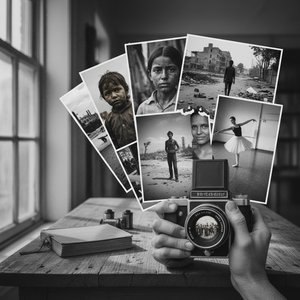
Witnessing History: Documentary Photography as an Art Movement
Explore the powerful history of documentary photography – from its origins to contemporary masters like Gordon Parks. Discover how this art form shapes our understanding of society and witness pivotal moments in time.

Sir John Watson Gordon: A Study in Scottish Landscape Painting & Tonal Impressionism
Explore the captivating portraits of Sir John Watson Gordon, a leading Scottish master. Discover his evolution from neoclassical style to atmospheric Tonalism and influence on 19th-century British art. Learn about his iconic sitters & legacy.