

 Förhandsvisa
 Skicka
 Dela
Dela
 Visa detaljer
 Guide
Guide

 Ladda ner
 Liknande objekt
 Röntgen
 Bildspel
 Q&A
Q&A Statistik
Hercules and Cacus

- 207.0 x 142.0 cm


 Visa mer
Giclée / Konsttryck
Giclée- eller canvasprint av museumskvalitet med snabb produktion och flexibla ytbehandlingsalternativ. ( Beställ handmålad reproduktion Byt till digital bild)




P118B Skr10

P118H Skr10

P118W Skr10

P438Z Skr10

P508JH Skr12

P508YH Skr12

P805H Skr10

P805Z Skr10

P919BZ Skr10

P919G Skr10

P919XJ Skr10

P959ZH Skr10

P968JZ Skr12

W106C Skr8

W218G Skr10

W218JH Skr8

W218Y Skr10

W307PJ Skr10

W316G Skr10

W316PJ Skr8

W316Y Skr10

W398PJ Skr8

W4111J Skr10

W500HY Skr15

W500JH Skr15

W692G Skr12

W849H Skr8

W940BG Skr15

W953PJ Skr8




Välj bland våra förinställda storlekar som motsvarar konstverkets ursprungliga proportioner.

Ange den bredd och höjd du behöver för att passa din ram eller vägg. Ett tryck kan endast beskäras, aldrig göras större än originalbilden, vilket innebär att ett format med en annan proportion leder till att en del av bilden går förlorad. Vi skickar en digital mockup för godkännande innan vi påbörjar tryckningen. Bilden som visas på denna sida visar inte den faktiska beskärningen — det är endast mockuppen som gör det.
Leverans över hela världen () på 2 veckor istället för standard 4/5 veckor. (2 november)

Fri expressfrakt över hela världen

Högkvalitativ linnecanvas

Fullständig fraktförsäkring

Garantier för återbetalning av tullavgifter

Garantier för exakt färgåtergivning

100 dagars returrätt (endast vid fel)

100% pengarna tillbaka-garanti

Mängdrabatt erbjuds
 Glasalternativet är endast tillgängligt i storlekar under 110 cm.

Hercules and Cacus
Giclée / Konsttryck
Storlek på reproduktion
-


Slutgiltigt pris
Skr 622
The Raw Majesty of Hendrick Goltzius’s Hercules and Cacus
Hendrick Goltzius's “Hercules and Cacus,” painted in 1613, isn’t merely a depiction of a legendary hero; it’s a visceral embodiment of strength, conflict, and the enduring power of narrative. This monumental work, now residing within the Palazzo Vecchio in Florence, immediately commands attention with its dynamic composition and dramatic chiaroscuro – the masterful use of light and shadow that sculpts both form and emotion. Goltzius, a pivotal figure in the Northern Mannerist movement, elevates a classical tale to an intensely human level, capturing not just the physical prowess of Hercules but also the palpable tension of his struggle against the monstrous Cacus.
A Masterclass in Technique: The Swelling Line and Baroque Drama
Goltzius’s genius lies not just in his subject matter but in the extraordinary technical skill he brings to bear. He was a pioneer of the “swelling line,” a technique that allowed him to manipulate the thickness and texture of lines with remarkable precision, creating an illusion of depth and volume from a distance. Observe how this is particularly evident in Hercules’s club – it appears to swell outwards as if poised for impact, conveying both its weight and the impending force of his blow. Furthermore, he employed the “dot and lozenge” technique, meticulously placing tiny dots within larger lozenge shapes to build up subtle gradations of tone, adding incredible realism to the textures of the figures’ skin, clothing, and the rough-hewn cave walls. This meticulous attention to detail elevates the painting beyond a simple illustration; it becomes a study in light, shadow, and material.
- The Swelling Line: Creates an illusion of volume and weight.
- Dot and Lozenge Technique: Adds nuanced shading and texture.
Historical Context: Florence, Medici Power, and Artistic Rivalry
“Hercules and Cacus” is deeply embedded within the turbulent political landscape of 16th-century Florence. Commissioned during a period of shifting power between the Medici family and the republican council, the sculpture became a potent symbol – Hercules representing the strength and resilience of the victorious Medici, while Cacus embodied the vanquished opposition. The story’s narrative was deliberately manipulated to serve this political agenda; initially intended as a celebration of Florentine liberty, it was later repurposed by the Medici to assert their dominance. The work's creation was fraught with artistic rivalries too – Vasari and Cellini, both prominent artists and critics, offered scathing critiques of Bandinelli’s design, highlighting the perceived flaws in his execution and subtly undermining his reputation.
Note: The sculpture’s history is intertwined with Florentine politics and artistic debates.Symbolism and Emotional Resonance
Beyond its political significance, “Hercules and Cacus” resonates profoundly on an emotional level. The scene captures a pivotal moment of intense struggle – the hero poised to deliver the decisive blow against his monstrous adversary. The dynamic composition, with Hercules’s body coiled in anticipation and Cacus unleashing a torrent of fire, generates a palpable sense of drama and urgency. The painting isn't simply about physical strength; it speaks to themes of courage, determination, and the triumph of good over evil. The raw energy of the scene, combined with Goltzius’s masterful technique, creates an image that is both visually arresting and emotionally compelling – a testament to the enduring power of myth and art.
Frågor och svar
Vilken är den dominerande nyansen i "Hercules and Cacus" av Goltzius, Hendrick?
Den dominerande nyansen i "Hercules and Cacus" av Goltzius, Hendrick är Ochre to Sepia. Nyansen utgör den underliggande tonen i färgpaletten.
Var kan jag hitta statistik för "Hercules and Cacus" av Goltzius, Hendrick?
Sidan Besöksstatistik för "Hercules and Cacus" av Goltzius, Hendrick presenterar statistik över publika besök: månatliga besök för detta konstverk, en jämförelse med konstnärens mest sedda verk samt varifrån besökarna kommer.
Vilken är den emotionella tonen i "Hercules and Cacus" av Goltzius, Hendrick?
"Hercules and Cacus" av Goltzius, Hendrick förmedlar en Powerful emotionell ton.
Liknande konstverk


Konstnärsbiografi
Hendrick Goltzius: Life and Legacy
Early Life and Training
- Born: 1558 in Bracht, near Viersen, North Rhine-Westphalia, Germany.
- Goltzius’s artistic journey began with training under his father, learning the craft of painting on glass.
- A pivotal moment came when he received instruction in engraving from Dirck Volckertszoon Coornhert in Cleves. This foundational training would shape his future mastery.
Artistic Development and Style
- Goltzius quickly rose to prominence as the leading Dutch engraver of the early Baroque period, also known as Northern Mannerism.
- His work is characterized by sophisticated technique, technical mastership, and a sense of “exuberance” in its compositions.
- Innovative Techniques: He pioneered the use of the "swelling line," manipulating lines to create tonal effects from a distance. He also developed the "dot and lozenge" technique for refined shading.
- Initially influenced by the style of Cornelis van Haarlem, Goltzius moved towards more dynamic and expressive forms.
Notable Works
- The Dragon Devouring the Companions of Cadmus: A print showcasing his mastery over engraving and dramatic storytelling.
- Lot and His Daughters: An example of his work held in the collection of the Rijksmuseum, demonstrating his skill in depicting complex narratives.
- Numerous portraits and mythological scenes further demonstrate his versatility and technical prowess.
Influences and Legacy
- Influenced By: Dirck Volckertszoon Coornhert played a crucial role in Goltzius’s early development as an engraver.
- Goltzius, in turn, significantly influenced subsequent generations of Dutch and European printmakers.
- As noted by A. Hyatt Mayor, he “was the last professional engraver who drew with the authority of a good painter and the last who invented many pictures for others to copy.”
- His innovative techniques and masterful engravings left an indelible mark on the art world.
Historical Significance
- Goltzius’s work reflects the artistic climate of the late 16th and early 17th centuries, bridging the gap between Mannerism and Baroque styles.
- His prints were widely circulated and admired, contributing to the dissemination of artistic ideas throughout Europe.
- Museum Collections: His works are featured in prominent museums such as Museum Boijmans Van Beuningen (Rotterdam), Rijksmuseum Amsterdam, Blanton Museum of Art (Austin), and The Metropolitan Museum of Art (New York City).
- He remains a celebrated figure in the history of printmaking, recognized for his technical skill, artistic vision, and lasting impact.

Goltzius, Hendrick
1558 - 1617 , Germany
Kortfakta
- Name: Hendrick Goltzius
- Movement:
- Northern Mannerism
- Early Baroque
- Birth Date: 1558
- Death Date: 1617
- Birth Place: Bracht, Germany
- Nationality: Dutch
- Date Of Birth: 1558
- Date Of Death: 1617
- Influenced By: Dirck Volckertszoon Coornhert
- Notable Works:
- The Dragon Devouring the Companions of Cadmus
- Lot and his Daughters
- Place Of Birth: Bracht, Germany
Relaterade artiklar

The Enduring Form: Exploring Themes & Techniques in Sculpture Across Historical Periods
Explore the rich history of sculpture from ancient masterpieces to contemporary innovations. Discover key techniques, influential artists & investment potential for discerning art collectors.

10 Bronsskulpturer Som Förändrade Konsthistorien – Upptäck Mästerverken
Utforska 10 legendariska bronsmästerverk som revolutionerade konsten! Lär känna Michelangelo, Rodin och andra ikoniska skulptörer. Hitta inspiration & museumskvalitativa konsttryck på ArtsDot.com – för en tidlös inredning.

The Enduring Form: Sculpture Across History, Technique & Emotional Resonance
Explore the rich history of sculpture with ArtsDot. Discover key techniques, influential artists & investment potential for discerning collectors. Expert insights into valuing and collecting timeless masterpieces.

Bronsålderns Mästerverk: 10 Skulpturer Som Förändrade Konsthistorien | ArtsDot
Upptäck 10 legendariska brons skulpturer som revolutionerade konsthistorien! Lär känna Rodin, Michelangelo och andra mästare. Köp museumkvalitativa repliker & hitta inspiration för din inredning på ArtsDot.com.
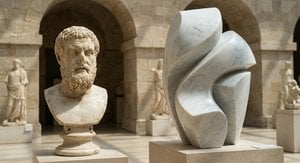
The Enduring Allure of Marble in Art History: From Classical Sculpture to Modern Abstraction
Explore the captivating history of marble sculpture from ancient Greece to modern art. Discover renowned artists like Canova & Michelangelo, carving techniques, and investment insights at ArtsDot.