

 Visa i rummet
 Skicka
 Dela
Dela
 Detaljer
 Studentguide för konstverk

 Ladda ner
 Liknande objekt
 Röntgen
 Bildspel
 Besökstatistik
Birds


 Läs mer
Handgjord oljereproduktion
Handmålad olja på duk i din valda storlek och ram, tillverkad efter beställning av våra konstnärer. ( Byt till tryckta exemplar Byt till digital bildförsäljning)




P118B $10

P118H $10

P118W $10

P438Z $10

P508JH $12

P508YH $12

P805H $10

P805Z $10

P919BZ $10

P919G $10

P919XJ $10

P959ZH $10

P968JZ $12

W106C $8

W218G $10

W218JH $8

W218Y $10

W307PJ $10

W316G $10

W316PJ $8

W316Y $10

W398PJ $8

W4111J $10

W500HY $15

W500JH $15

W692G $12

W849H $8

W940BG $15

W953PJ $8




Välj bland våra förinställda storlekar som motsvarar konstverkets ursprungliga proportioner.

Du kan ange egna mått för att passa en specifik ram eller yta. Om den valda storleken inte matchar originalbildens proportioner kommer vi antingen att beskära konstverket eller utöka målningen med ytterligare handmålade element. En digital skiss skickas till dig för godkännande innan produktionen påbörjas.
Observera att förhandsvisningen på skärmen inte återspeglar den faktiska beskärningen eller utökningen. Endast skissen visar den slutgiltiga kompositionen korrekt.
Även om anpassade storlekar är möjliga, rekommenderar vi att du väljer en dimension från den fördefinierade listan för att bevara originalproportionerna.
Efter beställning kommer ArtsDot.com team att mejla kunden för instruktioner och tillhandahålla en skissförhandsvisning
Leverans över hela världen () på 3–4 veckor istället för standard 5 veckor. (26 september). Inga kompromisser med kvaliteten.

Fri expressfrakt över hela världen

Högkvalitativ linnecanvas

Fullständig fraktförsäkring

Garantier för återbetalning av tullavgifter

Garantier för exakt färgåtergivning

100 dagars returrätt vid fabrikationsfel

100% pengarna tillbaka-garanti

Mängdrabatt erbjuds
 Glasalternativet är endast tillgängligt i storlekar under 110 cm.

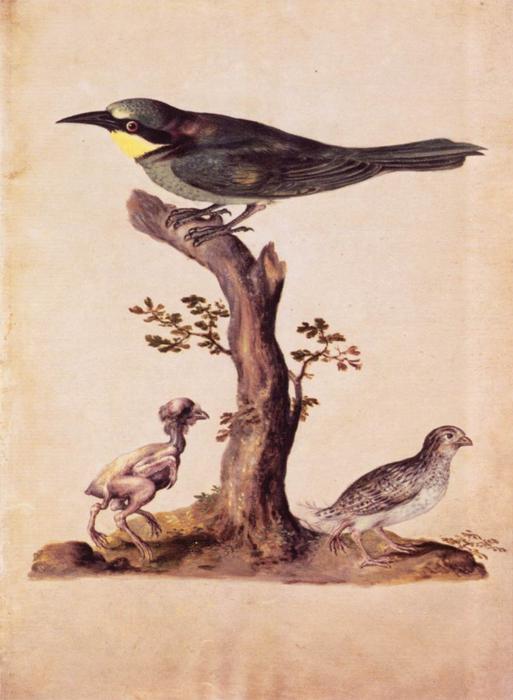
Birds
Tryckteknik
Reproduktionsstorlek
-


Totalpris
$ 263
Giuseppe Arcimboldo’s “Birds”: A Renaissance Masterpiece of Illusion and Symbolism
Giuseppe Arcimboldo (1527 – 1593), a Milanese artist who defied convention and captivated the intellectual fervor of his era, stands as one of the most singular figures in Renaissance art. While contemporaries celebrated realism and anatomical accuracy—a trend championed by artists like Leonardo da Vinci—Arcimboldo embarked on an audacious path: constructing portraits entirely from meticulously arranged objects – fruits, vegetables, flowers, books, even musical instruments. This technique wasn’t merely a visual gimmick; it was a profound meditation on the human condition, infused with symbolism that resonated deeply within the Renaissance worldview and continues to intrigue audiences today.
- The Composition: Arcimboldo's “Birds,” painted around 1566 for Rudolf II, Holy Roman Emperor, presents a striking image of a falcon perched upon a tree branch. The artist’s masterful manipulation of perspective and texture creates an illusion of depth, drawing the viewer into a meticulously crafted tableau.
- Technique: Executed in gouache on parchment, Arcimboldo employed a technique known as *trompe l'œil*, or “fooling the eye.” He painstakingly layered pigments to achieve remarkable realism—particularly evident in the feathers and bark of the tree—creating an astonishing illusion that challenges our perception of reality.
- Symbolism: Beyond its visual splendor, "Birds" is laden with symbolic meaning. The choice of avian imagery – specifically a gyrfalcon – served as a deliberate reference to Rudolf II’s imperial lineage and prowess. Furthermore, the inclusion of elements like gourds, pears, apples, and musical instruments underscored themes of fertility, wisdom, and artistic patronage—values central to the humanist ideals prevalent during Arcimboldo's time.
- Historical Context: The painting emerged during Rudolf II’s reign, a period marked by an unprecedented embrace of scientific inquiry and artistic experimentation. Arcimboldo’s work exemplifies this spirit of innovation, reflecting the Renaissance fascination with blending art and science to explore the mysteries of nature and human existence.
The Habsburg court recognized Arcimboldo's genius, commissioning him to create a series of fantastical portraits that celebrated Rudolf II’s intellect and ambition. Unlike many artists of his time who adhered to established artistic conventions, Arcimboldo dared to challenge expectations, forging a unique visual language that continues to inspire admiration and contemplation centuries later.
- Further Research: Explore Giuseppe Arcimboldo's oeuvre at ArtsDot for high-quality reproductions and insights into his artistic process.
- Related Articles: Delve deeper into Mannerism’s Masters: 10 Artworks That Redefined Renaissance Style | ArtsDot here to understand the broader artistic movement that shaped Arcimboldo's vision.
- Additional Resources: Discover more about Rudolf II’s patronage of the arts and his influence on European culture here.
“Birds” stands as a testament to Arcimboldo's unparalleled creativity—a captivating blend of illusion, symbolism, and artistic virtuosity that secures its place among the most enduring masterpieces of the Renaissance.
Liknande konstverk


Om konstnären
A World Reimagined: The Enigmatic Art of Giuseppe Arcimboldo
Giuseppe Arcimboldo, a name that conjures images both whimsical and profoundly strange, remains one of the most singular figures in Renaissance art. Born in Milan in 1527, his career unfolded against the backdrop of a Europe steeped in intellectual ferment, religious upheaval, and an insatiable curiosity about the natural world. While initially recognized for more conventional works – frescoes adorning cathedrals and portraits adhering to established courtly standards – Arcimboldo’s enduring legacy rests upon a series of composite heads constructed entirely from meticulously arranged objects: fruits, vegetables, flowers, books, even musical instruments. These weren't mere playful exercises in visual trickery; they were complex allegories, imbued with symbolism that resonated deeply within the Renaissance worldview and continue to fascinate audiences today. His father, Biagio Arcimboldo, was an artist himself, providing young Giuseppe with early artistic training and likely influencing his initial foray into design work for stained glass windows and frescoes at Milan Cathedral beginning around 1549. This foundational experience honed his technical skill and eye for detail—qualities that would become hallmarks of his later, more unconventional creations.Early Life and Artistic Training
Giuseppe Arcimboldo’s formative years were marked by exposure to the artistic traditions of Milanese Mannerism – a style characterized by elongated figures, distorted perspectives, and an emphasis on decorative ornamentation. His father, Biagio Arcimboldo, was a respected craftsman and designer, specializing in stained glass windows and architectural embellishments, transmitting invaluable knowledge about pigment preparation, glazing techniques, and sculptural modeling to his son. This early training instilled in Giuseppe a meticulous attention to detail and a profound understanding of visual illusion—skills that would prove crucial to the development of his groundbreaking artistic style. Beyond formal instruction, Arcimboldo’s father fostered an appreciation for humanist scholarship and philosophical inquiry, shaping his intellectual outlook and encouraging him to contemplate the relationship between art and knowledge.Courtly Commissions and The Habsburg Influence
A pivotal moment in Arcimboldo's artistic trajectory arrived in 1562 when he was appointed court portraitist to Ferdinand I at the Habsburg court in Vienna. This appointment ushered in a period of prolific creativity and collaboration with successive Habsburg rulers – Maximilian II and Rudolf II – who recognized Arcimboldo’s exceptional talent and commissioned him for ambitious projects encompassing costume design, festival decorations, and the curation of imperial collections. The Habsburg court represented an epicenter of artistic innovation and intellectual discourse during the Renaissance, attracting artists from across Europe and fostering a climate conducive to experimentation. Arcimboldo skillfully navigated this complex environment, adapting his style to suit the tastes of his patrons while simultaneously pushing boundaries and challenging conventions. Rudolf II’s fascination with alchemy and esoteric sciences profoundly influenced Arcimboldo's artistic vision, prompting him to explore unconventional materials and techniques—a characteristic that distinguishes his oeuvre from more traditional portraiture.The Birth of Composite Heads: A Revolutionary Technique
Arcimboldo’s signature achievement – the creation of composite heads – emerged not as a spontaneous whim but as a gradual evolution rooted in Renaissance artistic traditions. Artists like Andrea Mantegna had previously employed *trompe l'oeil* effects to deceive the eye and create illusions of depth, blurring the distinction between reality and representation. Arcimboldo skillfully synthesized these techniques with his mastery of sculptural modeling and decorative ornamentation, transforming ordinary objects – fruits, vegetables, flowers, books, musical instruments – into astonishingly realistic portraits. This innovative approach demanded an unparalleled level of technical skill and artistic imagination—a testament to Arcimboldo’s genius as a visual artist. The resulting images are not merely aesthetically pleasing; they serve as powerful allegories conveying complex ideas about identity, status, and the human condition.Legacy and Influence: Surrealism's Unexpected Patron
Despite his considerable success during his lifetime, Arcimboldo’s artistic reputation waned in the decades following his death in 1593—largely due to neglect by art historians who initially dismissed his work as mere eccentricity. However, a resurgence of interest in Arcimboldo’s oeuvre occurred in the 20th century, fueled by the burgeoning Surrealist movement. Artists like Salvador Dalí recognized in Arcimboldo a kindred spirit – a visionary who dared to challenge conventional perceptions and explore the subconscious through unexpected juxtapositions of imagery. Dalí famously declared Arcimboldo “the father of Surrealism,” acknowledging his pioneering use of symbolism and illusion as precursors to the movement’s aesthetic principles. Arcimboldo's influence extended beyond Surrealism, inspiring artists across diverse disciplines—from printmaking to sculpture—to embrace unconventional materials and techniques and to reimagine the boundaries of artistic representation. Today, Giuseppe Arcimboldo is celebrated as a pivotal figure in art history – a precursor to Surrealism whose enduring vision continues to captivate audiences worldwide. His paintings are housed in prestigious museums such as the Kunsthistorisches Museum in Vienna and the Louvre in Paris—ensuring that his singular contribution to Renaissance art will endure for centuries to come.
Giuseppe Arcimboldo
1527 - 1593 , Italien
Snabbfakta
- Artistic Movement Or Style: Mannerism, Surrealism
- Artists Or Movements Influenced By This Artist: ['Salvador Dalí']
- Artists Who Influenced This Artist: ['Leonardoskolan']
- Date Of Birth: 5 april 1527
- Date Of Death: 11 juli 1593
- Full Name: Giuseppe Arcimboldo
- Nationality: Italienare
- Notable Artworks:
- De fyra årstiderna
- Vertumnus
- The Librarian
- Place Of Birth: Milan, Italien
Relaterade artiklar

Feathered Visions: A Historical & Artistic Exploration of Birds in Painting
Explore the rich history of birds in painting! Discover symbolism, artistic movements & master artists like Audubon. High-quality reproductions available at ArtsDot.

John Gould: A Life Immersed in Avian Illustration – Biodiversity, Scientific Precision, and Artistic Legacy
Explore the life & legacy of John Gould, pioneering ornithologist & artist. Discover his stunning bird illustrations, the impact of chromolithography, and investment opportunities for collectors. Learn more now!
William Michael Harnett: Still Life, Realism & the American Pursuit of Materiality
Explore the captivating still lifes of William Michael Harnett, a master of American realism and trompe l'oeil painting. Discover his technique, legacy & the cultural context behind his iconic works.

Charles Bird King: Capturing Native American Dignity Through Portraiture & Cultural Exchange
Explore the captivating portraits of Charles Bird King, renowned for his depictions of Native American leaders. Discover the historical context, artistic techniques, and collecting value of these significant 19th-century artworks.

John James Audubon: A Life Immersed in Ornithological Art & the American Wilderness
Explore the life & art of John James Audubon, pioneer of ornithological illustration! Discover his stunning 'Birds of America' watercolors and complex legacy. Hand-painted reproductions available at ArtsDot.


