

 Förhandsvisa
 Skicka
 Dela
Dela
 Visa detaljer
 Guide
Guide

 Ladda ner
 Liknande objekt
 Röntgen
 Bildspel
 Frågor och svar
 Statistik
Pedestal table, Kunstmuseum Basel


 Visa mer
Konstverket som visas på denna sida skyddas av upphovsrättslagen, vilket innebär att vi inte lagligt kan skapa eller sälja en identisk reproduktion. Detta skydd upprätthålls genom internationella avtal såsom den Bernkonventionen och genom nationella lagar, inklusive de som fastställs av Amerikansk upphovsrättslag – Titel 17. Alla rättigheter förbehållna. Återgivning av konstverk är förbjuden utan skriftligt tillstånd från WahooArt.
Denna metod följer fullt ut upphovsrättsliga regler eftersom den inte innebär kopiering eller duplicering av det skyddade konstverket. Istället är det en kreativ nytolkning – en ny målning som är influerad av originalet men inte identisk med det.
Giclée / Konsttryck
Giclée- eller canvasprint av museumskvalitet med snabb produktion och flexibla ytbehandlingsalternativ. ( Beställ handmålad reproduktion Byt till digital bild)




P118B Skr10

P118H Skr10

P118W Skr10

P438Z Skr10

P508JH Skr12

P508YH Skr12

P805H Skr10

P805Z Skr10

P919BZ Skr10

P919G Skr10

P919XJ Skr10

P959ZH Skr10

P968JZ Skr12

W106C Skr8

W218G Skr10

W218JH Skr8

W218Y Skr10

W307PJ Skr10

W316G Skr10

W316PJ Skr8

W316Y Skr10

W398PJ Skr8

W4111J Skr10

W500HY Skr15

W500JH Skr15

W692G Skr12

W849H Skr8

W940BG Skr15

W953PJ Skr8




Välj bland våra förinställda storlekar som motsvarar konstverkets ursprungliga proportioner.

Ange den bredd och höjd du behöver för att passa din ram eller vägg. Ett tryck kan endast beskäras, aldrig göras större än originalbilden, vilket innebär att ett format med en annan proportion leder till att en del av bilden går förlorad. Vi skickar en digital mockup för godkännande innan vi påbörjar tryckningen. Bilden som visas på denna sida visar inte den faktiska beskärningen — det är endast mockuppen som gör det.
Leverans över hela världen () på 2 veckor istället för standard 4/5 veckor. (5 november)

Fri expressfrakt över hela världen

Högkvalitativ linnecanvas

Fullständig fraktförsäkring

Garantier för återbetalning av tullavgifter

Garantier för exakt färgåtergivning

100 dagars returrätt (endast vid fel)

100% pengarna tillbaka-garanti

Mängdrabatt erbjuds
 Glasalternativet är endast tillgängligt i storlekar under 110 cm.

Pedestal table, Kunstmuseum Basel
Giclée / Konsttryck
Storlek på reproduktion
-


Slutgiltigt pris
Skr 630
A Fragmented World: Georges Braque’s “Pedestal Table”
Georges Braque's "Pedestal Table," painted in 1913 during the pivotal years of Synthetic Cubism, isn’t merely a still life; it’s an architectural puzzle rendered in oil on canvas. This work, currently residing within the Kunstmuseum Basel, offers a glimpse into the artist’s radical experimentation with space and perception – a deliberate dismantling of traditional representation to reveal the underlying structure of form itself. The painting immediately captivates with its seemingly chaotic arrangement: a round pedestal table dominates the composition, supporting an assortment of objects—brushes, palettes, tubes of paint, cylinders, and even fragments of text—all presented in a flattened, almost two-dimensional space. Yet, this apparent disorder is meticulously orchestrated; Braque employs geometric abstraction to build a complex, self-contained world, inviting the viewer to engage in a process of deciphering its visual language.
The stylistic hallmarks of Synthetic Cubism are powerfully evident. Unlike Analytic Cubism’s dissection into smaller, interlocking facets, this painting embraces brighter colors and introduces collage elements – a technique that would become increasingly prominent in Braque's later work. The muted palette—primarily browns, whites, and blacks—creates a sense of solidity and materiality, while the strategic use of color adds subtle dynamism. Notice how the ochre tones subtly shift across the surfaces, suggesting texture and depth despite the flattened perspective. The inclusion of letters and numbers scattered throughout the composition isn’t arbitrary; they disrupt the purely visual experience, forcing us to consider the painting as a hybrid of image and text – a deliberate blurring of boundaries between art and everyday life.
Deconstructing Reality: The Principles of Synthetic Cubism
Braque's exploration within Synthetic Cubism stemmed directly from his collaboration with Pablo Picasso. They were driven by a desire to move beyond the analytical deconstruction of form, pioneered in Analytic Cubism, towards a more integrated and evocative representation. This new approach sought to capture not just the appearance of objects but their essence – their underlying structure and spatial relationships. Braque’s “Pedestal Table” exemplifies this shift. The table itself isn't depicted as a realistic object; instead, it becomes a structural element within a larger, invented space. The overlapping planes and fragmented forms create an illusion of depth, suggesting that the painting is not merely a representation of objects but a construction of spatial relationships.
Crucially, Braque’s use of collage—incorporating elements like newspaper clippings or fabric – further challenged traditional notions of artistic authorship. This technique blurred the lines between painting and other media, reflecting a broader cultural shift towards experimentation and interdisciplinary approaches during this period. The inclusion of these seemingly unrelated fragments contributes to the painting's overall sense of dynamism and complexity, mirroring the fragmented nature of modern experience.
Symbolism and the Everyday: A Reflection of Modern Life
While ostensibly a still life, “Pedestal Table” is rich in symbolic potential. The objects arranged on the table—brushes, palettes, paint tubes—are directly related to the act of painting itself, suggesting that the work is both a representation of the artist’s studio and a meditation on the creative process. The presence of musical instruments – hinted at by fragments resembling sheet music – adds another layer of meaning, evoking notions of leisure, inspiration, and perhaps even the pursuit of harmony. The table itself, a ubiquitous object in domestic life, becomes a stage for this carefully constructed tableau.
Furthermore, the inclusion of text—letters and numbers—introduces an element of abstraction and invites interpretation. These fragments disrupt the purely visual experience, prompting us to consider the painting as a dialogue between image and language. Braque’s deliberate ambiguity encourages viewers to actively engage with the work, projecting their own meanings onto its fragmented surface. “Pedestal Table” isn't simply a depiction of objects; it’s an invitation to contemplate the relationship between art, reality, and the human experience.
A Reproduction for Your Space: Bringing Braque Home
ArtsDot offers meticulously crafted hand-painted reproductions of Georges Braque’s “Pedestal Table,” allowing you to bring this iconic work into your own home or office. Our skilled artists replicate Braque's distinctive style and nuanced color palette with exceptional precision, ensuring that the reproduction captures the painting’s original depth and complexity. Available in a range of sizes and canvas materials, our reproductions provide an authentic representation of this groundbreaking artwork, making it accessible to art lovers and collectors alike.
Whether you appreciate Braque's pioneering contributions to Cubism or simply admire his masterful use of form and color, a ArtsDot reproduction of “Pedestal Table” is a beautiful addition to any collection. It’s more than just a print; it’s a tangible connection to one of the 20th century’s most influential artists.
Frågor och svar
Hur möts konststil och epok i "Pedestal table, Kunstmuseum Basel" av Georges Braque?
I "Pedestal table, Kunstmuseum Basel" av Georges Braque möter Synthetic Cubism-rörelsen Modernismen-eran.
Hur samverkar kontrast och harmoni i "Pedestal table, Kunstmuseum Basel"?
I "Pedestal table, Kunstmuseum Basel" förenas en Bold kontrast med en Unified Palette harmoni.
Hur harmonierar färgerna i "Pedestal table, Kunstmuseum Basel" med varandra?
Färgharmonin i "Pedestal table, Kunstmuseum Basel" beskrivs som Unified Palette.
Liknande konstverk


Konstnärsbiografi
Early Life and Artistic Foundations
Georges Braque, född i Argenteuil vid Paris norra strand 1882, inledde en resa djupt sammanflätad med den ständigt föränderliga konstens landskap. Hans barndom inom en familj av husmålare och tapetserare gav inte bara honom teknisk skicklighet i materialen utan också en tidig uppskattning för form och struktur. Trots att han initialt följde faderns yrke, led Braques inneboende konstnärliga ambitioner snart till formell utbildning vid École des Beaux-Arts i Le Havre, vilket markerade början på hans resa mot att bli en av 20:e århundradets mest inflytelserika målare. Denna grund – en blandning av praktisk hantverksskicklighet och akademisk studier – skulle visa sig vara avgörande när han senare dekonstruerade och omformulerade traditionella konstnärliga konventioner.
Vid 1902 flyttade Braque till Paris och fortsatte sina studier vid Académie Humbert, där han fördjupade sig i stadens pulserande konstnärliga miljö. Det var här han mötte konstnärer som Marie Laurencin och Francis Picabia, vilket skapade kontakter som skulle forma hans tidiga utveckling. Hans initiala verk återspeglade de rådande influenserna från Impressionism och Post-Impressionism, men en avgörande kontakt med Fauvisternas djärva färger och uttrycksfulla frihet 1905 tände en ny riktning i hans konstnärliga utforskning.
The Embrace of Fauvism and the Dawn of Cubism
Braques antagande av Fauvistiska principer – kännetecknade av intensiva, icke-naturalistiska färger och emotionellt uttryck – illustreras tydligt i målningar som The Patience. Denna period såg honom arbeta tillsammans med konstnärer som Henri Matisse och André Derain, experimentera med livfulla paletter och förenklade former. Trots att hans engagemang med Fauvism inte var rent imiterande; infogade han en unik känsla, mildrade rörelsens okontrollerade utbrott med ett mer restriktivt och analytiskt tillvägagångssätt.
En vändpunkt inträffade 1907 när han utsattes för retrospektivet av Paul Cézannes verk. Cézannes betoning på geometriska former och multipla perspektiv hade en djupgående inverkan på Braque, vilket lade grunden för hans banbrytande samarbete med Pablo Picasso. Från 1908 började dessa två konstnärliga titan ett intensivt intellektuellt utbyte som gav upphov till Cubism – en revolutionerande rörelse som utmanade traditionella föreställningar om representation.
Tillsammans utvecklade Braque och Picasso Analytisk Kubism, där de sönderdelade objekt i geometriska former och presenterade dem från flera perspektiv samtidigt. Verk som Houses at L'Estaque visar denna tidiga fas, vilket framhäver ett radikalt avstånd från konventionell perspektiv och en fokus på objekts underliggande struktur.
Innovation Through Fragmentation and Collage
Samarbetet mellan Braque och Picasso fortsatte att utmana konstens gränser, vilket ledde till utvecklingen av Syntetisk Kubism runt 1912. Denna fas såg introduktionen av collage – införlivandet av verkliga material som tidningsurklipp och väggpapper i målningar. Denna innovation utmanade den traditionella hierarkin mellan måleri och skulptur, suddade ut gränserna mellan konst och liv.
Braques pionjäranvändning av *papier collé* (pasted paper) markerade en betydande vändpunkt i hans konstnärliga utveckling. Genom att integrera fragment av vardagliga objekt i sina kompositioner, störde han den illusionistiska rymden i traditionellt måleri och introducerade ett nytt lager av materialitet och textur.
Under krigsåren 1914 blev Braque kallad till militärtjänst, vilket ledde till en period av reflektion och förändring. Hans krigserfarenheter påverkade hans konstnärliga vision djupt, vilket ledde honom att utforska mer personliga och lyriska teman i sina post-krigsverk.
Later Years and Enduring Legacy
Efter kriget utvecklades Braques stil bortom de strikta gränserna för tidig Kubism, och införlivade element från klassisk komposition och ett återuppväckt intresse för stilliv. Medan han bibehöll de geometriska influenser som definierat hans tidigare verk, utvecklade han ett mer nyanserat och eftertänksamt tillvägagångssätt för måleri.
Hans senare landskap och interiörer kännetecknas av sin lugna atmosfär och subtila harmonier av färg. Han fortsatte att experimentera med olika material och tekniker, utmanade konstens gränser tills sin död 1963. Hans inflytande på efterföljande generationer av konstnärer är obestridligt, vilket har format konstens gång och inspirerat otaliga målare, skulptörer och collagister.
Influences and Notable Works
- Influenced By: Henri Matisse, André Derain, Paul Cézanne
- Key Works: Houses at L'Estaque, The Patience, Violin and Palette, Mandola
- Impact on Art History: Revolutionized 20th-century art through Cubism; challenged traditional notions of perspective and representation.

Georges Braque
1882 - 1963 , Frankrike
Kortfakta
- Artistic Movement Or Style: Kubism, Fauvism
- Artists Or Movements Influenced By This Artist:
- Pablo Picasso
- Modern konst
- Artists Who Influenced This Artist:
- Henri Matisse
- André Derain
- Paul Cézanne
- Date Of Birth: 13 maj 1882
- Full Name: Georges Braque
- Nationality: Fransk
- Notable Artworks:
- Hus vid L'Estaque
- Tålamod
- Violin och palett
- Place Of Birth: Argenteuil, Frankrike
Relaterade artiklar

Georges Braque: Pioneering Cubism & the Evolution of Modern Form
Explore the revolutionary art of Georges Braque, a pioneer of Cubism alongside Picasso. Discover his artistic evolution, key works, and lasting impact on modern art. A guide for discerning collectors.

Georges Seurat: Topp 25 mästerverk – Impressionismens ljus och vetenskap i din konstsamling
Utforska Georges Seurats 25 mest ikoniska verk! Fördjupa dig i impressionismens ljus, pointillismens teknik och fransk konsthistoria. Hitta inspiration & museumkvalitativa konsttryck för ditt hem på ArtsDot.com.

Georges Braques 25 Mästerverk: En Konsthistorisk Resa för Hemmet
Utforska Georges Braques 25 mest ikoniska verk – en resa genom kubismens värld och fransk modern konst. Lär känna historien bakom mästerverken, tekniken & färglärorna. Köp högkvalitativa konsttryck på ArtsDot.com.
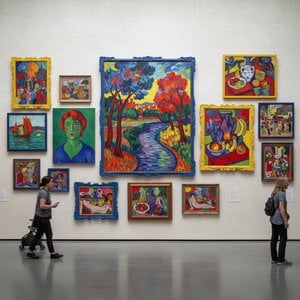
Fauvismens 10 Mästerverk: Konst som Chockade Världen – Upptäck Nu!
Utforska fauvismens 10 mest ikoniska mästerverk! Lär känna Matisse, Derain och andra pionjärer. Starka färger & djärva penseldrag definierade epoken. Hitta konsttryck av högsta kvalitet på ArtsDot.com – för din heminredning.
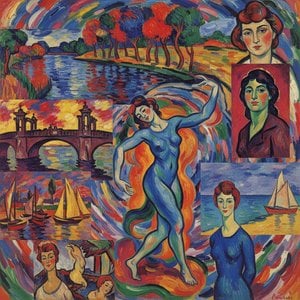
Fauvismens 10 Mästerverk: Konst som Väckte Färg till Livet | ArtsDot
Upptäck fauvismens 10 mästerverk! Fördjupa dig i Henri Matisses och André Derains djärva färger & expressionistiska konst. Köp reproduktioner av kända målningar online hos ArtsDot – museumkvalitet för ditt hem. Utforska samlingen nu!


