


 Visa i rummet
 Skicka
 Dela
Dela
 Detaljer
 Studentguide för konstverk

 Ladda ner
 Liknande objekt
 Röntgen
 Bildspel
 Besökstatistik
Rosslyn Chapel

 Läs mer
Handgjord oljereproduktion
Handmålad olja på duk i din valda storlek och ram, tillverkad efter beställning av våra konstnärer. ( Byt till tryckta exemplar Byt till digital bildförsäljning)




P118B Skr10

P118H Skr10

P118W Skr10

P438Z Skr10

P508JH Skr12

P508YH Skr12

P805H Skr10

P805Z Skr10

P919BZ Skr10

P919G Skr10

P919XJ Skr10

P959ZH Skr10

P968JZ Skr12

W106C Skr8

W218G Skr10

W218JH Skr8

W218Y Skr10

W307PJ Skr10

W316G Skr10

W316PJ Skr8

W316Y Skr10

W398PJ Skr8

W4111J Skr10

W500HY Skr15

W500JH Skr15

W692G Skr12

W849H Skr8

W940BG Skr15

W953PJ Skr8




Välj bland våra förinställda storlekar som motsvarar konstverkets ursprungliga proportioner.

Ange den bredd och höjd du behöver för att passa din ram eller din vägg. Eftersom detta är handmålat kan konstnären vid en annan form måla lite mer runt bilden eller beskära den något – du väljer själv. Vi skickar en digital mockup för godkännande innan målningen påbörjas. Bilden som visas på denna sida representerar inte det slutgiltiga resultatet — det är endast mockuppen som visar det.
Efter beställning kommer ArtsDot.com team att mejla kunden för instruktioner och tillhandahålla en skissförhandsvisning
Leverans över hela världen () på 3–4 veckor istället för standard 5 veckor. (23 oktober). Inga kompromisser med kvaliteten.

Fri expressfrakt över hela världen

Högkvalitativ linnecanvas

Fullständig fraktförsäkring

Garantier för återbetalning av tullavgifter

Garantier för exakt färgåtergivning

100 dagars returrätt vid fabrikationsfel

100% pengarna tillbaka-garanti

Mängdrabatt erbjuds
 Glasalternativet är endast tillgängligt i storlekar under 110 cm.

Rosslyn Chapel
Tryckteknik
Reproduktionsstorlek
-


Totalpris
Skr 2608
Liknande konstverk


Om konstnären
The Shadow of Industry: Exploring the Art of William Frederick Lutzenberger (1800-1868)
William Frederick Lutzenberger, born in 1800 and tragically passing away in 1868, stands as a pivotal yet often overlooked figure within the burgeoning landscape art scene of mid-19th century England. His work, characterized by a remarkable blend of Romantic idealism and a growing awareness of industrial realities, offers a poignant reflection on the changing relationship between humanity and nature during a period of unprecedented transformation. Lutzenberger’s artistic journey is one marked by both quiet contemplation and a subtle, almost melancholic, engagement with the dramatic shifts occurring across his nation.Early Life and Artistic Training
Lutzenberger's early life remains somewhat shrouded in mystery, though it’s understood he was born into a modest family in London. Unlike many artists of his era who benefited from established patronage or formal training within the Royal Academy, Lutzenberger largely self-taught. He began his artistic career as a lithographer, a skill that undoubtedly informed his meticulous attention to detail and his ability to capture subtle tonal variations – qualities he would later apply with great success to landscape painting. This early experience also exposed him to the burgeoning printmaking industry, an environment increasingly shaped by industrial processes, which subtly influenced his later artistic sensibilities. He began exhibiting his work in London’s art circles around 1830, initially focusing on topographical scenes and studies of rural life.A Romantic Vision – Early Landscapes
Lutzenberger's early works firmly establish him within the Romantic tradition. His paintings frequently depict vast, atmospheric landscapes—rolling hills, dramatic skies, and serene waterways—evoking a sense of sublime beauty and spiritual connection with nature. Influenced by artists like Turner and Constable, Lutzenberger skillfully employed light and shadow to create mood and atmosphere, capturing the fleeting effects of weather and time. Paintings such as *The River Thames at Marlow* (circa 1835) and *A Woodland Scene* (1840) demonstrate his mastery of depicting natural beauty with a delicate touch and an appreciation for the subtle nuances of color. These works were highly regarded in their time, showcasing a romantic sensibility that resonated with audiences seeking solace and inspiration in the face of industrialization.The Weight of Progress: A Shift in Subject Matter
As the 1840s progressed, Lutzenberger’s artistic focus began to subtly shift. While he continued to paint idyllic landscapes, a growing awareness of the impact of industrialization on the English countryside became increasingly evident in his work. He started incorporating scenes depicting factories, canals, and railway lines—not as romanticized vistas, but often with a sense of unease or melancholy. Paintings like *The Canal at Birmingham* (1852) and *A Mill Scene* (1857) reveal a more critical perspective on the rapid changes transforming England’s landscape. These works are not celebratory depictions of progress; instead, they convey a feeling of displacement and loss—a sense that something precious is being sacrificed in the name of industrial advancement.Legacy and Historical Significance
William Frederick Lutzenberger's contribution to 19th-century art lies primarily in his ability to capture the complex emotional landscape of a nation undergoing profound transformation. He wasn’t a flamboyant revolutionary, but rather a quiet observer who subtly embedded social commentary within his landscapes. His work serves as a valuable historical document, offering insights into the anxieties and uncertainties experienced by many during this period. While he may not be as widely celebrated as some of his contemporaries, Lutzenberger's paintings—particularly those reflecting the impact of industrialization—remain remarkably poignant and offer a unique perspective on a pivotal moment in English history. His legacy is one of understated observation, quiet reflection, and a subtle yet powerful critique of progress.
George Cattermole
1800 - 1868 , United Kingdom
Snabbfakta
- Nationality: WahooArt
- Date Of Birth: 1800
- Date Of Death: 1868
- Place Of Birth: Dickleburgh, United Kingdom
- Artistic Movement Or Style: 19th Century Art
- Artists Who Influenced This Artist:
- Caspar David Friedrich
- J.M.W. Turner
- John Constable
- Artists Or Movements Influenced By This Artist: ['Later artists through WahooArt reproductions']
Relaterade artiklar
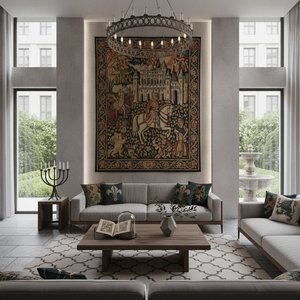
Timeless Elegance: How to Integrate High Medieval Art into Your Modern Interior Design
Discover how to infuse your modern home with the divine light of High Medieval art. From gilded illuminated manuscripts to Gothic-inspired textures, learn expert tips for integrating timeless elegance and historical grandeur into contemporary interior design.

Georges Braques 25 Mästerverk: En Konsthistorisk Resa för Hemmet
Utforska Georges Braques 25 mest ikoniska verk – en resa genom kubismens värld och fransk modern konst. Lär känna historien bakom mästerverken, tekniken & färglärorna. Köp högkvalitativa konsttryck på ArtsDot.com.

Georges Seurat: Topp 25 mästerverk – Impressionismens ljus och vetenskap i din konstsamling
Utforska Georges Seurats 25 mest ikoniska verk! Fördjupa dig i impressionismens ljus, pointillismens teknik och fransk konsthistoria. Hitta inspiration & museumkvalitativa konsttryck för ditt hem på ArtsDot.com.

High Medieval Art: 10 Masterpieces That Shaped an Era | ArtsDot
Journey through High Medieval Art! Explore 10 iconic masterpieces – from Giotto's frescoes to stunning Gothic cathedrals. Discover the stories behind these timeless paintings, sculptures & illuminated manuscripts. Find museum-quality art reproductions at ArtsDot.com.

George Paul Chalmers: Rediscovering the Angus Rembrandt & Scottish Colourist Roots
Explore the captivating world of George Paul Chalmers (1833-1878), a pivotal Scottish painter. Discover his landscapes, portraits & connection to the Aesthetic Movement and Colourists. Learn about this 'Angus Rembrandt's' legacy with ArtsDot.