
Salome II Hand-painted in oil, just for your walls


The picture follows your choices: , .
Beskrivning av samlarobjekt
Explore Edvard Munch's haunting 'Salome II,' a powerful charcoal drawing capturing intense emotion and psychological turmoil—a glimpse into the artist’s shadowed world of loss and anxiety.
 Visa mer
Konstnärens biografi
Edvard Munch (1863-1944): En norsk konstnär vars mästerverk utforskar ångest, sorg och mänsklighetens innersta värld. Känd för 'Skriet' och en djupgående stil.
Handgjord oljereproduktion
Handmålad olja på duk i din valda storlek och ram, tillverkad efter beställning av våra konstnärer. ( Byt till tryck Byt till digital bild)
Order your painting in four simple steps
Take your time. You can change any answer; the price in your order card follows each choice.
1 Step one of four
Which size would you like?
These sizes keep the proportions of the original painting. The drawing shows your choice on a wall, above a two-metre sofa.
Or give your own measurements
Välj bland våra förinställda storlekar som motsvarar konstverkets ursprungliga proportioner.

Ange den bredd och höjd du behöver för att passa din ram eller din vägg. Eftersom detta är handmålat kan konstnären, vid ett annat format, måla lite mer runt bilden eller beskära den något – det är du som väljer. Vi skickar en digital mockup för godkännande innan målningen påbörjas. Bilden som visas på denna sida representerar inte det slutgiltiga resultatet — det är endast mockuppen som visar det.
2 Step two of four
How should it be prepared: rolled, stretched or framed?
The prices below are for the size you chose in step one.
Choose the edges of the stretched canvas
Choose your frame

White Skr1

Blurside Skr1

Extended Skr1

P118B Skr10

P118H Skr10

P118W Skr10

P438Z Skr10

P508JH Skr12

P508YH Skr12

P805H Skr10

P805Z Skr10

P919BZ Skr10

P919G Skr10

P919XJ Skr10

P959ZH Skr10

P968JZ Skr12

W106C Skr8

W218G Skr10

W218JH Skr8

W218Y Skr10

W307PJ Skr10

W316G Skr10

W316PJ Skr8

W316Y Skr10

W398PJ Skr8

W4111J Skr10

W500HY Skr15

W500JH Skr15

W692G Skr12

W849H Skr8

W940BG Skr15

W953PJ Skr8

H24-GOLD Skr30

H24-SILVER Skr30

H36-GOLD Skr45

H36-SILVER Skr45
Inramad
Moulding: . Overall size with the frame: .
3 Step three of four
Would you like anything changed in the painting?
Most people answer no. Because each painting is made by hand, our artist can also adapt it for you.
After order, ArtsDot.com team will email client for instructions and provide a mockup preview
4 Step four of four
A few finishing options
All of them are optional. The answers already selected cost nothing extra.
Who paints it?
Leverans över hela världen () på 3–4 veckor istället för standard 5 veckor. (29 oktober). Inga kompromisser med kvaliteten.
A nameplate, as in a museum?
Detaljer för graverad bronsplatta
This elegant plaque features the artist's name and the title of the artwork, finely engraved for a timeless presentation.
It is made from bronze with a refined, elegant finish. The text is precisely laser-engraved for a sharp and permanent result. Measuring 9x2 cm, the plaque is compact yet easy to read. It's built to be durable and scratch-resistant, offering a professional, museum-quality look. Mounting is simple thanks to the included adhesive backing.
Detaljer för transparent akrylplatta
The plaque includes essential engraved details such as the artist's name, the title of the artwork, the date it was created, the type of media used-like oil on canvas or watercolor-a brief description of the piece, and a QR code that links to the complete artwork information.
It is crafted from clear acrylic, offering a sleek, modern appearance. The text is UV-engraved in black to ensure strong visual contrast. With a size of 10x15 cm, it ensures optimal readability. It comes equipped with two metal hooks for secure wall mounting. The plaque is designed to be weather-resistant, making it suitable for various environments, and it includes interactive features that work seamlessly with smartphone scanning.
Detaljer för svart akrylplatta
This elegant plaque includes engraved information such as the artist's name, the title of the artwork, the date it was created, the type of media used (like oil on canvas or watercolor), a short description of the artwork, and a QR code for quick access to more information.
The plaque itself is made from refined black acrylic with a premium finish. The text is laser-engraved in white for high contrast and readability. Its size is 10x15 cm, designed to be easy to read. It comes with two metal hooks for professional mounting. The design is sleek and fits any interior style. It is also weather-resistant and durable, with built-in digital integration for mobile compatibility.
A protective varnish?
When do you need it?
✓ Check and order
Your painting, as you ordered it

Salome II
Reproduktionsmetod
Storlek på reproduktion
-

Elitkonstnär av högsta klass
Mer detaljrikedom, finess och extra produktionstid
-

Inramning av reproduktion
-
-
För konstverk eller reproduktioner som är större än 105 cm (cirka 41 tum) på någon sida, levereras ramen som ett isärplockat kit. Denna metod säkerställer en trygg leverans och förhindrar skador under transport.
Professionell montering krävs – detta är inte en produkt för självmontering.
Kitet måste monteras och duken spännas av en erfaren professionell inramare med hjälp av trälim (ingår ej), en spänntång för duk och klämmor för att hålla sargen rak medan limmet torkar. Felaktig montering eller ojämn spänning av duken kan orsaka permanenta skador på konstverket och täcks
 För konstverk eller reproduktioner som är större än 105 cm (cirka 41 tum) på någon sida, levereras ramen som ett isärplockat kit. Denna metod säkerställer en trygg leverans och förhindrar skador under transport.
Alla massiva träribbor ingår, exakt tillkapade efter mått.
Monteras med de medföljande skruvarna, samt trälim för hörnfogarna, vilket inte ingår och måste anskaffas av din ramverkare.
Professionella verktyg krävs och ingår ej: en dukspännare och klämmor för att hålla listerna raka medan limmet torkar.
Viktigt:
Hörnjunctionerna kräver trälim, listerna måste hållas på plats med tvingar tills limmet har torkat helt, och för att spänna duken på den monterade ramen krävs en spänntång för duk. Inget av detta ingår i kitet. Vänligen kontakta en erfaren professionell rammakare innan du beställer denna storlek.

Namnskylt
-
-

Skyddande fernissa
Glansig fernissa (förstärker färgerna, skyddar mot ljus och fukt)
-

Anpassa mitt konstverk
Exempel på vad som kan ändras: Byt ut ansiktet mot ett foto från kunden; Lägg till ett husdjur (t.ex. byt ut en katt mot en hund); Inkludera ett dolt meddelande i bakgrunden; Ändra bakgrundens landskap eller detaljer.
-

Expressleverans
Leverans över hela världen () inom 3–4 veckor istället för standardiserade 5 veckor. (29 oktober). Inga kompromisser med kvaliteten.
-
Expressleverans
Leverans över hela världen () inom 5 veckor. (5 november).
Ingår
Slutgiltigt pris
Skr 2631
Glasalternativet är endast tillgängligt i storlekar under 110 cm.
Included with every order
- Fri expressfrakt över hela världen
- Högkvalitativ linnecanvas
- Fullständig fraktförsäkring
- Garantier för återbetalning av tullavgifter
- Garantier för exakt färgåtergivning
- 100 dagars returrätt (endast vid fel)
- 100% pengarna tillbaka-garanti
- Mängdrabatt erbjuds


Salome II: A Descent into Melancholy – An Exploration of Edvard Munch’s Haunting Vision
Edvard Munch's "Salome II," painted in 1905, isn’t merely a depiction of a biblical scene; it’s a visceral plunge into the artist’s own tormented psyche. This arresting black and white drawing, rendered with a deliberate roughness reminiscent of charcoal or pencil, captures a moment suspended between violence and vulnerability – a potent distillation of Munch's lifelong preoccupation with death, anxiety, and the fragility of human connection. The image immediately commands attention: a woman, identified as Salome (though her precise identity remains shrouded in historical ambiguity), holds the head of a man aloft, his lifeless form dominating the right side of the composition. Her expression is unsettlingly ambiguous – a mixture of triumph, sorrow, and perhaps even a chilling detachment. The stark contrast between the dark, almost suffocating background and the pale flesh tones of Salome creates an immediate sense of drama and isolation.
Munch’s artistic journey was profoundly shaped by personal tragedy and philosophical questioning. Born in 1863 amidst a landscape scarred by illness and premature loss – his mother and sister succumbed to tuberculosis early in life – Munch developed a uniquely sensitive awareness of mortality. This wasn't simply biographical; it became the bedrock of his art, fueling an exploration of the darkest corners of the human experience. The influence of figures like Hans Jæger, a Norwegian nihilist who encouraged him to paint “soul painting,” further propelled Munch toward expressing inner turmoil rather than merely replicating external reality. “Salome II” embodies this approach; it’s less about a literal retelling of the biblical story and more about conveying the emotional weight of power, loss, and the unsettling consequences of transgression.
The Symbolism of Head and Hand
The central image – the severed head – is laden with symbolic significance. In the original biblical narrative, Salome demands the head of John the Baptist as a gruesome trophy. However, Munch’s interpretation transcends this literal event. The head itself becomes an emblem of death, vulnerability, and the ultimate loss of innocence. Notice how it's presented: not dramatically posed or gloriously displayed, but rather laid limply in Salome’s hands, suggesting a profound sense of defeat and perhaps even pity. Her hand, pale and slightly trembling, is equally evocative – it’s both an instrument of violence and a gesture of hesitant restraint.
The woman's attire—a hat that partially obscures her face—adds to the air of mystery and detachment. It suggests a deliberate attempt to conceal emotion, reinforcing the idea that Salome isn’t simply a vengeful figure but someone wrestling with complex inner conflicts. The overall composition is deliberately unbalanced, mirroring the emotional instability at play. The man's head occupies a significant portion of the frame, emphasizing its importance and highlighting the devastating impact of its loss.
Technique and Expressionist Style
Munch’s technique in “Salome II” is characterized by a deliberate lack of polish. The lines are rough and sketchy, creating a sense of immediacy and urgency. This raw approach contrasts sharply with the idealized forms often found in academic art of the period. The use of charcoal or pencil lends the drawing a tactile quality, inviting the viewer to engage with its surface directly. Notice the expressive shading—the deep shadows that engulf the background and the subtle gradations of tone used to depict Salome’s face – all contribute to the work's emotional intensity.
This style firmly places “Salome II” within the realm of Expressionism, a movement that sought to convey subjective emotions rather than objective reality. Munch was a key figure in this movement, and his art served as a powerful vehicle for exploring the anxieties and psychological complexities of modern life. The drawing’s unsettling atmosphere and ambiguous narrative continue to resonate with viewers today, cementing its place as one of Munch's most compelling and enduring works.
Bringing “Salome II” into Your Space
ArtsDot offers meticulously crafted hand-painted reproductions of "Salome II," allowing you to experience the power and emotional depth of this iconic artwork in a way that is both authentic and accessible. Our skilled artists replicate Munch’s distinctive style with remarkable precision, capturing the drawing's raw energy and haunting beauty. Whether displayed as a statement piece in a contemporary interior or as a thoughtful addition to a classic setting, a ArtsDot reproduction of “Salome II” will undoubtedly spark conversation and evoke profound contemplation.
Frågor och svar
Kan jag se "Salome II" av Edvard Munch i olika ljus?
"Salome II" kan utforskas lager för lager på verkets Röntgenanalys-sida, en interaktiv vy inspirerad av en konservators ljusbord med elva optiska lager av bilden.
Vad föreställer "Salome II" av Edvard Munch?
"Salome II" av Edvard Munch föreställer: death, grief, madness, anxiety, woman, head, symbolism, mortality.
Vilken stämning och känsla förmedlas i "Salome II"?
Stämningen i "Salome II" av Edvard Munch är Dramatic, och dess emotionella ton är Melancholic.

Edvard Munch
1863 - 1944, Sverige
Konstnärsbiografi
Ett liv i skuggans värld: Edvard Munchs kosmos
Edvard Munch, född 1863 i det karga norska landskapet, är en konstnär vars verk kom att bli synonymt med modernitetens ångest och emotionella turbulens. Hans liv, djupt präglat av förlust och en genomgripande melankoli, utgjorde källan till hans starkt expressiva konst. Uppväxten kastades i skuggan av tidiga dödsfall – modern och systern avled båda i tuberkulos – vilket utvecklade ett djupt vemod och en fascination för dödlighetens natur. Dessa upplevelser var inte bara biografiska detaljer; de blev kärnan i hans konstnärliga vision, drivkraften bakom en obeveklig utforskning av det inre landskapet av rädsla, sorg och längtan. Faderns stränga religiösa övertygelser och Munchs egna psykiska kamp bidrog ytterligare till den känsla av ångest som genomsyrade hans värld, formande inte bara hans personliga liv utan också det symboliska språket i hans måleri. Han nöjde sig inte med att återge scener; han externaliserade ett inre tillstånd, översatte psykisk nöd till visuell form.
Från realism till självmålning: Munchs konstnärliga resa
Munchs konstnärliga färd började med en formell utbildning vid Statens kunstakademi i Kristiania (Oslo), men det var mötet med den bohemiska kretsen och Hans Jægers nihilistiska filosofi som verkligen tände hans kreativa eld. Jæger uppmuntrade Munch att överge konventionella akademiska stilar och istället fördjupa sig i sin egen subjektiva erfarenhet, ett begrepp han kallade “självmålning”. Denna vändpunkt markerade början på Munchs särpräglade stil – en präglad av råa känslor, förvrängda former och ett avståndstagande från naturalistisk representation. Hans resor till Paris under 1890-talet exponerade honom för den spirande postimpressionismen, där han absorberade influenser från konstnärer som Paul Gauguin, Vincent van Gogh och Henri de Toulouse-Lautrec. Den djärva färganvändningen, expressiva penseldragen och psykologiska intensiteten hos dessa mästare resonerade djupt med Munchs egna konstnärliga ambitioner. Han imiterade inte bara deras tekniker; han syntetiserade dem till något unikt hans eget – ett visuellt språk som förmådde uttrycka de djupaste och mest oroande mänskliga känslorna. Tiden i Berlin var också avgörande, då han kom i kontakt med dramatikern August Strindberg, vars utforskning av psykologiska teman ytterligare bränsle till Munchs konstnärliga undersökningar.
Ikoniska visioner: Verkens symbolik och betydelse
Munchs oeuvre är befolkat av bilder som har etsat sig fast i det kollektiva medvetandet. Skriet, kanske hans mest ikoniska verk, överskrider sin status som målning för att bli en universell symbol för existentiell ångest. Det virvlande, eldiga landskapet och figurens förvrängda ansikte uttrycker ett ursprungligt skrik mot universums likgiltighet. Madonna, ett kontroversiellt och djupt personligt verk, utforskar teman som sexualitet, moderskap och dödlighet med oroande ärlighet. Återkommande motiv som Det sjuka barnet – inspirerat av förlusten av systern Sophie – påminner smärtsamt om Munchs barndomstrauma och den ständigt närvarande dödens skugga. Melankoli I & II, kraftfulla framställningar av djup sorg och isolering, avslöjar en sårbarhet som är både djupt personlig och universellt relaterad. Dessa verk är inte bara representationer av yttre verklighet; de är fönster in i konstnärens själ, som erbjuder betraktaren en oförskräckt blick in i den mänskliga psykes mörkaste hörn. Munch strävade inte efter att skapa vackra bilder; han sökte sanningen – även om den var smärtsam och oroande.
Ett bestående arv: Historisk betydelse och inflytande
Edvard Munchs bidrag till modern konst är omätbart. Han står som en nyckelfigur i utvecklingen av expressionismen, banade väg för konstnärer som prioriterade subjektiva känslor framför objektiv representation. Hans kompromisslösa utforskning av universella mänskliga erfarenheter – kärlek, förlust, ångest och död – fortsätter att resonera med publiken idag, vilket befäster hans plats som en av de mest inflytelserika och bestående figurerna i konsthistorien. Hans verk har haft en djupgående inverkan på efterföljande generationer av konstnärer, influerat rörelser som tysk expressionism och bortom. Han vågade konfrontera den mörkare aspekten av det mänskliga tillståndet, utmanade konventionella uppfattningar om skönhet och konstnärlig representation. Även efter att ha uppnått berömmelse och erkännande – kulminerande i etableringen av Munchmuseet i Oslo – förblev hans personliga liv turbulent, präglat av perioder av psykisk instabilitet och isolering. Men genom allt detta fortsatte han att skapa, lämnade efter sig ett verk som fortsätter att provocera, utmana och inspirera. Munchs arv handlar inte bara om själva målningarna; det handlar om modet att konfrontera komplexiteten i den mänskliga existensen och att översätta dessa erfarenheter till konst som talar till de djupaste delarna av vår varelse.
Quick facts about Edvard Munch
- Artistic Movement Or Style: Expressionism
- Artists Or Movements Influenced By This Artist: ['Tysk Expressionism']
- Artists Who Influenced This Artist:
- Paul Gauguin
- Van Gogh
- Date Of Birth: 12 december 1863
- Date Of Death: 23 januari 1944
- Full Name: Edvard Munch
- Nationality: Norsk
- Notable Artworks:
- The Scream
- Madonna
- The Sick Child
- Place Of Birth: Ådalsbruk, Sverige
Liknande konstverk


Relaterade artiklar

Mästverk i Kolgrått: Topp 10 Berömda Målningar med Dramatisk Skugga | ArtsDot.se
Utforska 10 ikoniska målningar präglade av dramatiska koltoner! Lär känna Rembrandt, Goya och andra mästare. Hitta inspiration & köp konsttryck online hos ArtsDot.se – museumkvalitet för ditt hem. Upptäck hela samlingen!

Edvard Munchs 25 Mästerverk: En Djupdykning i Konst och Känsla | ArtsDot
Utforska Edvard Munchs 25 mest ikoniska konstverk – från 'Skrik' till 'Livsfrisen'. Lär dig om expressionism, symbolik och den djupa känslan i hans målningar. Köp museumskvalitets reproduktioner & inred med tidlös konst på ArtsDot.com

Mästverk i Svart: Topp 10 målningar dominerade av lampkolstoner – Konst & Inredning
Utforska 10 ikoniska målningar dominerade av lampkolstoner – från Rembrandts djupa skuggor till Manets dramatik. Lär känna konsthistorien och hitta inspiration för ditt hem. Köp reproduktioner av högsta kvalitet på ArtsDot.com.

Mästverk i svart: Topp 10 målningar som fascinerar – ArtsDot.se
Utforska 10 ikoniska målningar dominerade av svart – från Rembrandts djupa skuggor till Munchs ångest. Lär känna historien bakom mästerverken och hitta inspiration för din inredning på ArtsDot.se. Upptäck hela kollektionen online!
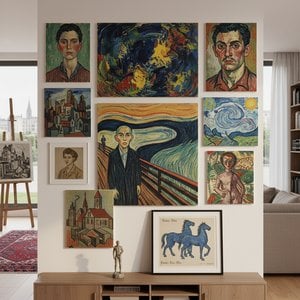
Expressionismens 10 Mästerverk: Konst som Berör Själv och Hem
Utforska expressionismens 10 mest ikoniska mästerverk! Lär känna Munch, Kirchner & Kandinsky. Upptäck historien bakom dessa färgstarka och emotionella konsttryck. Museumkvalitet på ArtsDot.com – hitta din perfekta tavla online!
 Förhandsvisa
 Skicka
 Dela
Dela
 Visa detaljer
 Guide
Guide

 Ladda ner
 Liknande objekt
 Röntgen
 Bildspel
 Q&A
Q&A Statistik